
REVIEWED BY KIERA EDELSTEIN
EDITED BY CHARLOTTE FRASER
Big Corporate wants you to work overtime with no pay. Big Lip-balm doesn’t want you to know that, secretly, it’s making your lips more chapped. Big Religion? Writer/Director Maddi Formosa seems to think it wants you to buy into its system of subservience and piety, of unquestioning devotion, with no questions asked.
And yet, in this debut original work, as part of Theatreworks’ ‘Fresh Works’ program Big Religion is a work that is hard to summarise so simply.
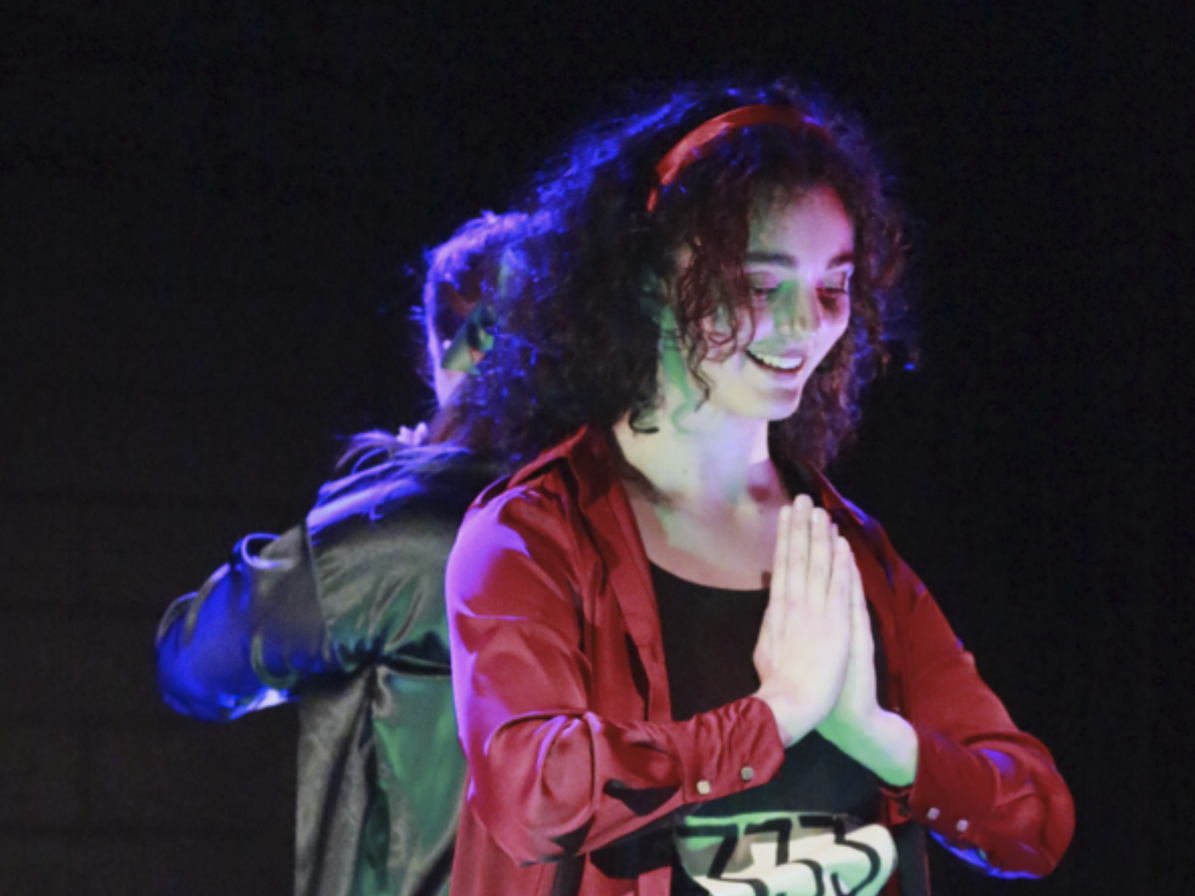
Arriving at the Explosive Factory in St Kilda – already a half-real, half-portal-in-the-wall location – nothing is exactly what it seems. As I settled into my seat, I cowered from the exposure of the theatre in the round style seating (with the small caveat that instead of surrounding a circular stage, the audience was organised around the shape of a neon glowing cross). It was as if everyone in the warehouse was equally vulnerable to a scrutinising eye from above, with nowhere to hide.
And then, as if receiving a prophecy, a projection appeared announcing the show’s beginning in flowery typography, much like that you might see in a medieval bible. These title-cards/scene-titles/witty-references-whose-context-only-made-sense-halfway-through-the-following-scene emerged before each scene, announcing scene number and orienting the show – although their obscurity often meant this feature felt more like an omnipresent interlocutor than a guide for the plot.
In this first instance, the card introduced the first of two prologues (because of course a show that questions the power of authority would shirk construction conventions). In this prologue two ‘beings,’ undefined in character or status begged an entreaty at each other that would set the stage for the whole show: Is that all it takes? One question?
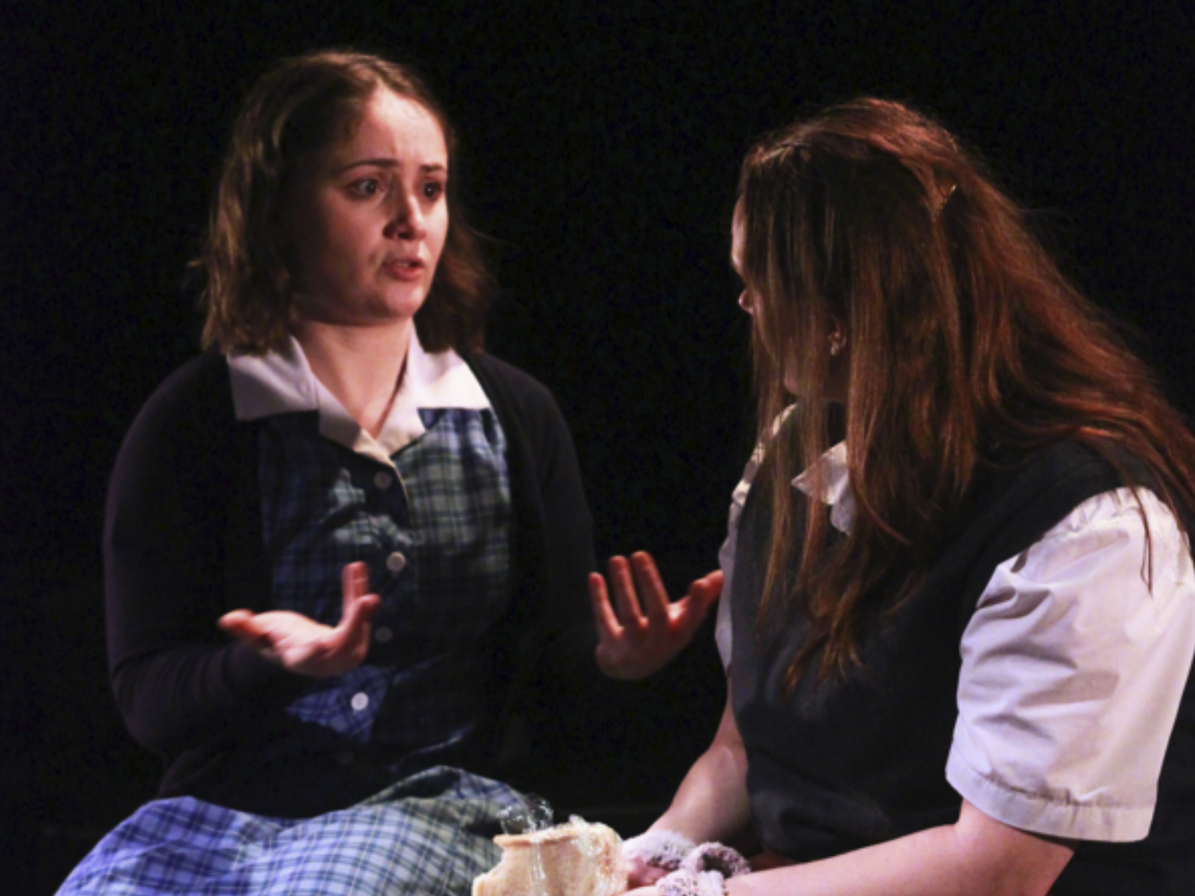
Silence. And then, the plot in its full form began, introducing from the darkness schoolgirls Jan (Caitlan McCalig) and Dav (Gabreille Ward) with brash loudness and giggles, as they bicker over letters from home and how best to dutifully observe of the instructions from ‘The Sisters.’ The story picks up as Jan seeks to create a little more excitement in her mundane boarding-school life by breaking into the school’s chapel to steal the sacramental wine, dragging an unwilling Dav along with her. The two girls are given a shock from the heavens when an angel – known as Being (Meagan Scolyer-Gray) – falls through the roof of their chapel and they hide this witness of their sacrilegious trespassing. The story then fractures into two non-linear fragments, one the backstory of Being’s literal and figurative fall from God, the other the present timeline of Jan and Dav as they struggle to take care of a pet angel – including the menial tasks of taking ‘it’ out on walks and sneaking ‘it’ cheese sandwiches from the canteen.
The performance of this friendship, underscored by the incredible chemistry between Ward and McCalig served as one of the greatest strengths of the show. Both actors were quick on the heels of their partner, bouncing through comedic beats with the speed of two friends who know each other so well that they anticipate conversational direction. McCalig as the bold, impatient, transient Jan was clever on her feet, masterfully commanding the space with her physicality. A critical point for this character was the development that, in her dizzied stupor having fallen from the sky, Being pronounces Jan pregnant with the baby of Jesus; the mother of the Second Coming of Christ. Although originally resistant – calling Being everything from crazy to perverted – Jan eventually embraces this honour “of the willingness to bear God’s fruit” with unexpected dedication. McCalig portrayed this development with such sweetness and sympathy, especially when she finds out there is no baby after all, that it was evident a deep amount of contemplative work had been done for the role.
Ward’s performance as a loner devotee, anxious to keep both her scholarship at school and her favour with God was equally considered and deeply heartfelt. It certainly felt like Ward had strong material to play with from Formosa, and even more so that she was capable of managing it. Indeed, all of Dav’s contemplations about God, questioning as she tried to make sense of punishment and sin, the compilation of exaltation of the Virgin Mary and the challenge of being young and abandoned seemed to carry the greatest weight of Big Religion’s conceptional contemplation, dealt with deftly and thoughtfully. The scene where Dav begs for guidance from a priest in a confessional (who happens to be Also Being caught in the wrong place at the wrong time) was my favourite of the whole show, with it’s simple, yet stunning performances.
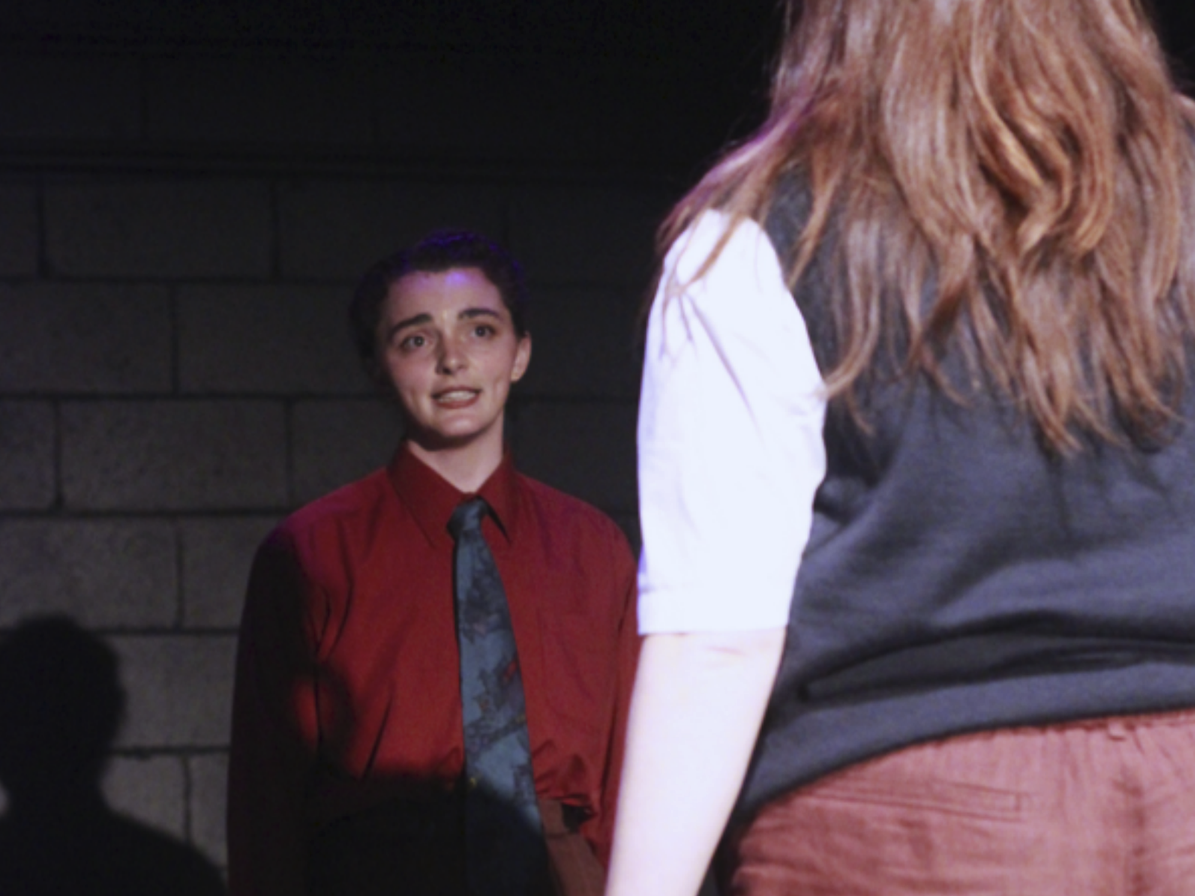
Altogether, the two girls were cleverly crafted foils of each other, which both brought out the truth of a catholic-girl-school experience weighted by the burden of restrictive authority and the joy of solidarity. Reminiscent of the classic banter-laden relationship between good God-fearing girl and her terrifyingly indignant best friend (think Erin and Claire from Derry Girls) Formosa’s characters were humorously yet authentically written and when the girls broke into the church, with their small hand lamps illuminating the dark space I felt genuinely nostalgic and delighted.
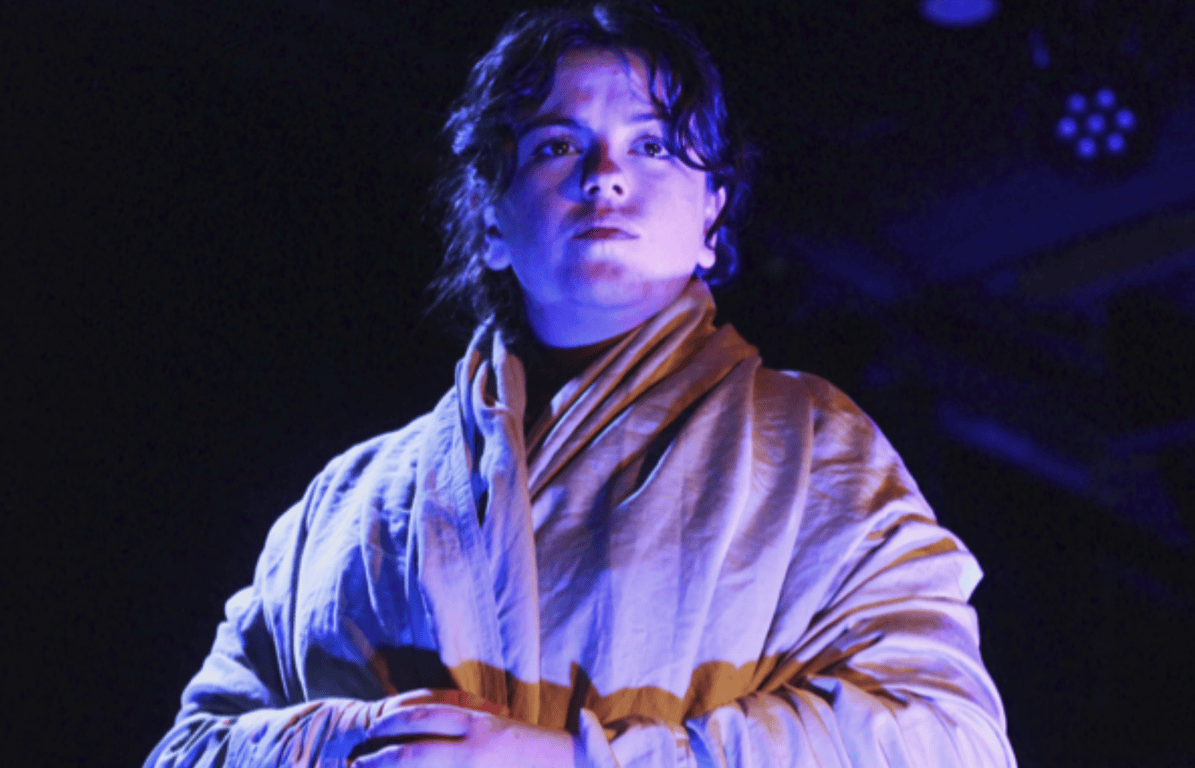
The parallel storyline between Being and her mentor ‘Also Being’ is less easy to convey. In Formosa’s neo-absurdist world, angels are sent to earth to monitor if humans are acting according to the ‘Big Idea,’ reporting back to the bossman (God) on sin and tragedy like targets and projections in quarterly reports. Also Being is introduced towards the beginning of the show as a more experienced angel – having gone down to earth previously during the mediaeval era and watch millions die at the hands of the Black Death. We meet Also Being as she is tasked with guiding Being for her first trip down to human land, as the older urges the less experienced to brace herself for tragedy and to hope for simplicity rather than drama. Along the way, and perhaps as part of Being’s plot to bring some more interest to her menial centuries on earth, the two angels fall in love, question authority and struggle with the burden of omnipotence.
Chudleigh’s performance was strong and endearing, consistently grounded in the tragic history of the character and steadfastly focused on her intention, in an almost Benedict Cumberbatchian earnestness. Scolyer-Gray had fantastic sense of physicality, giving a convincing and stupidly funny impression of an angel figuring out how to be corporeal for the first time. While it provided a heartfelt current through the show and a tremendously sweet scene as the two angels attempt to ‘do being in love’ by gnashing their mouths in each other’s direction like puppies, the motivation for this love story was not entirely clear. At times, it felt that both Chudleigh and Scolyer-Gray were weakened by the cliches they were conveying – as Being declared classic Notebook-eque phrases: “I’ve been thinking about us” or “I just want you to be happy.” In general, I would have enjoyed seeing the intentions of these characters fleshed out slightly more and seen how these motivations could further the direction in which it felt that the overall show was pointing. Nonetheless, watching these two non-human characters practice distinctly human emotions had a stunning, defamiliarizing effect on such normally accepted qualities of our everyday life, prompting the consideration of the heavenly features we get right down here.
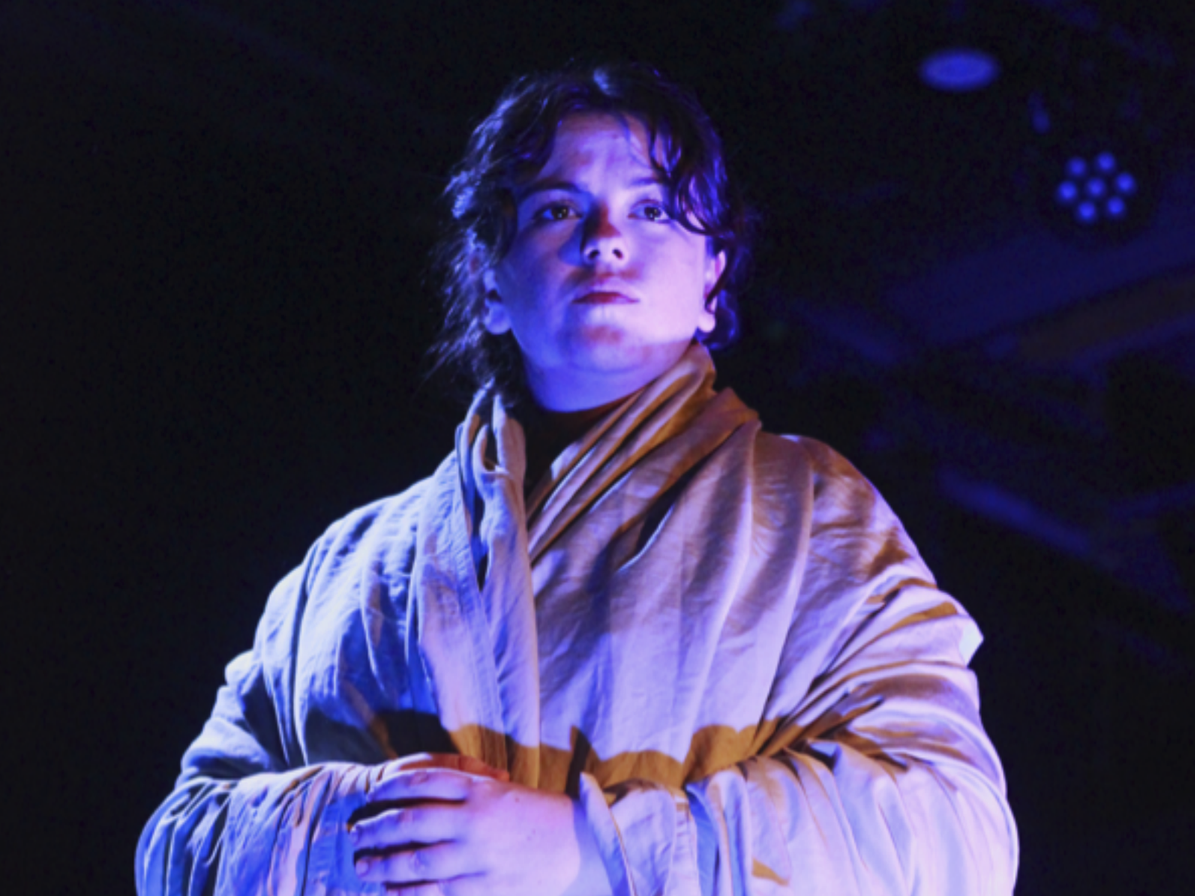
Formosa’s direction was particularly clever, making apt use of the minimalistic set with ease. Their ability to make so much use out of two drama blocks was not only extremely impressive but had the added bonus of taking me back to high school drama in all the best ways. In one of the later scenes where Jan throws rocks at Dav’s window to get her to come down and have a clandestine catchup, Formosa put Ward into the upper barracks of the small room – a bright choice I didn’t even know was possible in the space. Considered choreography, assisted by Eliza Grundy, flowed throughout the whole piece, with each transition smooth and creative. A strong addition came from John Augistine Sharp’s terrific sound design which completely enlivened the piece with his haunting melodies.
Prior to a delightful double epilogue, which featured a fantastically unexpected dance number, the show’s conceptual ending fell slightly flat for me. While the two angels turned their middle fingers to the man upstairs in one final, defiant earthly report, the incongruous conclusion of Dav turning back to the Catholic school that encouraged her to denigrate herself and accept violent harm as a ‘mature’ way of taking ownership felt dark and quite uneasy. At times, I think I would have appreciated a greater decidedness in metaphorical direction, as in the progression towards the conclusion conceptual concepts felt obscured.
Nonetheless, as a first original work, Big Religion showed tremendous promise for Formosa. Her cast seemed delighted by the playful absurd themes, revelling in swings from silly to serious and such a joyful quality that was infectious to watch. With a strong conceptual overtone and a deeply considered script, packed full of clever references, I have a keen eye for what is coming next for the playwright. Luckily, we’ve been giving plenty of authoritatively dominant structures to consider and carefully dismantle in the meantime.
Big Religion played at Theatre Works Explosives Factory 25 Aug – 5 Sep, 2026.
KIERA EDELSTEIN is a First Year Bachelor of Arts student who loves all things reading, writing and storytelling. She doesn’t know what her major is yet but has decided in the meantime to take part in as many parts of the student-theatre that she can.
CHARLOTTE FRASER (she/her) is a writer, performer and editor based in Melbourne. She holds a BA in English and Theatre Studies and is currently completing her Masters degree at the University of Melbourne. Charlotte is also the 2026 Dialog Editor.
The Dialog is supported by Union House Theatre
 The Dialog