
REVIEWED BY JESS PARKIN
EDITED BY CHARLOTTE FRASER
For a relatively new Arts Society, Little Hall lured quite an impressive audience to their performance of Mr Burns, a post-electric play. Both the cast and crew of Mr Burns had been busy at work on their social media page, posting trendy and catchy reels that built the excitement of the community – what sort of wonders could we expect from this down-to-earth and hilarious team? I knew I was ready for director Gabriel Moore’s answer.
After being guided to our seats, there was a palpable curiosity from the audience as they tried to predict the narrative of Anne Washburn’s elusive production. The excited hubbub echoed around the theatre as we settled into our seats and the cast rolled out. It had begun.
Mr Burns takes place in a post-apocalyptic America, a world without electricity. The show follows a group of survivors who try to use the shared memory of The Simpsons to unite a desolate country. In this three-act performance the audience is bombarded with a wide spectrum of emotions – the awkward humour around a dying campfire, the chaotic befuddlement from a play within a play, followed by the disturbing morphing of fear and hysteria in the final musical act. Exploring how everyday pop culture transforms into foundational human mythology, Little Hall Arts Society takes on imposing dystopian themes with an oddly humorous twist.
The energy that Lauchlan Kentish as Matt brings to the slow first act is indispensable. In a world without entertainment, the characters’ boredom is tangible. But this double-edged sword may have been stretched too far, and the reprieve Kentish enabled was all too brief. A bare set joined by the similarly minimal lighting and sound design leaves the audience sharing in the characters’ yearning for more – more stimuli, more entertainment, anything. And yes, it might have been an intentionally barren performance, but it left too much space and moments of silence that the performance often struggled to grip the audience.
Kentish’s comedic physicality could have been accentuated by including more variety in the blocking and a more intentional use of the props and set throughout the production. In the first act, Kentish is the only actor who rises from his seat during the low intensity moments. Joining in on a more playfully physical enactment of The Simpsons’ ‘Cape Feare’ might have been a way to reel in the audience’s wandering minds. But because the direction lent into the stripped-back nature of the script, there was a missed opportunity to fully capture the potential for pronounced production creativity.
Charley McColl’s performance as Jenny was beautifully intricate and realistic that invited the audience to laugh, to question and even to side-eye others alongside her. The friendly banter between the group wove together like a detailed tapestry by the performers – body language, eye gazes, physical contact – everything had its place. Mr Burns is an ideal script for such subtle aspects. The empty space warped until only the actors’ faces, with their pouts and their genuine joy, were visible to the audience.
McColl’s expert embodiment of grief was truly a sight to behold. Her tonal inflections and closed-off body language effectively depicted a woman in mourning and sensitively brought to light to the intricacies of her character. The hesitant and almost timid Maria (Nadelle Chua) was just as impactful, if not more so. Chua walked the fine line of an introvert in an isolated world – the effort that Maria puts into her conversation is palpable. Her endearingly clumsy attempts at conversation and her innocence in an otherwise dark world drew laughter from the audience throughout the play.
These detailed characters and personalities do leave me to question the relevance of the other two on stage, Colleen and Sam. Because despite their presence, they acted only as space-fillers in the first act. Little movement, no dialogue and even disappearing after twenty minutes with no engagement with the principal case pulled me out of the world of the play. Perhaps being intended to serve as a solution to the otherwise empty stage, this felt a bit slap-dash. In such a small and refined space, every detail draws attention from the audience’s scrutinising gaze.
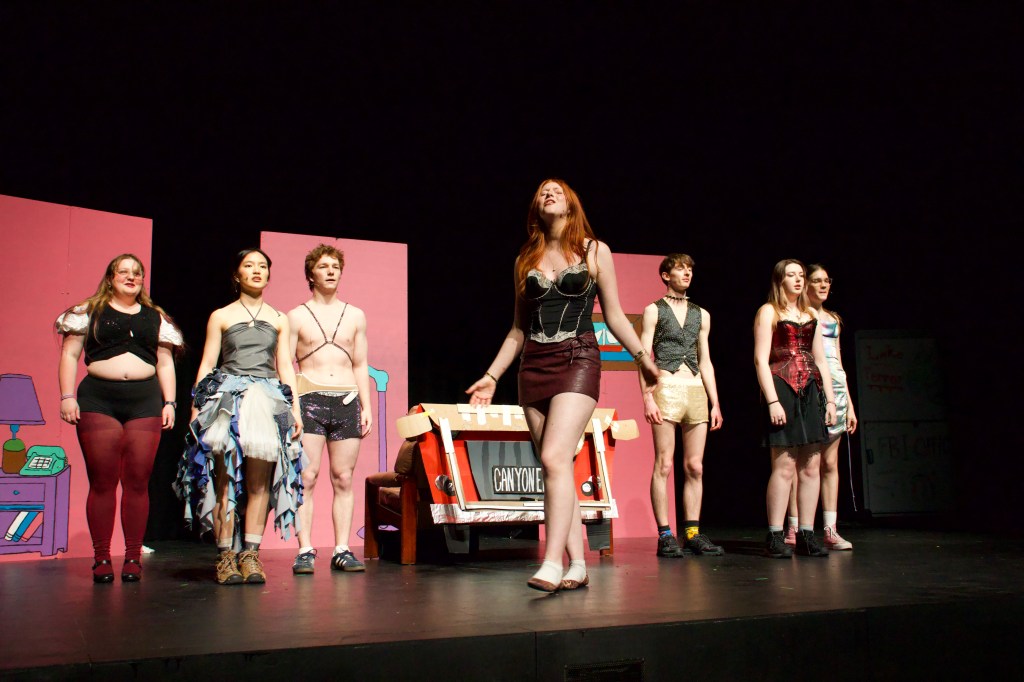
For the most part, the costumes are fantastically realistic with a touch of daring. Costume designer Lex Blockey perfectly captures the vibe of the first and third acts: apocalyptic survivors in camping-mode and a morphed fantastical society of Simpsons in togas. However, sandwiched in the middle of the timeline, the interpretation of the second act felt out of place. In a post-electric apocalyptic society, the newly formed Simpsons theatrical troupe has a very contemporary texture. On one hand, the 21st century costume with the bright pink set could have been an homage to better times, but this decision just didn’t feel like it belonged in the wider performance. If the society is progressively being altered, I wonder whether the set and costume could have reflected such a change.
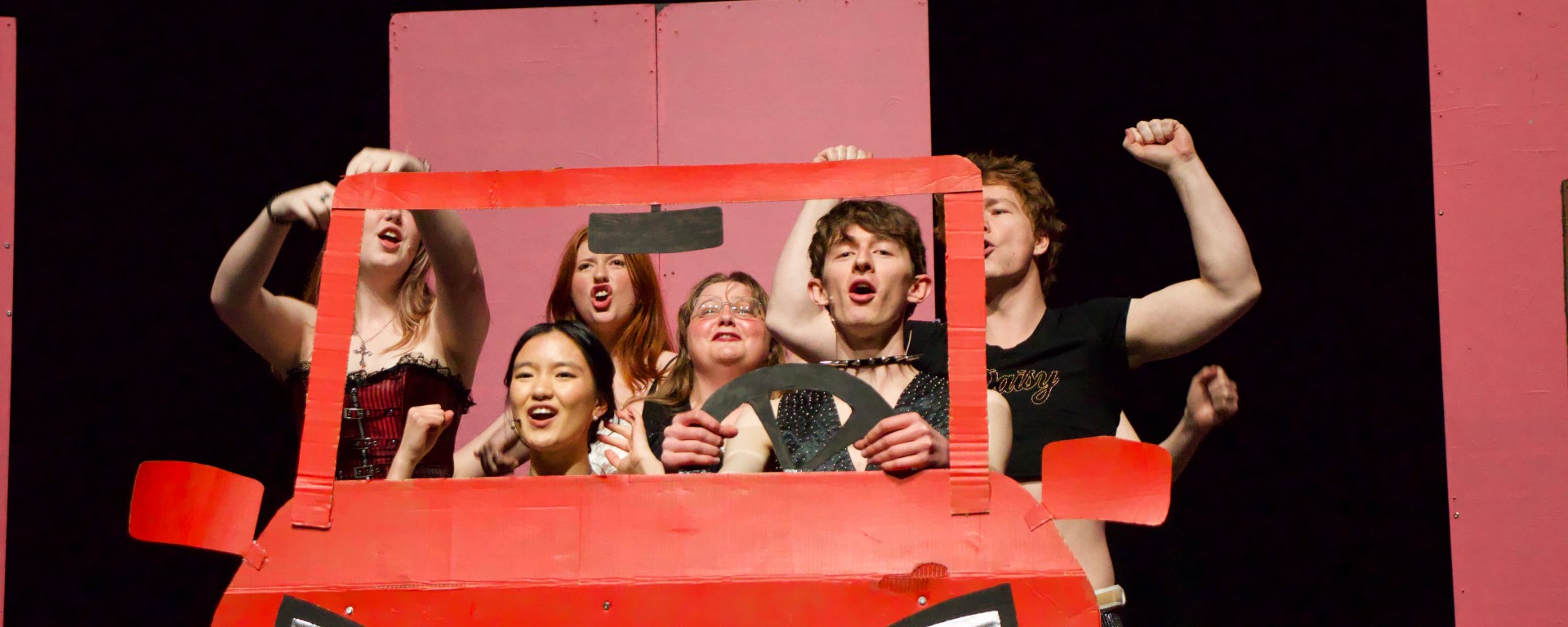
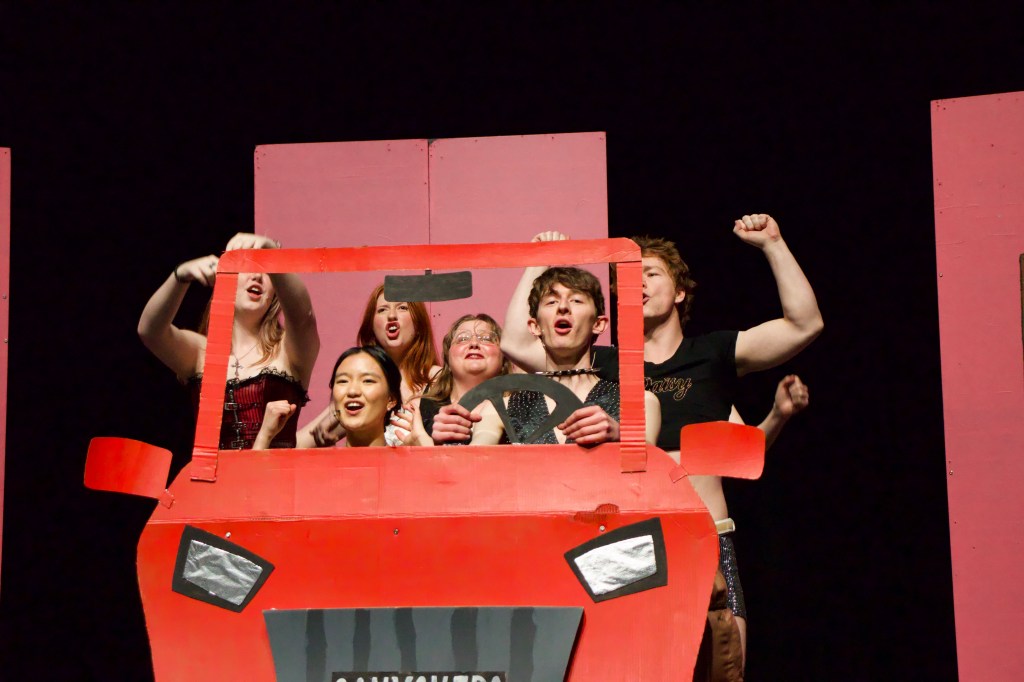
Despite this, the second act is the home of the most absurd acapella extravaganza I’ve ever witnessed. The whiplash from switching songs, the smiling shock at seeing corsets, chains and glittery short shorts left my jaw hanging open and my pen slipping through my fingers. After such a slow and careful beginning, to being bombarded by a chorus of voices that danced to the ‘Single Ladies’ choreography, no wonder the crew were building to such a blinding moment!
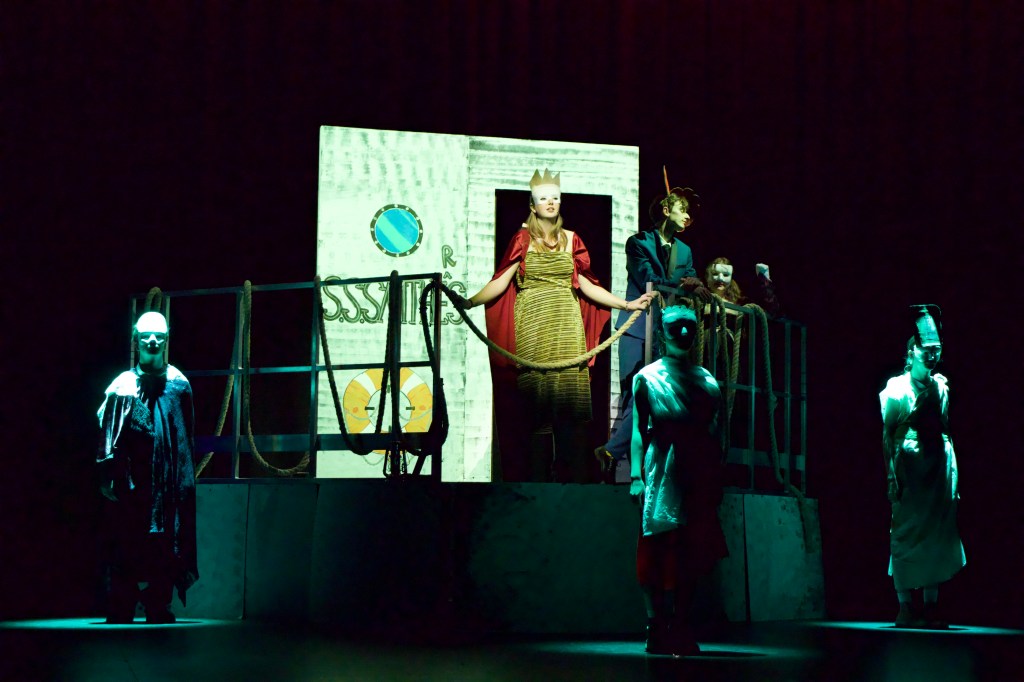
But this shock is nothing to the musical wonder of the final act. Arriving on stage after the intermission, the battle-cry ‘Hah’ bounds off the walls of the theatre with the accompaniment of the live piano and guitar. This is where the show is at its highest – revealing the masterpiece houseboat, flashing lights and the climax of Sideshow Bob’s evil trajectory. The lighting, designed by Ayahi Tanaka, broke through the dark theatre in a wave of slithering green and pulsating red, mirroring the moment of villainy to great effect. This was where the lighting really shone after a relatively simple set in the lead up, bringing to life the personification of myth from the previous acts through the creativity of the crew.
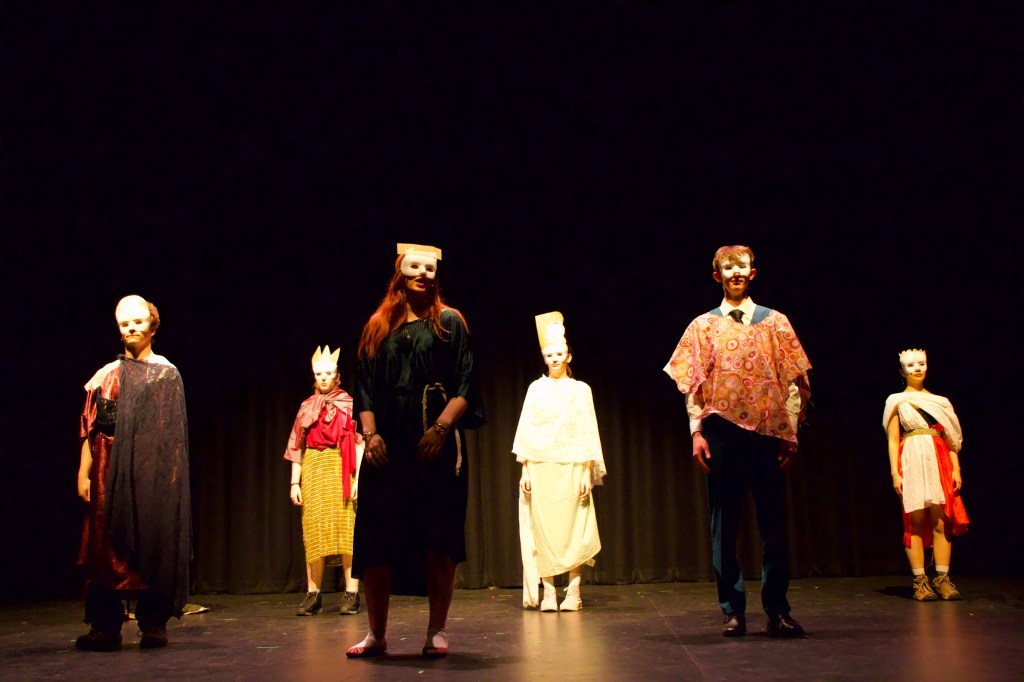
This third act was a standout moment for the actors’ voices! Accompanied by the duo of keys and guitar, the cast’s voices blended smoothly in a steadily growing rhythm. McColl’s consistent vibrato and clear tone cut the silence during her solos, cleverly weaving Bart’s hope through her voice in a way that reassures the audience despite the damning environment. Cael Chapman likewise shone here as an evil Mr Burns. In a rich tone with lovely complexity, Chapman elegantly integrated Sideshow Bob with Mr Burns, illuminating the social complexities of myth, story-telling and memory. This moment occurs in tandem with the somewhat terrifying masks worn by the cast and where this mutation is truly brought out. Truthfully, I was waiting for this moment of masquerading after my research into previous performances, and Blockley’s masks did not disappoint. Textured and personalised, characters were easily distinguishable and, most importantly, they cleverly concealed the actors from the audience. Nothing like a handmade mask to communicate the slow descent into dystopia!
But the most beautiful aspect of the show is the utter joy of the actors. The whooping and hollering during the bows were infectious, and the crowds’ congratulations fuelled everyone’s tired minds as they left the theatre with the haunting theme song lingering between us all. Little Hall Arts Society took on a huge project with Mr Burns and, despite some slow moments, they delivered a performance filled with sincerity and a chaotic absurdity that left the audience in a laughing heap.
Mr Burns: A post-electric play was presented by Little Hall Arts Society in the Union Theatre 3 – 5 September, 2026.
JESS PARKIN (she/her) is a second year Arts student, majoring in English and Theatre Studies and an aspiring editor. With a performance background, she is keen to turn her practical knowledge into engaging pieces for an even more engaged audience!
CHARLOTTE FRASER (she/her) is a writer, performer and editor based in Melbourne. She holds a BA in English and Theatre Studies and is currently completing her Masters degree at the University of Melbourne. Charlotte is also the 2026 Dialog Editor.
The Dialog is supported by Union House Theatre
 The Dialog