
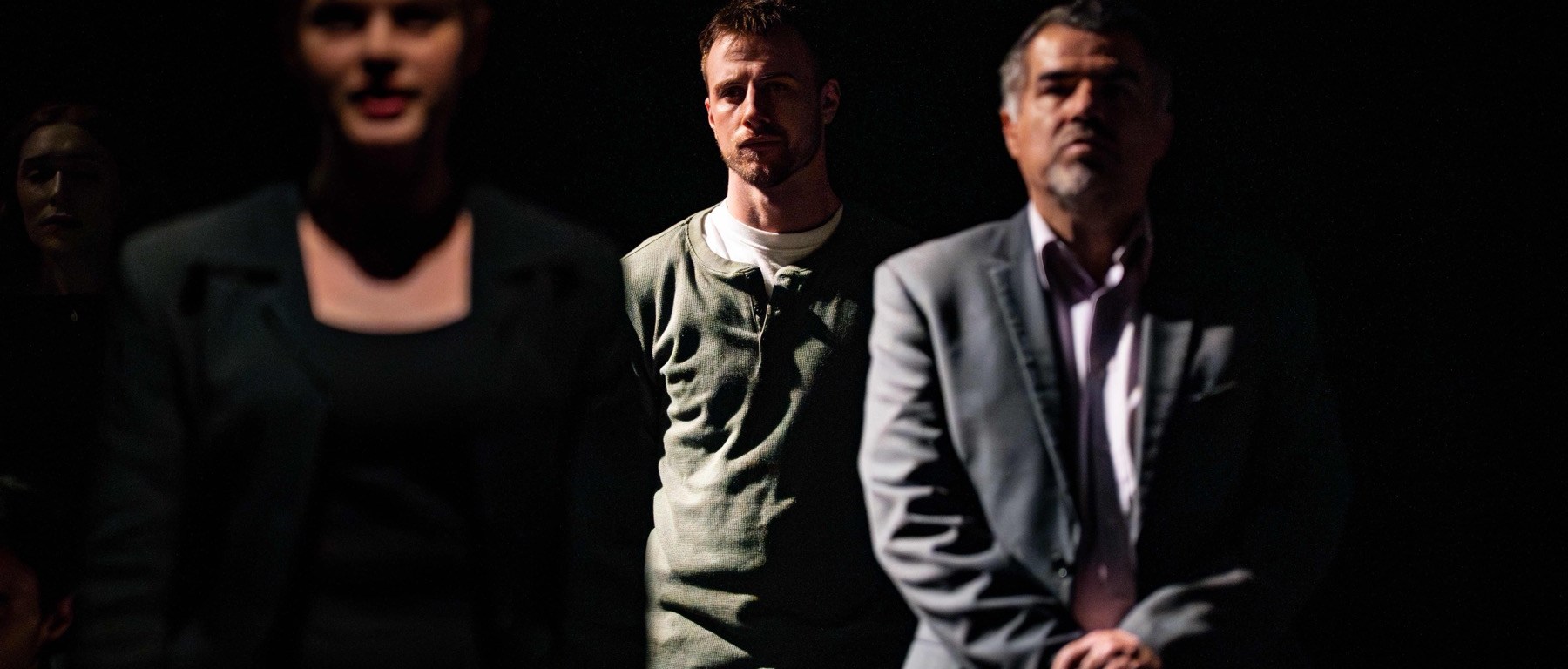
REVIEWED BY ELIJAH VALERY SLAVINSKIS
EDITED BY CHARLOTTE FRASER
Boasting a 100% on Rotten Tomatoes, 4.6/5 on Letterboxd and a 9/10 on IMDB 12 Angry Men (1957) is widely considered one of the greatest films of all time. It also happens to be one of my personal favourites, so when I caught wind of Asamina Theatre Company’s 12 Angry Actors I was tentatively excited. How great could a play really be when the gigantic presence of 12 Angry Men looms nearby?
To my most pleasant surprise 12 Angry Actors was nothing short of a brilliant work of independent theatre, and one of the best productions I’ve seen this year!
The titling of the show itself encompasses the success of this production. To invite direct comparison to one of the greatest pieces of performance art far before the audience sits and the lights goes down is incredibly gutsy. It’s even more exciting when this same ambition and unrelenting commitment manifests itself in Celine Khoury’s (and co-writer Brian Vriends’) smart, sharp and unrelenting script.
It is an understatement to say that I was shocked to hear that this was Khoury’s writing debut. The dialogue felt authentic and, for the most part, rooted in intense realism. I thoroughly enjoyed the opening few scenes in which light comedy and snappy small talk were used superbly to introduce us to this “local theatre troupe” and their upcoming Bridgerton-esque production. The inter-personal dramas within the cast are revealed too – Neville’s (Ali Samaei) crush on Audrey (Claire Warrilow), Kay (Celine Khoury) and Ted’s (Alexander Given) dating history, and the marriage between Justin (Jacob Saunders) and Dimity (Joanna Karanikolopoulos).
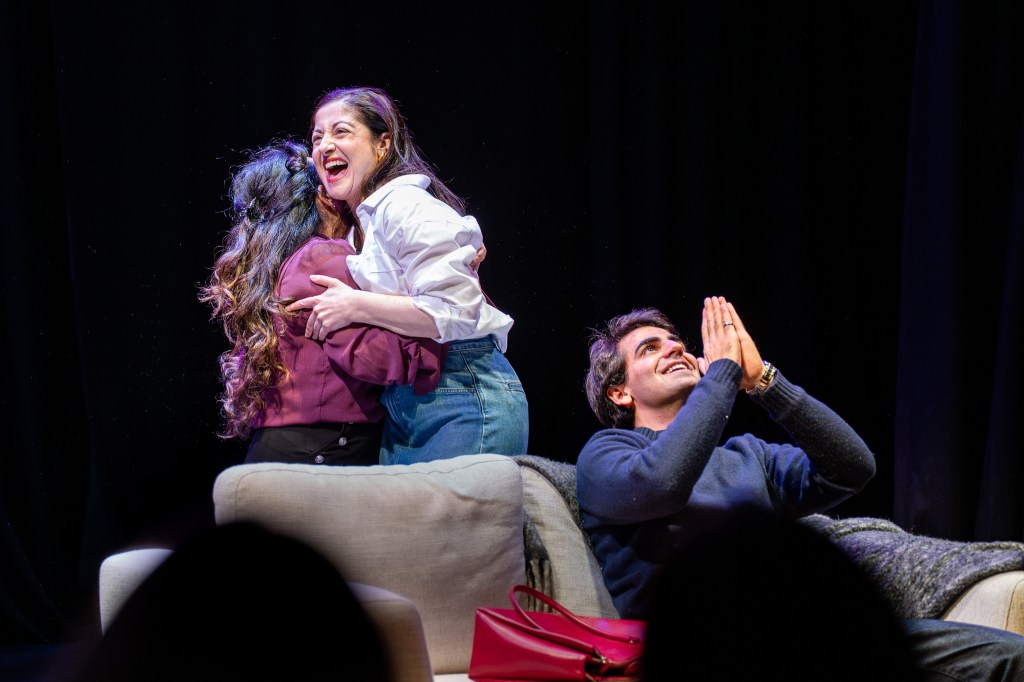
A comedic highlight was ex-lovers Ted and Kay rehearsing what director Danni (Kathy Richer) wants to be a particularly intimate and steamy scene. Ending the moment nose-to-nose, Danni loudly remarks that they must take a photo of this position for the marketing. In the lengthy time it takes for her to run to the office and grab the camera, we get an almost voyeuristic peak into Ted and Kay’s bickers and banters – snappy lines of dialogue that roll of the actor’s tongues so well it felt almost improvised. When asked how he got his Scottish accent so perfect, Ted replies that he’s “been watching the classics, like Shrek,” perfectly encapsulating the happy-go-lucky energy of the first 15 or so minutes.
The tone shifts and the narrative falls into gear when producer Cecilia (Ursula Searle) phones Kay, a criminal-defense lawyer by day, informing her that 20 years ago one of the cast members was convicted of manslaughter for killing his wife and asks if there’s anything the company needs to do legally at this point in time. Kay answers that there’s nothing to do from a legal perspective, but ethically there could be complications raising interesting provocations around company disclosure and duty. From here the first act narrows in on long, back and forth, two-hander scenes between Kay and Ted where they wrestle not only with the future of their romantic connection but also their ideological differences and distinct reactions to this ‘scandal’.
Through Kay, the audience is introduced to the side of forgiveness and second chances. I think it’s important to note that for the first act, Kay is essentially the avatar for the audience within the world of the play. The script stresses the validity of Kay’s arguments, perhaps nudging us towards her side of the dilemma even before the most explosive debates take place when the entire troupe find out what has happened in Act 2. Kay in this play is representative for Juror #3 in 12 Angry Men.
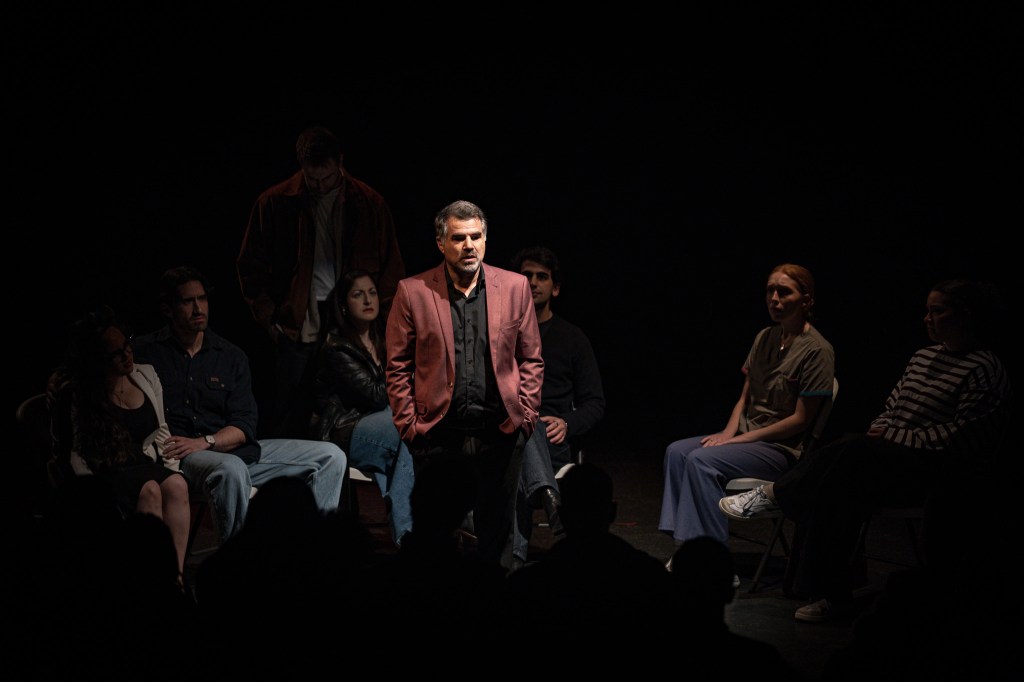
A key moment occurs during a discussion between Kay and Ted on the effect of silence. When asked why she finds the quiet so confronting, Kay steps into a spotlight downstage to deliver a monologue delving deep into her burden as a criminal defence lawyer. Celine’s performance here captures the ache deep in Kay’s heart, emphasising her fear that by trusting in the legal process she herself is part of the danger. She believes that punishment should end as the criminal’s sentence ends – that there should be no further social punishment. Yet she worries that her faith in this legal system leaves the world vulnerable to dangerous individuals who may have not been successfully deterred from acting in criminal manners once again. I was incredibly taken by the authenticity of the speech – my mother being an ex-criminal lawyer herself having expressed very similar feelings.
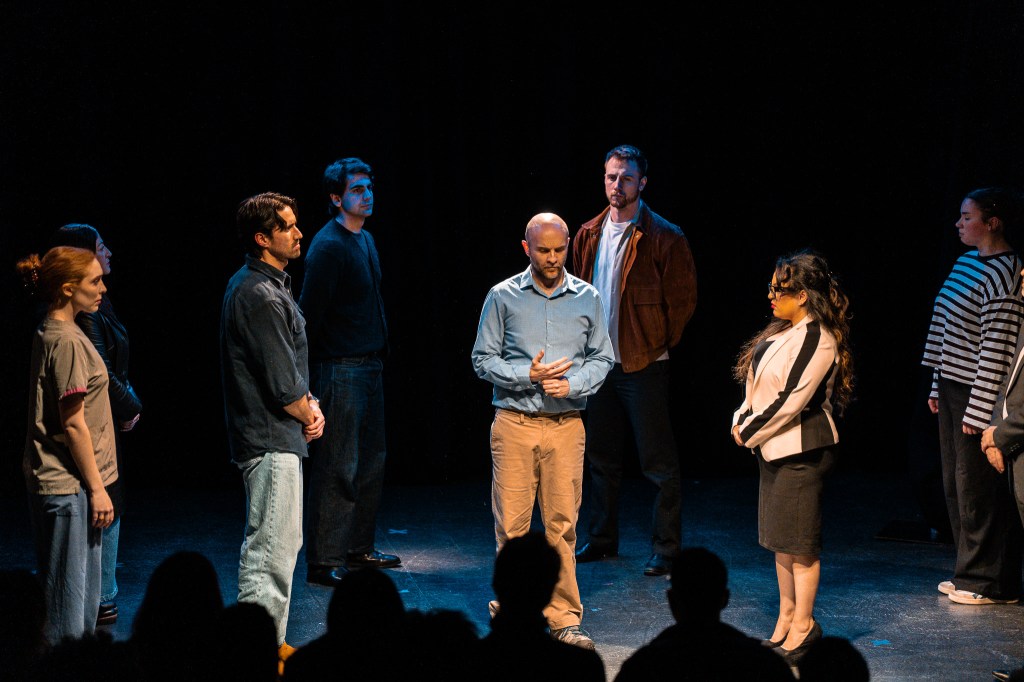
However, I question the effectiveness of the staging choice here. Throughout the play, each character gets a literal ‘moment in the spotlight’, stepping forward and providing the audience with a glimpse into their inner psyche and motivations. Although undeniably well-written, many of these asides felt repetitive of moments that had come before, or scenes that would delve into these characters later. With Khoury and Vriends showing such a knack for strong dialogue throughout, I doubt there was anything said in these monologues that couldn’t have been explored within the natural world of a scene.
The opening act ends with Cecilia announcing to the cast that they must take a vote on whether or not Matthew (Monty Burgess), the cast member revealed to have a criminal background, should be permitted to remain in the production. Just like 12 Angry Men, the vote must be unanimous.
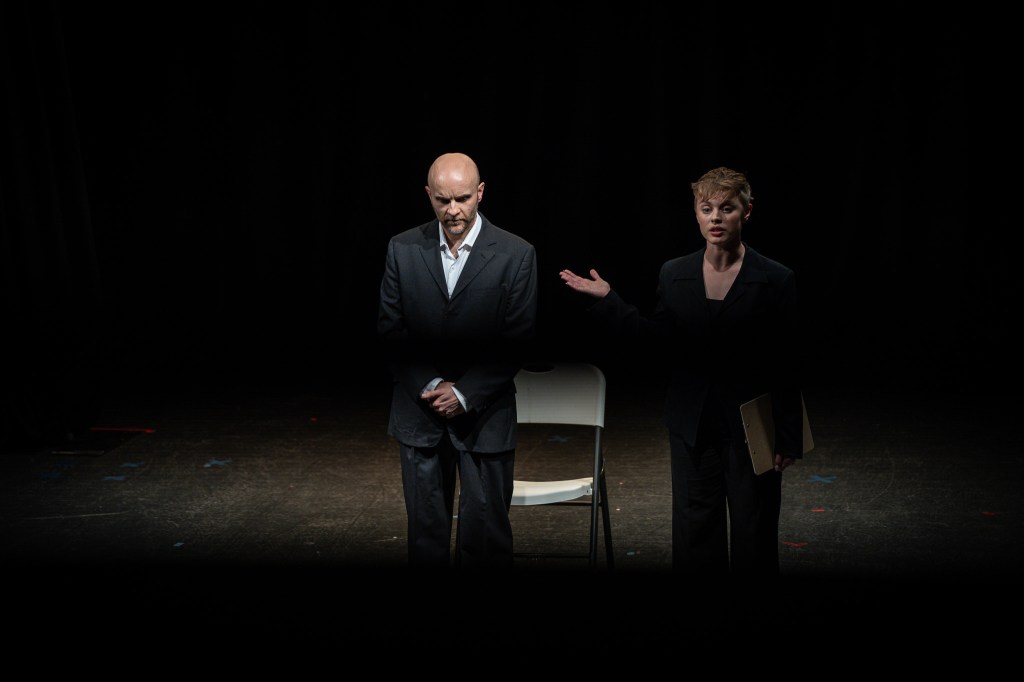
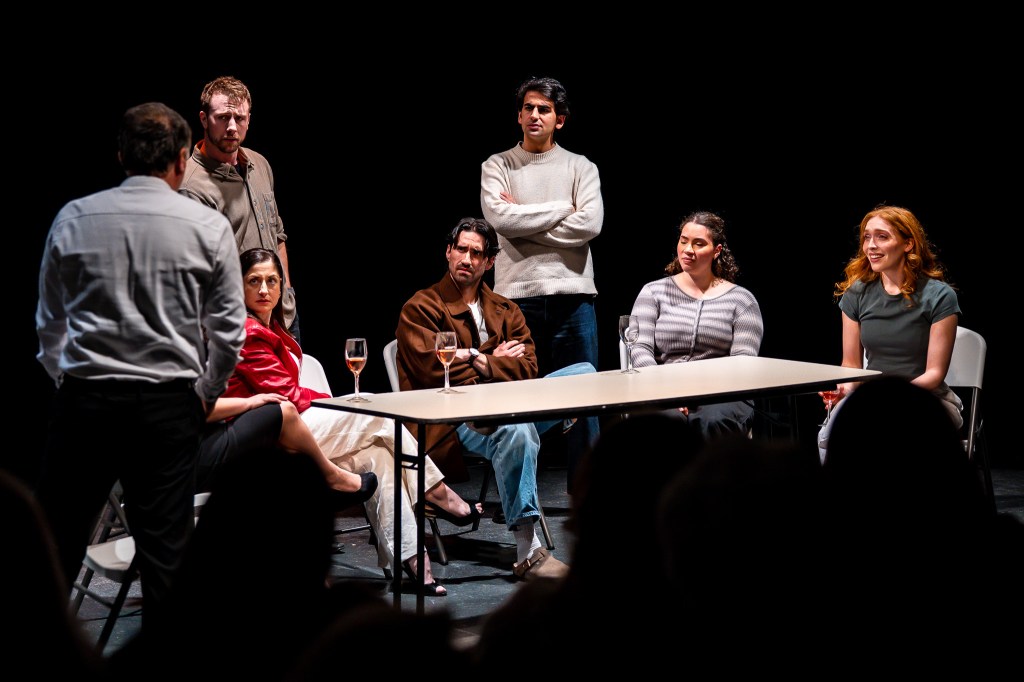
The production hits its stylistic peak at the beginning of Act 2 with a collection of truly riveting scenes sucking the audience into this group riddled with moral disagreements and their own prejudices. While 12 Angry Men sees a group forced to confront their prejudices about a social issue they are inherently removed from, 12 Angry Actors makes it personal. Ted and the youngest member of the troupe, Mary (Esther B Ebony), have a family history of domestic abuse and are understandably uncomfortable taking to the stage with a man who, unintentionally or not, murdered his wife. Neville and Thomas (Faouzi Daghistani) come from a cultural background where male aggression is normalised forcing them to confront their prejudices against their own culture. Finally, Audrey has witnessed women from violent homes come through her hospital on countless occasions.
The first cast meeting is a cauldron with arguments exploding left, right and centre. The acting all-round was amazing, particularly each performers ability to switch from passive to active. The directorial choice (Bethany Griffiths / Glen Kalem-Habib) for the background actors to keep talking while the scripted dialogue occurs in the foreground had a powerful auditory impact again adding to the overwhelming realism fostered in most scenes. Claire Warrillow as Audrey in particular gave a quiet, restrained yet incredibly effective performance.
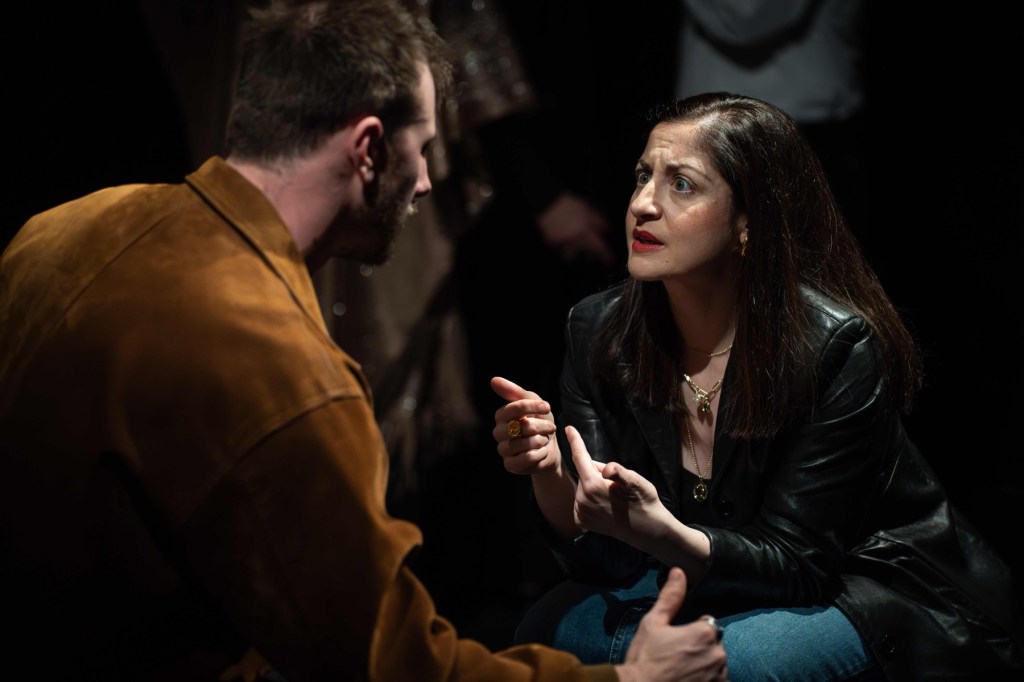
For me, the standout moment of the entire play offered a sense of relief from the explosive emotion that characterises much of the second act. In this scene, Cecillia brings Matthew a coffee and a cannoli and sits with him before rehearsal. As they eat, Cecillia asks Matthew if he is religious. He tells her that he wasn’t for a long time, that his father was a minister and that he wanted to run as far away from it all as possible, but in prison he spent more time with his spirituality. The scene’s writing and direction are nuanced and natural, with lines of dialogue delayed as Matthew and Cecillia take bites from their cannoli. It’s a refreshing moment of pure human connection to contrast the rising anger in much of the troupe.
Ultimately, Matthew is allowed to perform. However, 12 Angry Actors is not finished with you yet. The final scene has Cecillia directly address the audience as “our 12th actor” and asks them to consider whether they would give Matthew the chance to perform before literally asking us to vote via QR codes below our seats. The play ends with the reading of the results of the audience vote and while I often love audience interaction I found this ending to be unavoidably tacky and severe thematic overkill. My friend who accompanied me to see the play asked me during the intermission “if you were one of the actors, would you let Matthew perform?” Thus, it was very clear in the script and through the blocking (the ensemble would physically turn face-on to the audience) that the play was ‘asking’ the audience what they would do. It felt unfaithful to the earlier subtle moments of the production and utterly unnecessary to make this provocation so literal.
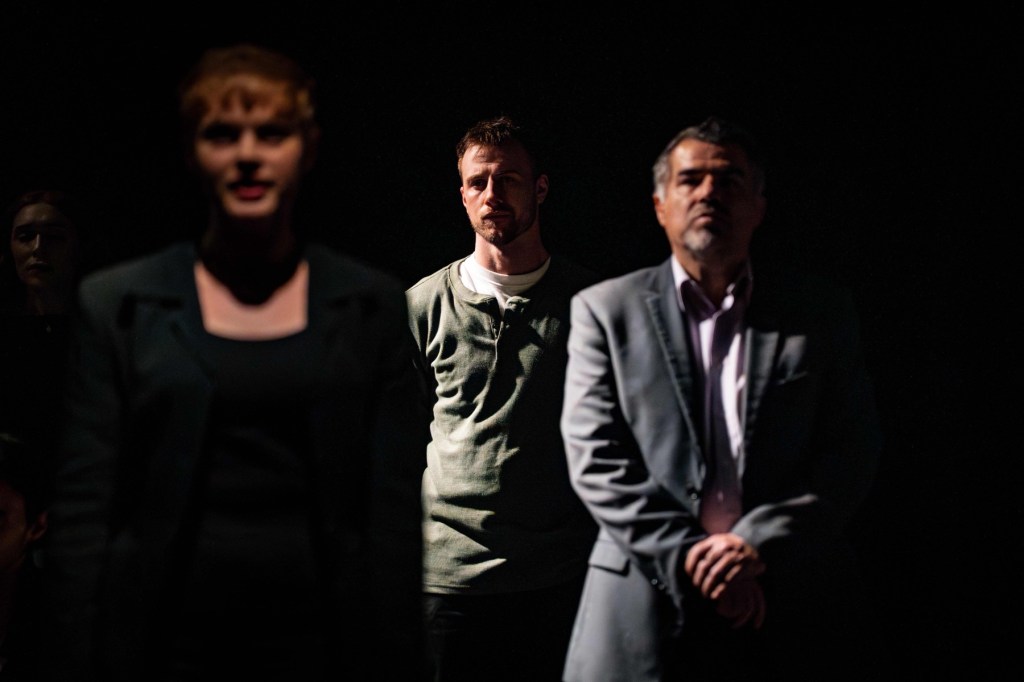
I have sung my praises for this script however the writers could learn to trust their audience a little more. I would like the writers to know that their audience is smart enough to understand their thematic concerns and the motivations of the characters without constant repetition.
Nevertheless, 12 Angry Actors delivers in pretty much every department. Juggling universal moral dilemmas with personal dramas, and of course the ever-looming presence of an impending opening night Asamina Theatre Company presents a deliciously difficult work that will stay with me for a long time.
12 Angry Actors by Asamina Theatre Company played at the Meat Market Stables 20 – 30 August, 2026
ELIJAH VALERY SLAVINSKIS is a first year arts student, looking to major in Screen Studies and/or Art History. After being on stage a lot as a child, he is keen to explore opportunities behind the scenes and in the audience, like writing for The Dialog!
CHARLOTTE FRASER (she/her) is a writer, performer and editor based in Melbourne. She holds a BA in English and Theatre Studies and is currently completing her Masters degree at the University of Melbourne. Charlotte is also the 2026 Dialog Editor.
The Dialog is supported by Union House Theatre
 The Dialog