
REVIEWED BY MIA SUTHERLAND
EDITED BY CHARLOTTE FRASER
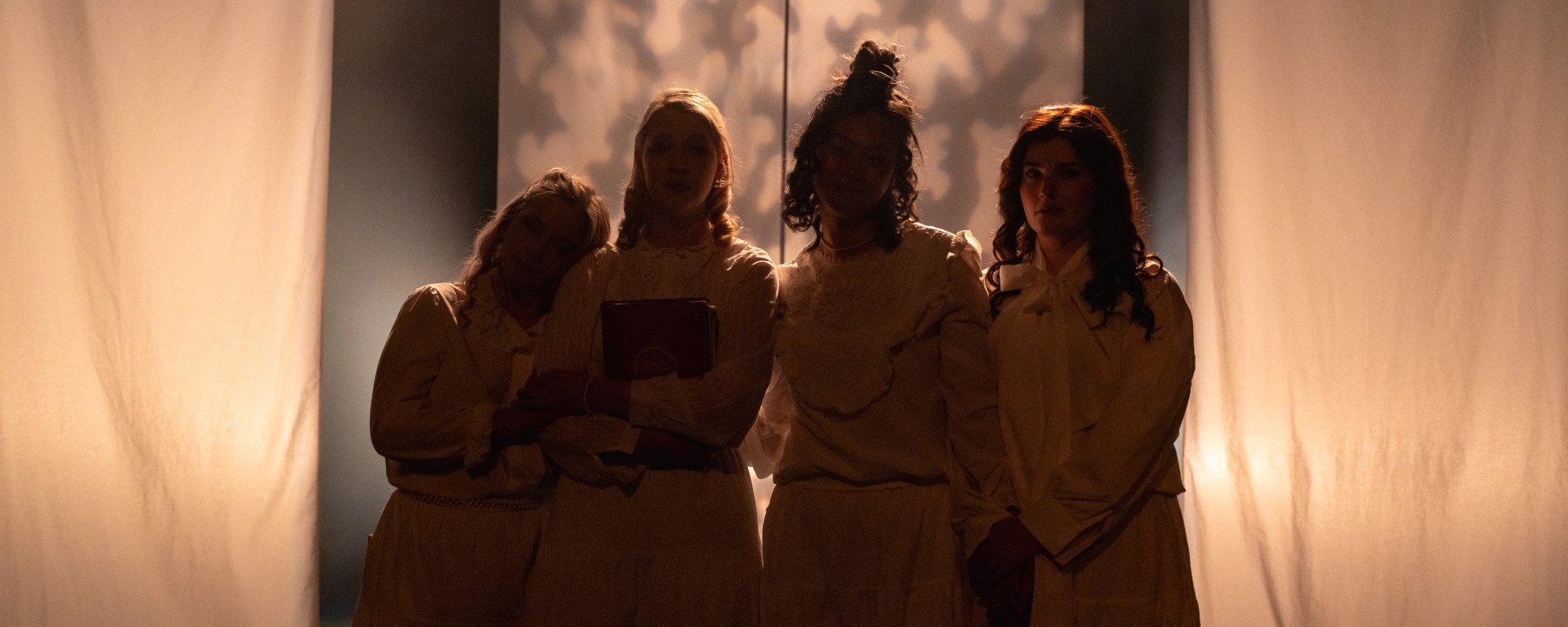
Fairytalers, written by Ellis Austin Finnie and performed at Theatre Works Explosives Factory is a play centring on four relatively unknown women who present themselves as the original writers of fairytales. These unknown historical figures become entrenched in your mind as their stories (both their personal life stories and the fiction they wrote) are told to you, by them. This spectacular play was a powerful exploration of feminism.
The small space at the Explosives Factory was utilised very effectively by set designer Fiona Macdonald to create the world of the play, with a chest in the centre with letters, books and travel cases scattered around its perimeter. The play opened with each woman walking into the space one by one holding a suitcase, meeting each other around the chest. Looking at a computer, they see that the memory of them and their achievements have been forgotten 300 years into the future. We are then introduced to the names of each of the women as they argue over who has the most information written about them on Wikipedia. These 18th-century French novelists in ghost form are Marie-Catherine (Catherine) Le Jumel de Barneville, Marie-Jeanne (Marie) L’Héritier de Villandon, Henriette-Julie (Henriette) de Murat and Charlotte-Rose (Charlotte) de Caumont de La Force.
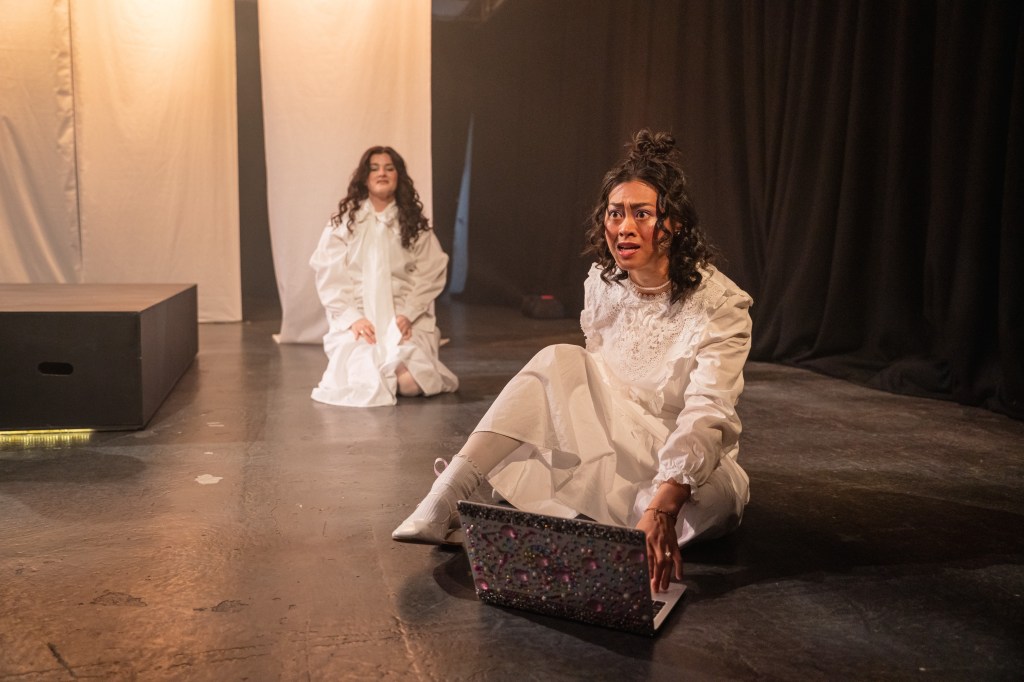
Austin Finnie’s writing was incredible. The dialogue was engaging, modern, snappy and hilarious all whilst keeping to the emotion of the play’s message. Modern references throughout the play included the women watching Married at First Sight and saying that they can relate to it due to their respective arranged marriages, breaking into song “Living La Vida Loca” opera style, rapping and, at one point, a character returned to stage with everyone’s coffee orders! Austin Finnie was able to construct four characters that were distinct from each other in their personalities but were all strong, independent and genuine people you would want to have a conversation with in real life.
The connection the audience felt with the four women was due to the direct interaction with the audience. The audience were acknowledged as a group of lost souls who had wandered into the women’s “corner of the abyss” and multiple times characters spoke directly to audience members in the front row, even getting two of them to dance on stage with them! We felt a part of the story – we were not just watching this play or listening to biographies of four unknown women, we were part of the conversation. The audience and the stage felt like one space, and we were not divided by a fourth wall by any means. This is credit to both Austin Finnie’s writing and Gabrielle Ward’s direction, this effect making the message the women were conveying even more powerful.
The play was quite structured with each women’s life story and a piece of literary work told to the audience one by one. Although at times the life stories and even the occasional fairytale did feel dragged out and could have been culled in length, it was important to the story and for the audience to learn about these ‘forgotten’ women in detail. The way in which the fairytales were reenacted was a highlight of the piece. Powerfully combining lighting design by Ashleigh Basham and Justin Heaton along with Fiona Macdonald’s set design, it felt like you were leaving the theatre space and were being transported into a storybook world. The first fairytale was told using pop-out books and a flashlight onto a white sheet for simple yet engaging projection of key elements of the story. For the other stories, some of the seemingly unimportant cases that were positioned upstage are placed on the centre chest and were opened to reveal dolls and fairy lights that made up the landscape of the storyworld.
Catherine (Ellie Carroll) is the first woman whose personal story and a piece of literary work is told. Catherine is portrayed as a strong leader and was the person to coin the term ‘fairytale’, so it makes sense that it is hers that is showcased first. As her story is told, she becomes increasingly vulnerable. That is not to say that Carroll did not make me laugh in this comedy piece – a highlight was her mimicking an evil witch when they reenacted Charlotte’s (Daisy Valerio) fairytale, Persinette. Also, comedic modern elements evident during the reenactment of Catherine’s wedding day (at age 15!) included the other three women wearing bright pink “team bride” beauty pageant-like sashes.
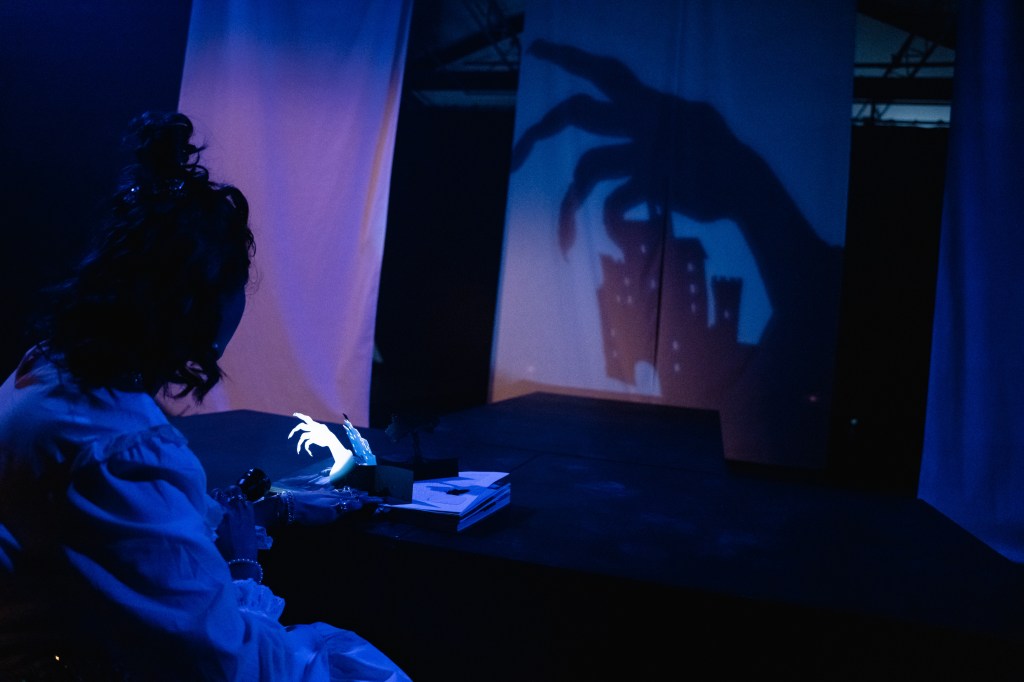
Some of the literary stories told are not considered the respective women’s most famous works, but they were chosen because of what they meant to the writers. This was powerful when learning about the story and its key messages, many of which related to the women’s personal lives. For example, the stories which referenced a princess locked in a tower related to the women’s experiences being locked up in a literal prison themselves as Charlotte was locked away after being accused of being a witch.
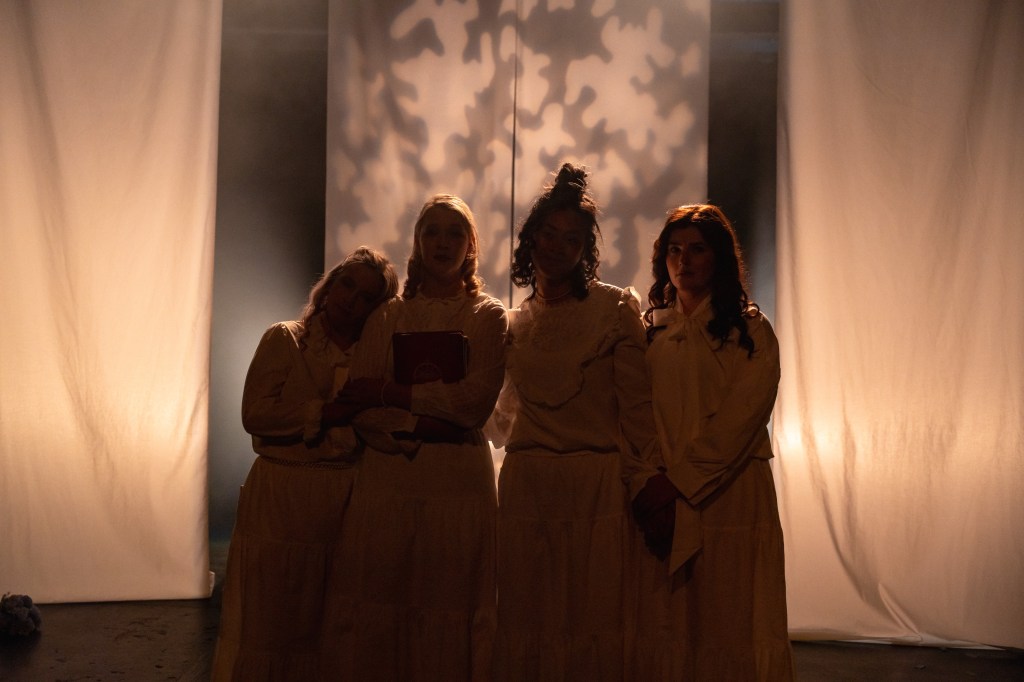
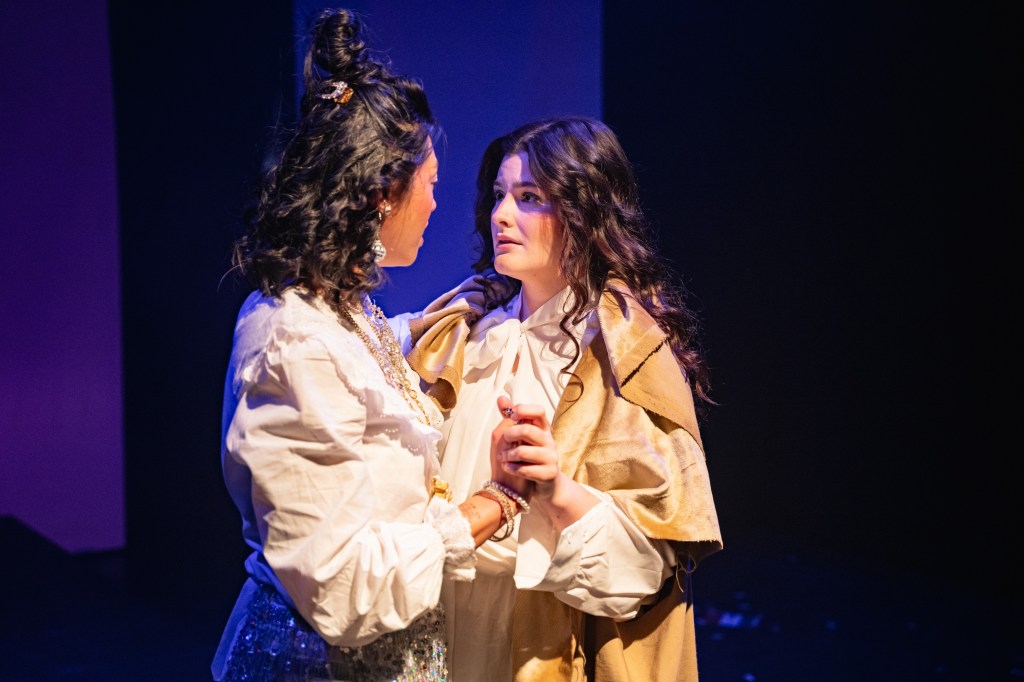
The character’s costumes, also designed by Fiona Macdonald, were simple yet extremely effective. All women were wearing a slightly different white dress or top and skirt. The white costumes were period-themed and possibly could have symbolised blank pages on which to interpret and write the story of the women being told. The hair and makeup of the characters had modern touches such as Henriette’s (Olivia Morison) bright green eye shadow or Marie’s (Grace Gemmell) butterfly hairclip and sequins on her dress. This white palette was also effective when recreating the fairytales and historical moments as they placed other objects and clothing on top to transform them into other people.
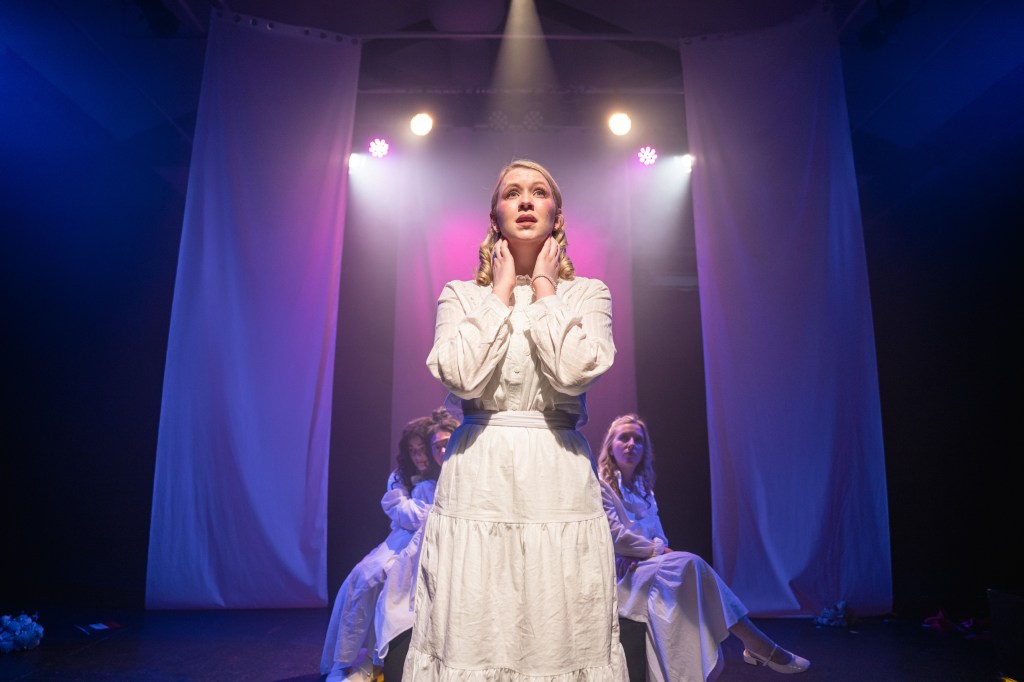
The scandals of the women’s lives were also explored, such as Henriette being trialled in court and then having to live the rest of her life in exile. Morison’s performance as Henriette was a standout. Morison’s portrayal was hilarious, providing more fun and joy to the already comedic piece. But her ability to become incredibly vulnerable and anxious as she tried to regain connection with Marie (Gemmell) and tried to voice her true feelings for her was incredibly moving. When she told her piece of literary work, The Palace of Revenge, it acted as microcosm for the main themes of the piece and Henriette’s personal life as the two lovers in the story could not be together due to larger forces at play. In fact, that was the feeling I had when watching this play: the many systemic issues women face, though they may have changed form slightly, are still apparent today. The anger these women felt because they could not be with who they truly loved or had no independence or the way male writers, like the Brothers Grimm, became more famous with their similar stories because they were men cemented a strong feminist message in the play, which I loved!
One of the central aspects of the piece was that the women had been forgotten to history and multiple stories of theirs had been adapted by the famous Brothers Grimm (to which the women say “f*** them!”). Charlotte’s (Valerio) piece, Persinette, is the ‘original’ version of the Brothers Grimm’s Rapunzel, although slightly darker. In fact, something I noticed was the level of darkness and sadness in these fairytales that was more than any ‘classic’ by the Brothers Grimm and one can only assume it is due to the painful, raw experiences these real women experienced in their lives and then put into their writing. Valerio’s performance as Charlotte was spectacular and the climactic argument toward the end of the play where she lets out her anguish, rage and heartbreak after refusing to tell the happy ending of her story, instead ending before the happy ending, like the way her real life did.
The play concluded with a discussion of legacy. This was a strong and powerful way to conclude the piece that was heavy with messages and historical information. It made the audience begin to question our beliefs about legacy. What is it and just because your name is not remembered, it does not mean you did not make a difference or that you did not matter. From beginning the play with obsession over the length of one’s Wikipedia page, the ending showed that the women were accepting the real importance of legacy and the impact they made on the world, making you leave there feeling content in your own being and legacy you may give, that although it may not be through Wikipedia fame or famous stories, it can be through other things like your children. For these ‘forgotten’ women of history, I can confidently say that through this play and its embodiment of four distinctly strong independent women with many lives, stories and lovers, I will remember their names.
Walking out of the theatre, I felt a combination of sadness, rage and empowerment but one of the best things to come out of the play is that I felt inspired by these feminists: Catherine, Marie, Henriette and Charlotte.
Fairytalers was presented at Theatre Works Explosives Factory 29 Sep – 3 Oct 2026 as part of the Melbourne Fringe Festival
MIA SUTHERLAND is studying a Bachelor of Arts and Diploma of Languages (Indonesian) at the University of Melbourne. She has always had a passion for theatre and is in her first year reviewing for The Dialog.
CHARLOTTE FRASER (she/her) is a writer, performer and editor based in Melbourne. She holds a BA in English and Theatre Studies and is currently completing her Masters degree at the University of Melbourne. Charlotte is also the 2026 Dialog Editor.
The Dialog is supported by Union House Theatre

