
REVIEWED BY KAASHVI JAIN
EDITED BY CHARLOTTE FRASER
Content warning: this review discusses sexual assault, sexual violence, victim-blaming and gore
There are some stories that are difficult to tell, others that are difficult to hear, and then there are stories that demand we do both. PIGSKIN is one of them. In a world where survivors of sexual assault are still questioned, dismissed and made to defend their experiences, this production arrives as an urgent reminder of the importance of listening. Raw, confronting and deeply moving, PIGSKIN is not simply a performance about trauma. It is about the struggle to reclaim your identity, your autonomy and, perhaps most importantly, your voice.
Created and performed by Lana Rosalea and directed by Cosima Gilbert, PIGSKIN follows Roe, a survivor of sexual assault whose life takes a grotesque turn when they begin transforming into a pig. Their nose grows crooked, their body deteriorates and their sense of self becomes increasingly disconnected from the person they once knew. Through physical theatre, immersive audio and audience interaction, the production explores the psychological aftermath of sexual violence, particularly shame, dissociation and the exhausting process of attempting to return to normality.
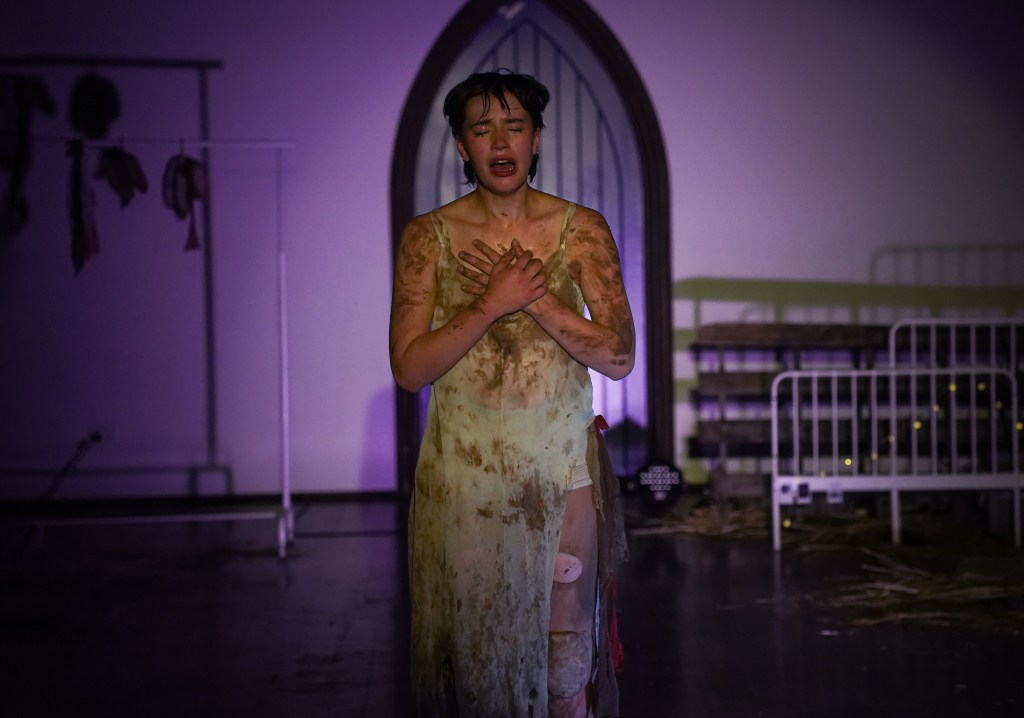
What makes PIGSKIN particularly effective is how quickly it establishes a connection with its audience. From the beginning, the use of headphones creates an intimate experience, making the audience feel closely involved in Roe’s story. Instructions to close their eyes and clench their hands introduce a physical element to the storytelling. These seemingly simple actions immediately establish the production’s central concern with the body, control and vulnerability. Rather than allowing the audience to remain passive observers, the performance asks them to participate in the experience.
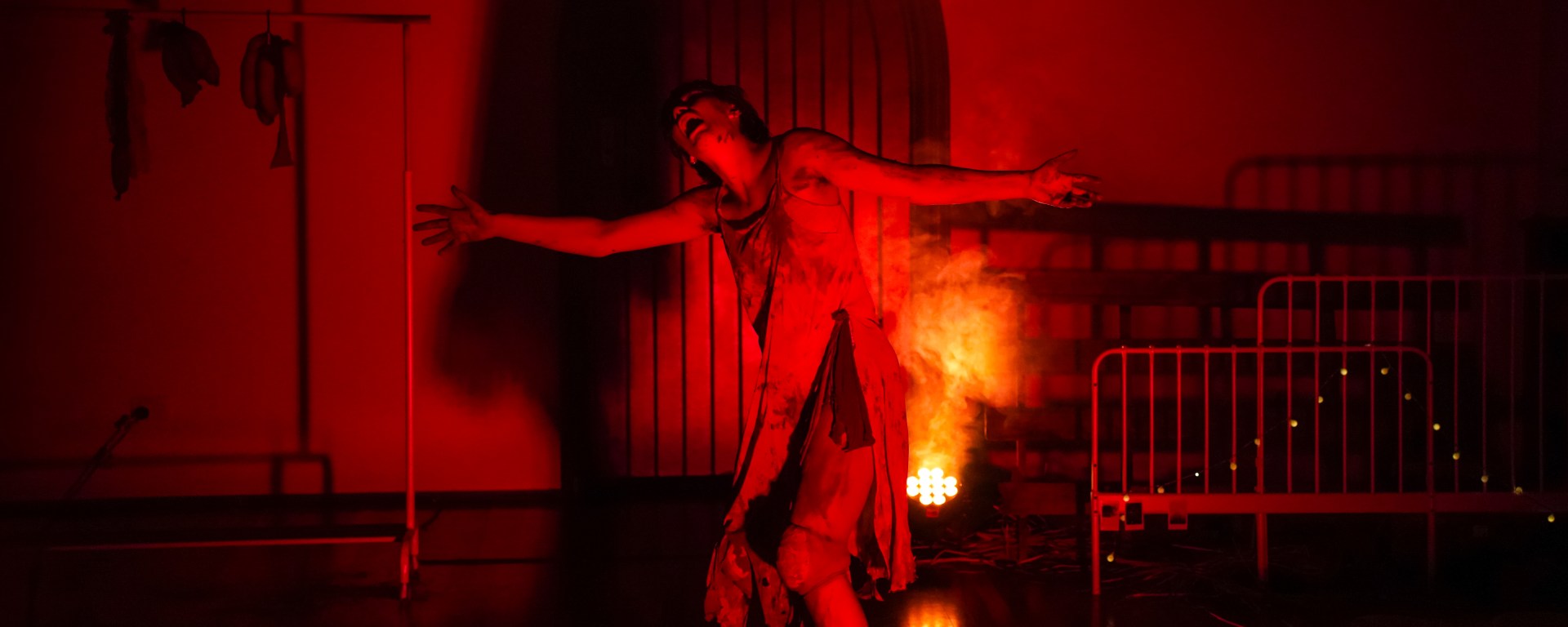
Rosalea delivers a phenomenal performance, carrying the emotional and physical demands of this one-person production with remarkable conviction. Their movements are especially striking, communicating emotions that dialogue alone could never fully express. The transformation into a pig becomes more than a grotesque theatrical image; it represents the shame and alienation that can follow an experience of sexual violence. Working with movement choreographer Matias Nuñez, Rosalea creates a physical language that makes Roe’s internal struggles visible. Every movement feels connected to the character’s emotional journey, demonstrating the power of physical theatre to communicate what words sometimes cannot.
Gilbert’s direction is equally impressive. There is a clear understanding of how to use the performance space to strengthen the narrative, with movement, sound and lighting working together rather than competing for attention. The production’s transitions between intimate reflection and moments of heightened distress are particularly effective. There is something deeply compelling about the way the performance shifts between the surreal and the painfully familiar, allowing Roe’s transformation to exist alongside experiences that feel uncomfortably recognisable.
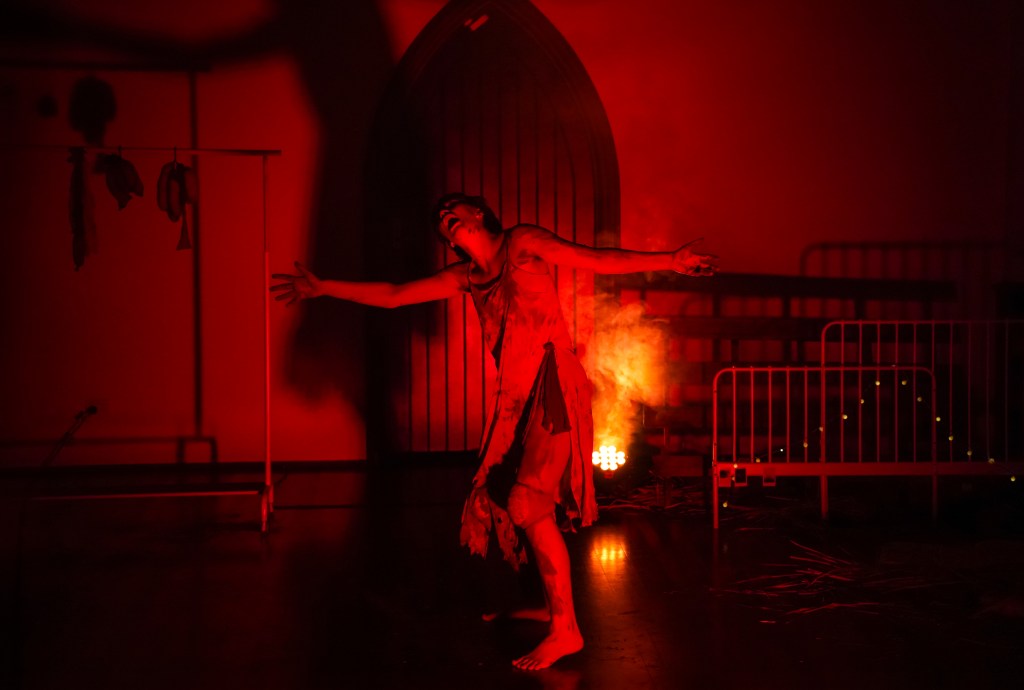
The technical design plays an essential role in establishing this atmosphere. Alex Fimeri’s sound design, supported by assistant sound designer Brynn Jacka, adds another dimension to the production. Through the headphones, sound becomes an integral part of the storytelling rather than simply an accompaniment. It draws the audience further into Roe’s experiences and strengthens the emotional impact of the dialogue. Stuti Ghosh’s lighting design is similarly effective, transforming the atmosphere of the performance space and emphasising shifts in the narrative. One particularly memorable moment involving a red lamp brings a striking sense of reality to the otherwise surreal world. Kate Carrington’s set design ties these elements together, creating an environment that supports the production’s physical and emotional storytelling.
However, some of the most powerful moments in PIGSKIN come from its writing. The script, developed with dramaturgy by Oliver Ayres, confronts the language frequently directed towards survivors. Questions such as “Are you sure you’re not being overdramatic?” and suggestions that someone should have been more careful reveal how easily responsibility is shifted away from perpetrators and onto those who have experienced harm. These moments are particularly effective because of how ordinary the language sounds. The production demonstrates that dismissive responses do not always arrive as dramatic confrontations; sometimes they appear in everyday conversations, disguised as concern or reasonable doubt.
One of the most confronting sequences involves a conversation with the police. Hearing Roe’s experience questioned through discussions of evidence and their communication with the perpetrator after the incident is genuinely infuriating. The scene highlights the additional emotional burden placed on survivors who must repeatedly explain and justify their experiences while seeking support. It is a powerful reminder that the aftermath of sexual assault extends far beyond the incident itself, particularly when the systems intended to provide protection become another source of distress.
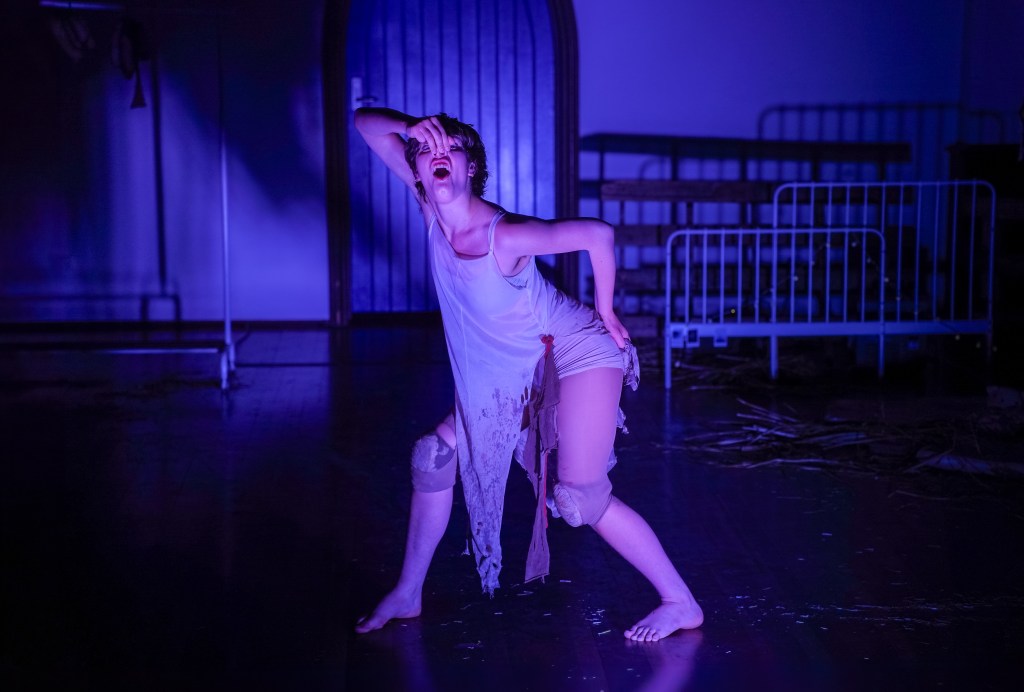
Watching PIGSKIN amid contemporary conversations about sexual violence makes its message feel especially urgent. The production challenges the assumption that there is a correct way to behave after experiencing trauma. It acknowledges that survivors may attempt to continue their everyday lives, communicate with people connected to their experiences or struggle to articulate what happened. None of these responses should automatically undermine the seriousness of their experiences.
Perhaps the most memorable line of the performance is the simple declaration, “I am not a liar.” It is devastating precisely because of its simplicity. After everything Roe has experienced, the need to defend the truth of their own story becomes one of the production’s most heartbreaking realities. It is a line that stays with you long after the performance ends.
Importantly, PIGSKIN does not focus solely on suffering. By incorporating information about support resources into its script, the production extends its message beyond the theatre. It acknowledges the importance of seeking help and reminds audiences that survivors deserve support, understanding and the opportunity to reclaim their lives.
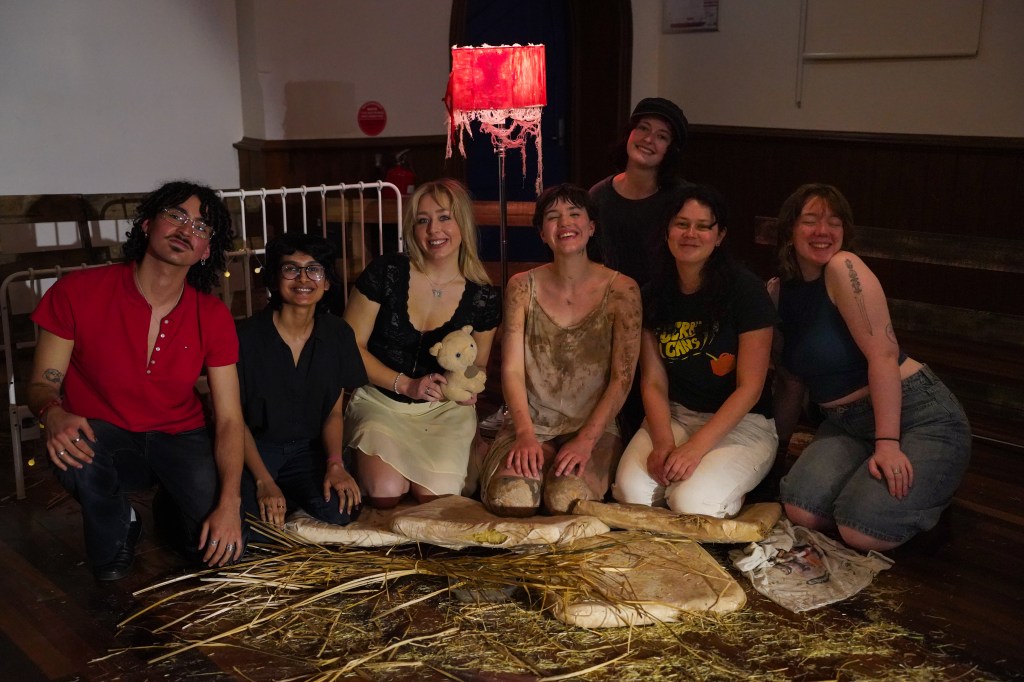
PIGSKIN is a beautifully crafted and deeply necessary piece of theatre. Through Rosalea’s extraordinary performance and the thoughtful collaboration of its creative team, it transforms a difficult subject into an intimate and unforgettable experience. It does not pretend that healing is simple or that life returns to what it once was. Instead, it recognises the difficulty of surviving, rebuilding and learning to exist beyond trauma.
Above all, PIGSKIN reminds us that survivors should never have to fight so hard simply to be believed. Their stories deserve to be heard, their experiences deserve to be acknowledged, and their voices deserve to take up space.
PIGSKIN played at Bluestone Church Arts Space 7 – 10th of October 2026 as part of the Melbourne Fringe Festival.
KAASHVI JAIN is a third-year Bachelor of Arts student at the University of Melbourne, majoring in Psychology and Media & Communications. She enjoys theatre, film and arts writing.
CHARLOTTE FRASER (she/her) is a writer, performer and student editor based in Melbourne. She holds a BA in English and Theatre Studies and is currently completing her Masters degree at the University of Melbourne. Charlotte is also the 2026 Dialog Editor.
The Dialog is supported by Union House Theatre

