
REVIEWED BY KAASHVI JAIN
EDITED BY CHARLOTTE FRASER
There are very few shows where a vampire romance, a Bunnings ad, Mario Kart and a garlic shop could comfortably exist in the same universe. Yet Crazy, Stupid, Blood, Medleys’ 2026 Med Revue production, somehow makes that combination feel completely natural. Moving between comedy sketches and an ongoing vampire musical, the production is proudly ridiculous, unpredictable and distinctly Gen Z. At its best, it feels like Saturday Night Live collided with a Hallmark romance, and somebody decided to add vampires.
Under the direction of Divjot Walia, alongside assistant directors Katie Licheni and Harriet Jones, the revue alternates between standalone skits and sections of the musical, a structure that keeps the night constantly moving. Rather than watching one narrative for the entire performance, the audience is repeatedly pulled away into something completely different before returning to see what has happened to our vampires. This could easily have made the production feel disconnected, but the recurring musical gives the chaos a surprisingly effective backbone.
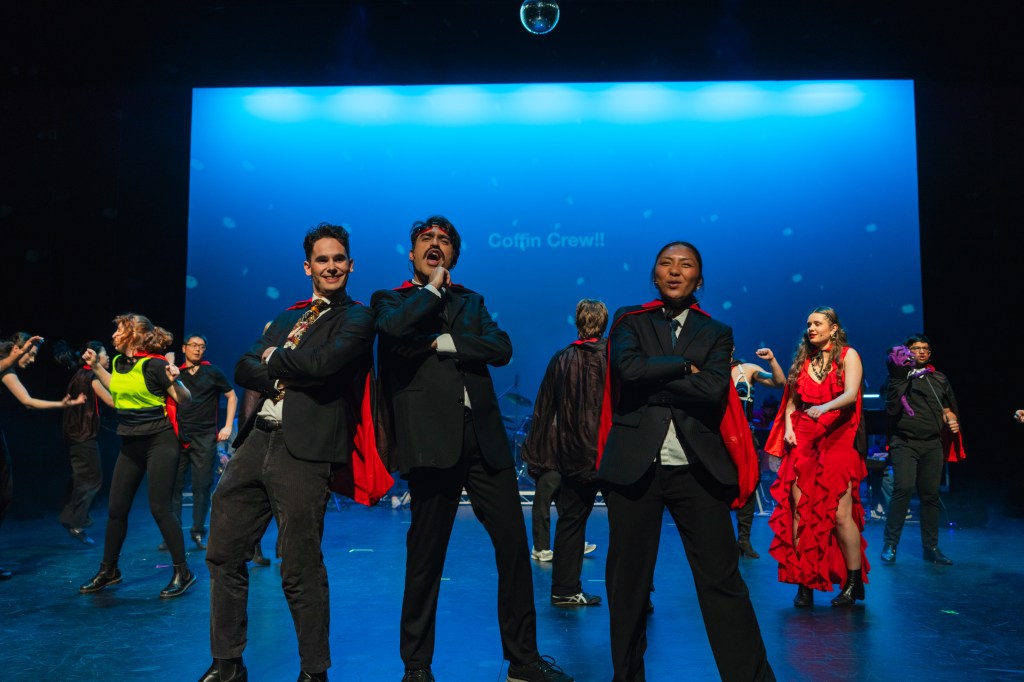
At the centre of that story are Clove (Katie Licheni) and Count Onme (Mitchell Fryer). Their chemistry is one of the musical’s strengths. Even as the storyline deliberately leans into ridiculous romantic conventions, Licheni and Fryer make the relationship enjoyable to follow. There is something genuinely sweet underneath all the blood and absurdity, which makes the musical more captivating.
Just as entertaining is Count Onme’s friendship with Count Nosferatu (Divjot Walia). Fryer and Walia establish a fun friendship dynamic that gives the story another relationship to invest in outside the central romance. Their interactions are particularly enjoyable because the show allows these characters to exist within this absurd world without constantly needing to remind us how absurd it is.
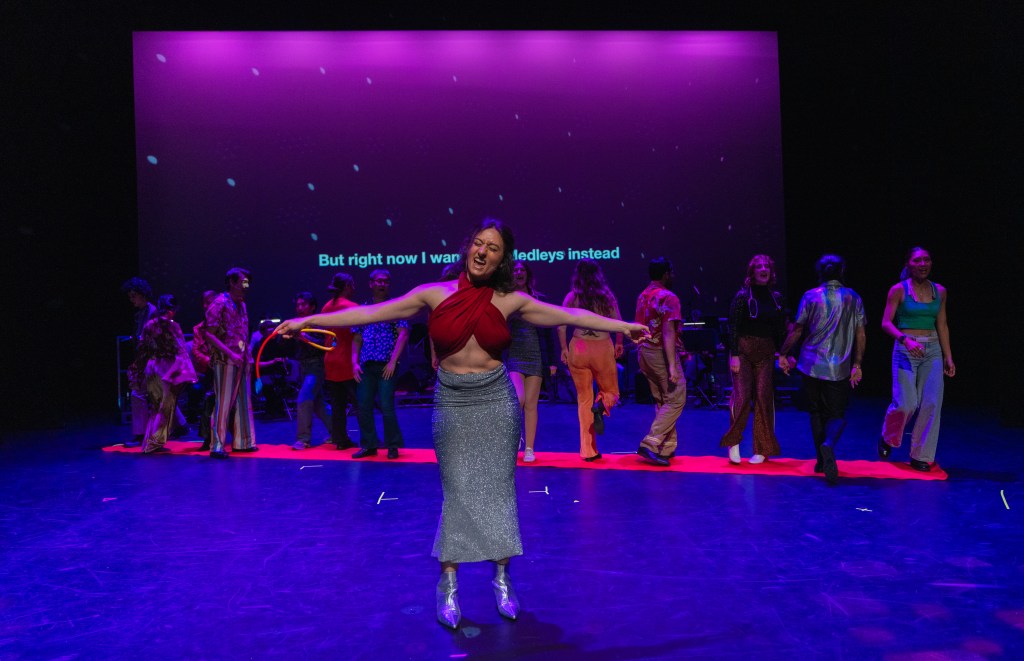
The absurdity of the world around them is equally playful. The garlic shop was one of the more interesting settings visually, using the set to establish a distinct location rather than relying solely on dialogue. Across the evening, the set and props made the stage feel considerably fuller, which becomes particularly important in a production jumping rapidly between unrelated scenarios. Each new object became part of the joke, while the wonderfully strange costumes only strengthened the feeling that almost anything might appear next.
And, frequently, it did.
From Bali belly and the red-light district to a magician meeting and a particularly memorable birth scene, the production rarely allows the audience enough time to predict what will happen next. The comedy moves rapidly between recognisable references and complete nonsense, and the performers’ commitment allows even the strangest premises to land. Forgotten Identity was one of my favourite sketches of the night, standing out within an already unpredictable collection for how completely it embraced the revue’s particular brand of absurd humour.
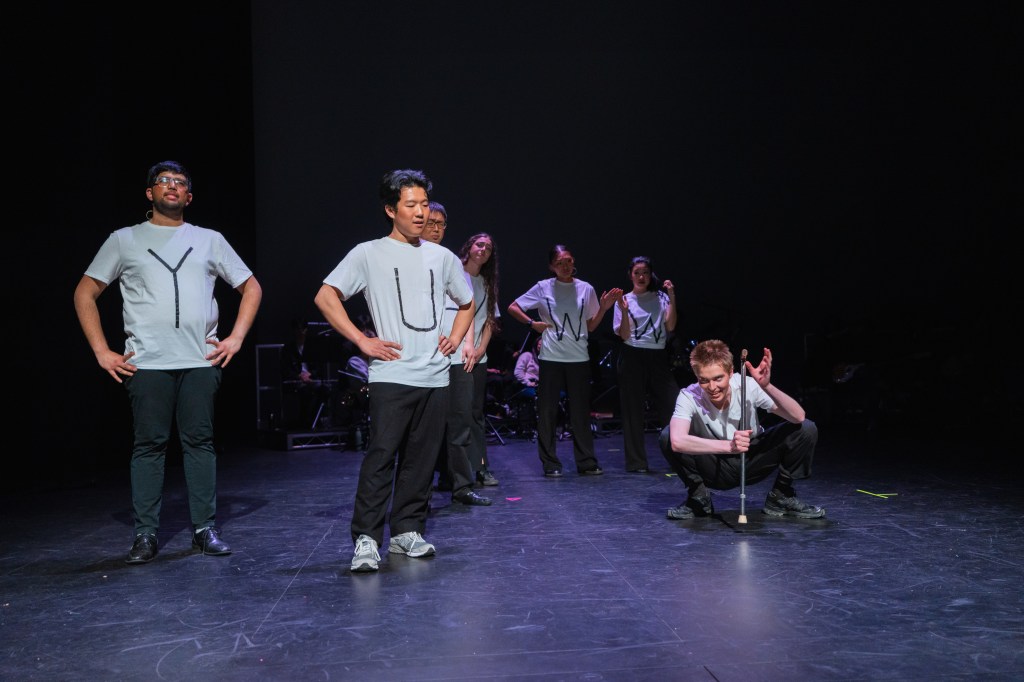
The Twilight history-book joke was another example of the show understanding exactly who it was performing for. Much of the humour feels distinctly current without simply becoming a collection of internet references. ‘You Are Hot and Old’ similarly captures the revue’s willingness to commit completely to a stupid premise. That commitment is crucial: jokes this ridiculous only work when the performers behave as though they are absolutely worth performing.
Some of the funniest material does not even happen through conventional live sketches. The cast sports and Mario Kart videos extend the revue’s humour beyond the stage and provide another change in form. The audience-interaction section, involving improvised movie genres, adds yet another layer of unpredictability. Giving the audience some control is always dangerous in the best possible way, and here it fits naturally into a show already built around the expectation that things might suddenly go somewhere bizarre.
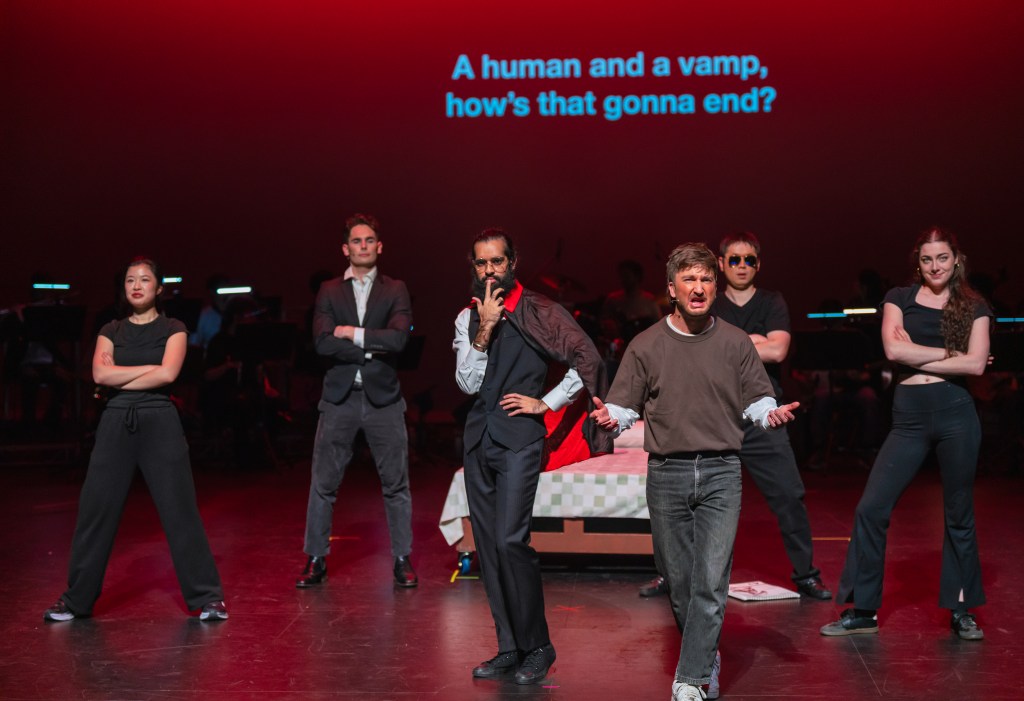
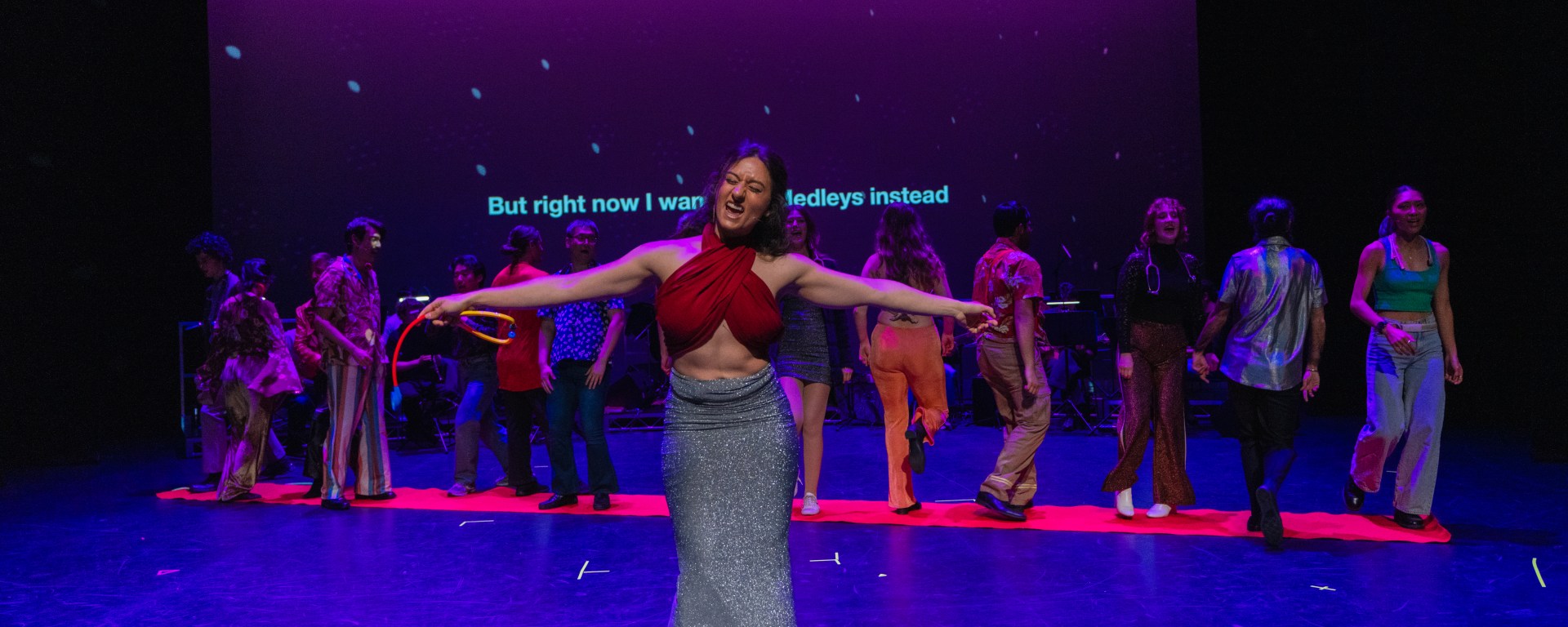
Music is similarly central to the production’s identity. With Sasha Saad as music director and a substantial live band, the musical sections have an energy that distinguishes them from the sketches without feeling like they belong to another production. The Med Revue song was particularly memorable, leaning into the company’s own identity and the self-awareness running throughout the night. The appearance of the disco ball during the musical numbers is a comparatively simple touch, but an effective one: suddenly the theatrical chaos feels like a party.
The revue is also well-supported by its choreography and technical elements. Amelia Grossi and Luoxi Pan’s choreography gives the larger musical sequences a different scale from the smaller comedy scenes, while Emma Robertson’s lighting design helps negotiate the constant shifts between sketches and the continuing vampire narrative. Lighting and sound are particularly effective during the birth scene, adding another dimension to an already hilarious moment. The production’s AV is similarly integral to the comedy, rather than simply sitting in the background, with its integration into both live scenes and prerecorded material helping some of the night’s most ridiculous jokes land. With so many transitions and tonal changes, the technical team has an enormous amount to coordinate.
The show’s accessibility efforts are also worth recognising. Captioning in a production this fast-moving, filled with songs, punchlines, videos and rapid transitions, is no small undertaking. It is an important part of making the performance accessible rather than treating accessibility as something separate from the production itself.
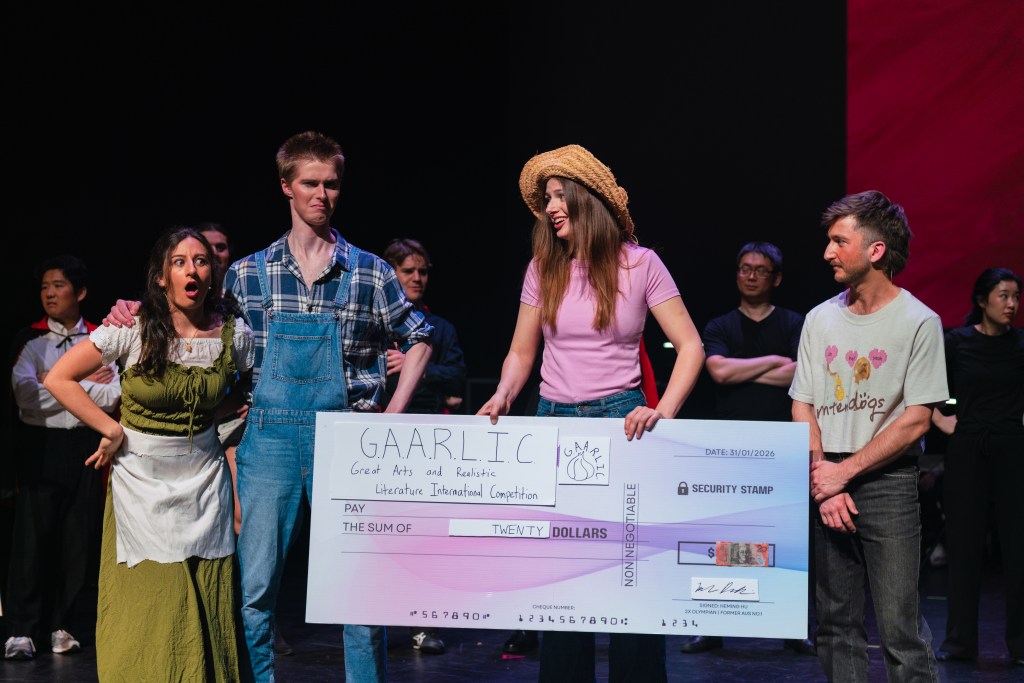
What makes Crazy, Stupid, Blood work, however, is its willingness to be silly. The show never seems embarrassed by its own ideas. Even its final twist is wonderfully stupid, and that is exactly why it belongs. A sensible ending would almost feel dishonest after everything that came before it.
There is a lot happening in Medleys’ production: vampires fall in love, friendships form, sketches appear and disappear, videos interrupt the action, performers sing and dance, garlic becomes scenery and a disco ball somehow feels essential. Yet underneath all that chaos is a production made by an enormous cast, band and crew who seem completely committed to the same strange joke.
Crazy, Stupid, Blood may not always make sense, but it does not need to. It is energetic, self-aware, and unapologetically weird the sort of show where you eventually stop asking what could happen next and simply wait, delighted, to find out.
Crazy, Stupid, Blood was presented by Medley’s the Med Revue 17 – 19 September 2026 at the Union Theatre.
KAASHVI JAIN is a third-year Bachelor of Arts student at the University of Melbourne, majoring in Psychology and Media & Communications. She enjoys theatre, film and arts writing.
CHARLOTTE FRASER (she/her) is a writer, performer and student editor based in Melbourne. She holds a BA in English and Theatre Studies and is currently completing her Masters degree at the University of Melbourne. Charlotte is also the 2026 Dialog Editor.
The Dialog is supported by Union House Theatre

