
REVIEWED BY CHARLOTTE FRASER
EDITED BY MANEKA DE SILVA
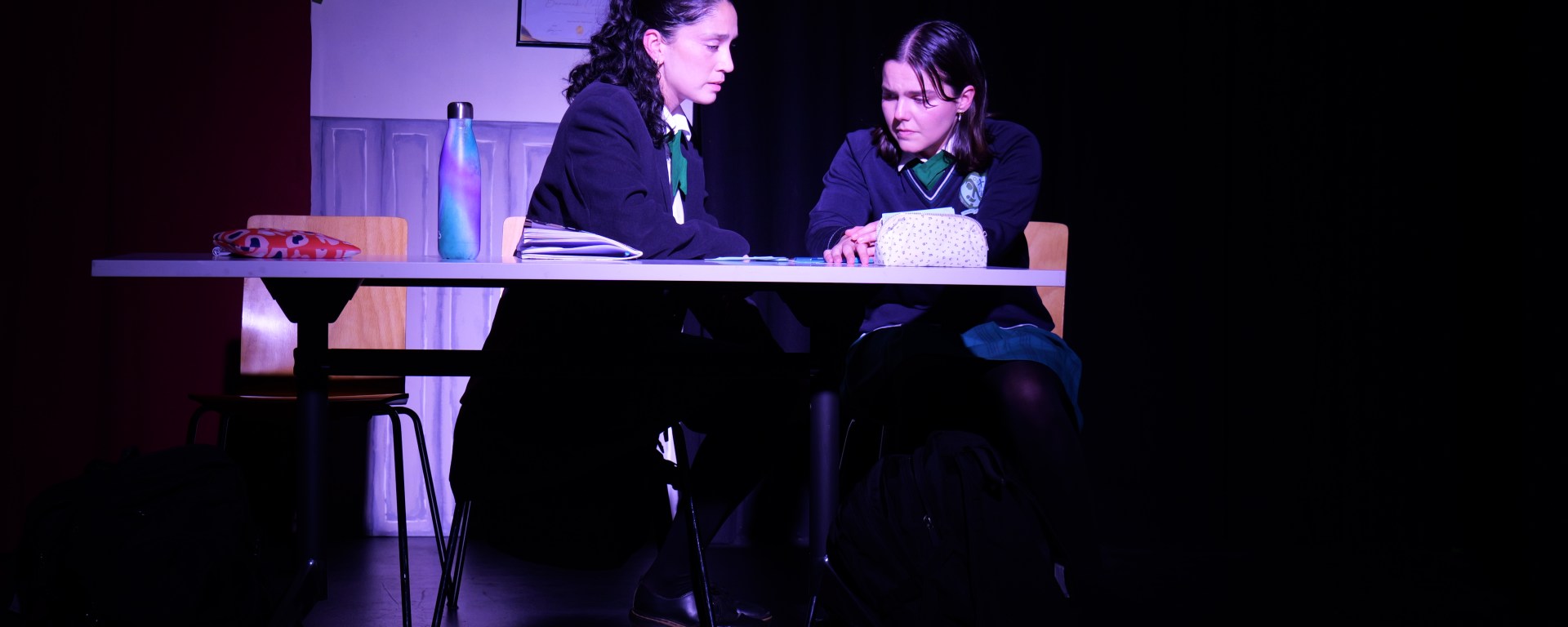
The thought of 2016 being the setting of a period piece genuinely makes my joints hurt. 2016, the peak of makeup youtubers having aggressive contour blindness and social media becoming increasingly prevalent in high schools and the year before the gay marriage vote took place in Australia is the setting of Charlotte Fels’ This House Believes. Directed by Fels with assistance from Dylan Manson, this play tells the story of two high school debate teams faced with the politically relevant question ‘should gay marriage be legalised?’
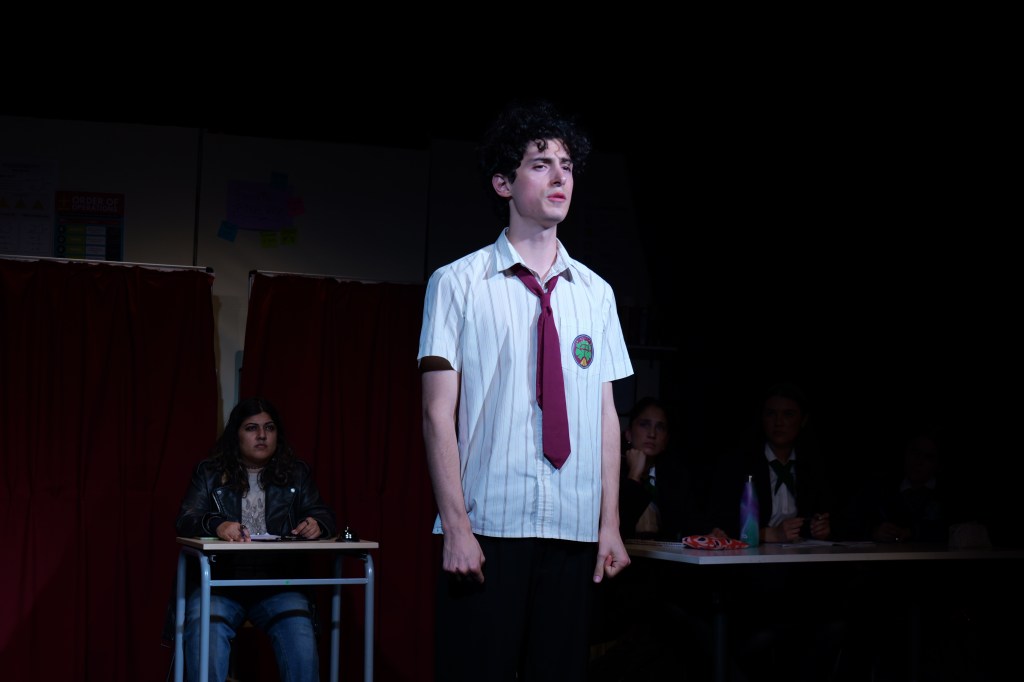
As someone who was on a debate team in 2016, I was blown away with the accuracy of this production. From the adjudicator’s (Radhika Chhabra) flat affect and monotone voice to the heated discussions between friends about being queer, this script managed to tackle this time period aptly without straying into caricature. Fels’ script depicts every boy I went to high school with the characters of Mark, Luke and John (Aryan Joshi, Benjamin De Gabriele and Bodhi Keech) to an unsettling extent, transporting me back to my early high school years. I felt like a soldier having war flashbacks listening to their banter and watching their roughhousing.
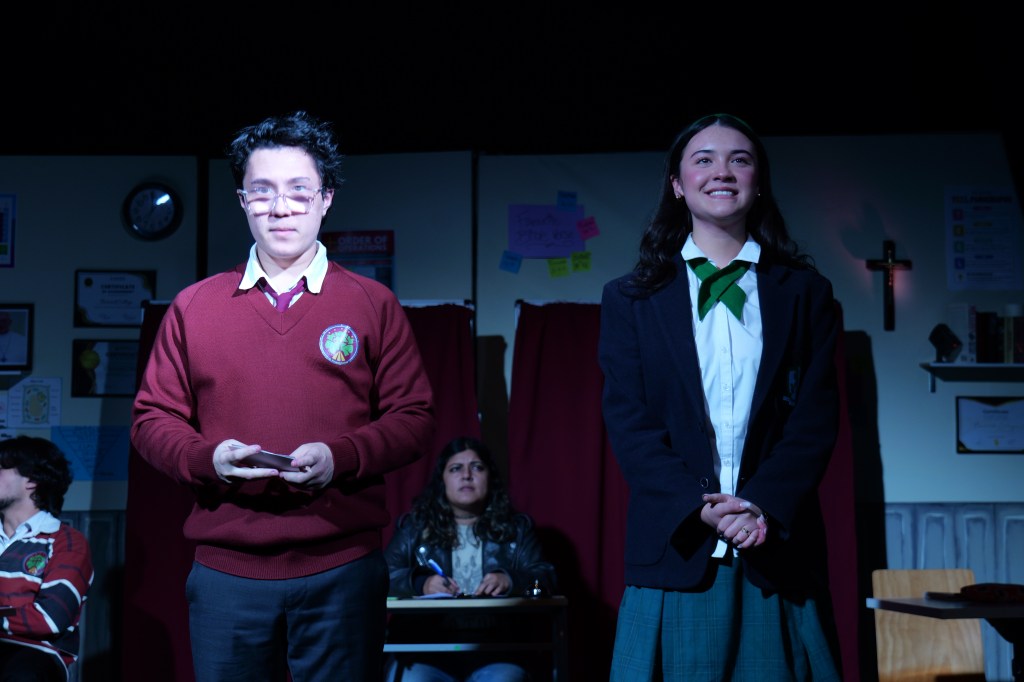
The structure of the show, most of it alternating between focus on the two debate teams as they prepare their arguments (well, I’m not sure how much time the boys actually spent preparing…), suited the story well. It made sense, it kept the pace steady and always felt like it was working towards something. My main critique of the writing would have to be that it asks a little too much of the audience a little too early. Specifically, in the scenes right after the teams are given their debate topic when Lilith (Zoe Boussioutas) and her teammates (Emma Boyce and Karina Howard) get into an argument about how messed up it is that they have to argue against gay marriage – something I wholeheartedly agree is an awful situation to put high schoolers in – the scenes attempt to have a drastic rise in tension a touch too soon. Audiences haven’t had time to properly meet these characters and get a feel for who they are yet, so it’s difficult to expect them to sit in this heavy tension.
Additionally, there were a few comedic moments within the boys’ team that seemed to go on just a little too long. Such as Mark (Joshi) flexing at the audience. Sure, it was entertaining and got a laugh, and if it had been only a few seconds I wouldn’t have much of an issue with it, but it dragged on too long. It was funny, but it didn’t make a whole lot of sense why he was doing it or who he was doing it too. His teammates weren’t reacting; it was purely for the audience. Small moments like that can be really effective when done right, but this one felt superfluous and felt more like the performer trying to make the audience laugh than actually adding to the story in any way.
I’m sceptical as well whether the boys would have actually grown so accepting of their friend’s queerness so quickly. Particularly when they throw around the F-slur in every other sentence and accuse each other of being gay as an insult. It’s very true to the time but I wonder whether this play is being a little optimistic in its depiction of Mark and John’s reaction to Luke coming out to them and how accepting they are. It could be just as interesting to play around with what happens when friends don’t react well.
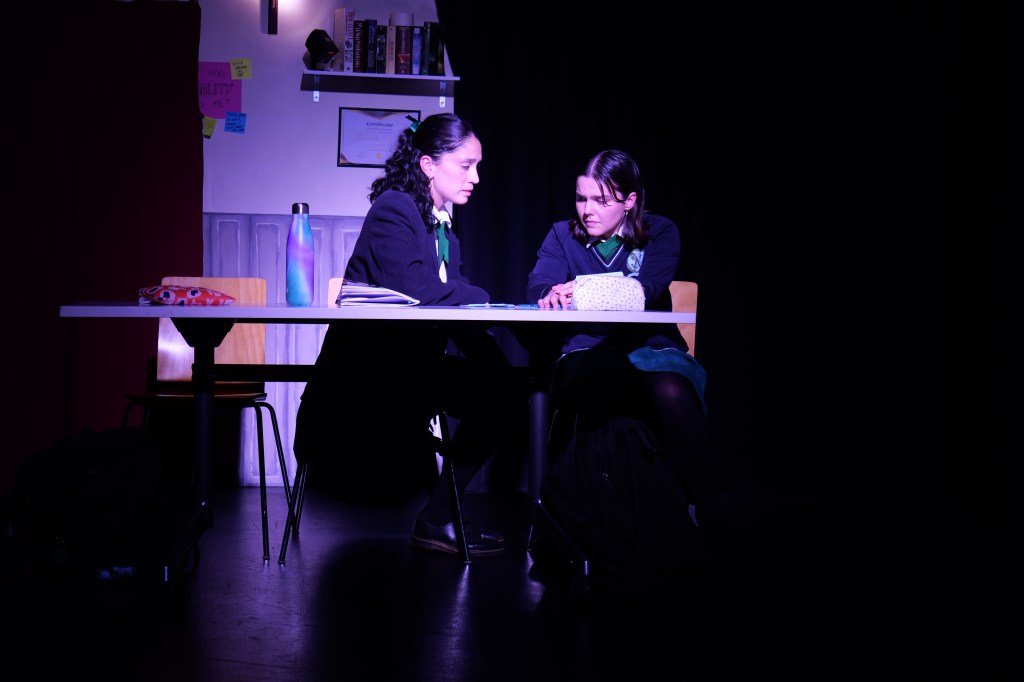
Aside from these, I’ll admit rather nitpicky, things, this script was well-balanced and the second half of the show, Fels’ writing talent flourished. With powerful monologues delivered by Maggie (Boyce) and Luke (De Gabriele) about being queer and battling with faith, the show gave a raw insight into how much deeper debates like this go for people in the queer community.
Every performer in this production gave an excellent performance. The standouts for me have to be Emma Boyce as Maggie and Karina Howard as Ruth. Both Boyce and Howard gave incredibly well-balanced performances, toeing the line between high school dramatics and raw emotion tactfully. Howard embodied Ruth’s ambition and determination to win, resulting in moments of comedy amid the drama, but kept it all grounded in a clear motivation, allowing herself to get vulnerable with her friends before returning to a similar level of intensity when the debate came around. I’ve already mentioned how powerful I found the writing of Maggie’s final monologue, and Boyce certainly rose to the challenge. Maggie held herself together until she just couldn’t anymore. This moment had the audience completely silent, listening and feeling for her.
Boussioutas as Lilith shone in the scenes where Lilith and Maggie got into arguments over the debate and their relationship. She is outspoken and stubborn and stole the show with a few quips and one-liners meant to poke at Maggie. Similarly, the boys’ debate team, made up of De Gabriele, Joshi and Keech, all worked extremely well together. Their banter was believable and delivered naturally, reminding myself and my friends of our own old classmates. Chhabra’s performance as the adjudicator had me in stitches with its accuracy. The deadpan expression that makes her look irritated, disinterested and unimpressed in equal measure balanced the drama going on between all of the other characters. Her closing scene with Boussioutas allowed a little warmth to shine through and was a wholesome end to the tumultuous story.
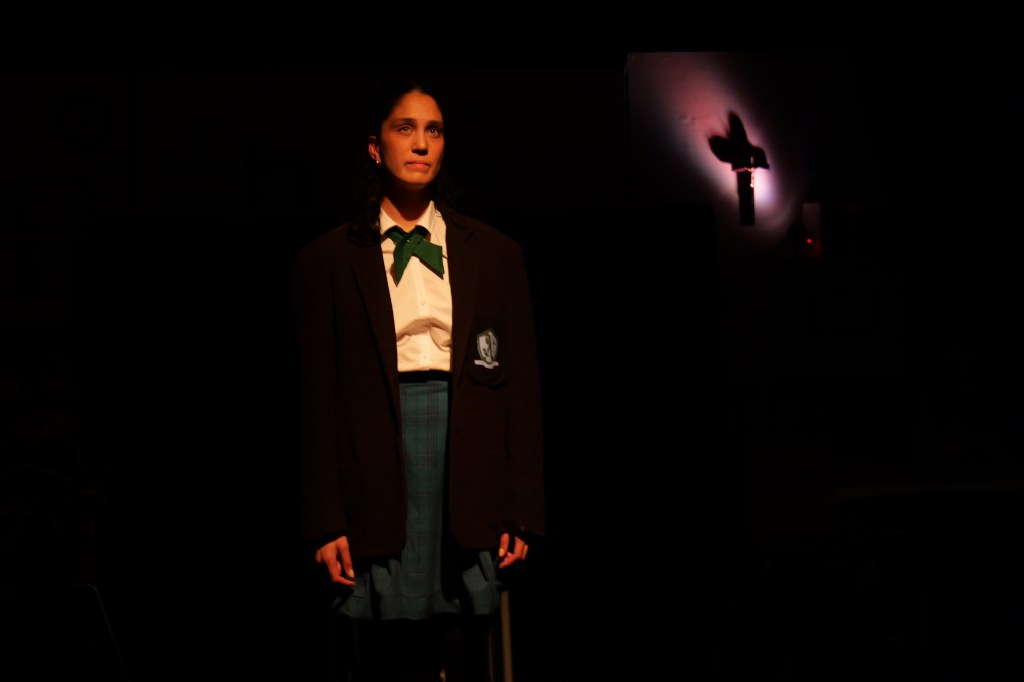
The costumes – designed by Naura Angelica – were all cohesive and perfectly matched each character. The way each character wore their school uniform showed just enough individuality to tell the audience something about them and felt incredibly true to my own school experience. The set (Jemima Fincke and Tee Giannarelli) was versatile and didn’t overwhelm the stage at the Kaleide, which is an achievement considering how small the space is. Lighting (James Pringle) was used tactfully and complemented the action onstage well, allowing the plot to really shine and keep audiences engaged.
Overall, This House Believes was an excellent production. Fels’ writing brought to life a 2016 classroom, and the performers rose to the task. With an excellent balance of drama and comedy, audiences were chuckling along as we watched these teens find their footing and debate complex topics. I’m excited to see what Fels and the team at RedActs does next!
This House Believes was presented by RMIT RedActs at the Kaleide Theatre 1 – 4 October 2026 as part of the Melbourne Fringe Festival
CHARLOTTE FRASER (she/her) is a writer, performer and editor based in Melbourne. She holds a BA in English and Theatre Studies and is currently completing her Masters degree at the University of Melbourne. Charlotte is also the 2026 Dialog Editor.
MANEKA is a 2nd Year Politics and International Relations Student who loves theatre and writing.
The Dialog is supported by Union House Theatre

