
REVIEWED BY AZMY
EDITED BY CHARLOTTE FRASER
What is ‘non-binary’? Can you define ‘non-binary’? Is it worth it? Is it useful? Why be it? What limits are you pushing? Do you need to push them? Who are you? What is gender? Why do we even have it? What am I? What is the purpose of any of this? Am I doing too much? Is ‘identity’ necessary? Is ‘gender’ necessary? Is the human body ‘necessary’? (& other questions raised by Too.)
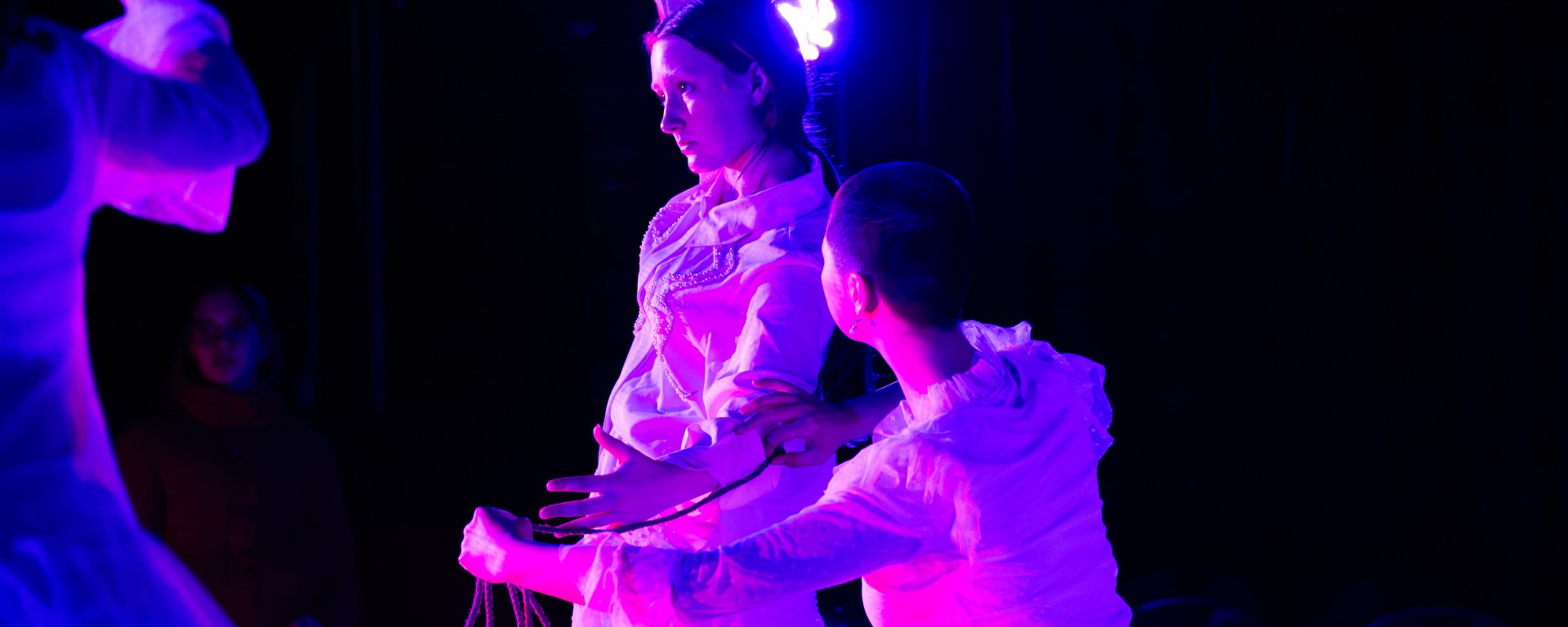
The non-binary experience is full of contradictions, and this show does a fantastic job at displaying a multiplicity of experience in a heartfelt and authentic way. The ensemble cast and the number of people interviewed, alongside writer-deviser-performer-interviewer Bronte Lemaire’s (any/all) considered stitching of these interviews together, meant that there was never a moment that felt as if it were preaching about the right way to be non-binary – it was just presenting a wide range of experiences.
Speaking with a lot of bias as a non-binary person (hi, my name is azmy i go by they/them), this is probably one of the coolest pieces of theatre ever. This is the first verbatim show I’ve watched, and I am astounded by the medium’s ability to build community, especially when it comes to underrepresented communities. Verbatim theatre involves performing the words of others as they were said, hence ‘verbatim.’ Too takes this theatre style to create a documentary of accounts regarding what it means to be genderqueer and non-binary.
In 2024, the Australian Bureau of Statistics estimated that 4.5% of Australians over the age of 16 are non-binary, with 9.5% of people between 16-24 identifying as non-binary – almost one in ten. This is based on data from 2022, and we will have a more accurate number once the data from this year’s census is made available. Despite the increasing number of non-binary people in the world, it remains rare for a non-binary character to ever be a protagonist, or even a minor character, in literally anything. Even when we are given representation, it is shallow at best, with gender being the character’s entire plotline. The only non-binary protagonist I can think of is Kris from the video game Deltarune. This being the case, a show made with a majority genderqueer team is remarkably hope-inducing.
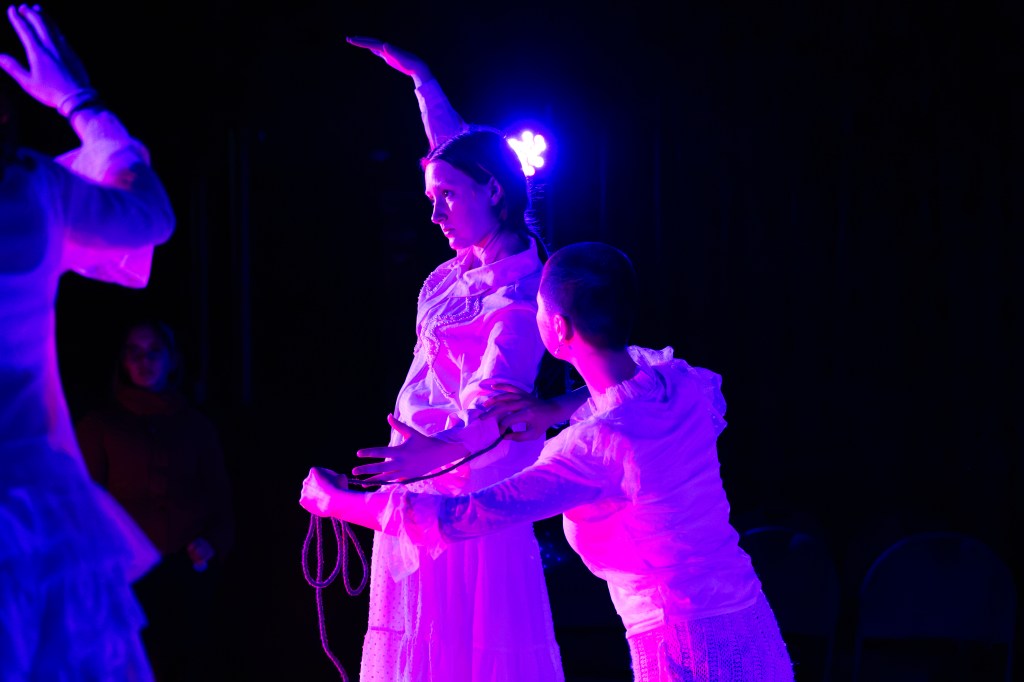
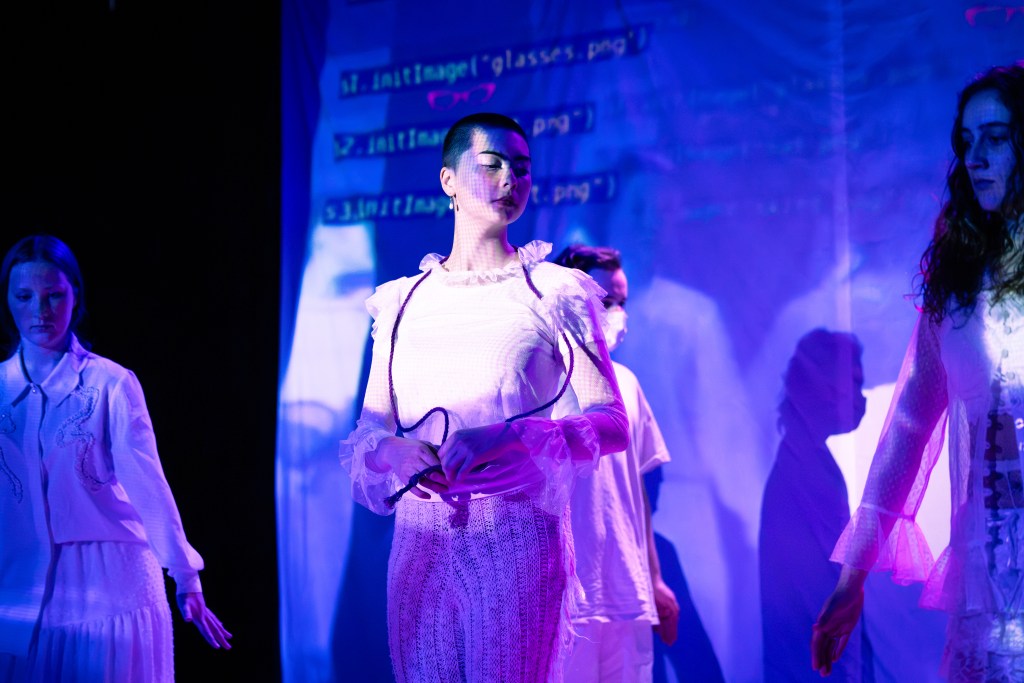
Too begins as soon as you walk into the room. The performers all hang out together, warming up and playing, talking amongst one another, in a joyful way. Set and costume designer Toby Vasilic (he/him) dresses everything and everyone in white – even the floor and the curtain – a dual sense of divinity and naivety. The lighting design by Allira Smith (she/her) bathes the set in deep pink and blue. Alongside the white, it’s impossible to tell what these three colours together could possibly be trying to transcribe… something subtle, I’m sure. Jokes aside, Smith’s considered lighting design complemented the show well and consistently enhanced what was happening on stage.
The show felt cohesive to watch as the devised work moved us steadily between various contrasting experiences. Its discussions undulated seamlessly between race, gender, class, neurodiversity, culture, sexuality, disability, illness, online-ness, family, self, media, abuse, the body politic and more.
One of the goals of this show is to make the vague experience of being ‘non-binary’ legible to more people so that we can have more well-rounded diverse experiences represented – not just those of non-human creatures or young thin white people. Consistently, non-binary and genderqueer characters are pushed away from the category of human, made robotic, made alien, made animalistic, made other. While this is something to mourn, Too also points out that this can be reclaimed and viewed with joy. It is also interesting to note that while non-binary representation is beginning to increase across mediums, video games and web series have been at the forefront of this change.
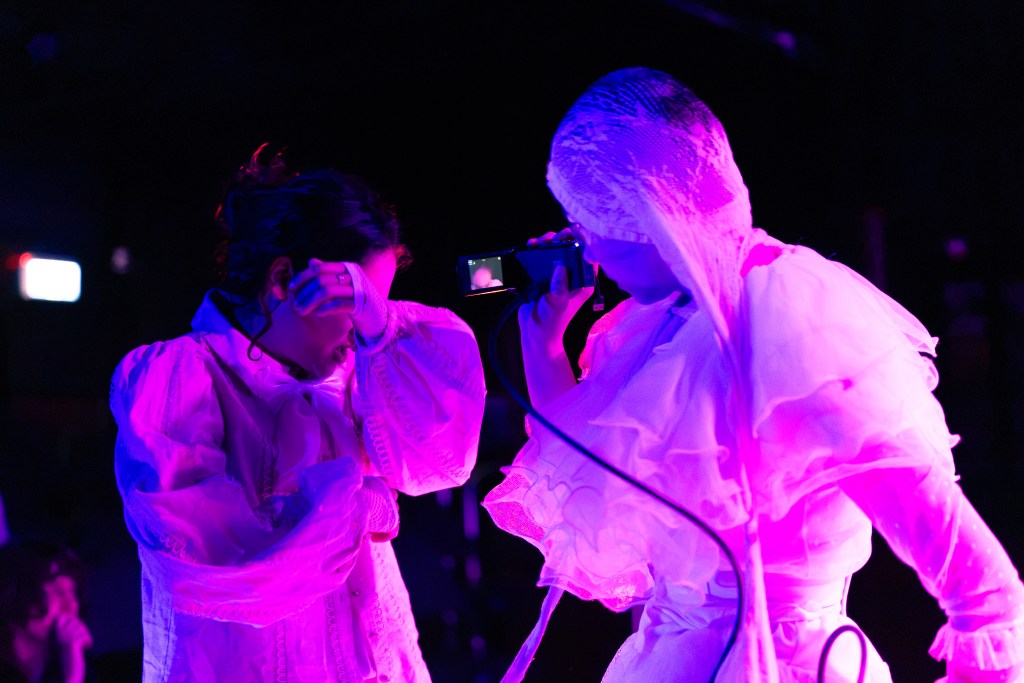
The liminal spaces of the internet are what allow for the liminal identity of ‘non-binary’ to become accessible to people who were stifled by the colonial concept of binary gender. The importance of the online culture in shaping the modern non-binary identity was brought to light in this show with fantastic live coding by Jakob Schuster (any/all). This is the most interesting use of projection I’ve ever seen in theatre: a projection that is transmitting, transforming, and translating emotion from a seat literally in the audience. Watching Schuster code music, lights, and visuals at the same time is the modern-day equivalent of watching Michealangelo paint the Sistine Chapel.
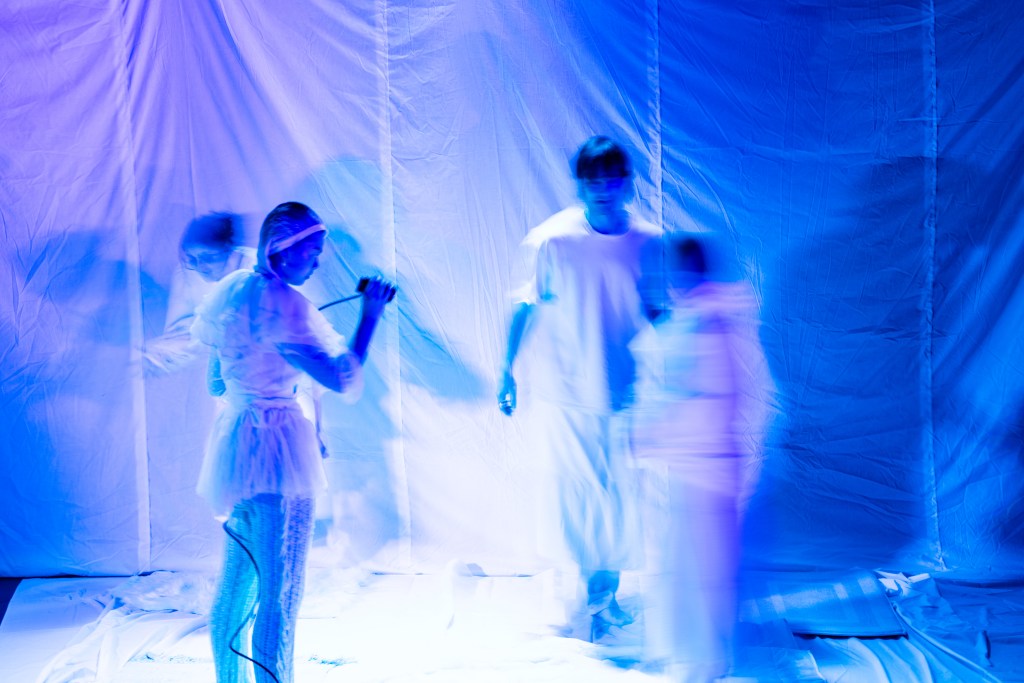
Each and every performer was compelling to watch, and the group struck a good balance when it came to stage presence, taking turns being front and centre and then taking turns holding the camera for Schuster’s pixellated projections. Most of the team took part in the devising process – Narii Salmon (he/they) who was also a dramaturg, and performers Lemaire, Jade Breen (they/them), Finn Corr (he/they), Marz Cooper (he/him), Jacinta Klassen (they/them), Joey Sheppard (she/they), and Wajanoah (any/all). This intensive collaboration supplied a wealth of visual interest that complimented the spliced nature of the script, and each scene was packed with multiple meanings layered onto the interviewed snippets. While every performer was absolutely astounding in their own right, I wanted to particularly highlight that Wajanoah was absolutely mesmerising, sporting some of the most gorgeous outfits and moving with steadfast fluidity. I also wanted to mention Schuster, who, despite having been doing tech for most of the show, surprised us all and made me cry with a beautifully delivered monologue about a baby trans who came out at 45.
This is an incredibly pertinent piece of work that lives up to TipToe Theatre’s motto of creating urgent work. I feel incredibly lucky to have been able to see a piece of media that cares this much about giving genderqueer people voices and representation. There was so much joy and creativity in this show, and the work was never treated in a way that was either too serious or too silly. Thank you to everyone involved for bringing such a kind and community loving piece to the stage, much love to you all!
Too played at the MC Showroom 6 – 10 October 2026 as part of the Melbourne Fringe Festival
AZMY is a creative studying a Bachelor of Arts at UniMelb. This year, they are making theatre with The Werkz Ensemble and Cipta Theatre company!
CHARLOTTE FRASER (she/her) is a writer, performer and editor based in Melbourne. She holds a BA in English and Theatre Studies and is currently completing her Masters degree at the University of Melbourne. Charlotte is also the 2026 Dialog Editor.
The Dialog is supported by Union House Theatre

