
REVIEWED BY JESS PARKIN
EDITED BY CHARLOTTE FRASER
The flickering LED lights that greeted me as I entered the low-lit Explosives Factory should have been a sign of what was to come. And being welcomed into what could have been a real-life Indie film set only encouraged my building excitement. I could almost touch the stage as I sat down in the intimate seating bank – we were part of the story, and that was palpable, rippling through the audience. But my confidence as I walked up the narrow flight of stairs left me completely unprepared for the emotionally draining 50-minute performance.
The Eternally Hopeful, written and directed by Isabelle Davis, is a series of heartfelt musical numbers that beautifully bring to life the complexities of everyday grief. Raw, emotive, tear-jerking and at times even light-hearted, we meet the characters right where they’re at. The small four-member cast each take on several lives, but the love for each character is so tangible and heartfelt that every individual is equally explored and given space. This short song cycle congratulates the highs and acknowledges the lows of ordinary life in a way that redefines grief. For the better.
As I entered the theatre, I was unsure of what to expect. I vaguely understood the basic outline of the show, but an original piece is sure to bring surprises from every angle. And The Eternally Hopeful did just that.
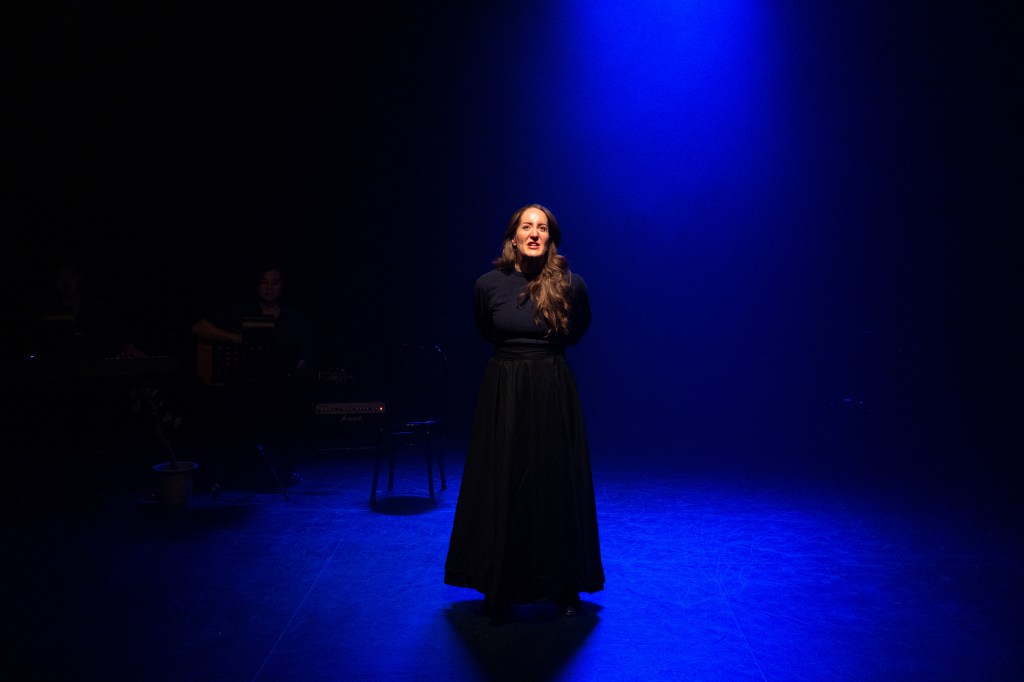
Upon first impression, the stage came as a surprise – blues and greens flooded the theatre and spotlit plants were scattered about. Now plants are a given, the fact that they oscillate between thriving and near-death is perfectly suited for a production like this, but it was the lights that struck me as odd. I was ready for a performance of hope and life, but the stage was illuminated in a sorrowful way. While hope is commonly coloured in brightly happy tones, The Eternally Hopeful illuminates its origins in despair and uncertainty, and Cale Dennis’ blue-green lighting design prompted that realisation right from the door.
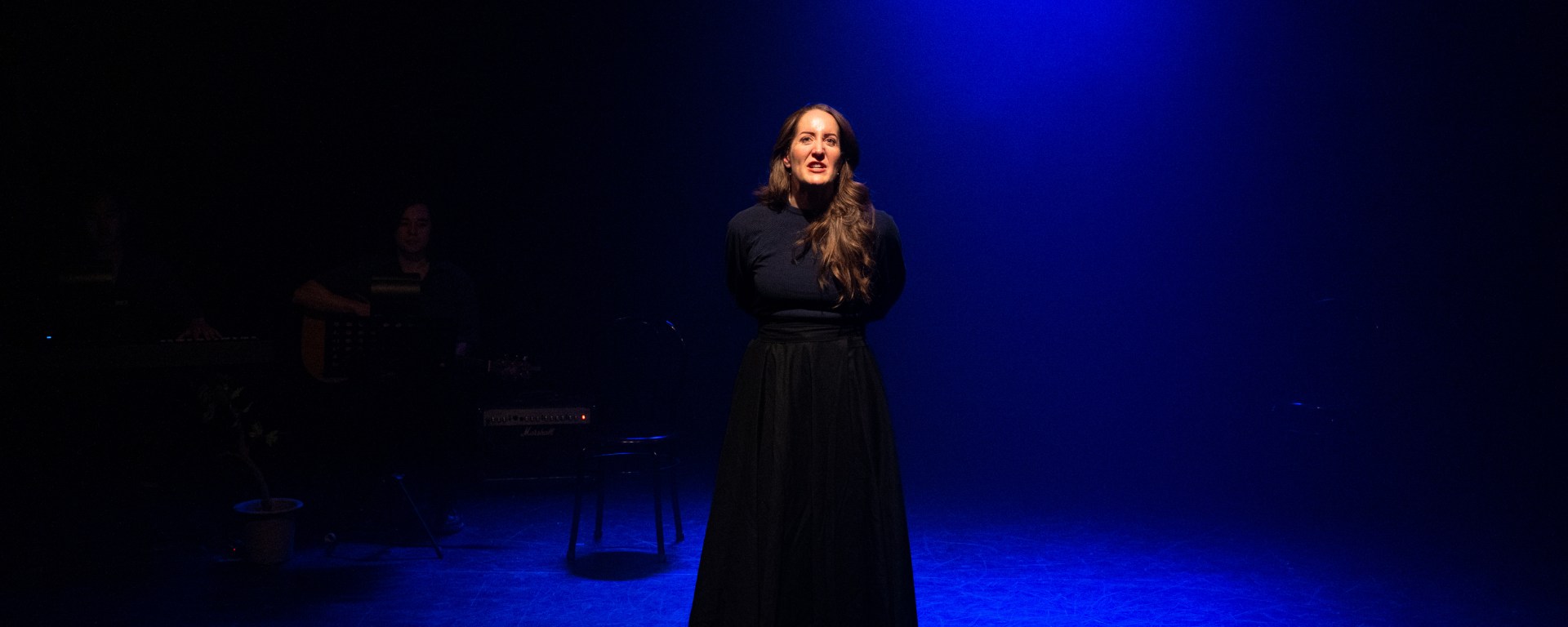
This mastery of lights continued to amaze me throughout the performance. It transitioned from up-beat joy to downcast anxiety in a heartbeat, expressed through a balance between lighting the stage with colours and then draining any glimpse of warmth. And it was this intentionality behind the feeling of isolation that raised goosebumps along my arms. The song titled “The Power of No” featuring Kate Allnutt is where this was brought to the forefront. After a playful bantering with the audience accompanied by a vast expanse of light, Allnutt falls to her chair and is suddenly alone in a spotlight. Alone, despite the audience right there. Alone, even with other people on stage. And it was the lighting design that brought out this viscerally distraught emotion.
While the lighting was truly standout on its own, it was the music that spoke to my heart. Music Director John Mondelo played the keys with such sincerity and brightness, accompanying the actors in a steady and reliable manner. He wove melodies through the air that both comforted and left space for the characters in their low moments, as well as leaping and bounding in their excitement. One outstanding moment is in the song “One More Chapter” where Hopeful 1 (Jacqui Dwyer) delights in the freeing imagination of a novel. Mondelo expertly catches this joy and creates such a blissful aural experience, blessing the audience’s ears.
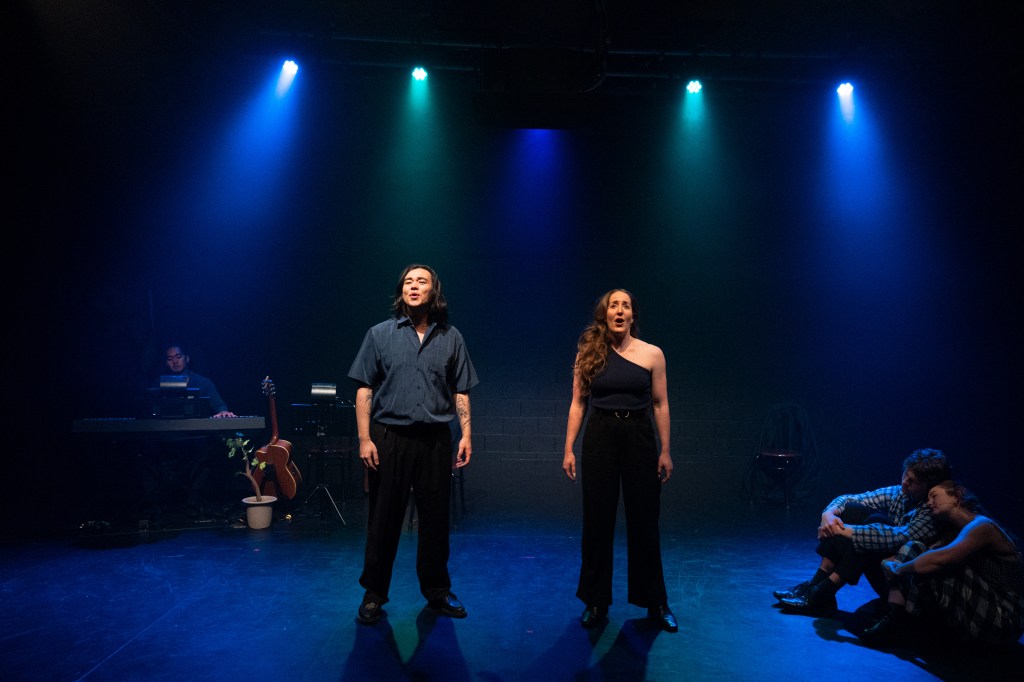
In many ways, the music is an accompaniment, allowing the actors’ voice to shine. But in The Eternally Hopeful, it walks alongside the characters in a steadfast way that feels like hope itself. And I believe that the music is truly the heart of this performance – the keyboard and the beauty of music carried through each new song, a presence that speaks to the theme that ‘we are eternally hopeful.’
Luke Leong Tay as Hopeful 4 is also an integral part of the musical aspect of the show. Strumming away on the guitar from the very beginning, the immersion was continual as he stepped up to perform his pieces. The opening number “I Wait” is a perfect example of the guitar’s bright tone and real sense of momentum that drives Hopeful 1. But after Leong Tay steps into the spotlight, there is a gap that is left in his absence from the musicians’ seat. While the keyboard’s soft and expectant melody beautifully melds with the songs, the more frequent addition of the guitar may have more clearly communicated the need for a compelling hope.
The actors made this performance unforgettable. Allnutt’s facial expressions were so intricate that, for all I knew, she was alone onstage for how immersed I was in her performance. In the family setting towards the end of the show, when all four actors were onstage, the love that shone from Hopeful 2’s face was beautiful. It brought to life the familial experience and was so intimate that I felt as if I was intruding on their story time.
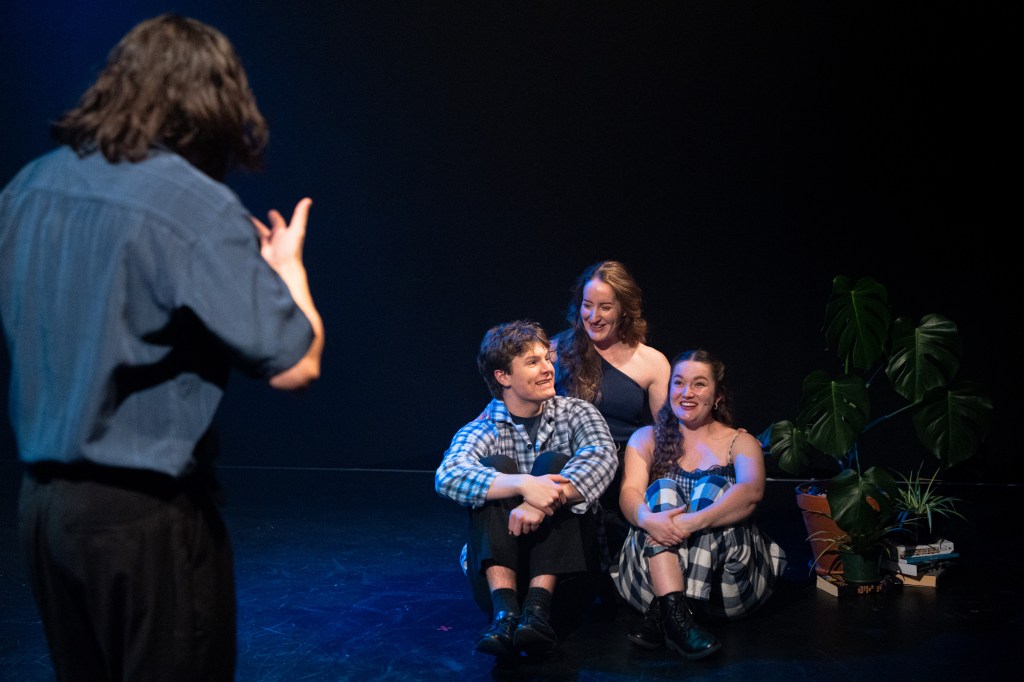
The delivery of “I think I know who I am” by Dwyer (Hopeful 1) was detailed enough that each time it was delivered, a new meaning arose. She was sure, then she was questioning, then scared, then uncertain. Not only was this expertly communicated by Dwyer and her expressive and transparent features, but also how her tonal inflections carried the character’s emotions.
Hamish Pattenden deserves just as much praise in his performance of Hopeful 3. The comedic yet troubled second number is both endearing and sobering. As a 16-year-old boy battling his emotions about his dying father, Pattenden carefully weaves Hopeful 3 together with fidgeting hands and shuffling feet. The dynamics of all four of the actors is seamless and yet fragmented – they all have their own stories, but they are still connected.
Nevertheless, direction seemed to emphasise the voices over physical movement. While the facial acting was superb, there was a discernible emptiness onstage. An emptiness that would have benefited from more movement and less motionless standing. I think this extra physical acting could have really added to the more natural movements of the characters – and where Allnutt excelled in her number “The Power of No” with the use of a chair.
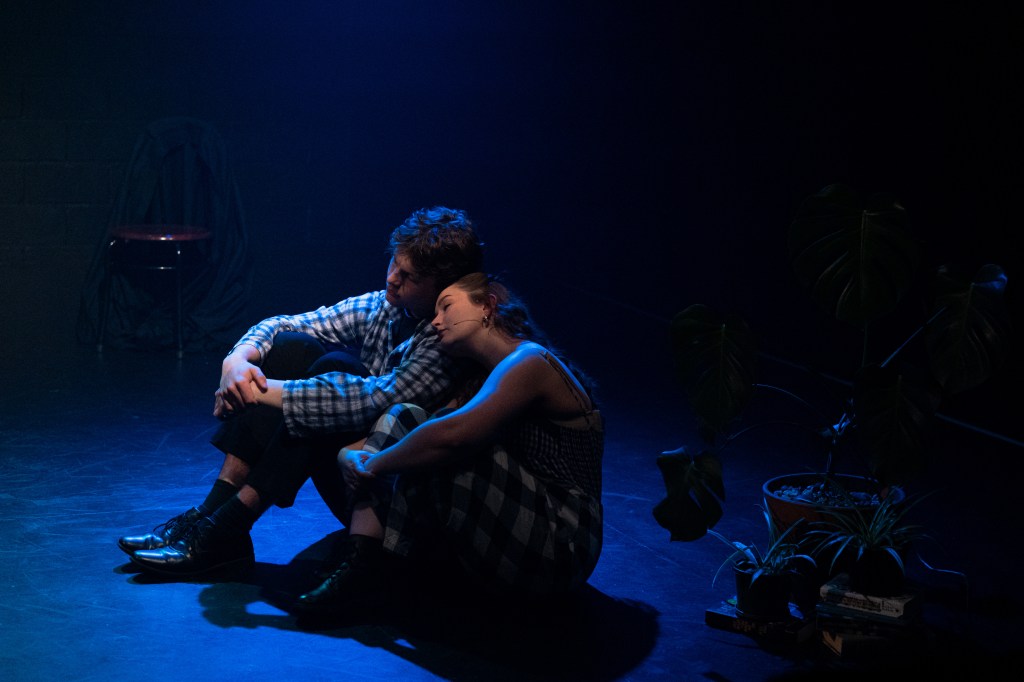
As I sat starstruck by the performance, goosebumps and tears joined my smile throughout. The short show is well timed – because I was certainly emotionally drained as I walked out on shaky legs with trembling lips. But the quick succession of songs and stories did not leave nearly enough space to process it all. To sit and reflect about the emotional bombardment that we had just experienced. And in some ways, that enables the stories to be more impactful, to pack a punch. But coming to grips with reality, even if it is through a fabricated story, does make for an exhaustingly visceral experience. And one that is not made alone.
The Eternally Hopeful is a beautifully intricate realisation of grief and sorrow. With scattered one-liners that serve as comedic relief to an otherwise heavy performance, this show expertly juggles complicated topics – twisting them with an edge that, ultimately, is forever hopeful. It begs the question: how are we viewing our own life, or rather how should we be viewing it, if not with hope?
The Eternally Hopeful by Isabelle Davis was presented at Theatre Works Explosives Factory 22 – 26 September 2026.
JESS PARKIN (she/her) is a second year Arts student, majoring in English and Theatre Studies and an aspiring editor. With a performance background, she is keen to turn her practical knowledge into engaging pieces for an even more engaged audience!
CHARLOTTE FRASER (she/her) is a writer, performer and editor based in Melbourne. She holds a BA in English and Theatre Studies and is currently completing her Masters degree at the University of Melbourne. Charlotte is also the 2026 Dialog Editor.
The Dialog is supported by Union House Theatre

