
INTERVIEW BY ELIJAH VALERY SLAVINSKIS
EDITED BY CHARLOTTE FRASER
As an incredibly sane person who was keeping religiously up to date with Farrago’s live blog of the UMSU elections I’ve been quite eager to learn more about Union House Theatre’s upcoming production of Party, taking place at the Guild Theatre from the 24th to the 26th of September.
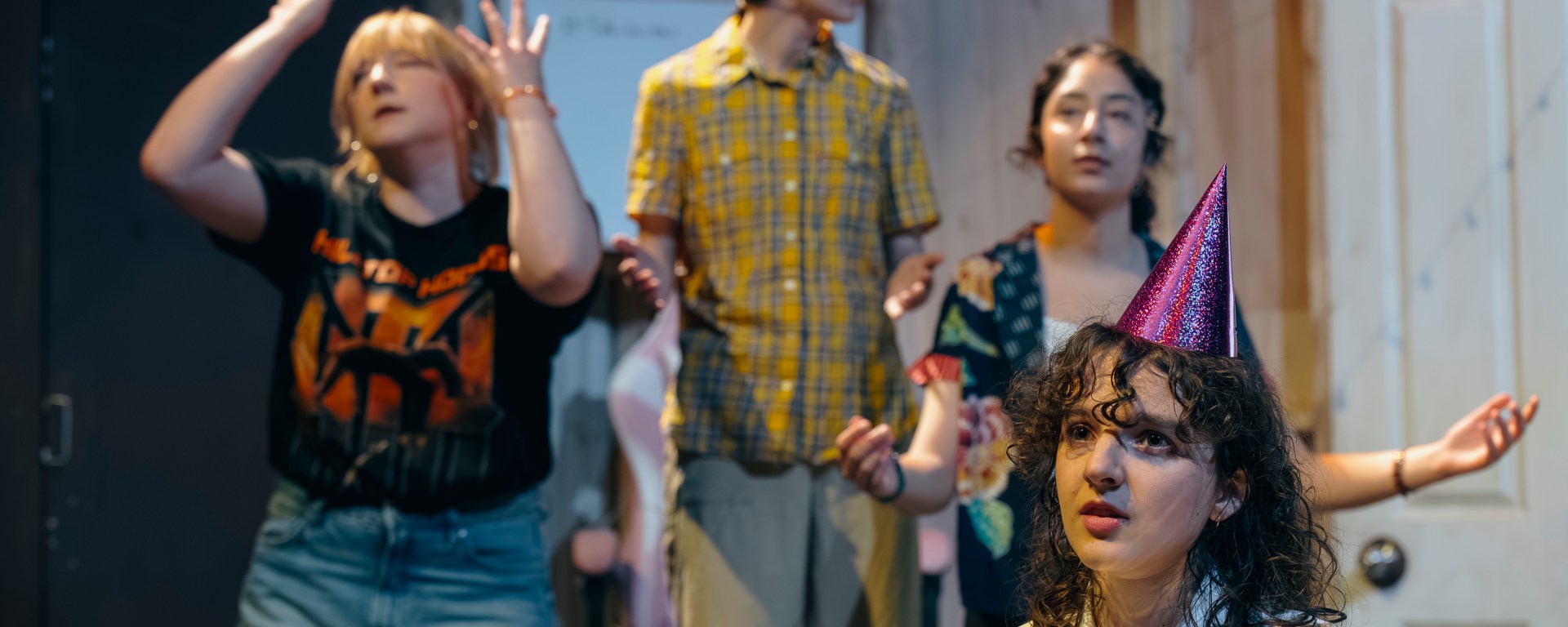
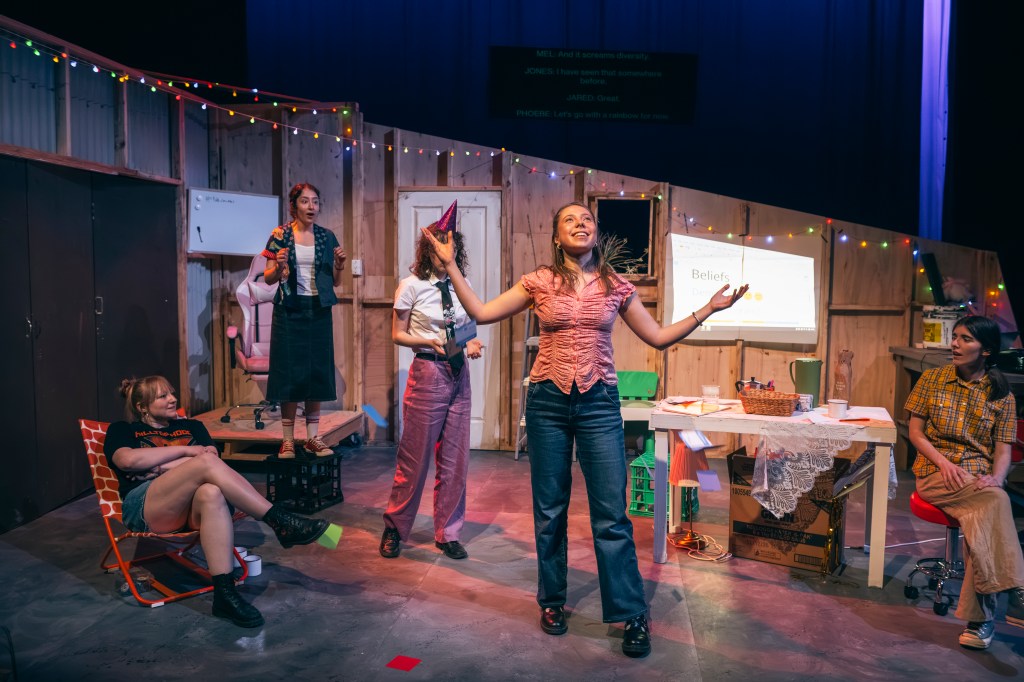
Party is a political satire written by Tom Basden in 2009 which drops in on a group of student idealists as they try to form a brand-new political party.
Last week I had the pleasure of sitting down with Andrew Sutherland, the director of Party, for a wide-ranging discussion including their approach to directing for comedy, the tensions between 2009 and today and whether there’s anything we can actually do to challenge the rise of the far-right!
We began by talking about the slightly daunting prospect of directing a comedic play. “Part of the challenge was seeing if I could still tell a joke,” after being far more serious in other parts of his practice including, “Ph.D. land which is not very funny anymore.” He said, “I think then it becomes also a little intimidating when the whole purpose of this show is to be funny. Normally a laugh is a bonus … now I’m like ‘oh no’ the jokes are the main thing.”
Sutherland described the play as a “portable and adaptable text.” He said, “it leans into the kind of single time, single setting element of it which is where it tries to draw its humour from.” Sutherland spoke on sitcoms like Veep, the US Office and, Parks and Recreation as being references for himself and his cast as they attempted to create a similar brand of comedy. He described the shows of that era as doing “stupid as funny” really well which was something the team tried to bring into Party.
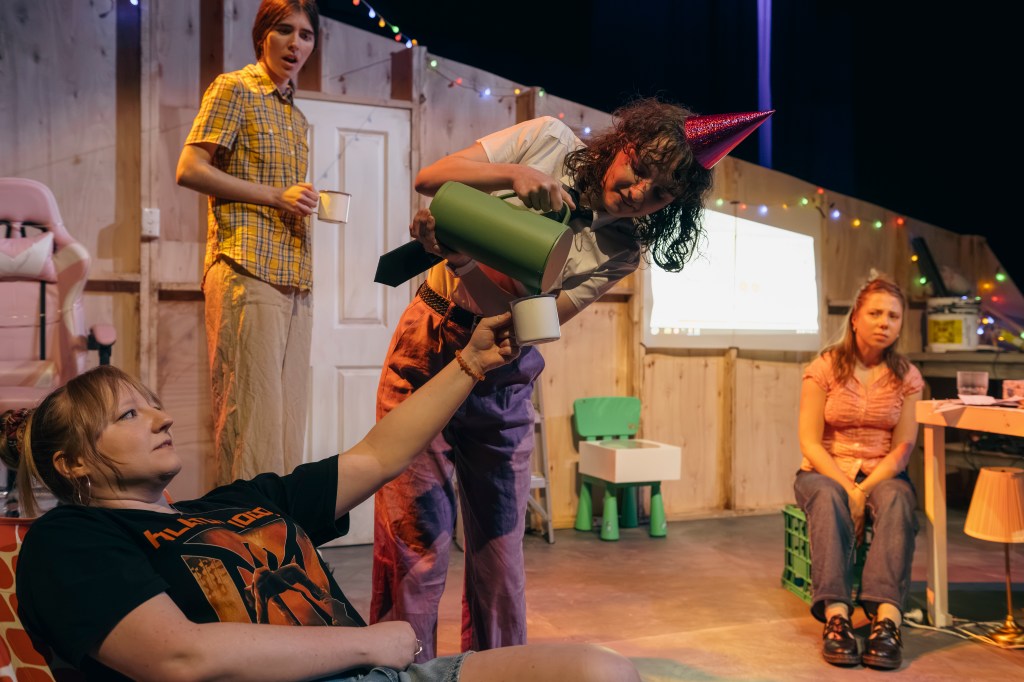
He described wanting the actor’s choices “to break logic a little bit, break naturalistic logic at times so we can keep throwing in new energies as the conversation changes.”
Sutherland spoke about encouraging the cast to commit “fully to the bit. We need to know what’s the bit, what the gag and then hopefully more and more of that will start to emerge.”
As well as being a theatre maker, Sutherland is also a published poet. I was quite interested in whether he had found any interesting links between the two forms in his work and particularly whether the poetic has influenced his directorial style.
Sutherland spoke about poetry often working in lateral association rather than strict narrative logic, which has influenced his work in theatre. He said, “I do think something that performance and theatre can do really well is put realities next to each other; having different realities coexist in the same space, which is kind of lyrical and poetic.” He also described how now he thinks in a poem “about how it is staged and how time functions in the poem because of theatre and performance.”
Sutherland noted that he is usually uninterested in “realistic and naturalistic kind of stage design.” He described most of his productions working in a more abstract space but that for Party, “it’s been fun to be quite literal with the space.” Sutherland joked, “it’s been so interesting for me, that [Party] is set in a shed, so its going to be set in a shed!”
Sutherland, who is also a current Ph.D. candidate at the Victorian College of the Arts, was sought out directly by UHT to take on the play. However, saying yes posed an “interesting challenge” for him as his time as a theatre maker and director has primarily been concerned with the creation of “new works – trying to develop them quite holistically with the playwright.” Party being a pre-existing show with “its own time and place” had Sutherland and the creative team searching for “what is interesting and relevant and new about it today.”
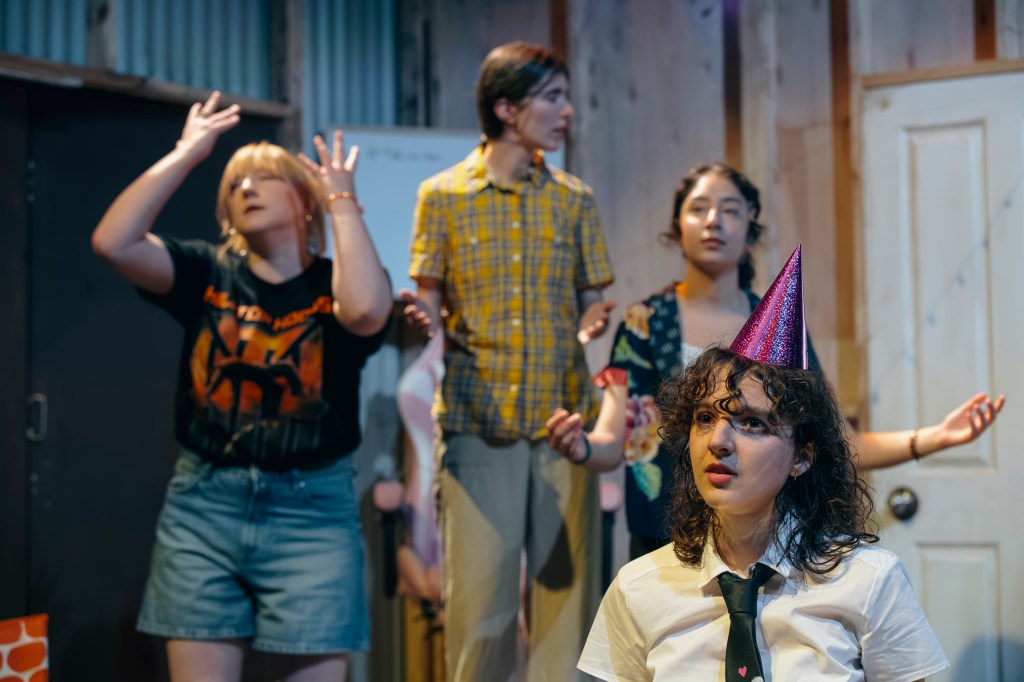
I assumed that this would be an easy task. Reading the Wikipedia article for the radio-play version of Party, the plot and satirical critiques felt so easily transferable to now. However, Sutherland described some major tensions between the play, written in 2009, and the world today which I found to be quite insightful and even a little jarring:
“There’s a naivety to the play and the writing that has some tensions to now,” he said. “There’s a certain cynicism in the writing of this play, but I think the cynicism now is different. I feel like we know more and maybe have less faith in change now, maybe I’m wrong about that though.”
Melbourne University has 76,000+ students yet only around 4,500 of those voted in the most recent union elections. While part of that can perhaps (who am I kidding, can definitely) be boiled down to aggravating campaigners who put students off voting entirely, I think that numerical differential speaks to how little we care about pushing for change generally in 2026.
Sutherland suggested that in the writing of the play, “there is a real genuine need and drive for the utopian version” of what these characters are doing on stage. They are “getting in a room together and having different options and organising,” which is indeed the grassroots form of any democracy. Perhaps events from the last 15 years have left the world more sceptical to those who gather in rooms to organise.
Throughout our conversation, Sutherland made it incredibly clear however, that the target of this satire, “is not student organising.” He said, “even though the characters are students the target is the obliviousness, or the ineptitude, or the untrustworthiness, or performativity of actual kind of politics and actual kind of politicians.”
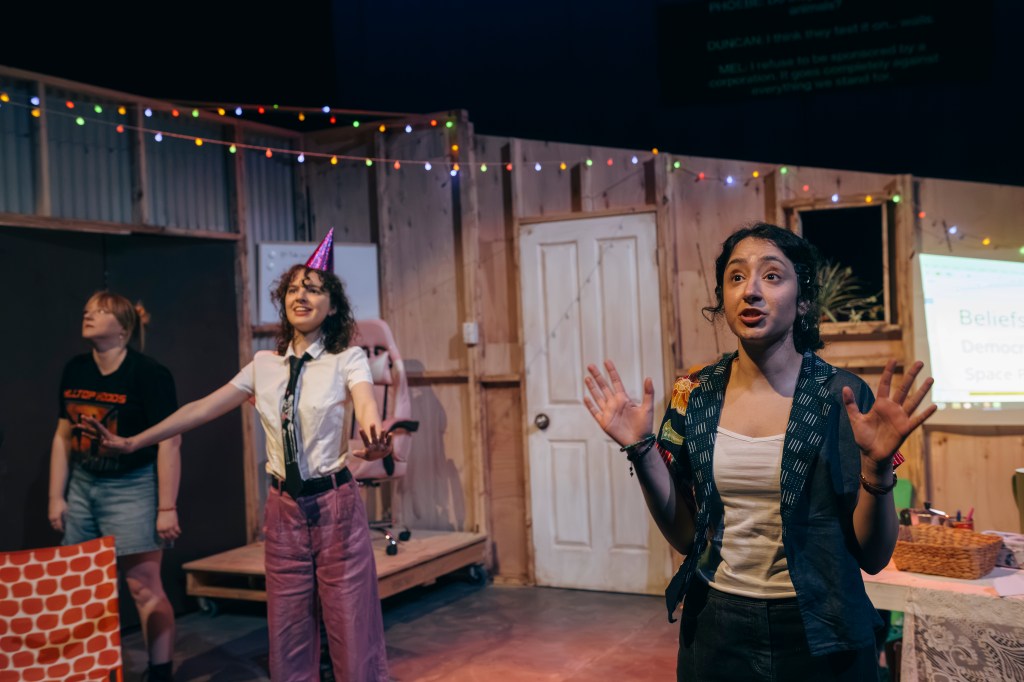
Can you think of any inept, untrustworthy, and/or performative politicians in 2026? I’ll give you a moment to think.
Sutherland reflected that he was not entirely sure where the satire lands. I asked what he meant by that which led us to a slightly tangential discussion surrounding the political benefit of satire which he suggested was perhaps, “a bigger conversation than offered by the play,” however, I believe it to be incredibly relevant.
Sutherland described “any attention is good attention” for figures like Pauline Hanson and Donald Trump, they are “immune to satire or being mocked.” He suggested that the rise of social media since the 90s (and even since 2009) has allowed figures like Hanson to cultivate more attention, even when it comes to satire against them. Sutherland says, “on the left we delight in mocking her … but [satire] is not the right strategy because … that still contributes to the noise and the harm.” He stated, “that’s also grappling the difference between 2009 and 2026 – what is the function of satire?”
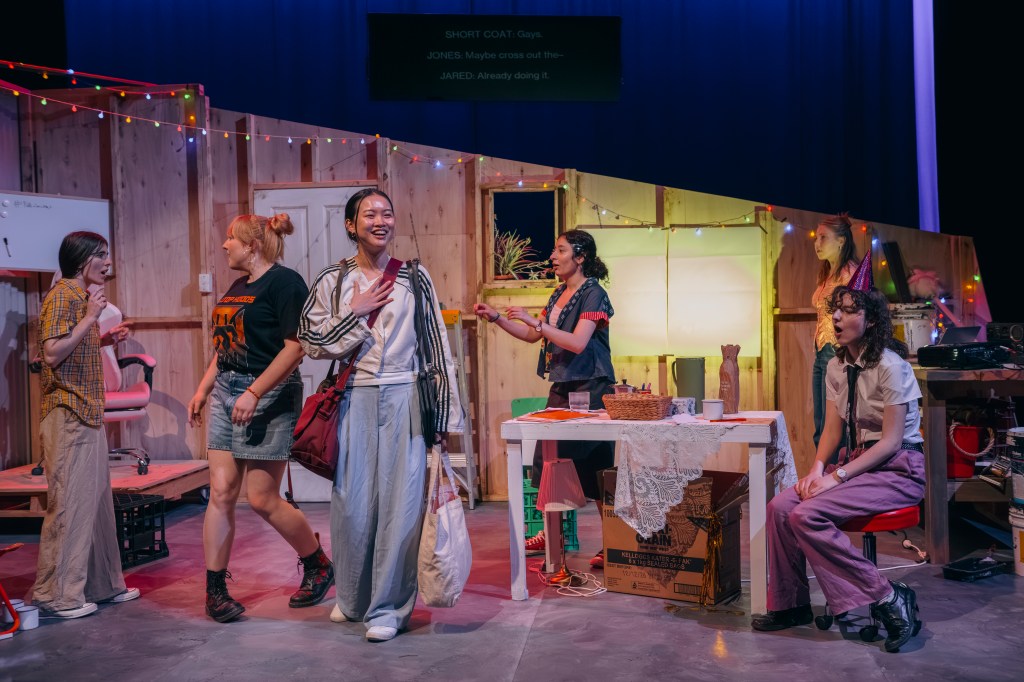
I asked, if not satire, then what type of theatre or form could be used as a challenge to this type of political figure?
Sutherland answered honestly and even a little idealistically – “I don’t know. I think the thing I do know, and also the important thing of this particular show, is the process of making something. I think that the sense of all being together in a room and working on something together and working on skills and working on making people laugh. I think that is still important.”
But in terms of what form is going to defeat the rise of the right, no, neither of us had an answer for that.
While no play will fix the world around us, this production of Party, and honestly every piece of theatre being produced right now is a reminder of the democracy that we live in. Making, creating, disagreeing, collaborating just as the team behind Party and the characters on stage have done is as important now than ever before. So, get in a room, get talking, and get organised.
Union House Theatre’s Party played at the Guild Theatre 24-26 September 2026.
ELIJAH VALERY SLAVINSKIS is a first year arts student, looking to major in Screen Studies and/or Art History. After being on stage a lot as a child, he is keen to explore opportunities behind the scenes and in the audience, like writing for The Dialog!
CHARLOTTE FRASER (she/her) is a writer, performer and editor based in Melbourne. She holds a BA in English and Theatre Studies and is currently completing her Masters degree at the University of Melbourne. Charlotte is also the 2026 Dialog Editor.
The Dialog is supported by Union House Theatre

