
REVIEWED BY LUCY SONNEMANN
EDITED BY CHARLOTTE FRASER
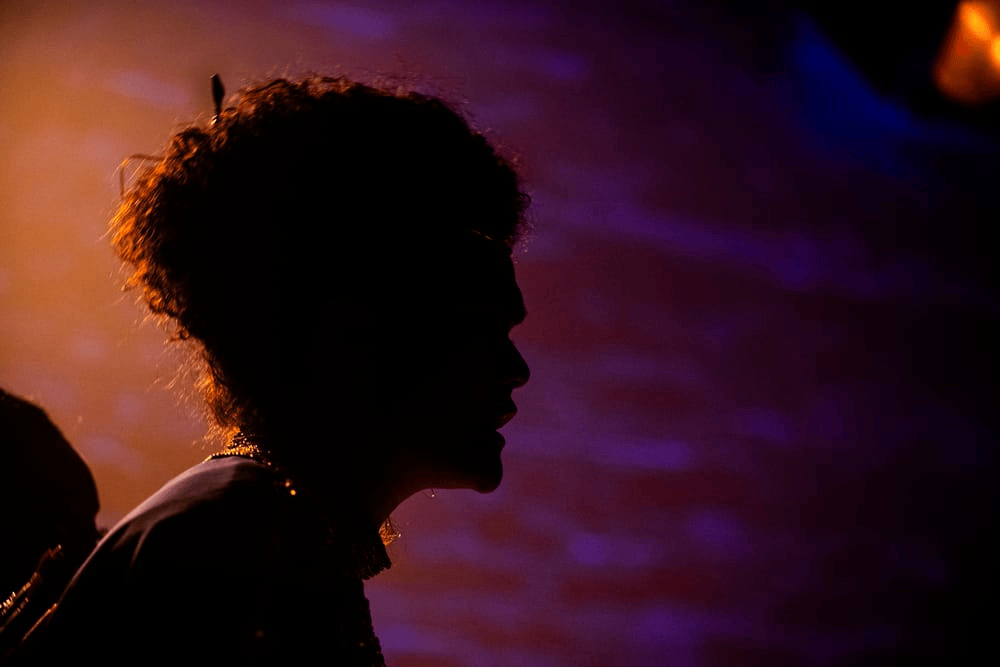
On the stage of fortyfivedownstairs, the air thick with incense and anticipation, the cast of MSC’s Cleopatra and Antony sit around an imposing stone amphitheatre; all but one. In her absence, her supporting characters stare into the audience, their unflinching gazes demanding that we bear witness. This is the story of Cleopatra: Egypt’s last pharaoh, a woman whose legacy has been rewritten so many times that it can be difficult to distinguish the woman herself from the stories told about her. One thing is clear: this will be no passive adaptation.
As the reworked title suggests, Cleopatra and Antony deliberately shifts Shakespeare’s focus towards the famous Egyptian queen, challenging the ways she has been depicted both historically and within the play itself. From Shakespeare to Elizabeth Taylor, all the way back to the Roman political propaganda perpetuated by Octavius Caesar at the time, history has reduced her from a highly capable, fiercely intelligent queen to ‘seductress with two boyfriends who committed suicide by snake.’ There is a lot to unpack.
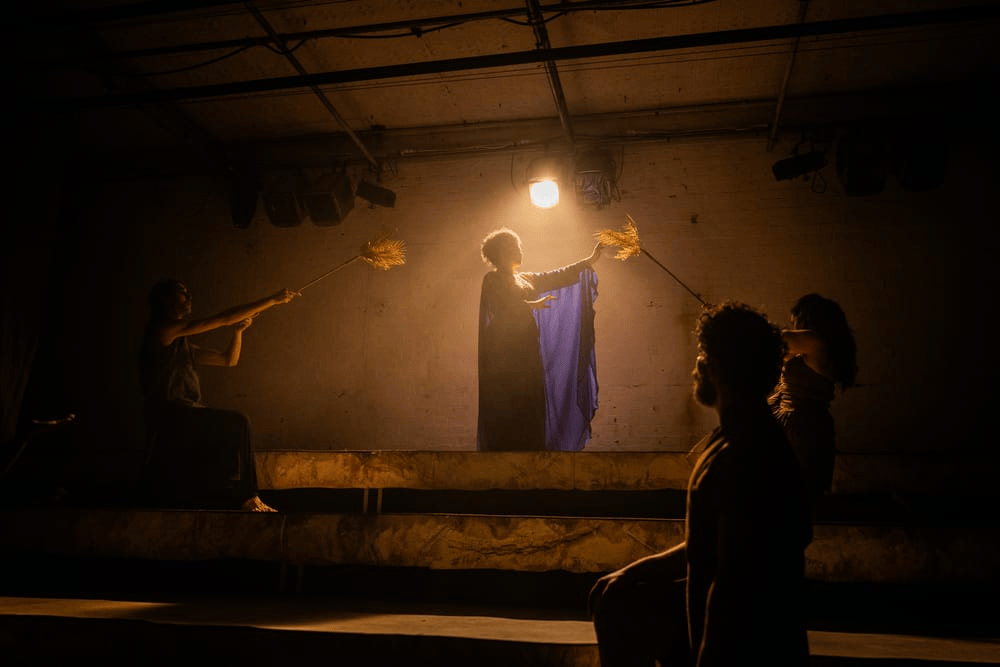
Historically speaking, Cleopatra worked hard to ensure Egypt remained secure amidst Rome’s endless expansion. However, Octavius – Mark Antony’s co-ruler of Rome and political adversary – needed a way to discredit his rivals’ suitability to rule Rome. Thus, Cleopatra was framed to the Roman public as an immoral, foreign seductress who had bewitched her Roman lover and reduced him to incompetence – because no way could a man just be incompetent of his own accord, it must be a woman’s doing!
Rather than an outright rejection of Shakespeare’s original work, this 90-minute adaptation reclaims a Cleopatra closer to the woman history may have known. Under the intelligent direction and adaptive choices of Sonya Suares, the stormy language of Shakespeare’s original text is given full breath while scenes that divert strongly from the queens’ plausible history are reconfigured or challenged.
The defining feature of Akina Edmonds’ performance as Cleopatra was that there was nothing fake about her power. Delightfully playful and flirtatious moments were grounded within the framework of a deeply charismatic and intelligent portrayal.
Her great pride and emotional volatility from the script is retained, yet her capacity as a ruler is never in question; even at her most playful or unpredictable, Edmonds’ Cleopatra never feels less than completely in command.
Louis Lucente delivers a captivating struggle between desire and duty as Mark Antony. Haunted by his former military greatness and accused of being weakened by Cleopatra’s influence, Lucente brings a unique vulnerability to the role that makes total sense within the narrative. Deeply considerate and sensitive, he still possesses a staggering capacity for volume and violence, particularly in his jealousy over Cleopatra. It is this tension between tenderness and brutality that gives his performance its depth. Edmonds and Lucente’s equally powerful, complex characterisations are compelling together, the attraction between Cleopatra and Antony appearing rooted in the qualities that define them.
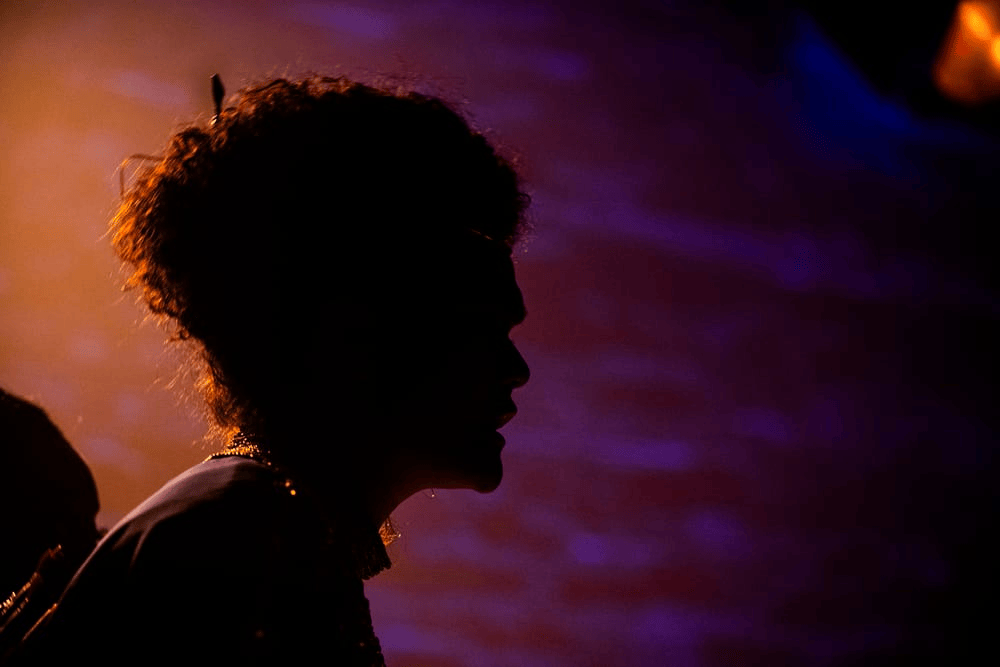
Tsungirai Wachenuka as Charmian was utterly captivating, her ethereal physicality filling the space and lifting every performer around her. Playful banter with Cleopatra makes her fierce defence of her queen all the more striking in the plays’ final scene, and her narration edifies this adaptation’s beautiful sense of sisterhood between its women.
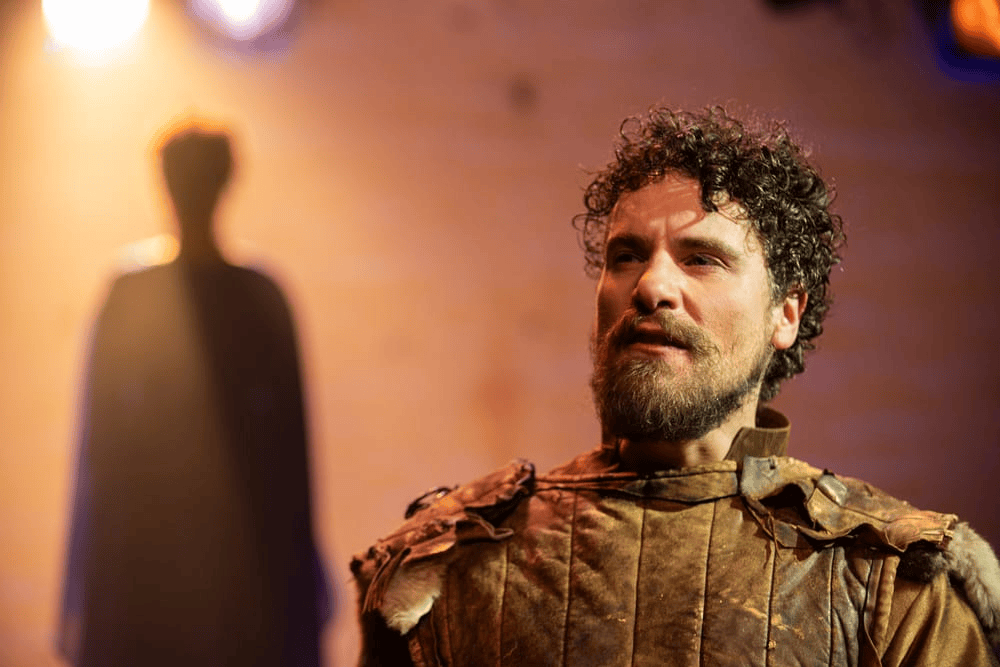
Damon Baudin as the unassuming Octavius makes the shadow of Julius Caesar difficult to forget, his quiet calculation hinting excellently at the formidable power he is yet to claim.
Despite its small cast, every performer carries their weight, bringing a physical and vocal energy that makes this production invigorating. Shakespeare is performed here with technical precision and vocal prowess, embracing the text and the adaptions’ additions in equal measure. The ensembles’ chemistry is particularly enjoyable in the Second Triumvirate’s meeting, where a hint of clowning emerges amongst the supporting cast during the tense verbal tennis match of Antony and Octavius. Spontaneous comedy like this can often fall flat in such a play; in this case the foolishness was highly distracting and thoroughly entertaining. In the more serious scenes, the ensemble creates a chaotic, volatile environment while still delivering vocally centred performances. Laura Iris Hill shines in Enobarbus’ final moments, her masterful command of Shakespeare’s language bringing a deeply moving clarity to the poetry and imagery. Amir Antoine’s was equally affecting as Eros, his final moments played with excellent control and focus with Lucente, leaving the audience utterly heartbroken.
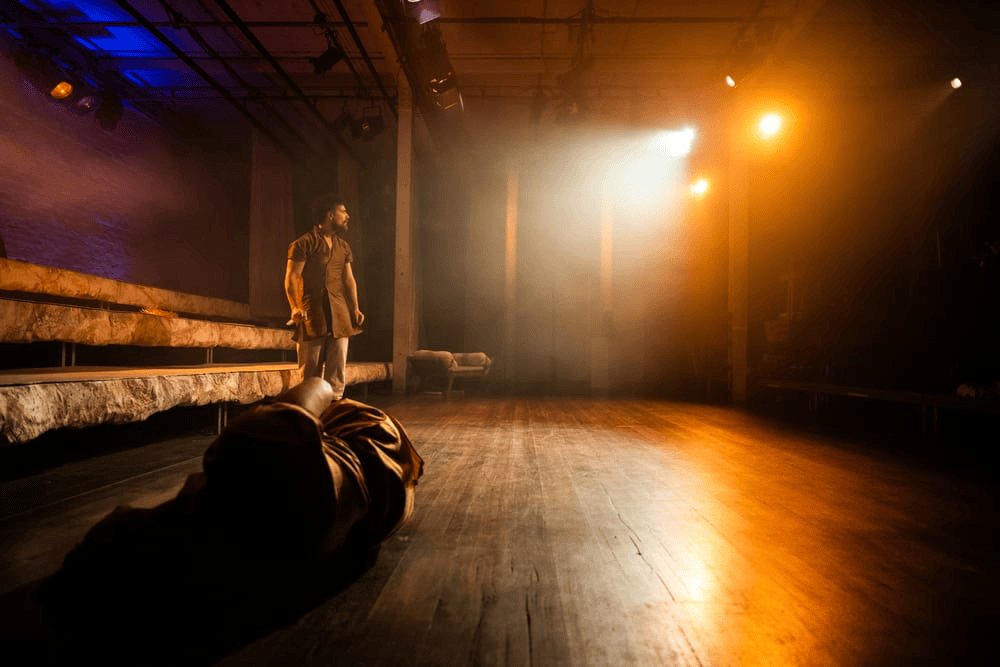
There is much to admire in this production’s beautiful, highly considered design, which uses simplicity to transport us across the ancient world. Set by Eloise Kent is particularly effective. The sparsity of the fortyfivedownstairs space and the imposing stone steps evoke an ancient theatrical space, while scents in the air, large curtains and entrances and exits woven through the space create an immersive world without ever cluttering the stage. This uncluttered design is a particularly wise choice for a story spanning Rome, Egypt and the many geographical locations between them, allowing the audience to travel with imaginative ease.
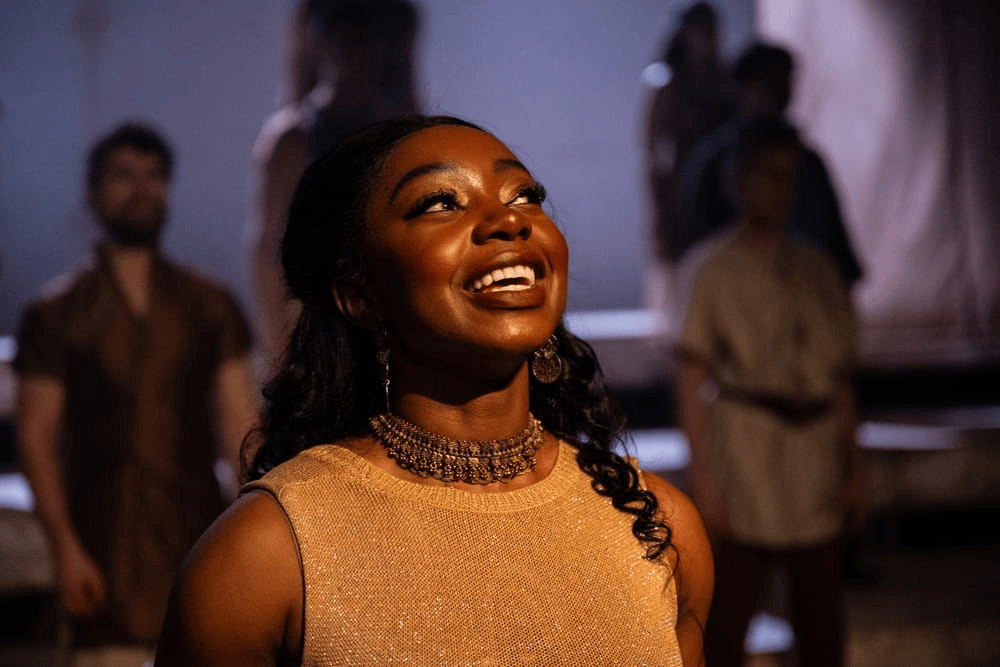
Lighting by Rob Sowinski is successful in its subtlety, crafting an intense and relentless heat from the sun that feels natural to the space. The show culminates in a final tableau rendered regal under Sowinski’s lighting, the casting floating back to life under Charmain’s direction to recreate Cleopatra and Antony’s first meeting. Samatha Hastings’ costumes provide just the right amount of detail, evoking both military society and ancient royalty without relying on full armour or excessive bling. Cleopatra shines with regal power in a dazzling blue dress, and Octavius stands out amongst the Romans with a blood red tunic. Between the rigidity of Roman tunics and luxurious Egyptian styles, Mark Antony’s simple attire is cleverly indicative of his complex loyalties.
Movement directed by Tom Royce-Hampton is at its most effective when it becomes a language of its own. Angelo Torres’ Soothsayer was a standout, his mystical sequence of movements captivating and foreboding. Although the motif of the cast circling various characters in distress or deep thought throughout the story got increasingly repetitive and predictable, and mass movement for the battle scenes was clear and provided a palpable sense of danger.
Overall, Suares succeeds in a sensitive and engaging adaptation, however the treatment of the lovers’ final moments came across in quite a confused manner. The decision to strip Cleopatra’s death of its grandiose ceremony is deeply moving, no costume change for a deathbed or romanticised spectacle. Instead, she is pragmatic and sincere, the act of removing herself from the fate Caesar intends is more important than the way she dies. Removing the romanticisation that has surrounded Cleopatra’s death for centuries gives this production startling humanity.
This moment is unfortunately undermined by the following response from the ensemble. The collective wailing of servants perhaps intends to communicate their profound loyalty to their queen, but this is pushed so far that it begins to detract from the tragedy rather than deepen it. After achieving such moving simplicity, the sudden theatricality of the moment feels almost comic, leaving this scene feeling ironically overstated.
The source material is wonderfully rich in its messaging, simultaneously celebrating and warning against the emotions that rule us. Tragedy ensues when passion is chosen over political security, and yet this story celebrates the profound human impulse to choose love despite the consequences. What MSC has done with this material is thoroughly insightful and exciting, breathing life into an overlooked play and an even more overlooked leading lady. Passionate, fierce and alive; thank you for waking her up MSC.
Melbourne Shakespeare Company’s Cleopatra & Antony played at fortyfivedownstairs, 20 August – 13 September, 2026.
LUCY SONNEMANN (she/her) is a Melbourne-based actor, and second year BA student at the University of Melbourne, studying English and Theatre Studies alongside Creative Writing. She loves Melbourne’s student theatre community, and the magic of live performance.
CHARLOTTE FRASER (she/her) is a writer, performer and editor based in Melbourne. She holds a BA in English and Theatre Studies and is currently completing her Masters degree at the University of Melbourne. Charlotte is also the 2026 Dialog Editor.
The Dialog is supported by Union House Theatre

