
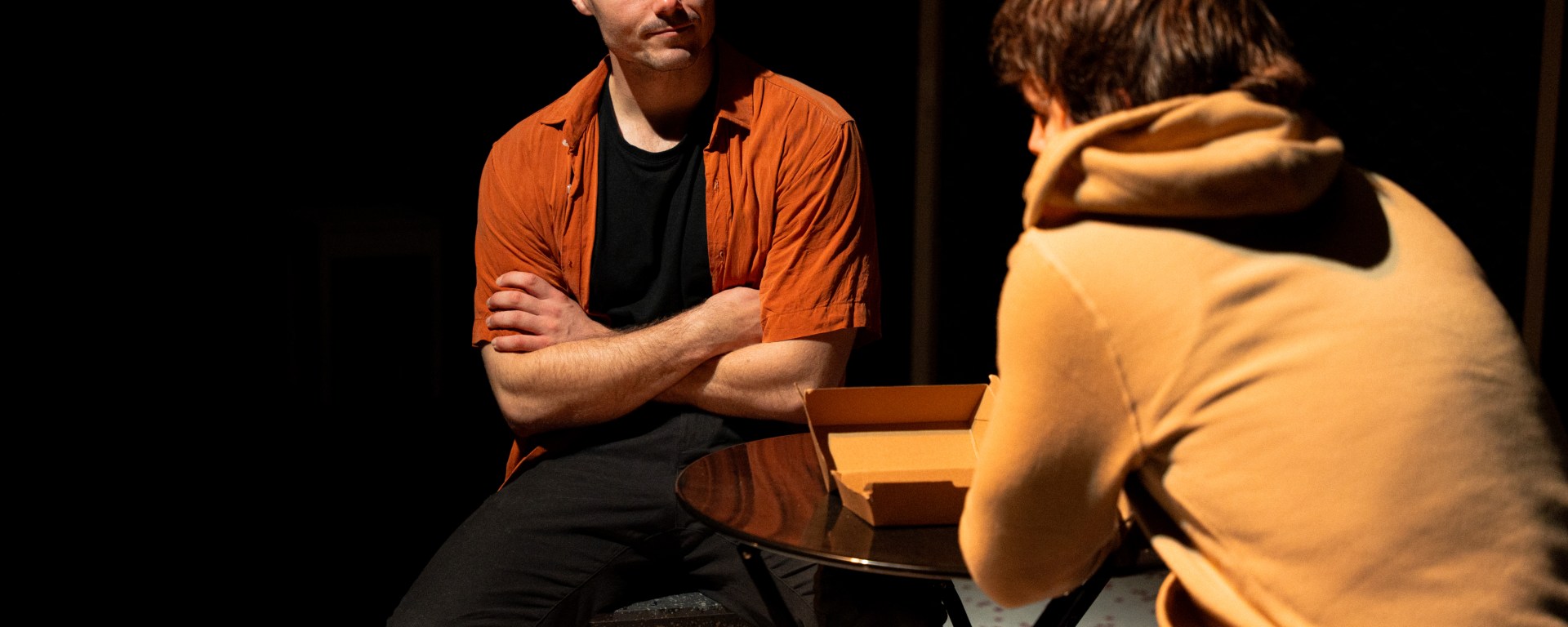
REVIEWED BY JADE BREEN
EDITED BY RACHEL THORNBY
Trigger warning: The cat dies in this one.
Well, eighty-five of them to be precise, but who’s counting?
Presented by Theatre Works and Paracosm, Tom Fowler’s Katzenmusik turns up the broken radiator, raising a bold middle finger at the all too familiar perils of the housing crisis.
Derived from German, Katzenmuzik is defined as a caterwaul; the shrill howling or wailing noise often produced by a cat. It is an uncomfortable sound, piercing its way through your consciousness, echoing long after the source has taken its final breath. The opening moments of the show foreshadow a grizzly narrative: eighty-five cats will die in this play. So, as I settled into my seat, I prepared myself for the worst.
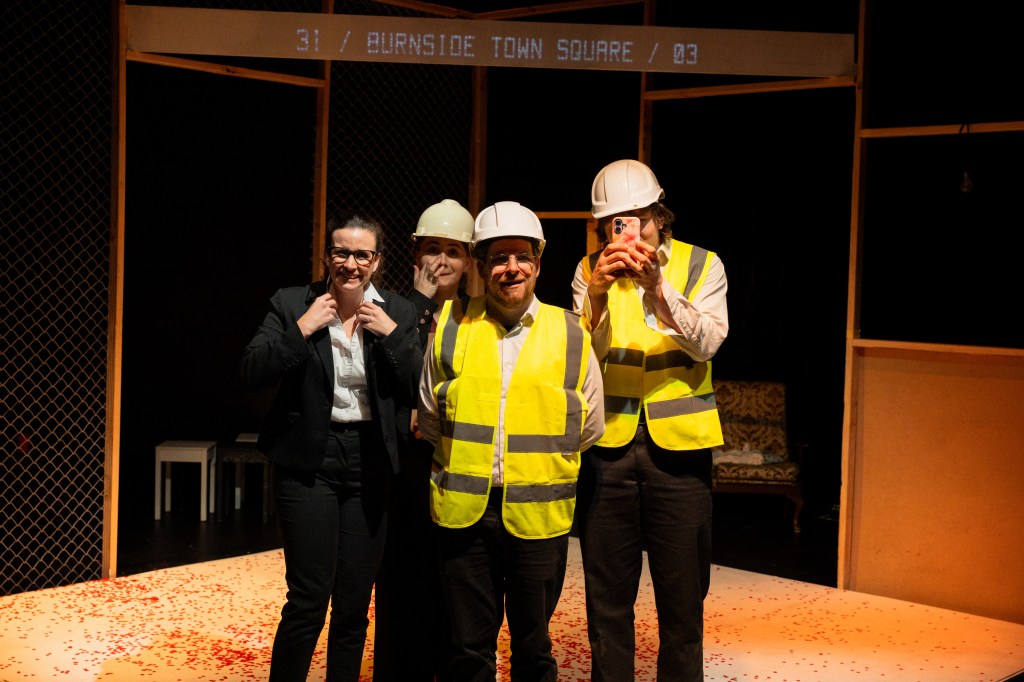
Fowler’s script documents the absurd responses of the small town of Burnside following a grizzly and infamous cat massacre. The residents of a once peaceful oasis mourn their furry friends, lamenting the tragedy that has stained the reputation of their community. But as the final cats are put out of their misery, and the piles of bodies are laid to rest, a much darker crime is revealed, the death of a young woman at the hands of her irresponsible landlord. As the audience is catapulted backwards through time, we are asked to consider what is the value of a human life?
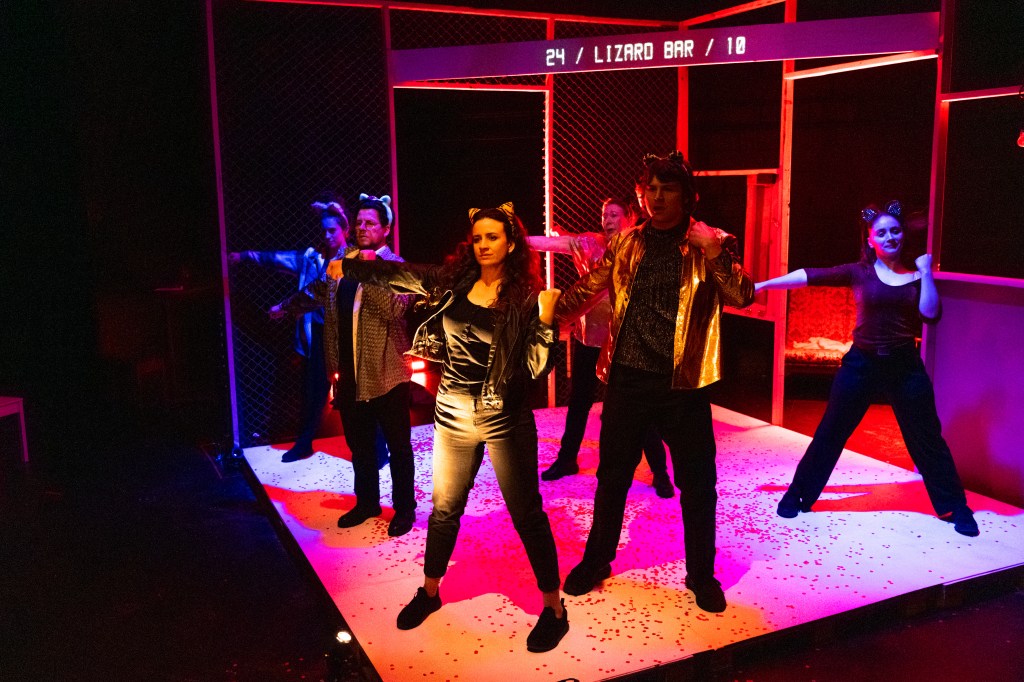
The work sees seven actors (Georgina Barley, Kyle McCallion, Tyrie Aspinall, Grace Gemmell, Gabrielle Ward, Hugo Gutteridge and Julia Johnson) take on seventy-seven characters, crafting absurd snapshots of the unique human stories that are so often squashed under the weight of the housing crisis: phone calls that could have saved lives, doctor’s appointments that should have gone better, and news interviews that ask all the wrong questions. The ensemble worked effectively to take on such a broad cast of characters slipping in and out of each moment like a well-oiled machine. What exists textually as quite a tumultuous narrative becomes this holistic organism under the strong direction of Chris Patrick Hansen. The work presented a confident physical language, the tightly choreographed movement and chorus moments contributing to a memorable creative aesthetic. I particularly loved the way the phone calls and voicemails utilised the whole cast to build a scene that only required two characters. While the performers themselves were very strong, the cast was let down by an overcomplicated rotation of costumes. The constant quick changes creating a bit of confusion about which characters we had already met and which ones were being introduced for the first time. Despite this confusion I felt the production did well to craft strong and resonant characters who were very easy to empathise with.
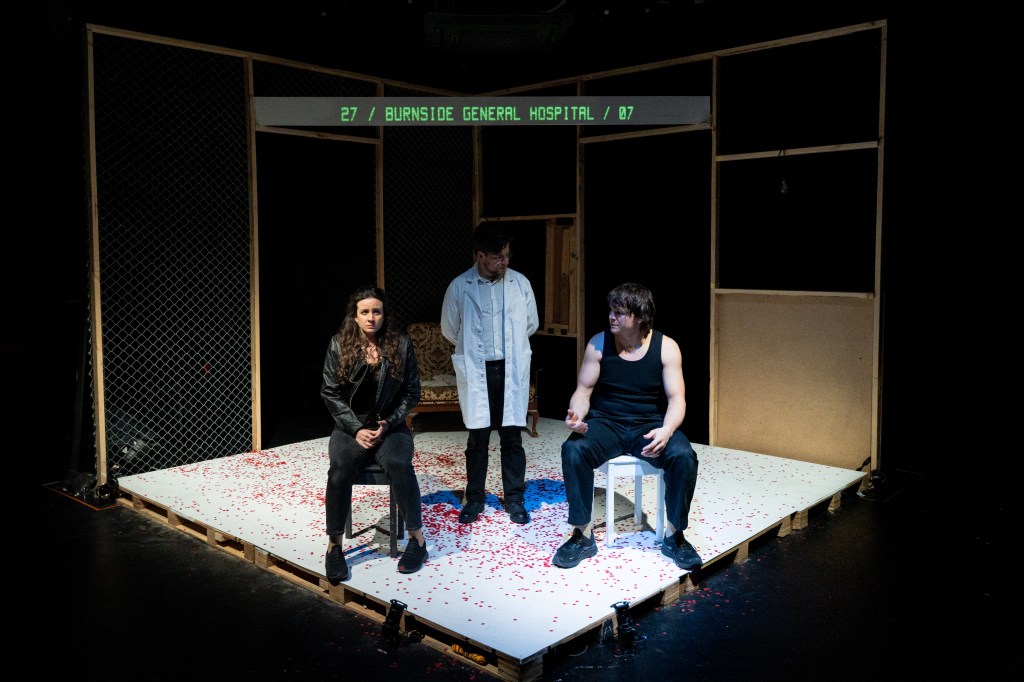
The design of Katzenmusik saw bare wooden scaffolding fill the interior of the Explosives Factory, the stark frame embellished by the occasional addition of a couch or lectern depending on the scene. I loved the simplicity of the design, not only for its ability to transport us swiftly from moment to moment, but for its intriguing commentary on the grim state of accessible housing. The set demands the performers to squeeze themselves into impossible spaces, oftentimes forcing them to spill out into the audience to have enough space to tell the story and this intention was complemented by intelligent and considered lighting and vision design by Jacques Cooney Adlardney. Housing is a finite resource, and this design highlights the compromises that people must make just to keep a roof over their heads. Sure, the hot water has been turned off, and the broken radiator is spewing carbon monoxide, but it could be worse, right? The irony of this design is that the set itself is larger than what is attainable for most renters going to see the show.
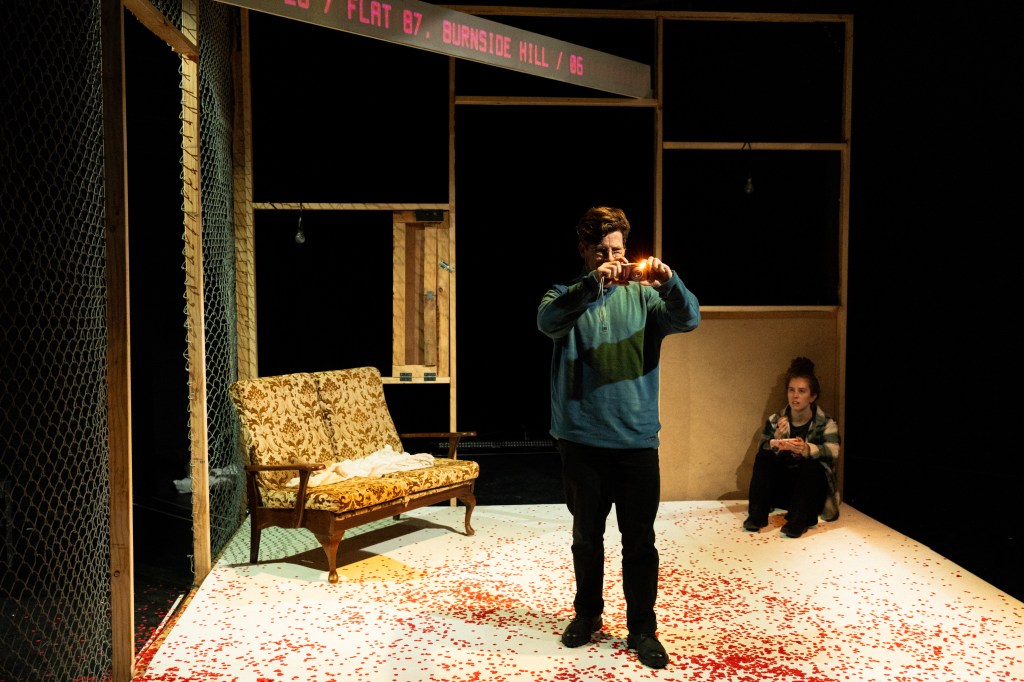
Originally devised by a group of young people ten years ago, the play is based on the real-life animal murders that took place in the 18th century, a mass action protesting the living circumstances of young apprentices. A few centuries later this production argues that not much has changed. Theatrically, the driving narrative force sees the play travelling backwards through time, allowing the audience to piece together the events of the tragedy and question when it all went wrong. Beyond this, the disruption of linear time and the framing of events suggest a startling recession in the attitudes we bring to conversations about housing and wealth disparity. Renters are expected to remain polite and agreeable in the face of disgusting exploitation, bending over backwards to please those who wield unprecedented power over their living situations. Katzenmusik tackles the overbearing noise coming from those in power, presenting an acute awareness of just how dire the housing crisis really is. While landlords give grand speeches about an honest day’s work, people all over the world are coughing up their lungs just trying to survive the cold and perhaps it is this noise, this caterwaul, which should capture our attention. Within this conversation I found myself slightly conflicted with the accessibility of the production, questioning whether a work about power and wealth can truly resonate with those it represents when the cost of a theatre ticket is often unjustifiable against rising living costs.
Ultimately, Katzenmusik meets the violation of human dignity with a vengeful outcry, a demand for direct action, and a very real threat of violence against the oppressive force of the housing industry.
Katzenmusik played at Theatre Works Explosives Factory 4 – 13 June 2026.
JADE BREEN is a young playwright and theatre practitioner based on Boonwurrung and Wurundjeri country. A proud advocate for diverse and intersectional storytelling, Jade is excited by work that encourages resistance, change and a celebration of identity.
RACHEL THORNBY is a Media and Communications honours student writing her thesis on social media reviewing platforms. As a lover of reading and writing she is a sub-editor for both The Dialog and Farrago.
The Dialog is supported by Union House Theatre

