
REVIEWED BY AUDREY MUELLER
EDITED BY CHARLOTTE FRASER
We often expect enormous acts to transform our lives, but ultimately it all boils down to the small decisions.
In Key Conspirators and Theatre Works’ production of The Effect – an award-winning play by Lucy Pebble – we meet Connie and Tristan, two young volunteers who get involved in an anti-depressant drug trial. They expect 4 weeks of ease concluding with a stack of cash in hand, but what they don’t expect is to have their whole lives turned upside-down. Changed for better or worse by love.
The play spans 90mins and is captivating every second. Themes of mental health, ‘levels’ of depression, emotions and their relationship to one’s life are investigated and confronted. From the production’s first line key issues regarding mental health are taken on in a sardonic, almost comedic, way.
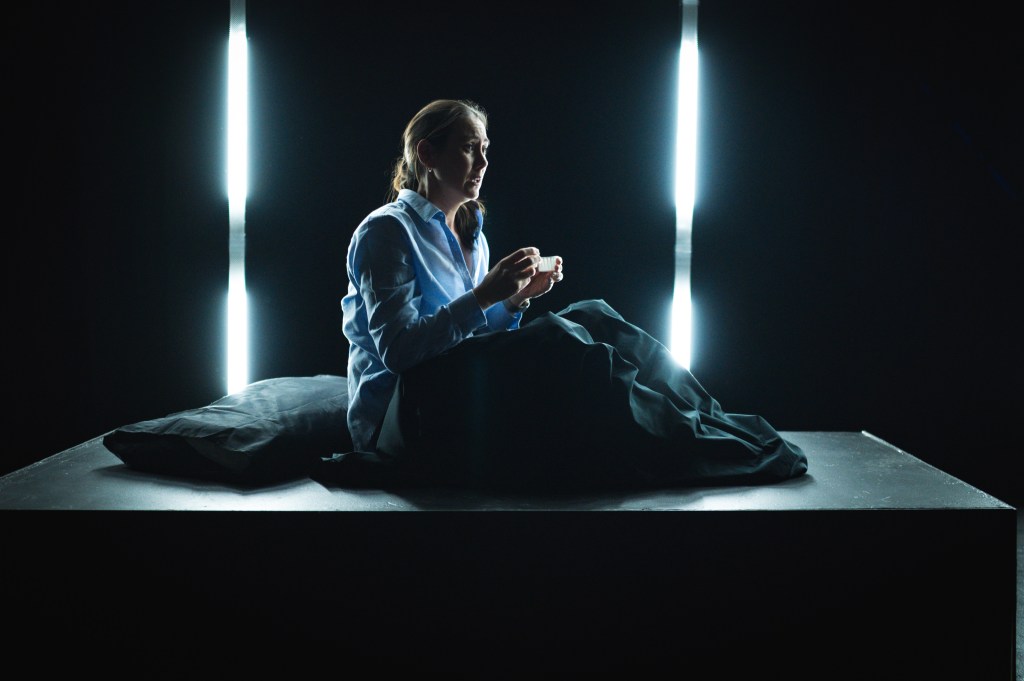
The first volunteer Connie, played by Jessica Martin, is a textbook perfectionist: a postgraduate psychology student who can convince everyone but herself that she is happy. Martin portrayed this archetype to a tee. Her constant fidgeting and flickering eyes created the base of her nervousness. The jittery, anxious dialogue delivery and constant playing with her hair cast her discomfort clearly.
The second volunteer, Tristan – played by Damon Baudin – is a laid-back, flirty drifter. In the play’s opening we meet Baudin as he manspreads in the clinic room spouting obnoxious jokes to the physiatrist. Introduced with arrogance and a carefree demeanour, this soon changes under the effect of the drug. Baudin juggles the role’s behaviour fluctuations authentically– one moment relaxed, one moment lustful, one moment distressed accompanying the drugs effect.
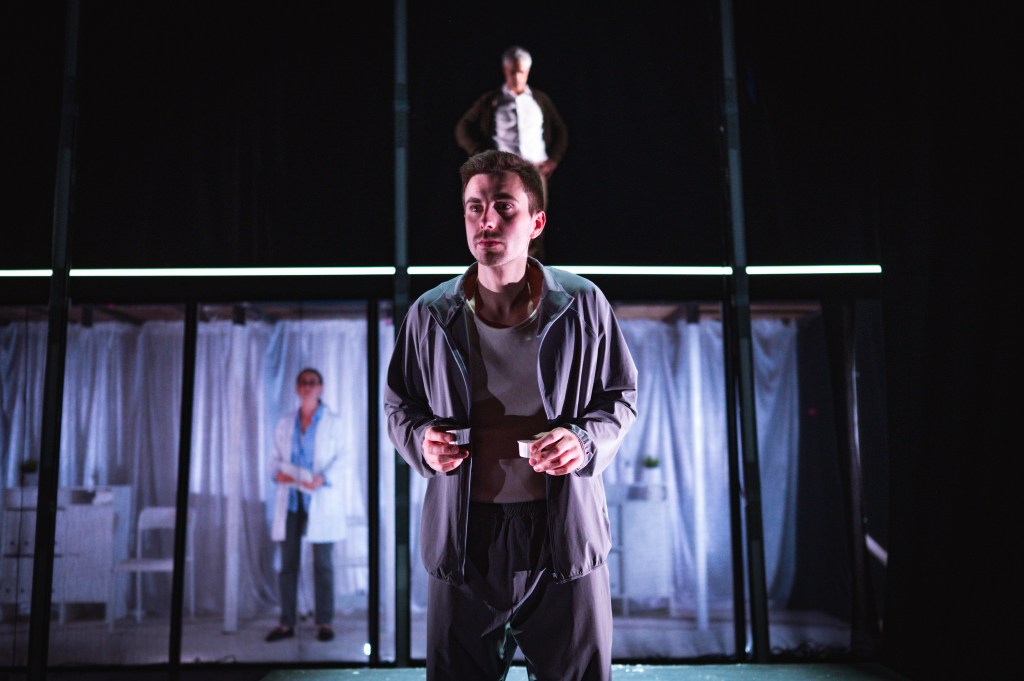
The two volunteers perform the distress of chemically altered hormones flawlessly, their uncomfortable state washing over the audience – a credit to the work of director Alonso Pineda. Their bantering dialogue seamlessly intertwines creating genuine chemistry. Attention to physicality and gestures, from large dancing scenes to minute details like a shaking leg during a conversation, elevated the distressed psyches.
Dr Lorna James, a perfectly level-headed physiatrist holds the largest character arc in the play. Played by Emma Choy, who smoothly switches between interactions involving the volunteers and her friend/employer Dr Toby Sealy. Choy’s nails the unexpected representation of a professional psychologist suffering from depression, who actively refuses to use medications from her field. This character trait implicitly escalates the uncertainty of medial drugs much better than a monologue could have.
The drug trials funder and enthusiast Dr Toby Sealy, played by Philip Hayden, you would assume takes on the antagonist role of greedy, corrupt investor. Instead, Hayden grounds Sealy’s ambition in care and passion for helping others, making the character refreshing and likeable.
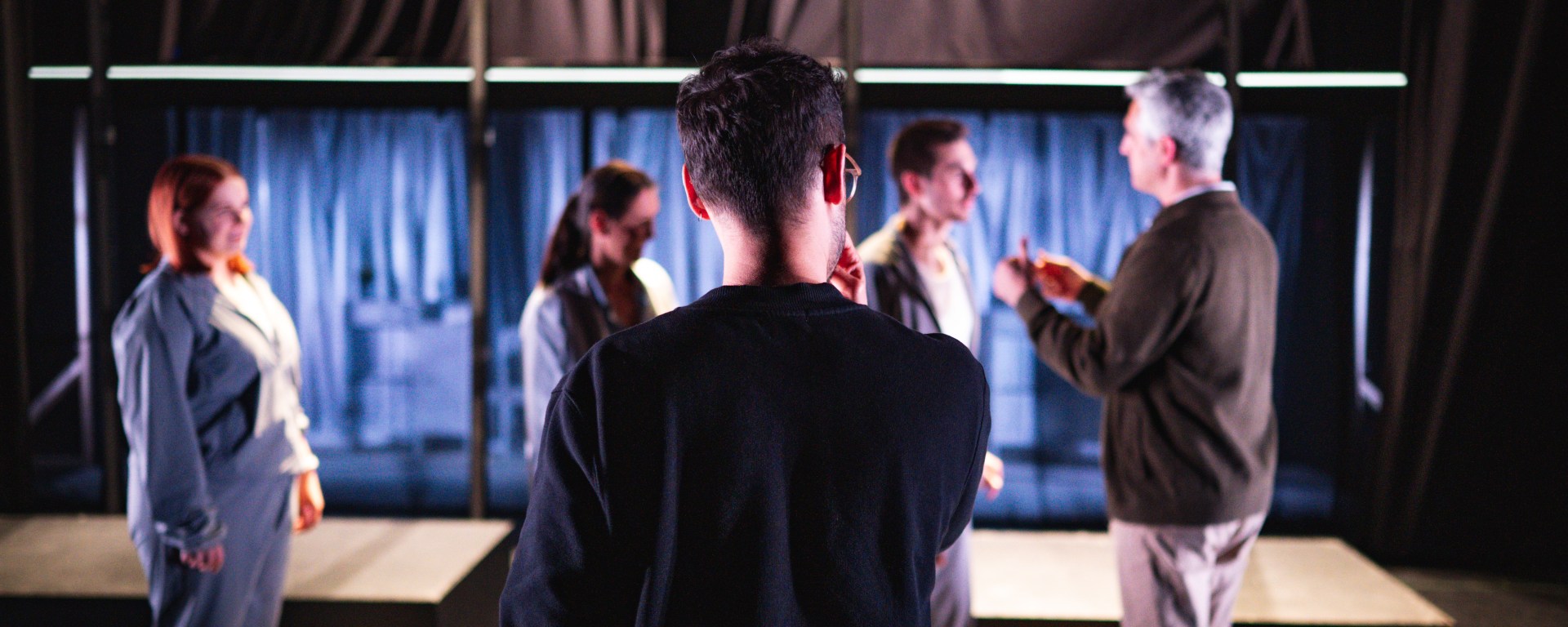
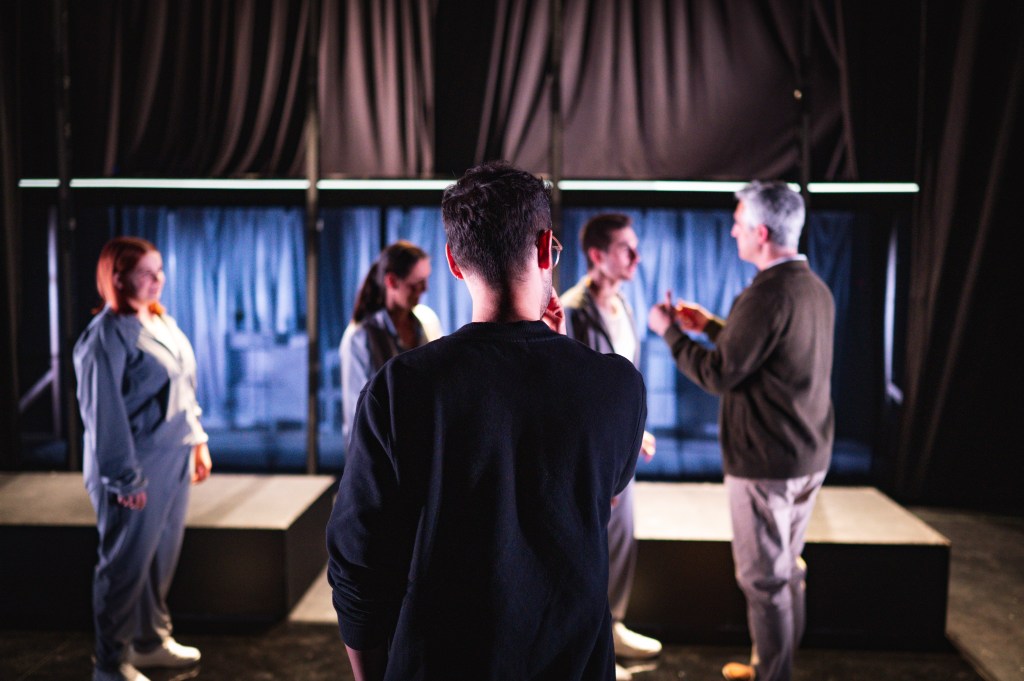
Tom Vulcan’s set divided the stage into three sections: upstage you find a high balcony, below an enclosed room and downstage a plastic area with two blocks serving as beds. The space itself lacked wings; Vulcan cleverly created wings on either side of the balcony and box which provided the actors opportunity to move around the space and costume change effectively, aiding the realism and seamlessness of the narrative. The set was brilliantly constructed and provided great separation when the characters and scenes unfold across various time and location. Additionally, the bareness and bleak shades allowed attention to be concentrated on the actors, foregrounding the play’s focus on human condition. It was a fantastic use of small space.
Notably, though, the balcony had four vertical bars of lights situated from the balcony’s floor upwards, which limited visibility. The audience was just under full capacity on opening night, and thus, at any given time an audience member’s line of sight is blocked by a vertical light bar. Often actors’ facial expressions or gestures were missed, causing frustration and breakage in the play’s immersion.
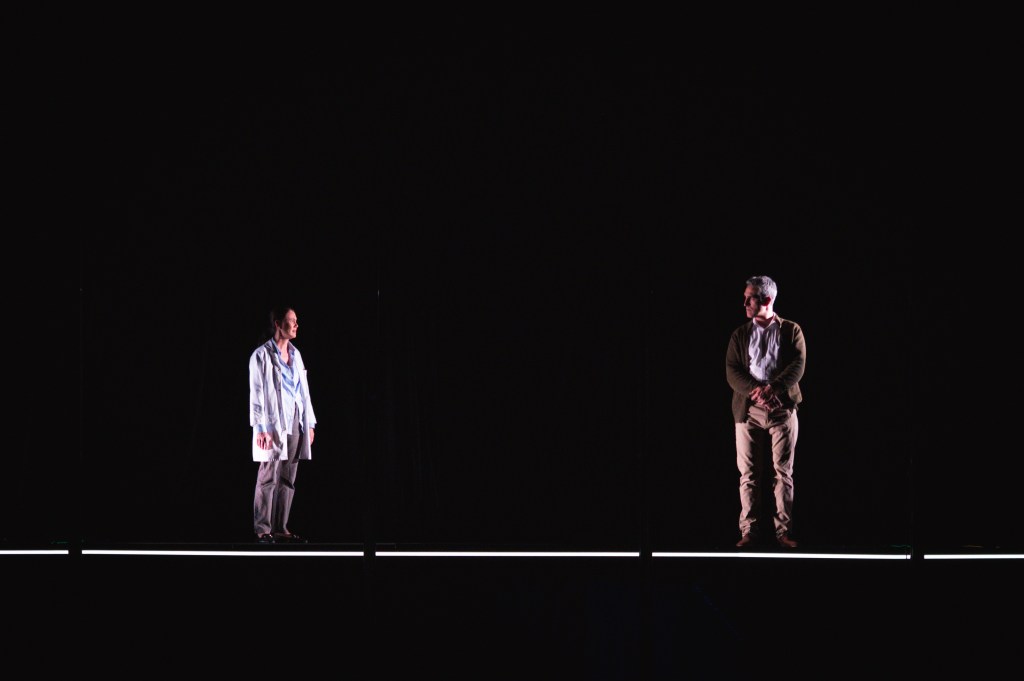
The play uses lights situated along the balcony’s framework, flashing during intense and pivotal moments, such as the volunteers swallowing their pills, scene changes and moments of distress. The lights elevate the drama of the play and contribute to the distress embodied by the characters. Despite the lighting beaming directly to audience members, it was tasteful and manageable for visual perception. It takes attention briefly off the stage as audience’s eyes adjust, allowing for actors to move through the wings and stage undetected. I would, however, have liked to see what variety in the light’s direction could do for the show, such as lights directed to the volunteers when they swallow their pills, allowing for a dramatic spotlight. More experimentation by Vulcan with lighting could have elevated the uniqueness and commentarial message of the play.
The play displays love life archetypes which are overused and cliché within the creative industry. Particularly evident the beginning of the trial, the participants must name the colour of words that appear projected upstage. Choy explains this is a psychological trick, if the word is a trigger or an uncomfortable topic, the participant takes longer to name the colour. Connie, a woman, stumbled on words such as diet, Tristan, a man, stumbled on words like father. The reactions push the identity of an anxious insecure woman desperate for love and a laid-back, non-committing man. Despite these rigid and dull elements of the play’s writing, the production transparently leans into these clichés, ultimately using it as a technique to foreground and examine themes of human condition, its effect on life and the flight between the mind and the heart.Opposite to Tristan and Connie rigid trope, James and Sealy’s characters are dynamic, creating a more complex and crucial reading of human connection. Within their relationship they take on roles of exes, friends, colleagues and lovers. They hold differing opinions in many areas such as the use of medicine to assist with depression, but despite this they evidently have deep care for one another. Their relationship takes a strong arc and examines how both emotion and logic can blur human perception.
The Effect was impeccably executed by Theatreworks – the themes and discussions woven into the play shine through the acting and set. The contemplative state the play leaves you in is reason enough to see it, but the phenomenal acting, despite a somewhat banal script, was a highlight for me.
The Effect was presented by Theatre Works Key Conspirators at Theatre Works 8 – 18 April 2026.
AUDREY MUELLER is a second year arts student, majoring in creative writing and media communications. Her love for theatre was sparked in high school and she carries this passion into her uni work, performances, reviewing and sub-editing at Unimelb.
CHARLOTTE FRASER (she/her) is a writer, performer and student editor based in Melbourne. She holds a BA in English and Theatre Studies and is currently completing her Masters degree at the University of Melbourne. Charlotte is also the 2026 Dialog Editor.
The Dialog is supported by Union House Theatre

