
REVIEWED BY ISLA TEAGUE
EDITED BY RACHEL THORNBY
The Intercollegiate Activities Council (ICAC) kicked off the Melbourne University theatre season with their production of Godspell, directed by Stella Bryne. Written by John-Michael Tebelak and composed by Stephen Schwartz, Godspell filled the Union Theatre with joy, energy and lots of vines from the 16th – 18th of April. Centring on parables from the Gospel of Matthew, Godspell invites the audience to learn with the ensemble as Jesus (Kenneth Chai) teaches the lessons as skits.
As someone who is not Christian, I was a little hesitant going into the performance, as biblical references have been known to go over my head. Walking into the theatre, I wondered if I might lose the trail of the storyline or spend the entire time trying to decipher the biblical speech. However, the company of Godspell instantly relieved my fears as they invited the audience into a world just a step away from our own with modern references, humour and fantastic renditions of Stephen Schwartz’s music. They used these tools throughout the musical to emphasise their message of faith, community and inclusion through clever skits of Jesus’ lessons. I felt like a participant of the lesson they were sharing and this inclusivity allowed me to follow the detailed biblical parables that endeared us to the characters’ differing personalities.
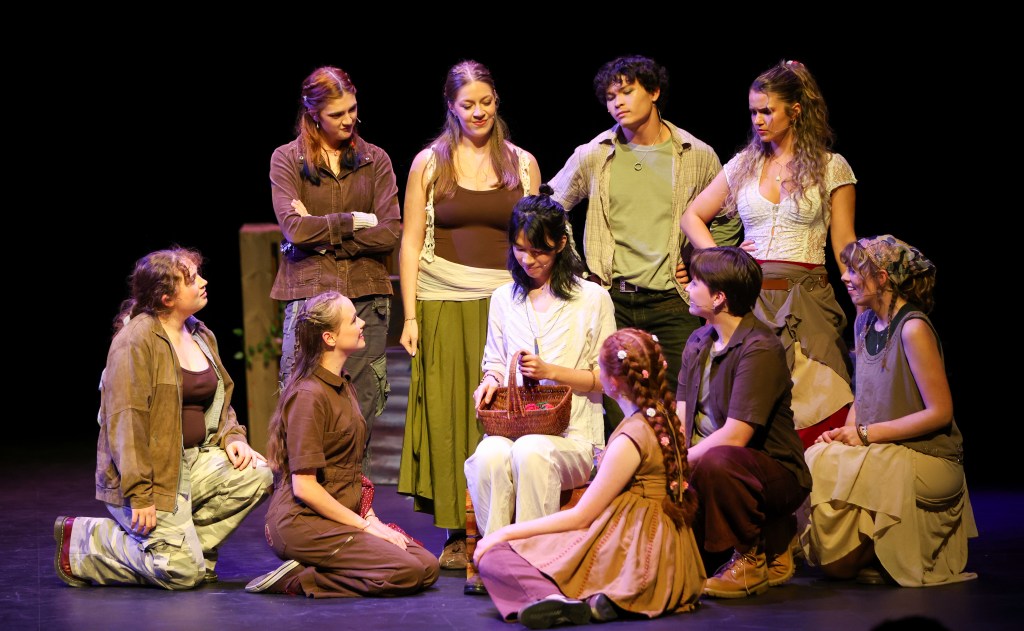
Godspell departs from a typical narrative arc with its short parables interspersed with hits like Day by Day and By My Side. The music referenced a wide range of styles from Vaudeville and jazz to classical music theatre and ballads, which created an exciting aural experience but also a challenge due to the continuously changing tone. However, the ensemble successfully navigated the difficulties of the structure and language through their energetic physical comedy and utter joy which extended into the audience – who were only too excited to join in the fun onstage. Luckily enough some of us got the opportunity to participate through a game of Pictionary and Charades. By physically bringing the audience onstage and into the community they were building this effectively realised their ideas of inclusion. In addition to ensemble’s comedic timing and physicality (shoutout to some very realistic cows), what really carried the musical was the standout vocals from the lead disciples (Hannah Campbell, Finnegan Clapp, Isabella Condon, Poppy Elfick, Vivienne Mackenzie, Moe Quigley, Harper Raverty and Isobel Whitehead). With the satisfying and consistent harmonies from the ensemble that carried the upbeat tone in songs like Save the People, and incredible duality in the haunting tone of Finale, the dynamic choices by the Music Director and Conductor Amelia Lau clearly demonstrated the motivations of the characters.
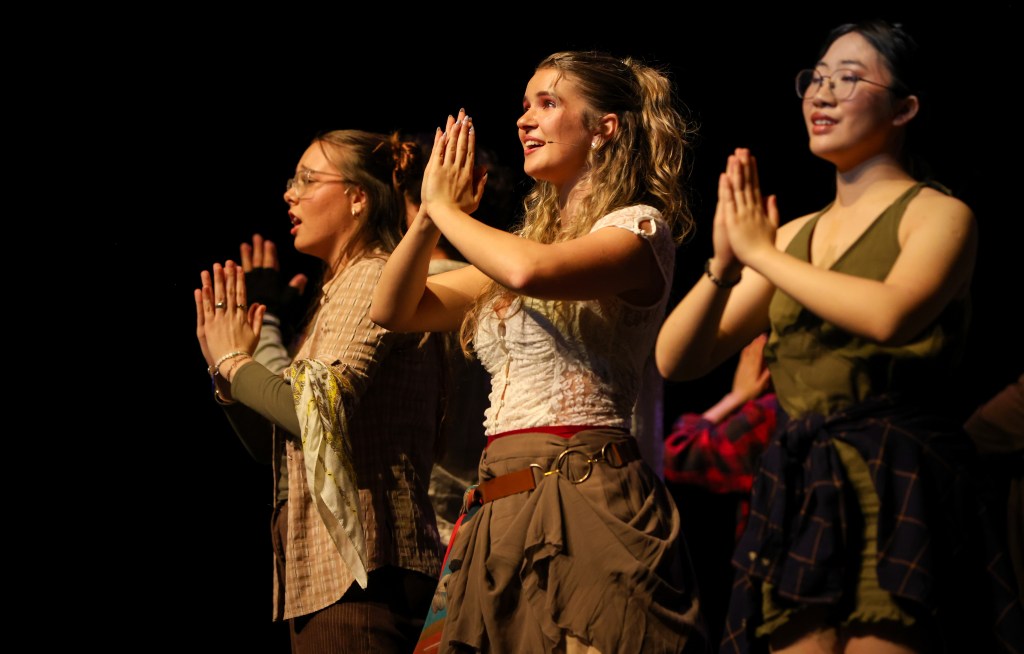
The camaraderie between the entire cast was exposed through the highly collaborative nature of this show, and I never saw a blank face throughout. Praise goes to the whole ensemble for their distinctive characterisations that were carried into their bodies, faces and voices. Director Stella Bryne’s guidance of the skits explored moments of fun between characters, and the physical storytelling truly brought the musical to life, especially in moments like the ensemble ‘punch line’ demonstrating how to ‘do unto others as you would have them do unto you’ and the image of the last supper before Judas’ betrayal. Certain improvised moments spoke to the actors’ playfulness and commitment to connecting with a modern audience, such as hilarious dialogue after ‘phoning up God’ and Jesus (Kenneth Chai) telling the audience to quit vaping. Choreographer Maya Nix’s expression of the story through energetic movement enhanced the cast’s acting, notably from the dance ensemble’s performance throughout the production. The impressive tap skills of Harper Raverty and Dance Captain Emily Barber in All for the Best illustrated the conflict between Jesus and Judas, and the strength of the whole cast’s physicality in Finale supported the emotional weight of the ending.
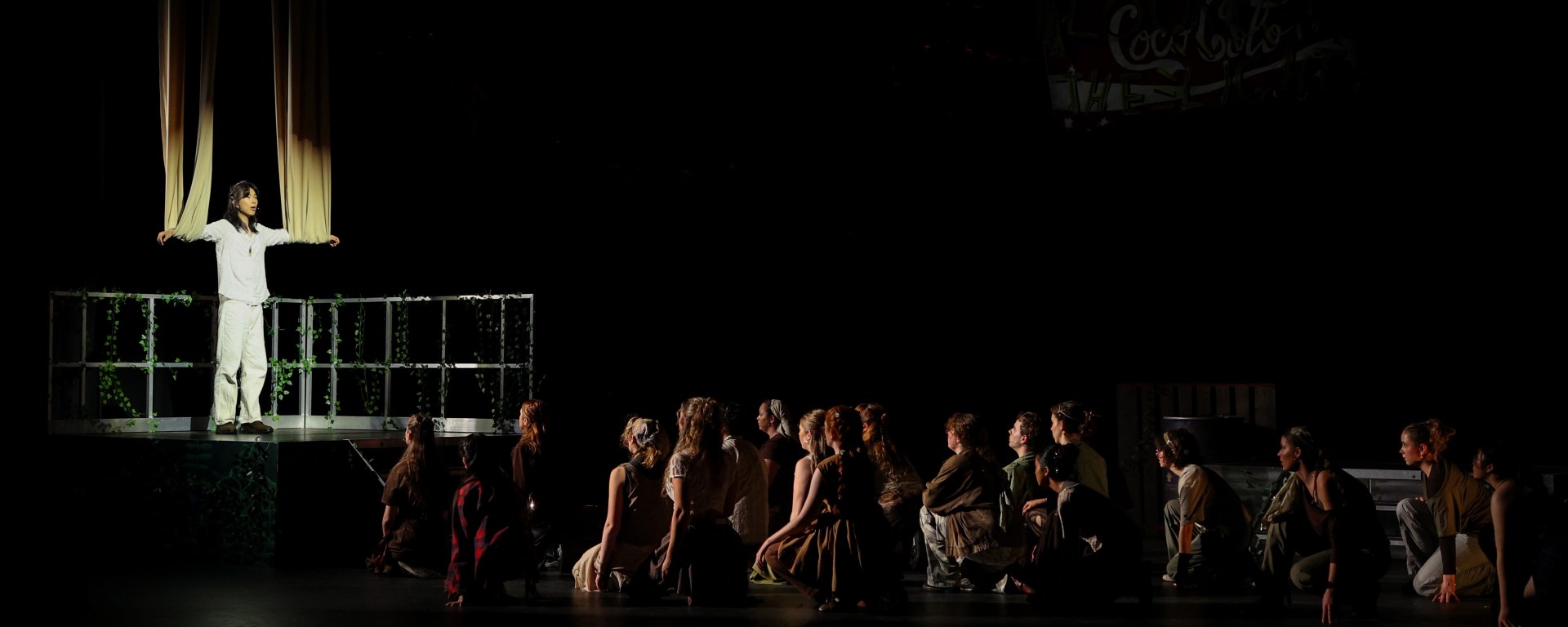
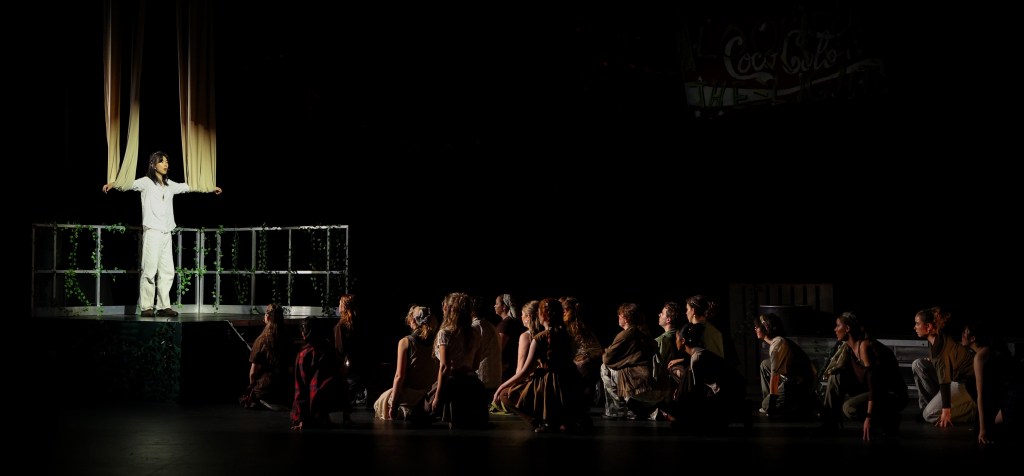
I immensely enjoyed the characterisation of Jesus that Kenneth Chai brought to this production. Their soothing voice, calm yet often humorous persona and controlled body language enthralled the audience as much as the disciples. Grace Dwyer’s powerful performance as Judas complimented them well with both actors demonstrating impressive vocal range, yet contrasting each other with impassioned acting from Judas, and cool headedness from Jesus. This allowed Kenneth Chai to create an almost ethereal presence at times, only enhanced by their pure white costume designed by Adelina Memeti. This contrasted the rugged, post-apocalyptic feel of the set, designed by Sam Kohler, and the ensemble costumes, which used greens, browns and beige to position the show as reminiscent of our current society, yet still connected through use of a Coca-Cola sign and multi-media. Unfortunately, while the use of video projection for the prologue and opening song (Tower of Babble) was an interesting idea to give context to the audience, due to the technicalities of projecting onto a curtain, the news broadcast was near impossible to read, and the faces of the cast were distorted, limiting its effectiveness. While I cannot be sure due to its illegibility, I believe the news broadcast set the musical after the pandemic in a post-apocalyptic world. This choice by the creative team demonstrated the need for hope and community in our current tumultuous society.
ICAC’s production did not shy away from performing a modernised adaptation of the musical, leaning into contemporary references (I am not forgetting the Labubu mention) and humour to connect to their audience. The cooperation of the cast carried the themes of finding hope within the darkness, and relying on your community to guide you, illustrating to the audience how to look for the light.
Godspell was presented by ICAC at the Union Theatre 16 – 18 April 2026.
ISLA TEAGUE (they/them) is a dancer and performing artist from Melbourne/Naarm, participating in both community and university theatre scenes. Currently studying a Bachelor of Arts (Criminology) at University of Melbourne, they are in their first year of reviewing for The Dialog.
RACHEL THORNBY is a Media and Communications honours student writing her thesis on social media reviewing platforms. As a lover of reading and writing she is a sub-editor for both The Dialog and Farrago.
The Dialog is supported by Union House Theatre

