
REVIEWED BY GRACE DWYER
EDITED BY CHARLOTTE FRASER
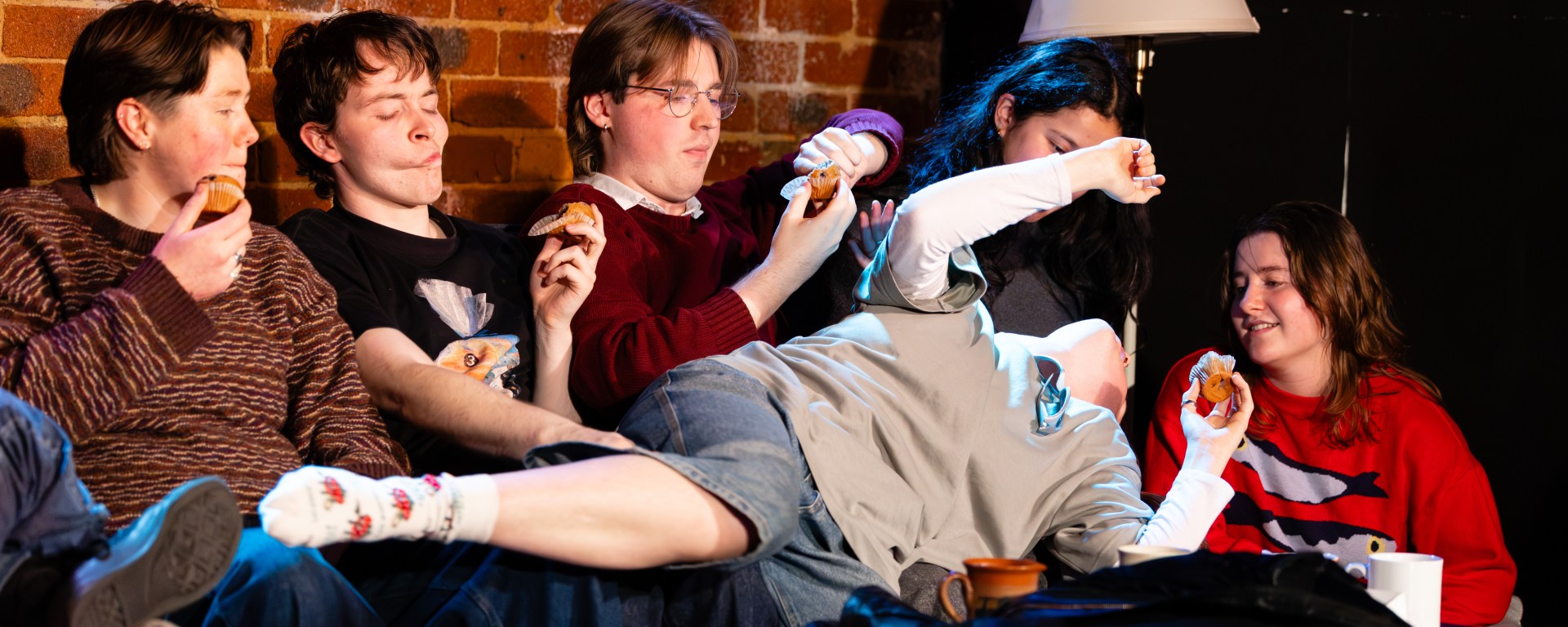
I firmly believe that any form of dinner-party, kitchen-sink or friendship-fallout drama is perhaps one of the strongest formulas to ensure an entertaining, well staged and tightly written piece of theatre. From the classic Who’s Afraid of Virginia Woolf to last year’s Big Bear, there’s nothing more satisfying than watching a web of relationships collapse, preferably in a suburban setting. Writer and director Avi Walsh-Davis killed it last year with their play Everyday, in which a group of apartment tenants get stuck in a lift. This time, in All Good Things, the group are old friends, housemates or fellow students. Instead of forming relationships, Walsh-Davis seems interested in breaking them down. So, I’m very excited as we take our seats at the Motley Bauhaus. In All Good Things, the proverbial kitchen sink is a sharehouse living room, complete with a Marketplace couch and sparse brick wall. Alyssa McDonald Smith’s set design fits snugly within the Bauhaus stage, and the cast use the entrances and exits effectively throughout the show, so I feel right at home.
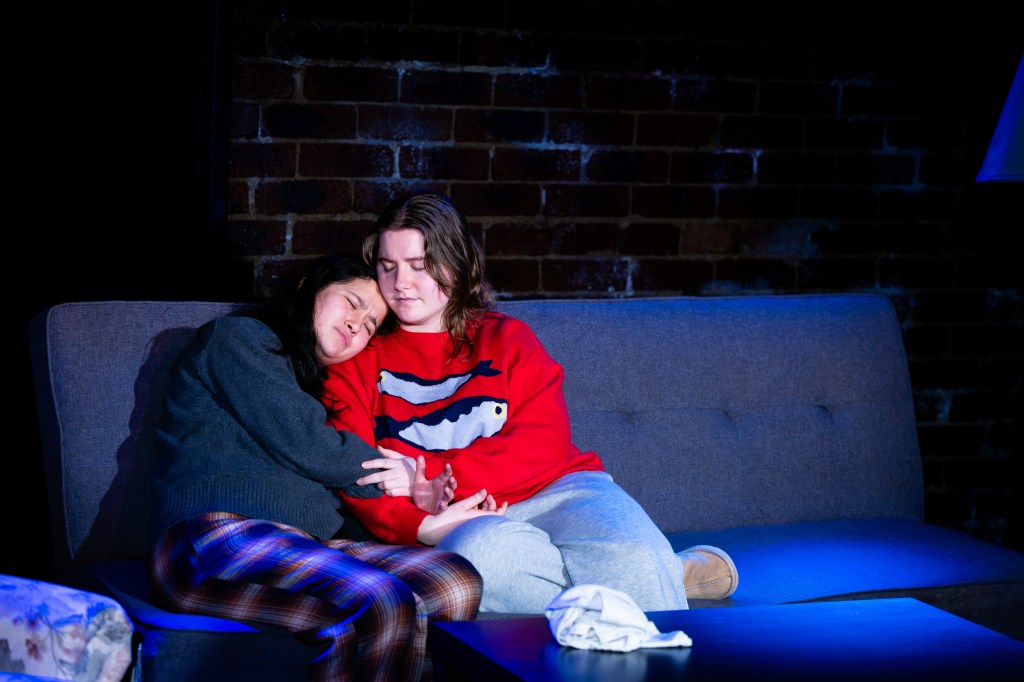
The show opens with Cameron (Austin MacDonald) stumbling headfirst out of Sarah’s (Issy D’Souza) bedroom and spotting Sarah’s housemate Zavetti (Juliet Bland). From the first moment, we understand two things: this friend group has a chronic and recognisable issue with secrets and the central ‘morning-after debrief’ about to occur is only going to make things worse.
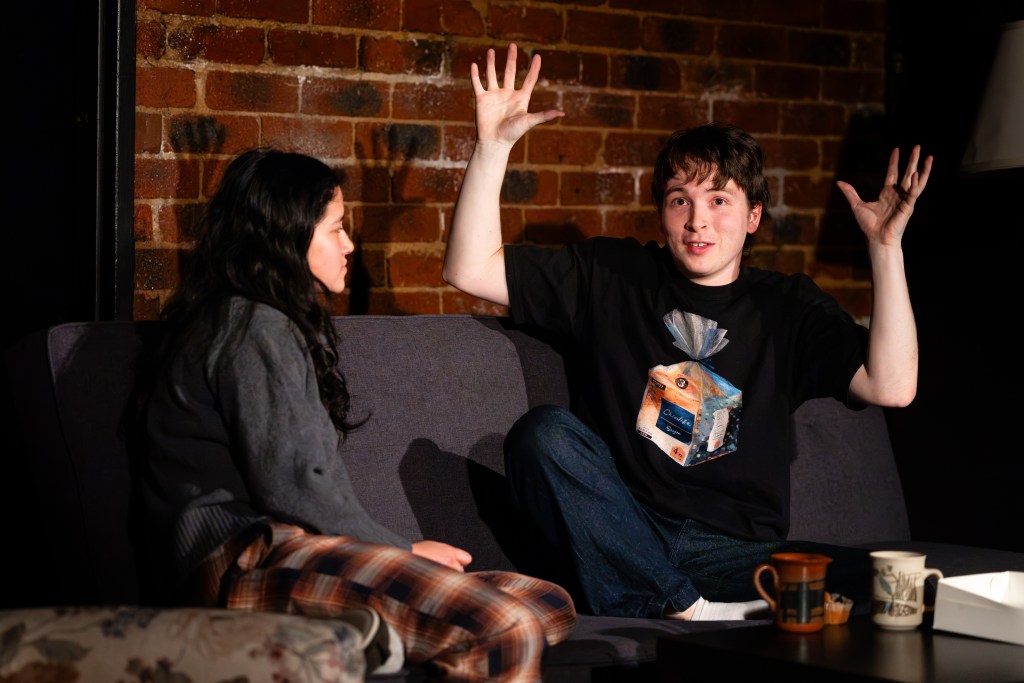
All the cast do a fantastic job of establishing character dynamics from minute one. D’Souza Sarah has a no-nonsense attitude, but a warmth in delivery and body language that shows she still clearly cares for her friends. Her chemistry with MacDonald, who has a strong command over Austin’s awkwardly charming physicality, is especially sweet and realistically imperfect. Bland’s comedic timing is impressive, and she does a ridiculously good job of embodying the manic eagerness of a friend urgent to get in on the gossip and then the depressive downside of realising the extent of her friend’s secrecy. And we haven’t even met the others yet.

There’s a palpable excitement from the audience whenever a new character is introduced, bringing their own baggage to the room. After a relatively light first half, the play takes a more uncomfortable turn – this is where Walsh-Davis excels at showing everyone’s humanity. Lewis, played by Arthur Oakley, is the group’s punching bag. His chronic out-of-the-loopness leads to some great situational comedy, and the audience loves it. But when Lewis eventually reveals his dissatisfaction with his friends, Oakley employs a wonderful earnestness that makes us sympathetic to his outsider status. Actual outsider Darcy (Sophia Goodwin), an Irish exchange student, seems to slot right into the friend group, but is let down as the web of relationships begins to tangle. Goodwin’s infectious Irish accent and happy-go-lucky energy also make her a crowd favourite, eliciting laughs and comical groans as she and Zav outrageously flirt on the Marketplace couch.
Everyday proved that Walsh-Davies could write a mean monologue, so it’s especially impressive that All Good Things shines the most through its rapid-fire dialogue. Both Sarah’s extroverted twin brother Miles (Finn Stanley) and hungover scene-stealer Rory (Zoey Barnett) pull this off extremely well. Furthermore, the two do a fantastic job of walking the line between chewing the scenery and grounding themselves. Stanley’s charismatic stage presence grows melancholy as Sarah confesses she finds him overbearing, and Barnett’s outspoken command of the space explodes as she desperately attempts to keep the friend group from drifting apart.
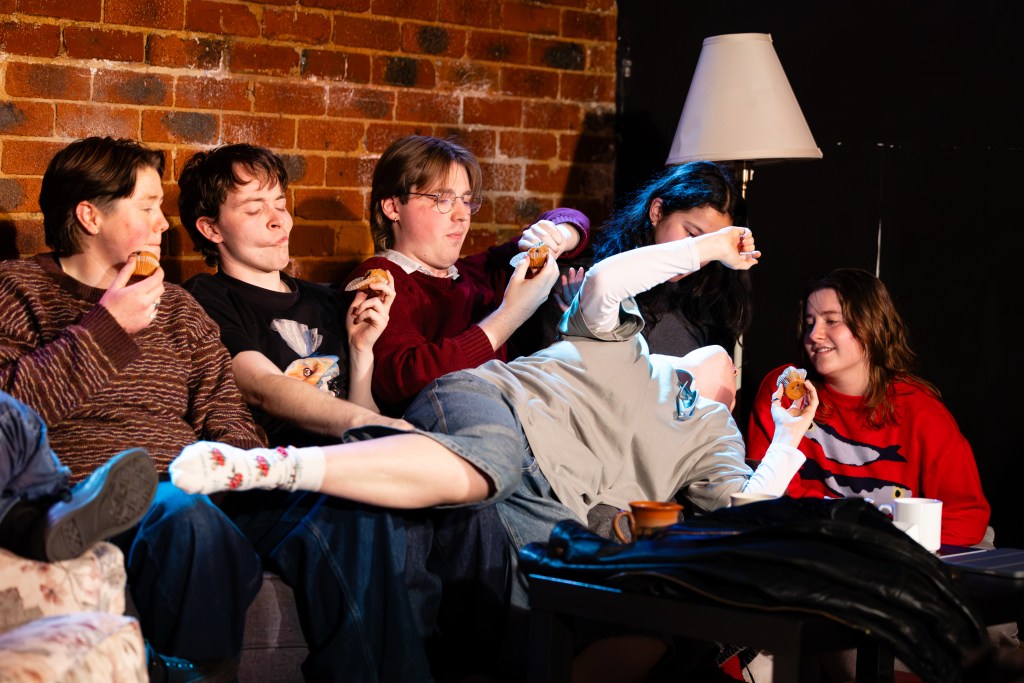
Something especially commendable about All Good Things is just how painfully realistic and relatable these conflicts are. In real life, relationships usually fizzle out rather than blow up. People are more misguided than malicious. And we grow all inevitably change and move on. The inertia of the post-grad, mid-20s sharehouse is in full swing here: these characters have changed but are not significantly different. The push and pull between embracing your new, uncertain self or turning to the familiar, stifling person you once were is embodied in all these friendships, personal sacrifices, secrets and outdated rituals. Meanwhile, life fills up so much that the simple ‘when is everyone free?’ becomes a dreaded group chat question with no clear answer. But we should still try…right? At its conclusion, All Good Things doesn’t try to put forward a hasty solution, but acknowledges these quintessential, and maybe even inevitable, elements of contemporary friendship.
With such a relatively small space, the technical elements of the show are less overt, but add plenty to the experience. We are introduced to Connor Maher Lemaitre’s lighting design as characters switch on cosy warm lamps or sit outside in the cool rain. As more characters arrive, coloured lights switch on and then off whenever a conflict reaches fever pitch. Considering the Bauhaus has its main lighting rig right over the heads of the audience, I felt the well-thought-out design was especially immersive. Tom Diggle’s stage management was flawless –especially the show’s frequent sound cues and effects.
Sadly, All Good Things must come to an end, to raucous applause. There’s something healing about walking out from the collapse of all these relationships into a crowd of supportive friends and family here to congratulate the cast and crew. Through their exploration of stifling nostalgia and inevitable change, Walsh-Davis has brought together a talented company that has explored these universal emotions effectively, while creating something new and unifying.
All Good Things played at the Motley Bauhaus 11 – 14 August 2026.
GRACE DWYER is currently completing her Honours in English and Theatre Studies. She fell in love with student theatre during her first year at college, playing a frog prince – and loves watching and talking about productions almost as much as she loved hopping around the stage.
CHARLOTTE FRASER (she/her) is a writer, performer and editor based in Melbourne. She holds a BA in English and Theatre Studies and is currently completing her Masters degree at the University of Melbourne. Charlotte is also the 2026 Dialog Editor.
The Dialog is supported by Union House Theatre

