
REVIEWED BY ZENA WANG
EDITED BY CHARLOTTE FRASER
[An English language version of this review is below.]
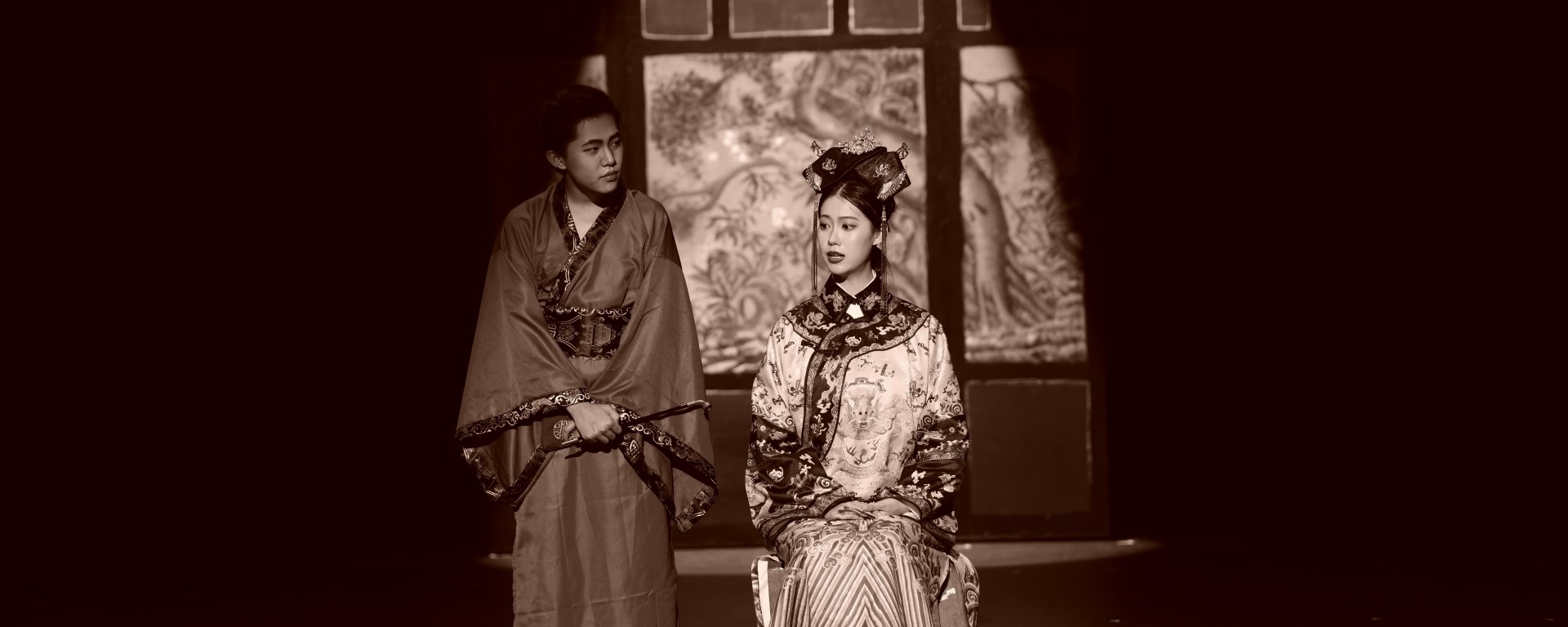
墨尔本大学中华剧社的《北京法源寺》(Once Upon a Time in China),由 Lu Junxiao、Yan Wangqing、Zuo Jinyuan 执导,为观众呈现了一次诗意的相遇,将我们带入中国近代史上最具政治张力的时刻之一。作品围绕1898年的戊戌变法展开:康有为(Chen Liang 饰)、梁启超(Li Sutong 饰)与谭嗣同(Tian Chenkai 饰)等维新派,在光绪皇帝(Gu Ada 饰)的支持下,试图推动清帝国的现代化改革。然而,随着慈禧太后重新掌控权力,这场运动很快被镇压,“戊戌六君子”被处决,康有为与梁启超则流亡海外。对于不熟悉这段历史的观众而言,这部作品有时确实需要一定的背景知识,但它最强烈的力量,并不在于解释历史,而在于将历史转化为一个充满声音与精神残响的空间。
作品予人最直观的感受是,与其说它是一部传统意义上的历史剧,不如说是一场舞台上的朗诵,或是一场在历史事实早已尘埃落定之后,灵魂之间展开的对话。角色们仿佛不是从现实时间中说话,而是从某个超越日常时间的位置发声——他们所剩下的,只有信念、悔意与执念。法源寺因此不只是一个历史地点,更成为记忆与未竟之愿的容器。作品并不急于判断谁对谁错,而是将历史呈现为一连串碎片化的声音,每一个声音,都被困在更大的历史图景中属于自己的位置里。
从观众进入剧场的那一刻起,作品便有效地建立起了这个世界。具有冥想感的佛教音乐充满空间,使观众席带上了一种静止而仪式化的氛围。演出正式开始后,音效设计(Cheng Keyu)又使用了虫鸣、鸟叫等日常的自然声响,将这种精神性的氛围落回到一个具体的环境之中。舞美设计(Joli and Chloris)在后方投影出北京庭院或寺庙建筑的白描图像,这些图像与声音景观结合,使观众无需依赖复杂写实的布景,也能够理解故事发生的地点、季节与情绪。投影、音乐、自然声与群体走位,共同将舞台转化为一座具体的寺庙,也转化为两个世界之间的门槛。
舞台调度借用了中国传统戏曲中简洁而富有象征性的视觉语言。舞台后方摆放着一张供桌,使人联想到中国戏曲中常见的“一桌二椅”传统。舞台两侧的椅子则构成了一个对称的结构,适合对话、对峙与仪式的展开。当谭嗣同与僧人普净(Dai Xingbang 饰)以及普净的弟子异禀(Xu Yongqi 饰)交谈时,这种空间分隔暗示出“阴”与“阳”、生者与死者、人间与灵界之间的关系。群演在舞台上的穿行,也帮助营造出一座忙碌寺院的感觉,使这个神圣空间显得有人居住、有呼吸,而非静止的背景。
另一个有趣的细节,是角色初登场时对地域口音的使用。作品并没有让所有历史人物都使用同一种正式的舞台腔调,而是让他们的出身地通过声音变得可感。这样的处理使舞台像是不同地域、不同方言、不同政治立场的汇聚点。在一部关于国家危机的戏中,这种声音上的多样性暗示出,使晚清中国并不是一个单一而抽象的概念,而是一个广阔、不均衡,并被同一场危机卷入其中的社会。
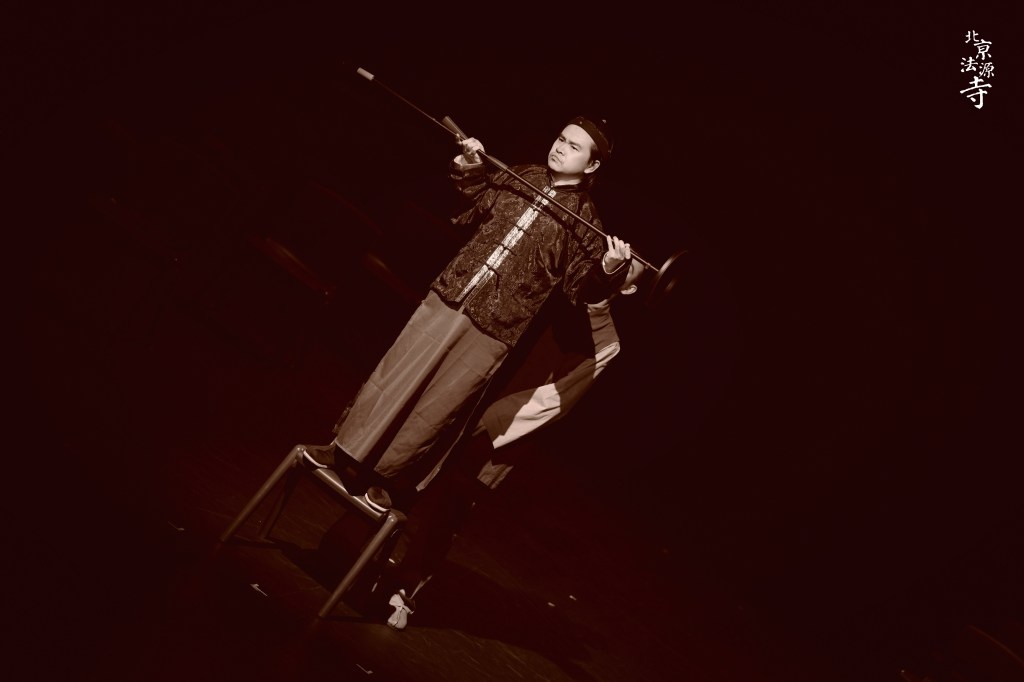
Chen Liang 饰演的康有为登场尤其令人印象深刻。作品使用了实时摄像,将他的影像投射到后方幕布上,制造出一种近似纪录片的质感。这让康有为拥有了一种双重的存在:他既是舞台上的身体,也是一个被放大、被记录、被观看的影像。这样的选择非常贴合这个人物的暧昧性。康有为既作为一位富有思想力量与政治紧迫感的改革家出现,也像是一个深知语言、影像与历史自我塑造之力量的人。不同于走向牺牲的谭嗣同,康有为是幸存者,是策略家,也是政治叙事的制造者。Chen Liang 的表演在个人魅力与微妙的自我意识之间取得了平衡。
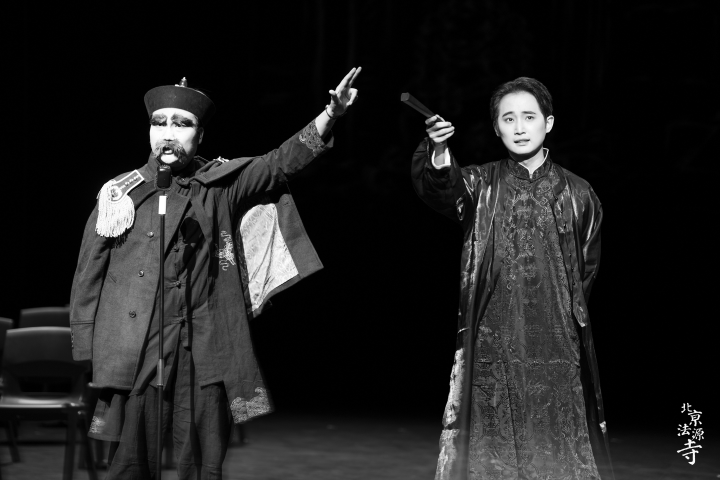
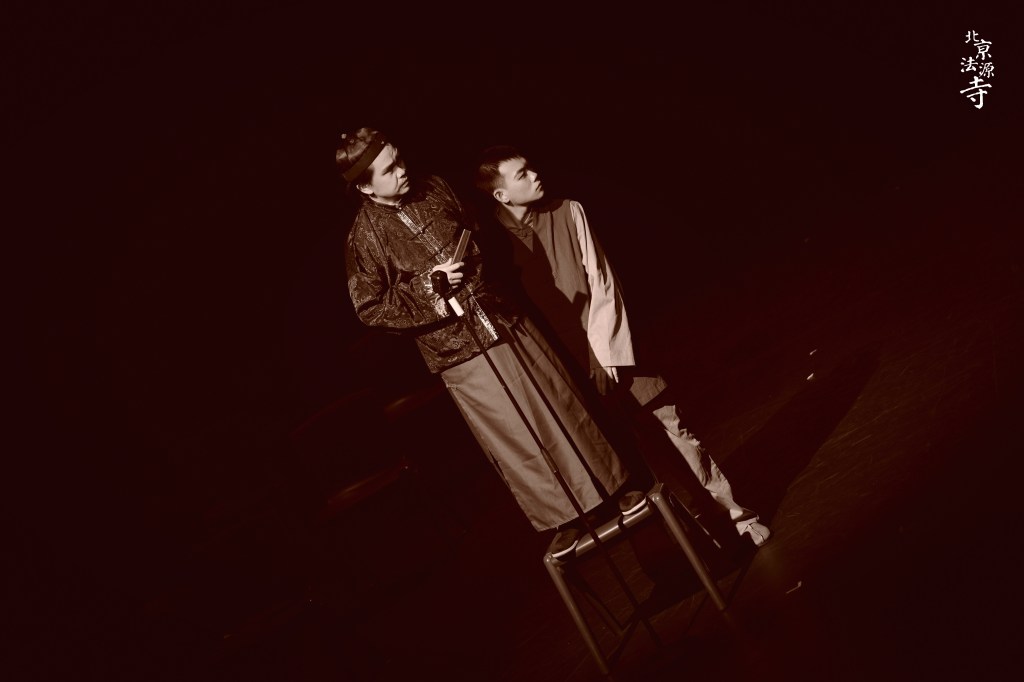
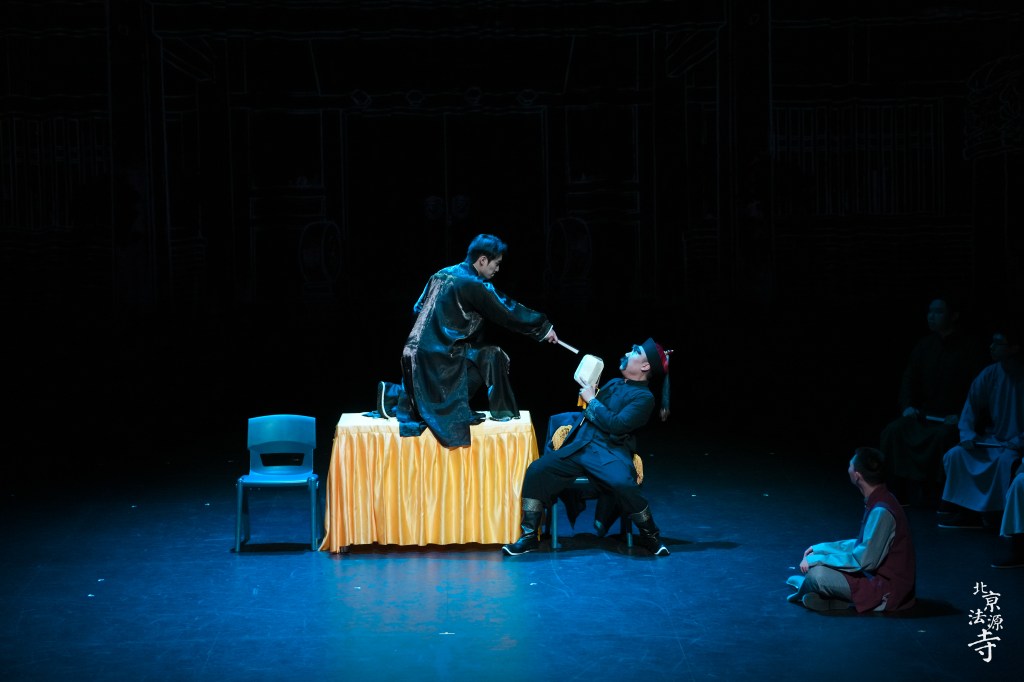
作品对于京剧语汇的使用,也具有很强的戏剧效果。京剧音效被用于转场,使场景转换不再只是实际层面的移动,而成为节奏被强化的时刻。其中最突出的例子,是谭嗣同(Tian Chenkai 饰)与袁世凯(Lu Junxiao 饰)在法源寺中的会面。此时,维新派希望掌握兵权的袁世凯能够在光绪皇帝被慈禧太后(Shao Dishan 饰)控制后出手救驾。作品并没有将这一幕处理成自然主义的政治谈判,而是将它塑造成近乎传统戏曲段落的场面。程式化的身段、“一桌二椅”的空间安排,以及以扇代剑的象征性道具,共同把这场对话转化为一场仪式化的决斗。表面上看似谈判的场面,变成了一场交锋,揭示出政治语言之下隐藏的暴力。
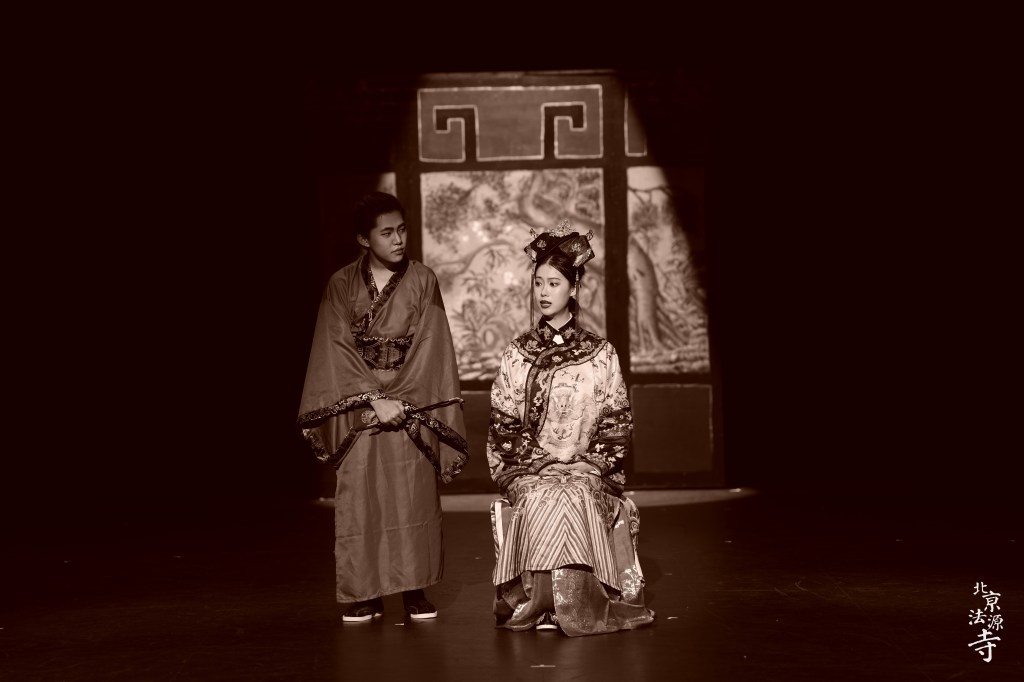
慈禧太后的登场也是另一个极具冲击力的视觉意象。Shao Dishan 饰演的慈禧最初戴着一个恶鬼般的面具出现,随后又将它摘下。这个面具体现了人们对慈禧的常见刻板印象:她是阻碍改革的怪物,是镇压戊戌变法的反派。然而,通过摘下面具这一动作,作品也开始质疑这种简化的形象。慈禧并没有被呈现为单纯的邪恶,而是一个被崩塌帝国的焦虑困住的政治人物。她对改革的抵抗,不仅可以被理解为保守,也可以被理解为一种恐惧:恐惧改革推进得过快,会将一个本就脆弱的国家推入混乱。在这种解读中,清帝国像一棵从内部腐朽的巨大树木:维新派想要迅速修剪与嫁接,而慈禧担心,同样的动作会让整棵树轰然倒下。
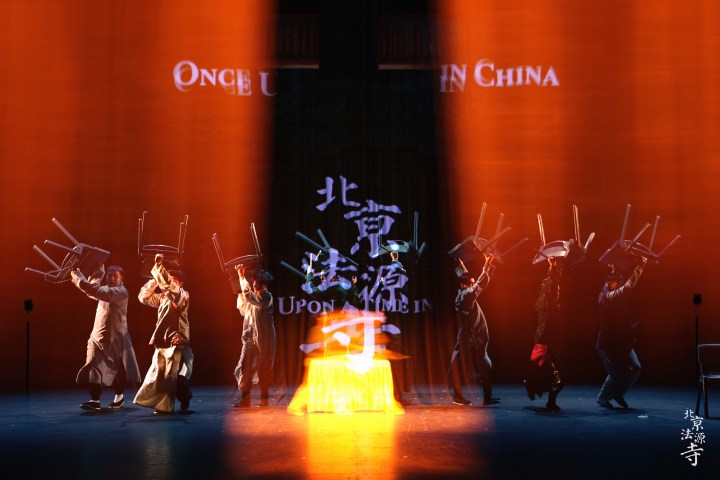
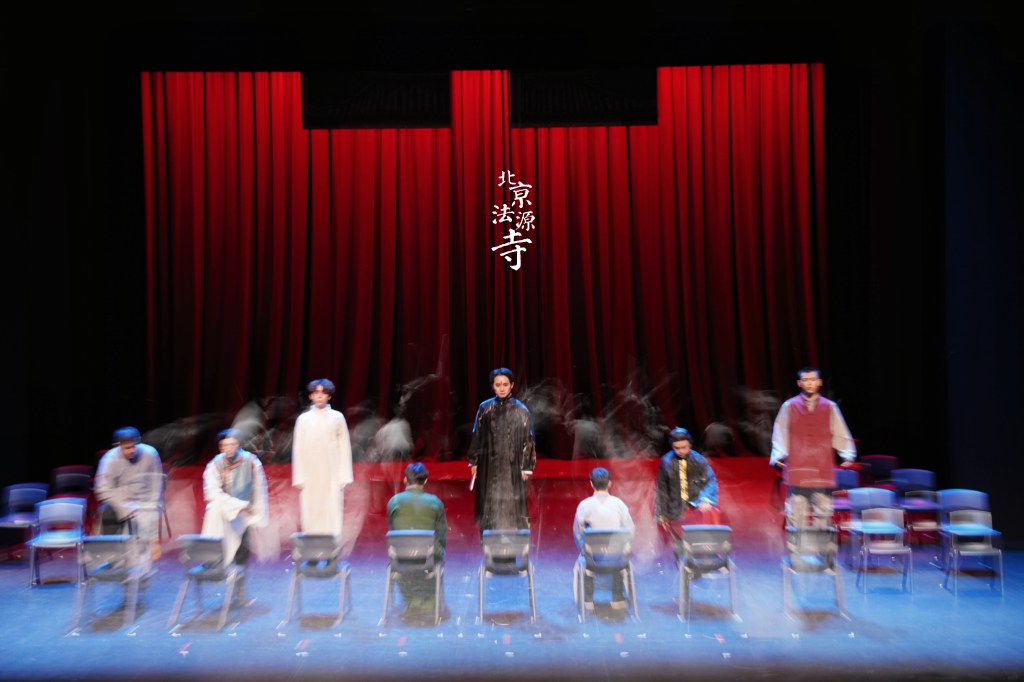
维新派讨论救驾的场景,则非常动态地使用了椅子。群演站上椅子、举起椅子、重新排列椅子,在舞台上制造出不断变化的高度层次。作品没有让这场讨论停留在纯粹的语言交流中,而是把政治上的紧迫感转化为高度、运动与失衡。椅子不再只是家具;它们暗示着不稳定的权力结构。当群演向上攀升时,救驾计划的野心与危险仿佛也随之升高。
普净与异禀是整部作品中最成功的角色之一。他们构成了一种跨越时间的框架,在旁白、见证者与精神引路人之间游移。不同于康有为、谭嗣同、慈禧或袁世凯,他们并不完全属于政治世界,而更像是站在法源寺本身之中,从距离之外观看历史。他们的存在将剧中分散的碎片缝合在一起。Dai Xingbang 饰演的普敬带着静默与端庄,仿佛早已看透了野心、苦难与死亡的轮回。相比之下,Xu Yongqi 饰演的易丙则更加活泼、好奇,也更容易亲近。师徒关系为作品带来了温度与清晰的戏剧关系。具有反讽意味的是,这两个存在于历史之外的角色,常常比许多位于历史中心的人物更加鲜活。
然而,这部作品最鲜明的特质,也正是它最主要的局限。诗意的、朗诵式的形式,确实创造出一种历史之后灵魂仍在言说的感觉;但当这种形式持续过久,而缺少足够的戏剧行动时,它便开始变得静止。除了慈禧、康有为与袁世凯之外,许多角色都显得相对扁平。例如“戊戌六君子”很难被区分为拥有各自动机、冲突或情感旅程的个体。他们更像是牺牲的集体意象,而不是被充分发展出的戏剧人物。有些时候,作品似乎是在讲述历史,而不是将历史戏剧化。
这一问题也与节奏和走位密切相关。作品最有效的时刻,往往是它找到身体语言的时刻:椅子的编排、生死两界的空间分隔,以及受到京剧启发的对峙场面。然而,演出中相当多的部分依然依赖演员站定不动,讲述大段文本。独白下方的背景音乐进一步强化了舞台朗诵的感觉。这一点在慈禧与光绪皇帝相关的段落中尤为明显,这种抬高的表演方式或许意在呈现帝王与权力的庄严感,但有时却放慢了节奏,削弱了戏剧张力。
观众的沉浸感也受到了一些现实因素的打断。由于演出允许观众在关闭闪光灯的情况下拍照和录像,演出过程中时常可以看到亮起的手机屏幕。对于一部精心建立冥想式、精神性氛围的作品而言,这些微小的光亮不断将观众拉回到剧场现实之中。许多场景也发生在大幕前方的台唇或乐池区域。这种处理创造了亲密感,但每当这一区域被面光照亮时,观众席也会被同时照亮,从而削弱了作品原本建立起的氛围。
总体而言,墨尔本大学中华剧社的《北京法源寺》是一部具有野心、也具有视觉思考的作品。它最强的成就,在于将法源寺转化为一个介于历史、记忆与来世之间的空间。通过声音、投影、京剧元素与象征性调度,作品创造出一个萦绕不散的诗性世界。它的弱点则在于叙事的碎片化、部分人物的扁平化,以及对独白的过度依赖。尽管如此,这部作品依然留下了清晰的情感印象:历史或许无法改变,但那些曾经相信、恐惧、挣扎与牺牲的声音,仍在回响。
Melbourne University Chinese Theatre Group’s Once Upon a Time in China, directed by Junxiao Lu, Wangqing Yan, Jinyuan Zuo, offered a poetic encounter with one of the most politically charged moments in modern Chinese history. The play centers on the Hundred Days’ Reform of 1898, when reformers such as Kang Youwei (Liang Chen), Liang Qichao (Sutong Li) and Tan Sitong (Chenkai Tian) attempted to modernise the Qing Empire with the support of the Guangxu Emperor (Ada Gu). The movement was soon crushed after Empress Dowager Cixi reasserted control; the ‘Six Gentlemen’ were executed, while Kang and Liang fled into exile. For audiences unfamiliar with this history, the production sometimes required prior knowledge, but its strongest quality lay less in explaining history than in transforming it into a space of voices and spiritual residue.
My overall impression was that the production felt less like a conventional historical drama than a staged recitation, or a conversation among souls after the facts of history have already been fixed. The characters seemed to speak from somewhere beyond ordinary time, left only with belief, regret and obsession. Fayuan Temple became not only a historical location, but also a vessel for memory and unresolved longing. Rather than judging who was right or wrong, it presented history as a series of fragmented voices, each trapped inside its own position in a larger historical pattern.
The production established this world effectively from the moment the audience entered the theatre. Meditative Buddhist music filled the space, giving the auditorium a sense of stillness and ritual. Once the performance began, the sound design (Keyu Cheng) deployed a range of everyday natural sounds such as insects and birds grounded this spiritual atmosphere in a specific environment. The set (Joli and Chloris) projected line-drawing images of a Beijing courtyard or temple architecture and, together with the soundscape, allowed the audience to understand the setting, season and mood without a complex realistic set. Projection, music, natural sound and chorus movement transformed the stage into both a physical temple and a threshold between worlds.
The staging drew on the visual economy of traditional Chinese theatre. At the rear of the stage stood an offering table, recalling the symbolic ‘one table and two chairs’ convention associated with Chinese opera. Chairs on either side created a symmetrical structure for dialogue, confrontation and ritual. When Tan Sitong spoke with the monk Pujing (Xingbang Dai) and Pujing’s disciple Yibing (Yongqi Xu), the spatial division suggested ‘Yin’ and ‘Yang’, the living and the dead, the human world and the spiritual world. Chorus members moving through the stage helped evoke the feeling of a busy temple, making the sacred space feel lived in rather than static.
Another interesting detail was the use of regional accents when characters first appeared. Rather than giving all historical figures the same formal stage voice, the production allowed their places of origin to become audible. This made the stage feel like a gathering point for different regions, dialects and political positions. In a play about national crisis, this vocal diversity suggested that late Qing China was not a single abstract idea, but a vast and uneven society drawn into the same emergency.
Liang Chen’s entrance as Kang Youwei was especially memorable. A live camera feed projected his image onto the back screen, creating an almost documentary texture. This gave Kang a doubled presence: he was both a body on stage and an image being enlarged, recorded and watched. The choice suited the ambiguity of his character. Kang appeared as a visionary reformer with intellectual force and political urgency, but also as a figure aware of the power of speech, image and historical self-fashioning. Unlike Tan Sitong, whose trajectory moves toward sacrifice, Kang is a survivor, a strategist and a maker of political narratives. Liang Chen’s performance balanced charisma with a subtle sense of self-awareness.
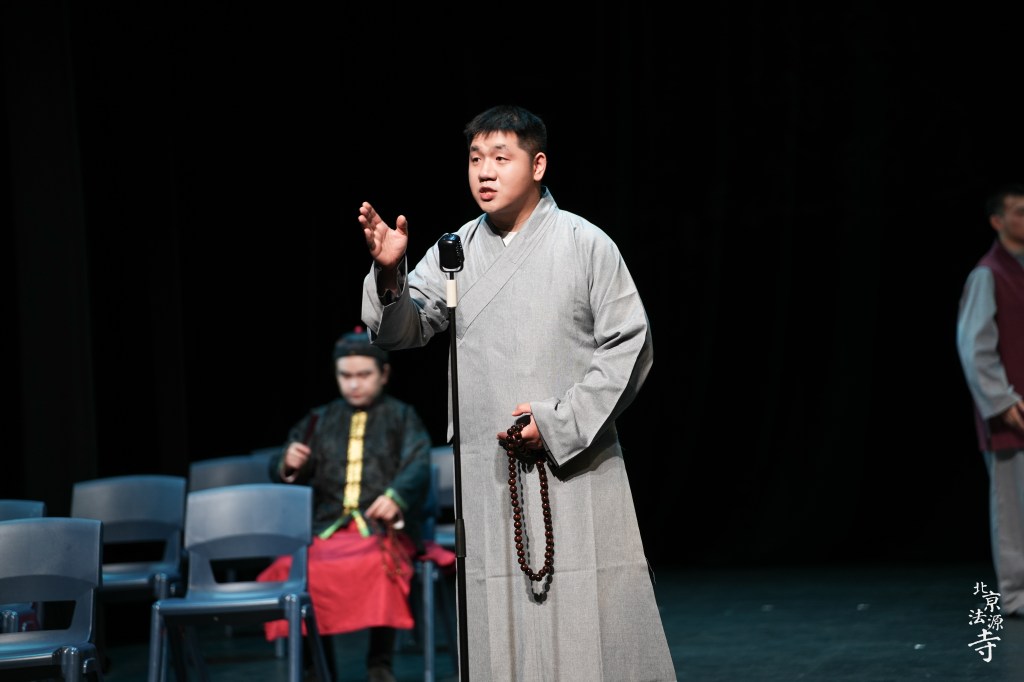
The production’s use of Peking Opera vocabulary was also theatrically effective. Peking Opera sound effects were used in transitions, turning scene changes into moments of heightened rhythm. The most striking example was the meeting between Tan Sitong (Chenkai Tian) and Yuan Shikai (Junxiao Lu) at Fayuan Temple, when the reformers hope Yuan, who holds military power, might help rescue the Guangxu Emperor after he is placed under Cixi Empress Dowager (Dishan Shao)’s control. Instead of staging this as a naturalistic political conversation, the production shaped it almost like a traditional opera sequence. Stylised gestures, the table-and-chair arrangement and the fan used as a symbolic sword transformed the dialogue into a ritualised duel. What appeared to be negotiation became combat, revealing the violence beneath political language.
Cixi Empress Dowager’s entrance was another striking image. Dishan Shao as Cixi first appeared wearing a demon-like mask, then removed it. The mask embodied the familiar stereotype of Cixi as a monstrous obstacle to reform, the villain who crushed the Hundred Days’ Reform. Yet, by taking off the mask, the production questioned that simplified image. Cixi was not presented merely as evil, but as a political figure trapped inside the anxiety of a collapsing empire. Her resistance could be read not only as conservatism, but also as fear that reforms moving too quickly might throw an already fragile state into chaos. The Qing Empire, in this reading, is like a vast tree rotting from within: the reformers want urgent cutting and grafting, while Cixi fears that the same intervention may cause the whole tree to fall.
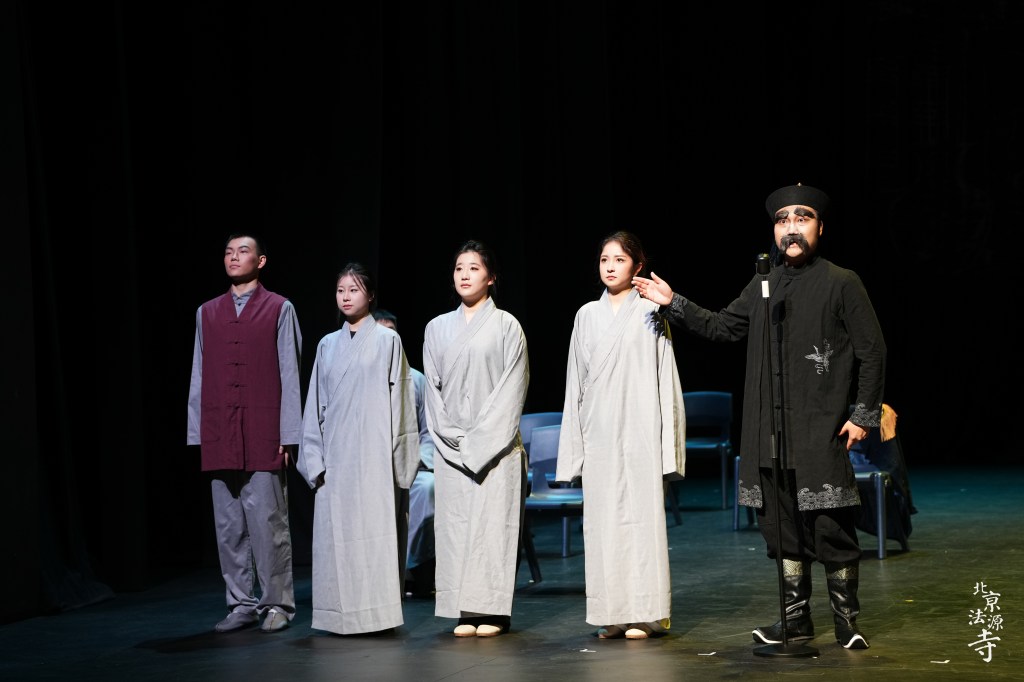
The scene in which the reformers discuss rescuing the Guangxu Emperor used chairs in a dynamic way. Chorus stood on them, lifted them and rearranged them to create shifting levels across the stage. Instead of leaving the discussion as a purely verbal exchange, the staging translated political urgency into height, movement and imbalance. The chairs became more than furniture: they suggested unstable structures of power. As the chorus climbed, the rescue plan seemed to rise in ambition and danger.
Pujing and Yibing were among the most successful characters. They functioned as a cross-temporal frame, moving between narrator, witness and spiritual guide. Rather than belonging fully to the political world of Kang, Tan, Cixi or Yuan, they seemed to stand within Fayuan Temple itself, observing history from a distance. Their presence stitched together the scattered fragments of the play. Xingbang Dai’s Pujing carried stillness and dignity, as if he had seen through cycles of ambition, suffering and death. Yongqi Xu’s Yibing, by contrast, was lively, curious and accessible. Their master-disciple relationship gave the production warmth and dramatic clarity. Ironically, these characters, existing outside history, often felt more alive than many of the historical figures at its centre.
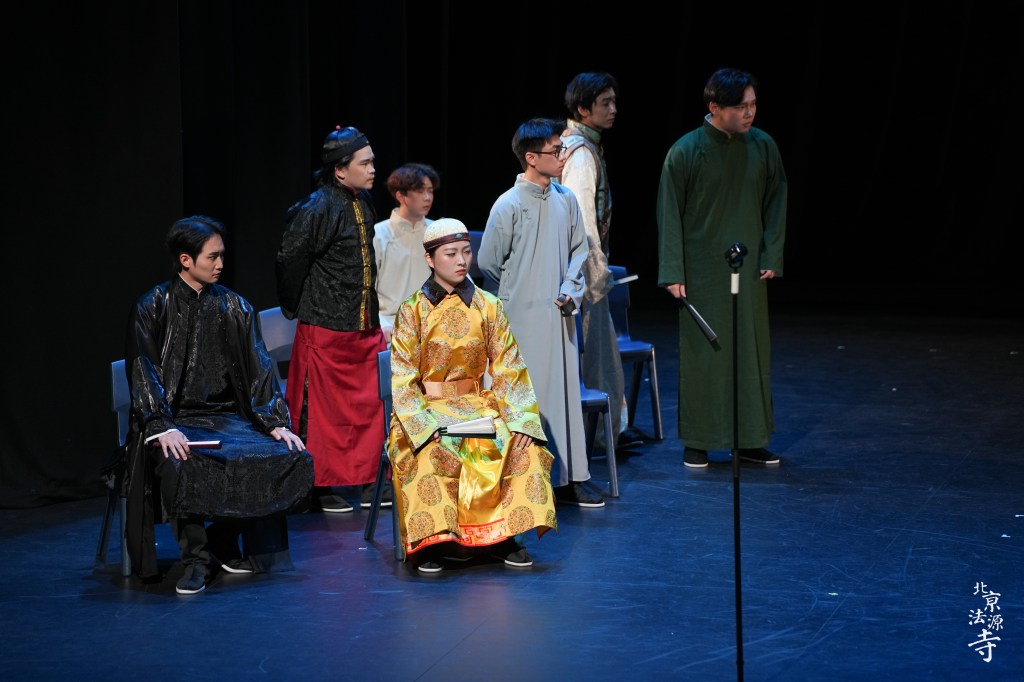
However, the production’s most distinctive quality was also its main limitation. Its poetic, recital-like form created the sense of souls speaking after history, but when sustained for too long without enough dramatic action, it became static. Apart from Cixi, Kang Youwei and Yuan Shikai, many characters remained relatively flat. The Six Gentlemen, for example, were difficult to distinguish as individuals with separate motivations, conflicts or emotional journeys. They appeared more as a collective image of sacrifice than as fully developed characters. At times, the production seemed to tell history rather than dramatise it.
This issue was closely connected to rhythm and blocking. The most effective moments were those in which the production found a physical language: the chair choreography, the life-and-death spatial division and the Peking Opera-inspired confrontation. Yet much of the rest of the performance relied on actors standing still and delivering long passages of text. Background music under these monologues intensified the feeling of staged recitation. This was especially noticeable in scenes involving Cixi and the Guangxu Emperor, where elevated delivery may have been intended to suggest imperial dignity, but sometimes slowed the pacing and reduced dramatic tension.
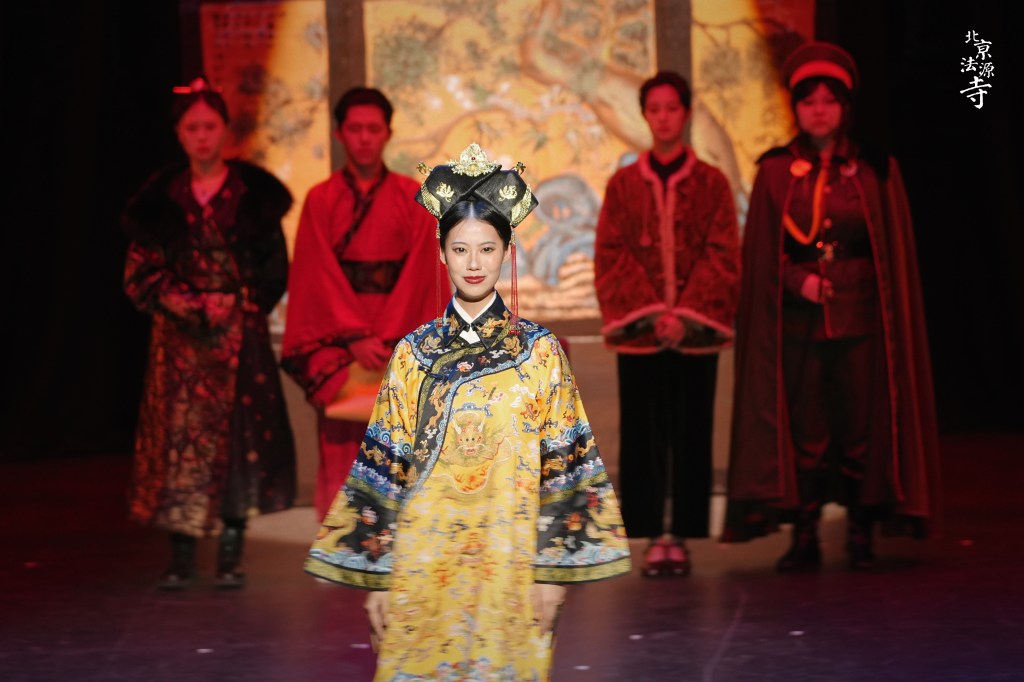
There were also practical interruptions to the audience’s immersion. Because photography and filming were allowed without flash, visible phone screens appeared throughout the performance. For a work that carefully built a meditative, spiritual atmosphere, these small lights repeatedly pulled the audience back into the reality of the auditorium. Many scenes were also performed in the apron or orchestra-pit area in front of the house curtain. This created intimacy, but whenever this area was lit, the front of the audience was illuminated as well, weakening the production’s atmosphere.
Overall, MUCTG’s Once Upon a Time in China was an ambitious and visually thoughtful production. Its strongest achievement was the transformation of Fayuan Temple into a space between history, memory and the afterlife. Through sound, projection, Peking Opera elements and symbolic staging, the production created a haunting poetic world. Its weaknesses lay in the fragmentation of narrative, the flatness of several characters and the overreliance on monologue. Still, the production left a clear emotional impression: history may be unchangeable, but the voices of those who believed, feared, struggled and sacrificed continue to echo.
Melbourne University Chinese Theatre Group’s Once Upon a Time in China played at the Union Theatre 28 – 31 May 2026.
ZENA WANG is a student at the VCA with a strong interest in theatre and visual storytelling. She loves exploring the intersection of space, performance, and audience experience.
CHARLOTTE FRASER (she/her) is a writer, performer and editor based in Melbourne. She holds a BA in English and Theatre Studies and is currently completing her Masters degree at the University of Melbourne. Charlotte is also the 2026 Dialog Editor.
The Dialog is supported by Union House Theatre

