
REVIEWED BY LUCY SONNEMANN
EDITED BY CHARLOTTE FRASER
Opening night. A hush sweeps through the audience as we settle in for the story. The lights dim, the overture commences and UMMTA’s audience erupts into joyous roars as the curtains of the Union Theatre open on Shrek the Musical.
Shrek? The Musical? Oh yes, the DreamWorks film that spoofed the Disney formula back in 2001 is a musical and a big, bright, beautiful one at that. With the films’ endearing anti-hero in Shrek the Ogre, a large cast of fairytale icons and a pop-rock sound, the source material for this show’s is packed with theatrical energy. Though the playful parody of classic fairy-tale tropes provides plenty of laughs, Shrek also delivers a powerful message: don’t judge a book by its cover, and don’t be afraid to rewrite the story book. If you feel like it, tear it to pieces!
I was most intrigued by the bold departure from the film’s character designs, a visual tradition established on Broadway in 2008 often left unchallenged by designers. This creative decision from director Joshua Drake (with assistance from Emma Guthrie) demonstrated commendable ingenuity, allowing performers and designers to shine in their unique interpretations in every element of the show. A special shoutout is in order for artist Kiera Edelstein, whose watercolour illustrations in the marketing aligned this adaption with more of a nostalgic whimsy and a softer colour palette than its predecessors.
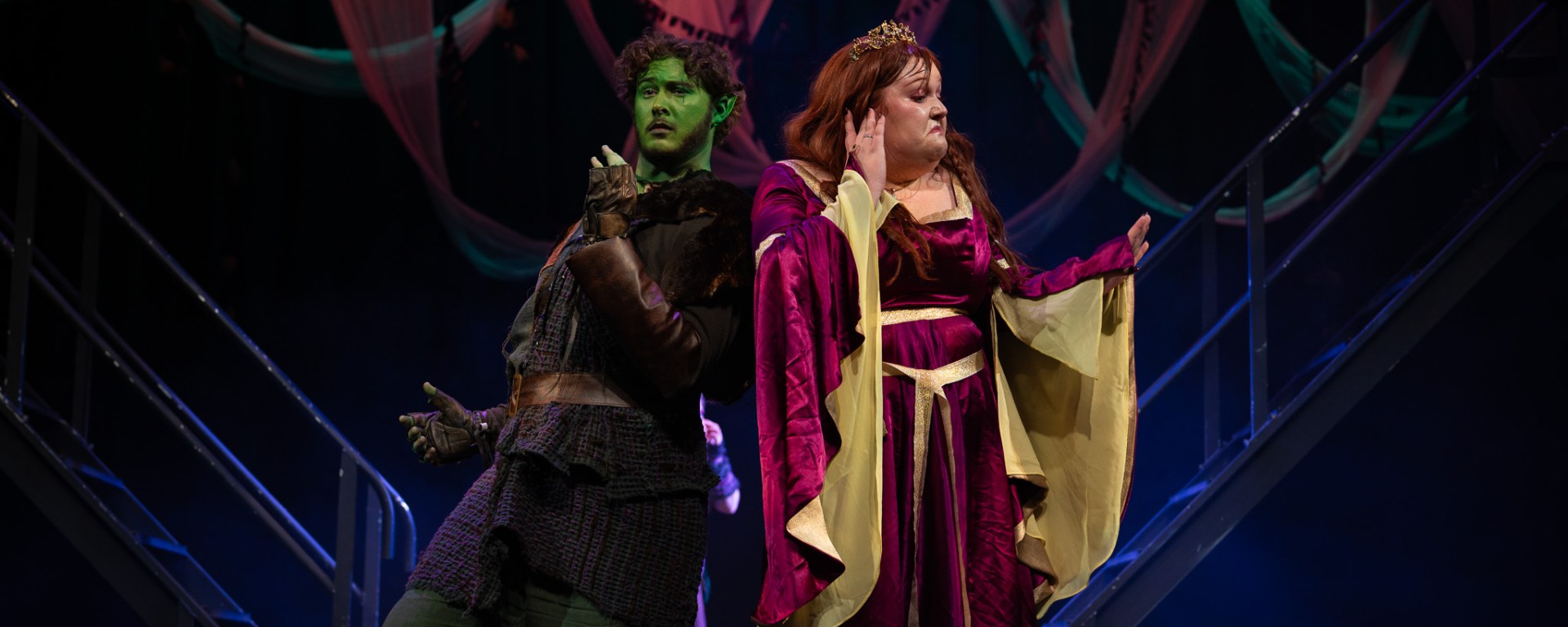
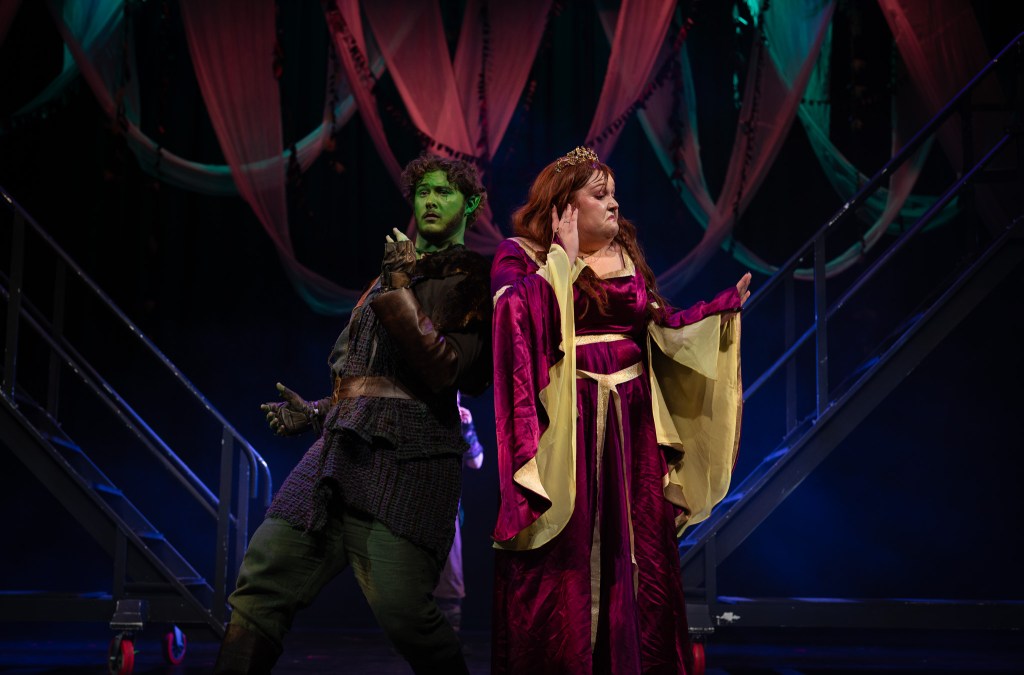
Led by Clara Verbeek and Ella Barrett, the costuming team produced an astounding number of costumes for this production – over sixty! A highlight was their decision to lean into Shrek and Donkey’s human qualities, making the discrimination they face because of their mythical identities all the more poignant.
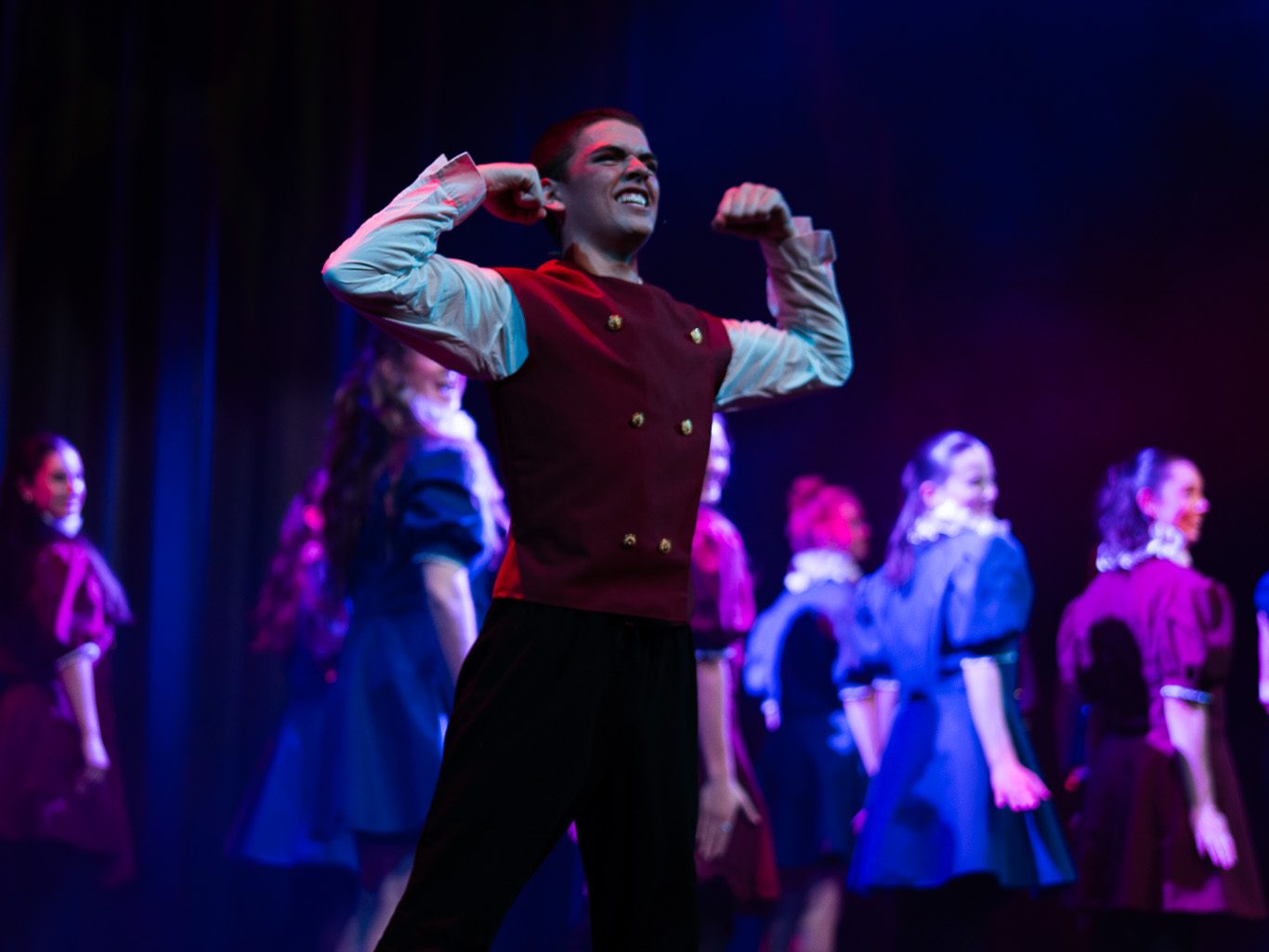
The fairytale creatures in this production wore clothes inspired by Celtic and Scottish traditions and folklore, bringing great depth and detail to the show’s medieval setting. By contrast, the people of Duloc were adorned in appropriately restrictive Elizabethan style doublets and ruffles, providing a new level of camp for this production’s cookie-cutter kingdom. And what would be doing if we didn’t mention the artistry that went into creating the heads for the rat costumes. As one excited audience member cried out, “Woah! Did you see that!” Rarely in a student theatre show do you see that level of craftsmanship, bravo.
Set and staging design by Yani Joannidis, Gina Ramsay and Elizabeth Vardouniotis saw a beautiful canopy of drapes and vines hung from the ceiling, filling the large space of the Union with a fittingly forest-y vibe. Large moving set pieces are always a hassle, but the teamwork of both cast and stage crew ensured these were transitioned with grace.
Lighting by Angus Purtell and Charlie Campbell transformed the forest into something resembling a magical pop-rock concert, shifting effortlessly between atmospheric wonder and high-energy spectacle. Occasionally the faces of minor characters could have been better lit when delivering lines, though this remained a reasonably minor issue. The star-filled projections by Darcy Hersbach in ‘Who I’d Be’ were genuinely goosebump-inducing, and while the sea of green that flooded the stage during the finale was hardly a subtle choice, it was an undeniably effective one, eliciting a joyous audience response to the final number.
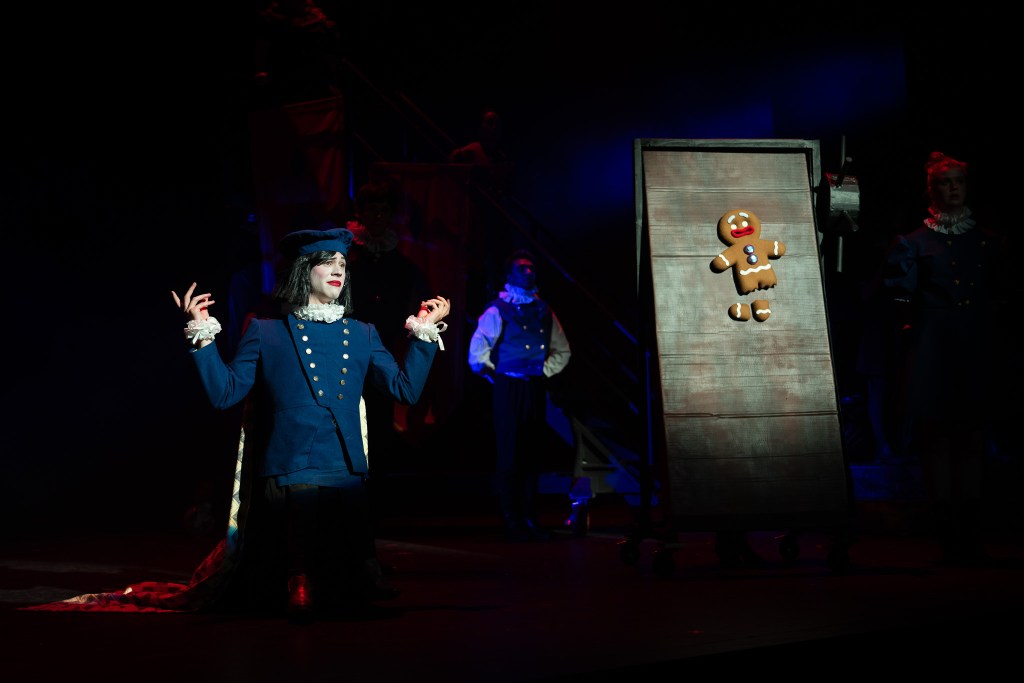
The show called for some highly demanding puppeteering, and the props team delivered. From biscuits that sing to birds that explode, each smooth technical component felt very magical. The only downfall was at times it felt these wonderful creations could have been displayed to better advantage. Giving that incredible dragon puppet its own moment, even very briefly, would have been great.
Eckard Becker was phenomenal in the title role, portraying the misanthropic Ogre with spot-on comedic timing, daring vulnerability and a very convincing Scottish Accent. Becker’s renditions of ‘Who I’d Be’ and ‘When Words Fail’ were utterly captivating, his acting through song sparkling with insightful spontaneity and wistfulness.
And where would Shrek be without his noble stead? Charlotte Nolans’ take on Donkey was charming and hilarious. Not afraid to lean into Donkey’s delightfully annoying personality, Nolan served up unapologetic sunshine and joy in this role. Her vocalisations in ‘Don’t Let Me Go’ were truly a highlight, showcasing great comedic timing and a killer voice.
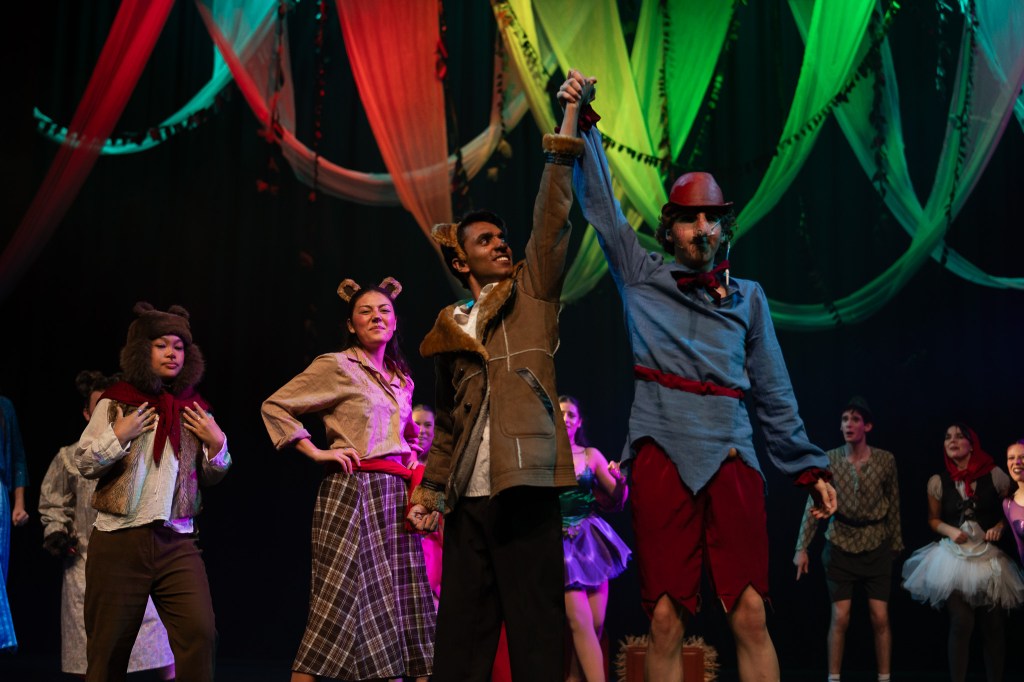
This delightful duo teamed up to rescue Princess Fiona, the incredible Cassandra Barker-McLaren whose singing was truly that of a fairytale princess. She channelled Fionas feisty, unrelenting belief in ‘I know it’s Today’ and made beautifully witty vocal choices in ‘Morning Person’, really honouring the pop/rock elements of the score alongside that bright Disney sound.
And what a villain we had in Bradly Watson’s Lord Farquaad. Hilariously creepy in his portrayal of the pompous king, Watson led the Duloc dancers with towering stage presence (and exquisite knee shuffling). That defying gravity riff? Perfection.
Both Duloc and the fairytale realm were brought to life with the hard work of an outstanding supporting ensemble. Under the direction of vocal coach Khanh Pham, the cast delivered beautiful ensemble vocals that showcased a deep, stylistic understanding of Shrek’s wide musical spectrum. Special mention must go to the Mia Sarrou’s Dragon and supporting Dragonettes (Jessica Harrison O’Toole and Grace Barnes), and the solos in ‘Freak Flag’ lead by Gingy (Alexandra Shacklock) and Pinocchio (Jack Dobson). A mind-blowing display of individual skill. Michael Werden was a delightful Captain of the Guard, whose insanely loud screams of terror are still ringing in my ears.
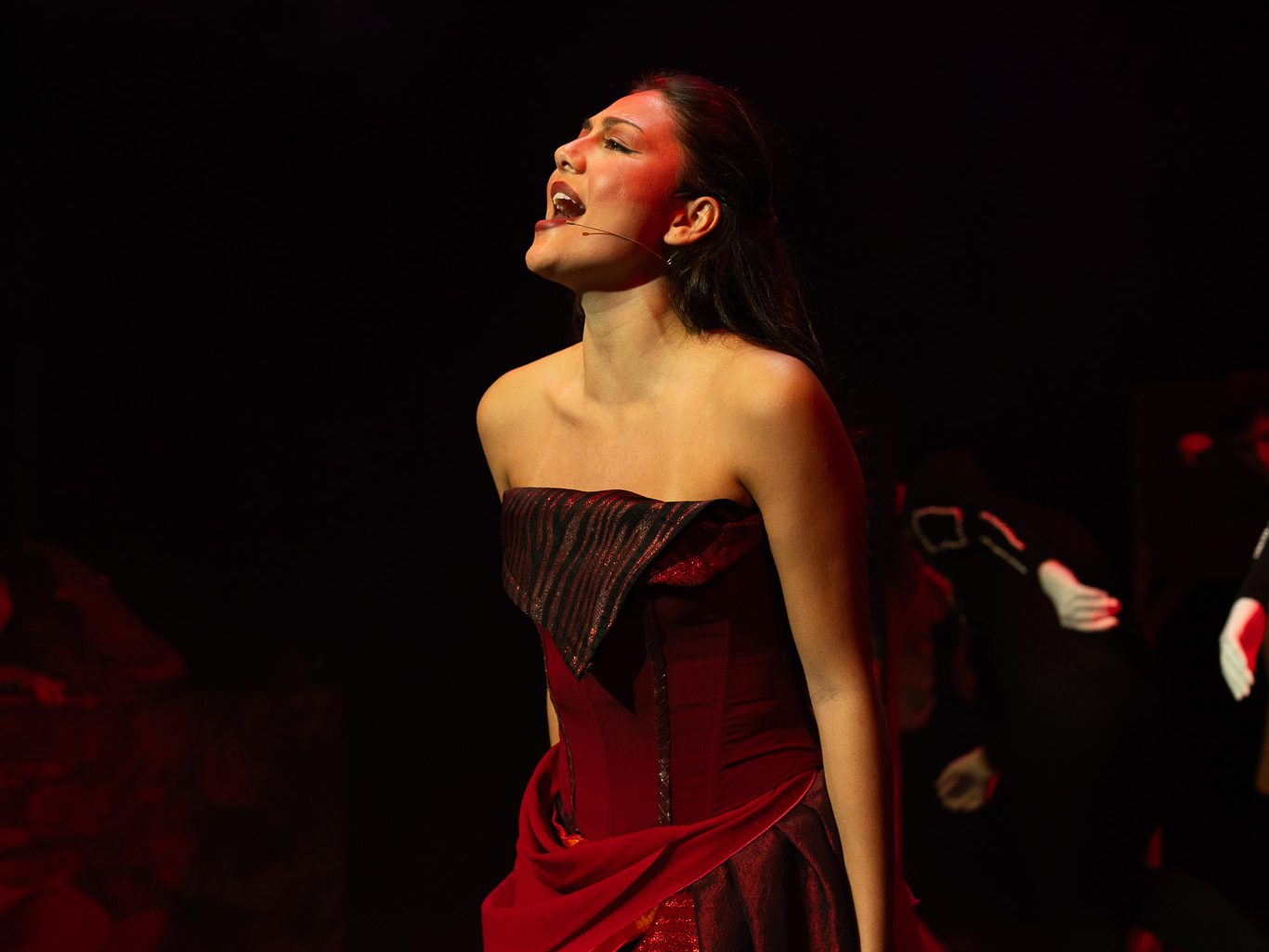
The work of choreographers Leila Edelstein, Āna Kerei Watts and Liv Dumville delivered clean ensemble numbers with very striking frozen poses, as well as beautiful sequences for featured dancers (Emily Waldron, Holly Gibney, Matilda Pattenden and Sophie Kennedy). Her work on ‘What’s Up Duloc’ particularly exciting in its synchrony, though the tap section of ‘Morning Person’ could have been more audible. Musical Director Conor Boussioutas led a wonderful band, locking in perfectly with the actors to provide a tight, cohesive backbone for the entire production.
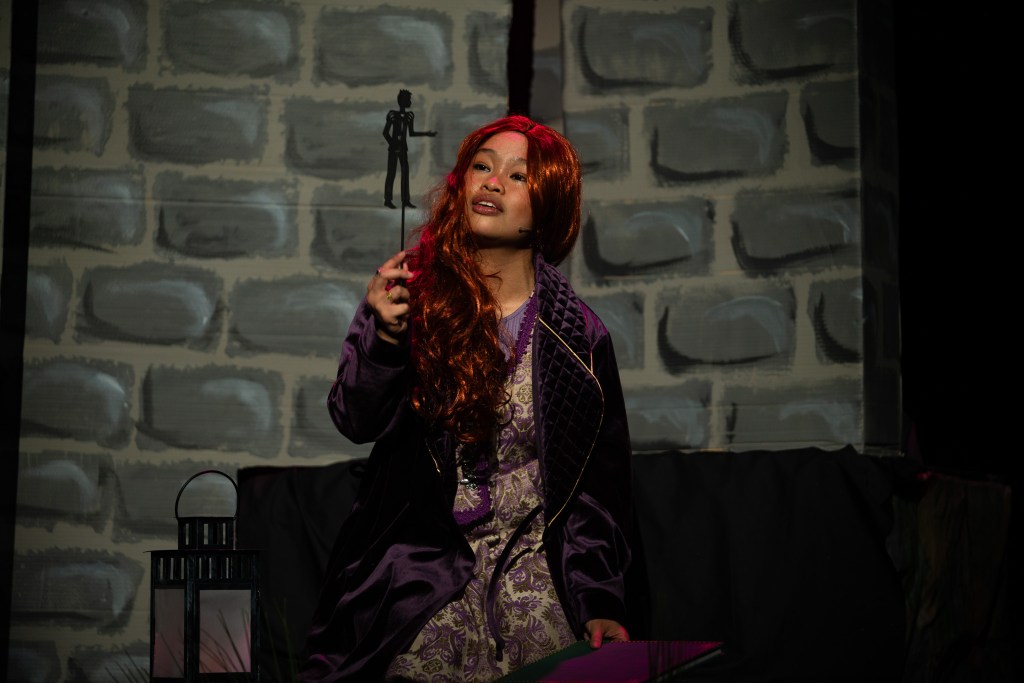
Shrek’s analogy of onions and ogres reminds us that layers can reveal depth. However, this production’s abundance of original concepts occasionally stretched the audience’s attention across too many competing visual ideas. While the shadow projections in ‘I Know It’s Today’ were highly imaginative, they overshadowed the winsome Young Fiona (Lana Gabriel Fernandez), tasking her with navigating an unnecessary number of props. The fairy dance ensemble in ‘Who I’d Be’ was superb, but a little out of place; the lifts and bright coloured costumes pulled far too much focus away from the intricacies of Becker’s performance. Sometimes this production could have trusted the strength of just one layer.
A thought on the writing; the humour entrenched in the story surrounding Farquaad’s height as a little person feels quite outdated, especially in a story about inclusivity. Despite these script issues, Watson and the cast did a commendable job with what they were working with, directing humour where possible towards Farquaad’s’ villainous persona, and not his stature.
UMMTA’s Shrek sparkled with effervescent creativity, leaving its audience with a glorious reminder to love with acceptance. The feeling that lingered in the theatre as the curtain fell was everything you could hope for from a student production: joy, pride and a genuine love of storytelling.
UMMTA’s Shrek played at the Union Theatre May 14 – 16 2026
LUCY SONNEMANN (she/her) is a Melbourne-based actor, and second year BA student at the University of Melbourne, studying English and Theatre Studies alongside Creative Writing. She loves Melbourne’s student theatre community, and the magic of live performance.
CHARLOTTE FRASER (she/her) is a writer, performer and editor based in Melbourne. She holds a BA in English and Theatre Studies and is currently completing her Masters degree at the University of Melbourne. Charlotte is also the 2026 Dialog Editor.
The Dialog is supported by Union House Theatre

