
REVIEWED BY ELIJAH VALERY SLAVINSKIS
EDITED BY MIRANDA WILSON
If there was one thing I was meant to take away from Little Hall’s absurdly long-titled cabaret, it was that “if AI says it’s right, then it must be true.”
At least I think it was…
ME: Hi ChatGPT.
CHATGPT: Hey! What’s up?
ME: I’m hoping you could help me out with something.
CHATGPT: Sure—what do you need help with?
ME: Well, you see, I recently watched a cabaret, and I have to write a review…but, I have no idea where to start. How does one critically evaluate a cabaret??
CHATGPT: A cabaret is basically a live performance that includes anything from singing to storytelling to mildly chaotic emotional vulnerability—sometimes all in the span of five minutes, often while making eye contact directly with the audience. It’s less ‘strictly structured theatre’ and more ‘controlled artistic chaos in nice lighting’.
To critique it, pretend you’re judging how well that chaos was managed: were the performers compelling or just loudly confident? Did the show flow like a journey or like someone just shuffled a playlist mid-song? And did you feel entertained, confused, or spiritually involved against your better judgement?
ME: Thanks ChatGPT! I now feel super confident to talk about my experience and express my feelings about the cabaret I watched!
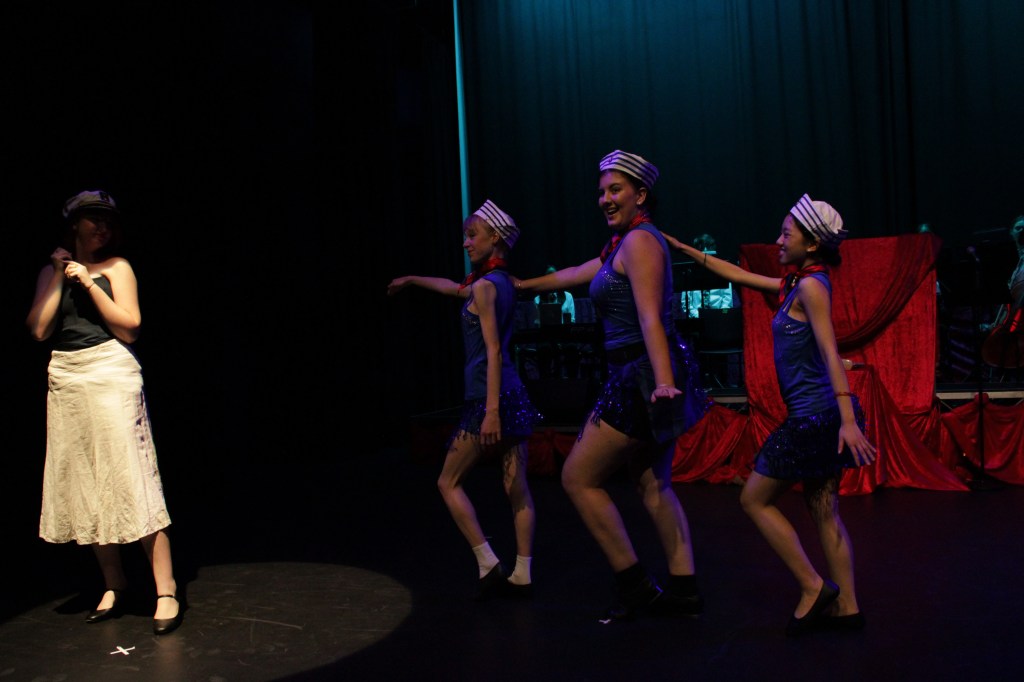
As I sat down in Guild Theatre to see Little Hall Arts Society’s Two nights only, a blow your mind, must see, totally, utterly, simply amazing, magical, spectacular Cabaret, I had a few expectations as to what I was about to watch. I’d attended and enjoyed a variety of cabarets previously, the 1972 film Cabaret is one of my favourite movies, and when I saw the characteristic red curtain draped across the band stand at the back of the stage I thought I knew what I was getting into. How much could my mind really be blown?
Then ‘Star Wars (Main Theme)’ started blaring from the speakers, accompanied by a projection of the iconic scrolling text on the screen at the back of the stage, before two performers came out to sing ‘Lady Marmalade’. This stylistic whiplash came to encapsulate the entire energy of the show. In the words of ChatGPT, Little Hall’s cabaret did feel like artistic chaos, juggling iconic musical theatre tunes with hip-hop dance battles and sketch comedy.
While Little Hall’s cabaret was far from the most polished show I’ve seen, it was impossible not to get swept up in, and ultimately won over by, co-directors Ivan Sokolov and Gabriel Moore’s deliciously joyous, energetic and chaotic vision.
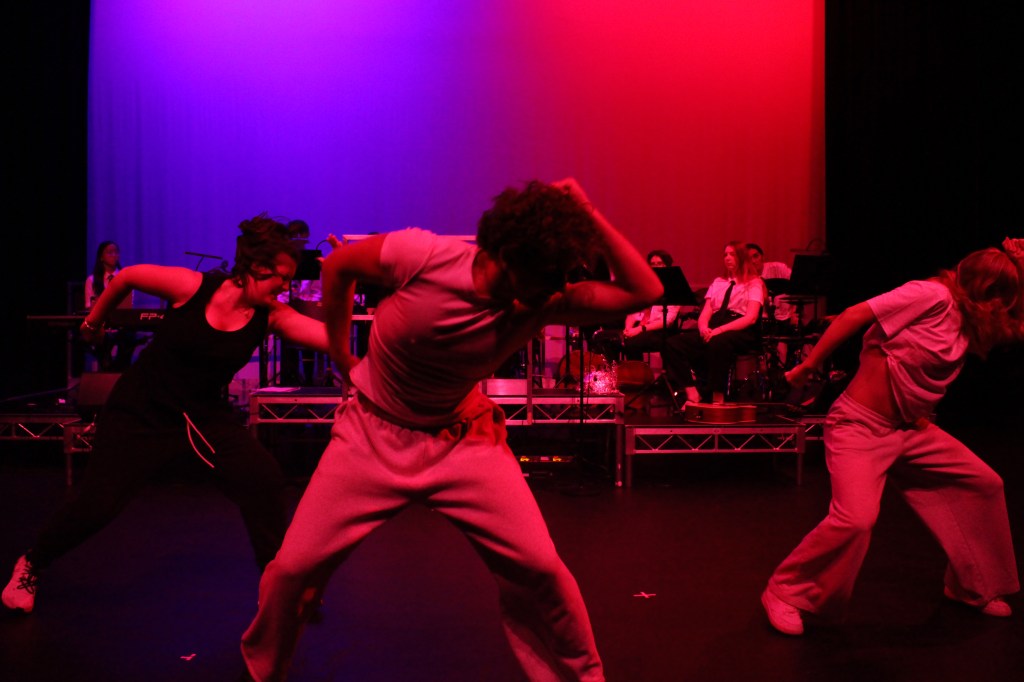
The narrative of the show could most aptly be described as meta, following Ivan and Gabriel as they attempt to produce the greatest cabaret. Yet their creative differences – Ivan only wants to include only classic songs, while Gabriel wants to modernise – threaten to derail the entire production. The First Act is a showcase of iconic cabaret numbers as per Ivan’s planning, including ‘Anything Goes’ and ‘That’s Life’. However, in between performances, Gabriel starts an ‘Evil Shadow Organisation’, teaming up with an Artificial Intelligence program called EvilGPT, to hijack the cabaret, kidnap and brainwash Ivan, and insert modern songs into the production which are then performed in the Second Act.
Gabriel Moore, who wrote the show as well as co-directing and starring in it, showcased a real understanding of comedy in a script that balanced self-aware humour, quippy banter and a pointed satirisation of AI which was only elevated by he and Sokolov’s performances. The two had incredible chemistry on stage, reminiscent of classic ‘buddy comedies’ such as Bill and Ted’s Excellent Adventure which felt like a significant influence of the production.
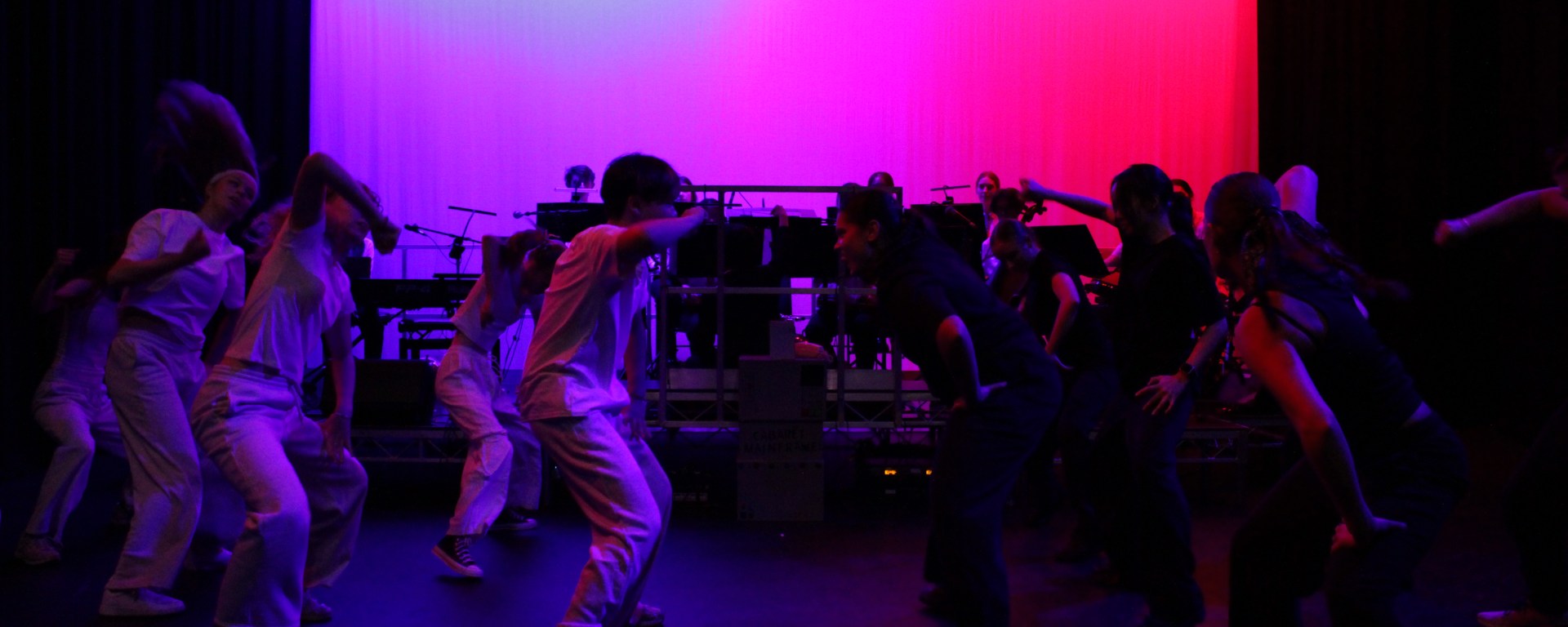
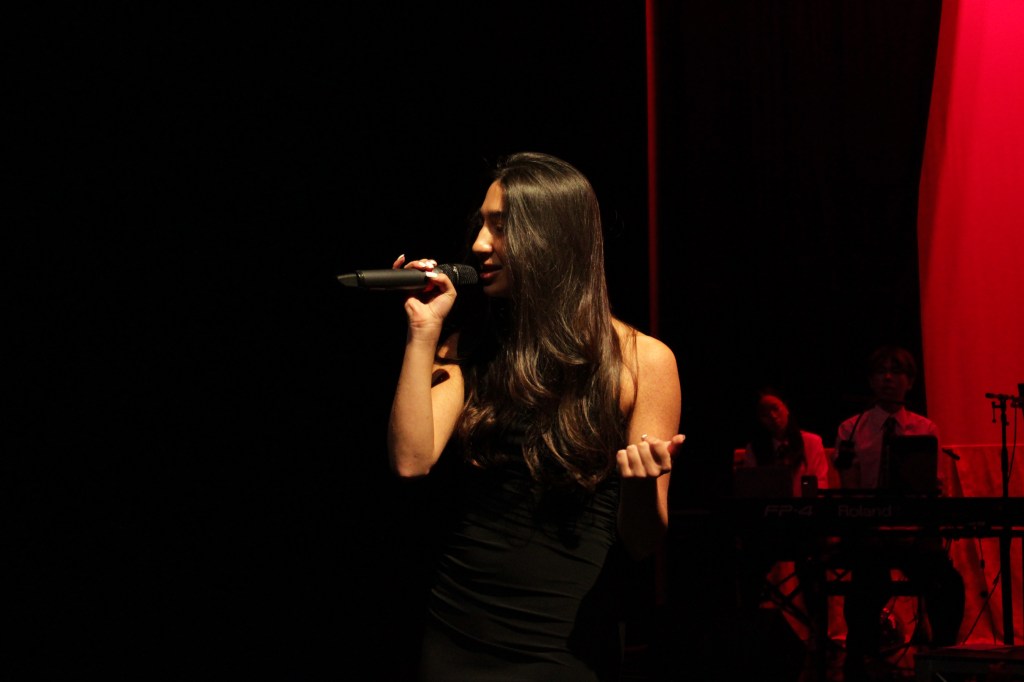
While I believe the cabaret was at its best during the comedy sections when Moore and Sokolov were on stage together, many of the musical performances were quite impressive. The ensemble dance numbers (choregraphed by Chelsea Wiramanaden) from early in the Second Act (Telephone/Thriller/Shut Up and Drive) were incredibly well constructed, with the dance battle style working well to enhance the energy of the group and support those perhaps less confident in their dancing abilities. Dancer Aiden Huntly was a particular highlight, stealing my attention whenever he was on stage. Not only did he showcase immense technical skill, but he also had an undeniable performance quality, particularly in his solo during ‘Shut Up and Drive’ and with his dance partner Maya Farmer in their Latin routine for ‘Perhaps Perhaps Perhaps’. There were some standout vocal performances too – Kennedy Xiao’s rendition of ‘Don’t Rain on My Parade’ was beyond impressive. To accompany oneself on the piano during an already vocally challenging number is the mark of a very talented performer.
As the Second Act progresses, Gabriel realises that he is being taken advantage of by EvilGPT and frees Ivan from the mind-control device. Ivan laments about the ‘good old days’ before the cabaret, asking, “whatever happened to human made art?”. We are then thrust into a cowboy themed flashback showing Ivan recruiting Gabriel to host the cabaret with him after a shootout, parodying the spaghetti western. This section of the performance got me thinking that although it’s expressed in some admittedly wacky ways, the show does seem to have a genuine thematic concern for old versus new, and whether the two can coexist in today’s world.
There’s an obvious separation of the old music and the new music throughout the show until a troubadourian performance of ‘Take Me Home, Country Roads’ by Matt Aidt interrupts the flow of modern songs in the western section of the Second Act. The performance was surprisingly poignant, with a soft spotlight illuminating Aidt as he sung. The number was followed directly by Beyoncé’s ‘TEXAS HOLD ‘EM’ in a heartwarming act of musical unification. The entire crowd joined in for both songs, perhaps reminding us all that no matter how far forward technological advancements may push us, or how heated arguments about the ‘greatest era’ may get, we mustn’t lose sight of past creations nor be afraid of the art of the future. Most crucially, we can’t forget the things that bind us as humans – creativity and collaboration.
Yet perhaps I’m overanalysing. In fact, I am definitely overanalysing. Perhaps it is Gabriel and Ivan who sum up their cabaret, and life, the best – “at the end of the day it’s just not that serious.”
Little Hall Arts Society’s Two nights only, a blow your mind, must see, totally, utterly, simply amazing, magical, spectacular Cabaret played at the Guild Theatre April 23 – 24th, 2026.
ELIJAH VALERY SLAVINSKIS is a first year arts student, looking to major in Screen Studies and/or Art History. After being on stage a lot as a child, he is keen to explore opportunities behind the scenes and in the audience, like writing for The Dialog!
MIRANDA WILSON is a Master of Publishing, Editing and Creative Writing student at the University of Melbourne. She loves reading and writing, and her creative work has been published in Above Water.
The Dialog is supported by Union House Theatre

