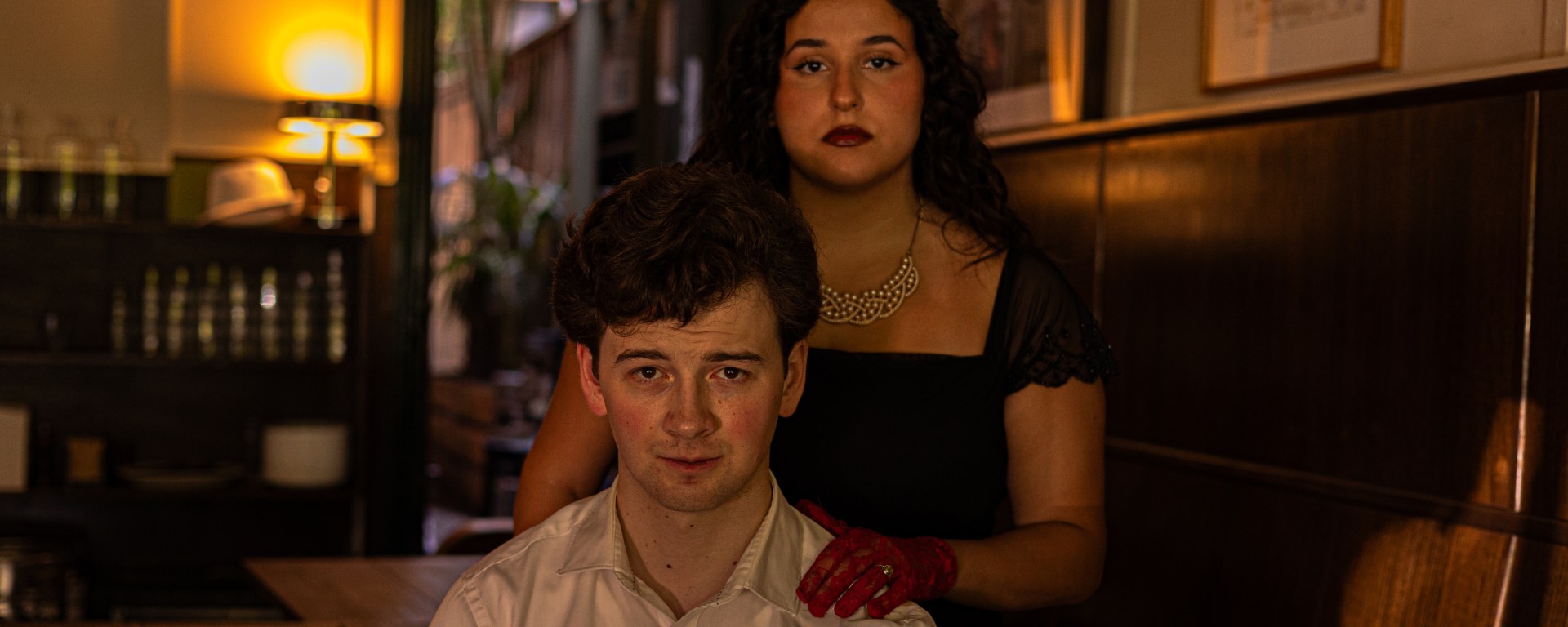
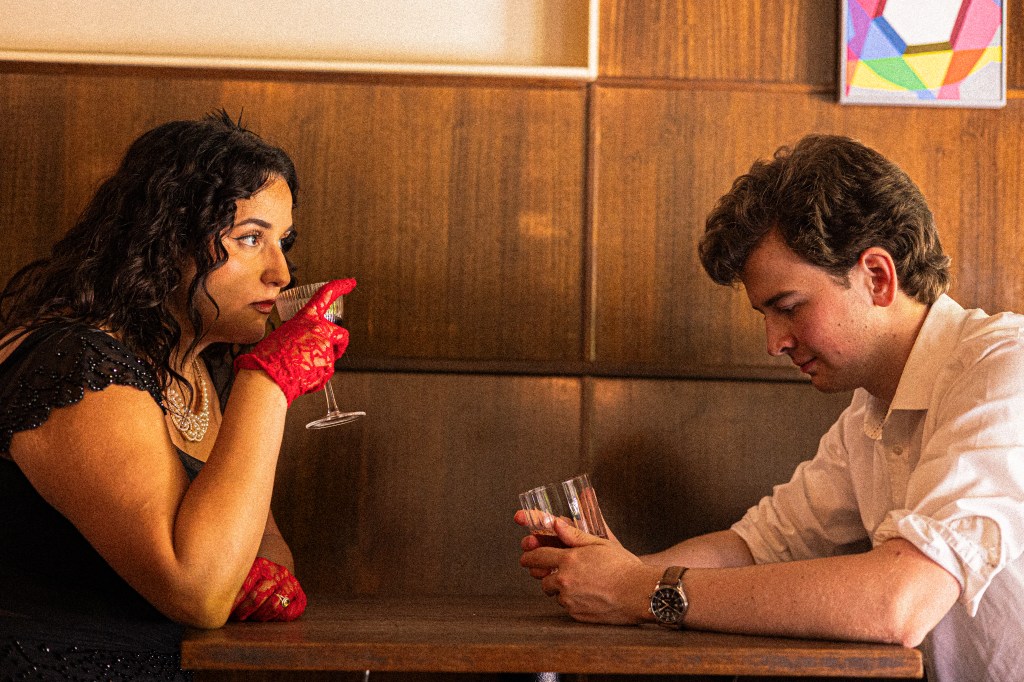
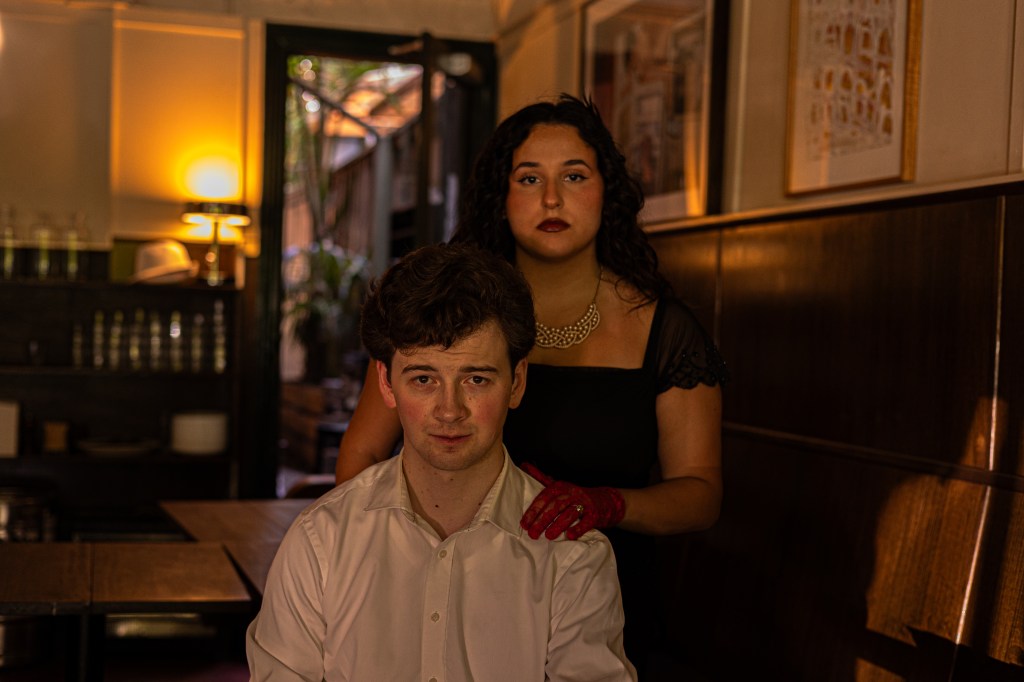
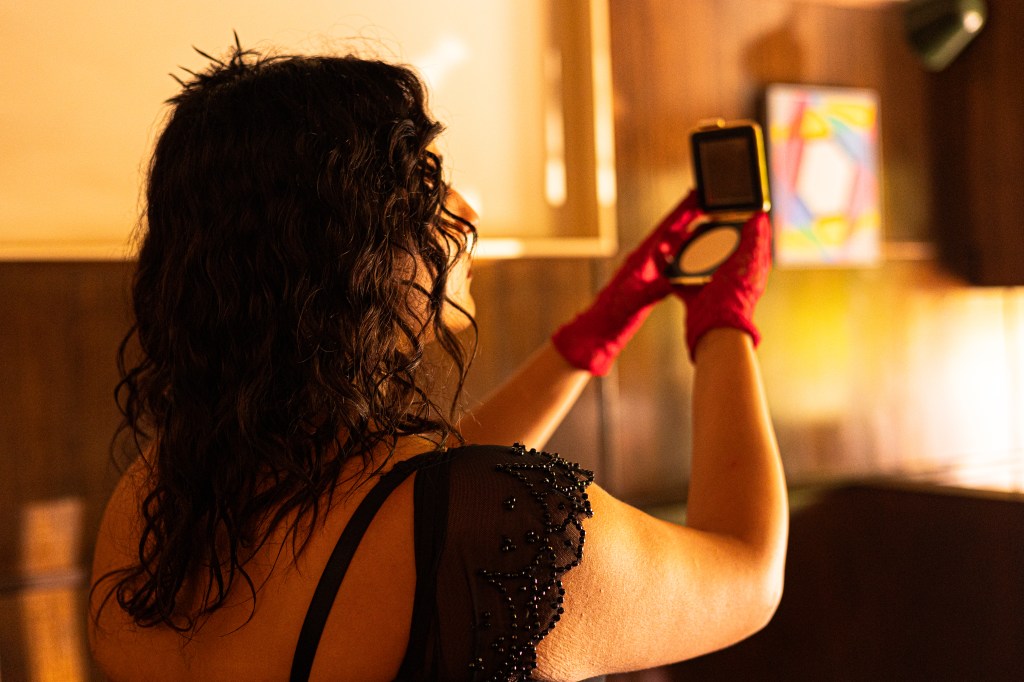
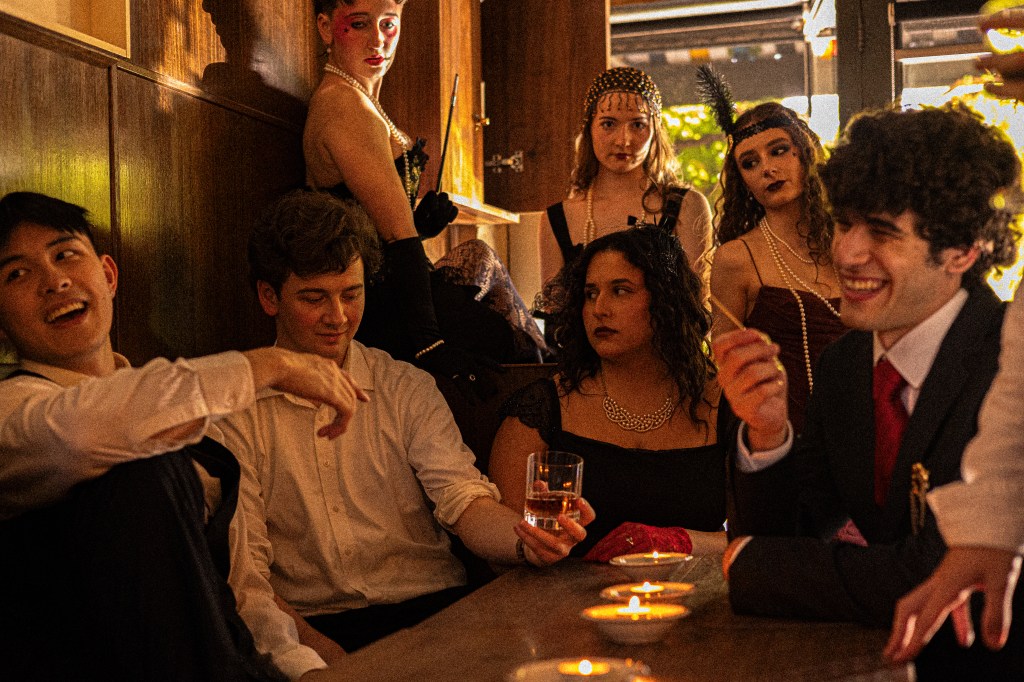
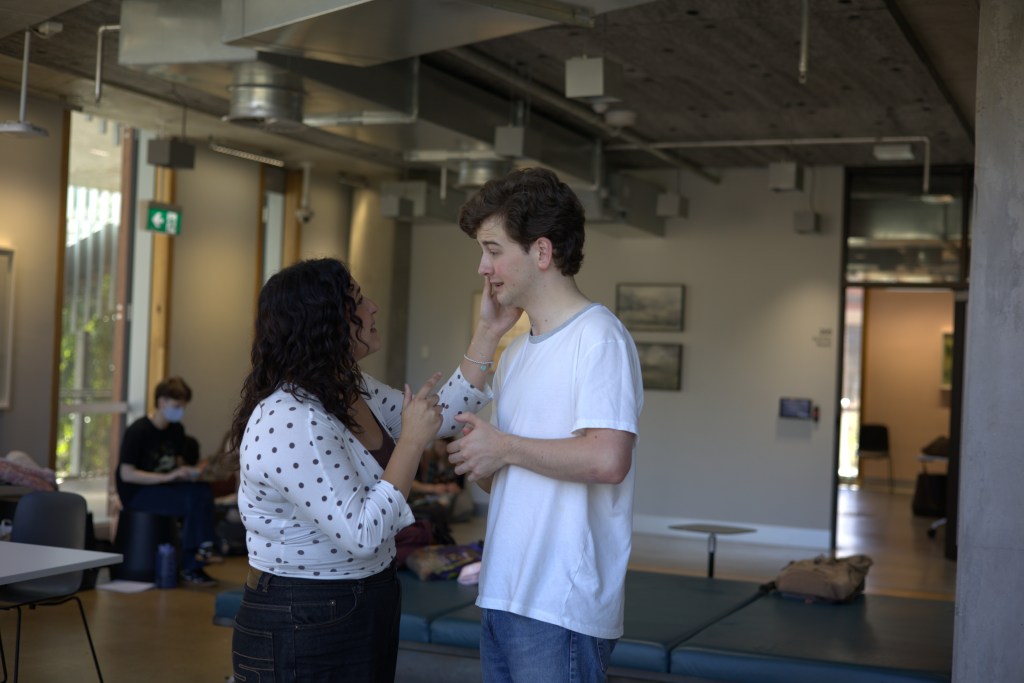
The Dialog head editor, Charlotte Fraser, recently sat down with Alana Collins, Giulia Magagna and Flynn Lhuede to discuss Melbourne University Shakespeare Company’s upcoming production of Macbeth.
This production takes one of Shakespeare’s most famous plays and re-stages it in 1920s New York, bringing the socially relevant messages around greed, power and corruption present in the original script to a contemporary audience.
CHARLOTTE: What drew you two to this production initially?
GIULIA: I originally found out through one of my friends, who has done a show with Melbourne Uni before, and he was telling me about this 1920s Mafia New York style Macbeth, and I was like “oh my god, that’s a bit of me, I have to do that!” And … I really like mobster movies, I think they’re really fun and one of my friends said that I had a good New York accent, so … why not just got for it? Just everything. How well thought through the cast info book was, just reading all of that really, I was like “okay this is so cool everything is so thought out” … you know what you’re going into. I thought that was really good, as an actor, to come into something that was well planned out. I was just really drawn to the reimagining of Macbeth to something that I’m interested in.
FLYNN: When was it announced?
ALANA: Pretty early, like last year.
FLYNN: Because I can’t remember [if it was] before Prague or not. I remember a friend of mine sent it to me like: “hey, 1920s Macbeth.” We both love Shakespeare, we both love the play and I was fortunate enough to be able to do it earlier, in Prague, I got to play Macbeth and that was an interesting production, so I wanted to be able to do it again but actually receive direction. [Getting to] have a second crack at it and [the] 1920s is such a cool time period and just the design of all of it is really cool.
CHARLOTTE: Having come from assistant directing MUSC’s last production – a queer restaging of A Midsummer Night’s Dream – what do you think is at the core of a strong recontextualization? Or what did you gain from that experience and bring into directing Macbeth?
ALANA: Midsummer was my first experience of an adaptation [of] a Shakespeare… you know, I’d seen Shakespeare done before but they were always pretty … text accurate. I was fortunate enough in Midsummer to help with the script editing process and I think that’s a really important thing to do as a director, even if you’re not changing anything, to really understand the text, particularly in adaptations. With Midsummer we cut a bunch of stuff to make it work and to shorten it, which complicated a few things but also assisted us in finding what we really wanted to get from it. And then, for Macbeth, we didn’t cut as much [we] really combed through the script to find all of those places where … the locations, the characters – where everything align[s] with the 1920s context. I really like history so it’s really important to me, at least, that it all connects and [that it] has meaning and we feel immersed in this 1920s world. Because, it’s very easy to have the aesthetics of it and have the idea of “oh let’s do Macbeth but it’s the 1920s” but if you don’t do the groundwork and foundations of finding how it’s all going to pan out, it would be very easy to get to a point where it’s like “oh, but what about … this thing, we never considered that now it doesn’t work.” I think there’s always a way to make it work, but if you don’t do that initial [work] then it leads to issues.
I think that’s a really important thing to do as a director, even if you’re not changing anything, to really understand the text, particularly in adaptations
CHARLOTTE: As actors approaching a play like Macbeth – one where some of the most famous actors have taken on these iconic roles – how do you bring in pieces of your favourite takes on these roles and balance it with your own interpretation?
GIULIA: I think a really big thing for me as an actor is, yes, looking at the source material [and] people who have done it beforehand, to see different takes, like “oh, I wouldn’t have interpreted it that way.” But I think a lot of it comes from when you’re actually working with another actor, seeing what they’re bringing to the scene and playing off of that. And a lot of it can be improv but a lot of it is discussion after: “how did that feel? Did that work? Where’s your headspace? Where do you think your character is sitting during this scene? Like what’s their ambition? What do they want?” … I like to play off whoever I’m working with, and a lot of it does come from where you character is, the inner workings of your character. For me as an actor, it’s always more fun to play around with it with your scene partner. I think a lot of people are alone in their scenes. When you’re watching something and [you think] “okay, they’re kind of by themselves up there aren’t they?” – even though they’re acting with somebody else. I feel like it’s important to be cohesive, [and to know] where you both are. So, I thought that that was really important. And that’s how I approach this, because it is – the characters are married, it’s a marriage, [and] you wanna feel that even while they’re talking to each other, you know? Even while we’re standing apart on stage, you still want to be able to fell that.
FLYNN: I think that … especially with a lot of Shakespeare, the characters are so open to interpretation that they are so heavily informed by the actors and who is playing each character, and then that’s sort of fine-tuned by the director to fill [the] whole picture. But yeah, it’s a marriage. [I’ll] say this because I did it last time, but two completely different Lady Ms has led to every scene just being completely different. Macbeth is a little less murder-insane-y. It’s really interesting how all these characters shape it, it’s so much more fun now because of Matt [Ho] with Banquo and it’s… it’s Shakespeare. And, in relation to all of the other actors who have played the roles, I think… I don’t think about it because if I did I would kind of go insane.
ALANA: Like Macbeth.
We all laugh; it’s true.
FLYNN: It’s a lot of pressure, and when you go “oh… Ian Mckellen did all of these roles” … oh… okay. Yeah. He did. Holy shit. Sort of just compartmentalising that and treating it as: Shakespeare was a writer, he wrote this play, we’re doing this play. Do the same work you would for any other one.
CHARLOTTE: What has been the most challenging part of the rehearsal process so far?
ALANA: That’s a good question…
CHARLOTTE: Alana is freaking out.
ALANA: I mean, is it bad to say I’ve felt like it’s been a pretty easy one so far?
GIULIA: I was about to say that.
ALANA: I mean, obviously there’s always going to be ups and downs and hard rehearsals and [moments] like that where things aren’t going right, or you have to rethink something, or change things that you had set in stone – that’s always gonna happen. I find, as a director, the most important trait I need to have is flexibility. But, as a whole, it’s been a dream, honestly. It’s such a great cast and the production team is lovely, we’re all just going [along] and it’s all coming together, all the stages, it’s all happening and I’m just really pleased with how it’s going. Knock on wood. I don’t think I can say that there’s been a most challenging moment, … whatever challenges have [come] up have been sorted out as they’ve come and added to my enjoyment of the process because it’s like: “oh now I get to solve a problem!”
GIULIA: I think that it’s been really great. I was a bit nervous because I’m not a part of this uni, so coming into this I knew that everybody would probably know each other, and I would not know anybody. So that was a bit nerve wracking but genuinely, everyone is incredible. I think [it’s] a testament to how well everything is planned, … I’ve been a part of shows where it’s all fallen apart and not because of anybody’s fault but just because it wasn’t organised. [In Macbeth] everyone has a role and everybody … it’s like a clock. The cogs turn because everyone’s doing their job. And everyone is very committed; I feel that as well. There have been heaps of times where you’ll work with an actor and their head’s not there, which is fine! It’s been really smooth sailing and anything that there has been to work through, [mainly been] acting stuff but that’s exciting to me, [it’s exciting to] run into things like that and you get to talk about it with each other. And it feels comfortable to do that because it’s a safe space.
FLYNN: It’s gone scarily smooth so far.
ALANA: We’ll wait until tech week.
FLYNN: I’m used to productions having issues behind the scenes with cast and, especially as it’s a student production, students love to gossip and create drama.
CHARLOTTE: Yep.
FLYNN: And it kinda just hasn’t happened yet that I’m aware of at least.
ALANA: [Or] that I’m aware of.
FLYNN: It’s been really good. Just to be able to come and focus on the acting work … rediscovering the banquet scene and rediscovering that arc has been a fun little challenge I’ve had to work on. [I’m] still struggling with the [New York] accent, I need to figure that out, but that’s part of it. It’s a lot of fun.
CHARLOTTE: That’s great to hear. Going off that: with the text itself and a play that has so many emotionally charged monologues, how do you break the script down and connect to it? Which is your favourite and why?
ALANA: I have some favourite lines and things that just … because obviously Shakespeare writes quite poetically at times, and it’s such a… it shouldn’t sound as good as it does, but I really love the way that Flynn says the “Hear it not, Duncan; for it is a knell / That summons thee to heaven or to hell” (II.I.76-7) –
he’s essentially saying, don’t hear the clock because it’s signifying that I’m going to kill you. Horrible, but [it] just sounds so good that every time I hear it, I’m just like hmm …
FLYNN: And Macbeth has his own awareness of “I’m doing this; I’m going to go to hell.” … It’s a fun line.
GIULIA: There’s a few. I think just reading the script and knowing the play and reading this [version] of it, looking at the scenes, I was so excited to be able to do them with Macbeth – with Flynn. Not that I knew [Flynn] at the time, but I was like: “this is going to be really exciting,” because, as an actor, I really like playing off whoever I’m working with. So that was really fun and I like all the bathroom scenes.
Flynn and Alana agree. Despite my curiosity, I don’t follow up and ask for context; I trust Alana’s direction. I’ll be interested to see which scenes they’ve set in a bathroom when show week comes around.
GIULIA: One of the joys has been working on Act V Scene I, because it’s the scene where I go insane and I really didn’t know how I was going to approach it. I think there can a quiet, sombre nature of going insane. But I felt like it wasn’t supposed to be like that [in] this production. I watched a lot of performances where it was done like that. But [after] working on it in the space and bringing it to Alana and seeing how [she] liked it and [receiving her direction], I feel like that was really helpful. If I had to say, the bathroom scenes and that scene [are] my favourites just because I feel like I get to really go for it there, which is exciting.
I think there can be a sombre, quiet nature of going insane.
CHARLOTTE: (to Flynn) And she stole your answer?
FLYNN: Yeah, the bathroom scenes are great, just because it’s such a—it’s a really confined way [that] it’s staged so there’s no movement. There’s no escape. It’s just intense and it’s full-on and it’s a lot of fun getting to work with another actor and navigate that challenge and find a way to make it engaging. It’s been great getting to do that. The “ring the alarum bell——” (V.V.57)
ALANA: That’s a good one.
FLYNN: … working with a huge ensemble and having these huge ensemble moments and it was one of the moments where I was just in the middle of it and [thought] “oh shit I’m in the middle of this, fuck!” It was really cool. It’s just fun to do that I’m really excited to get to do the final scene, it’s some of my favourite texts in this show, the like “I will not yield” (V.VIII.30) – the moment where he just loses everything and that’s him breaking. And it’s been a lot of fun getting to play a character who does get to be so intense and go to these emotional extremes because so often it’s really pulled back but [with the] Shakespeare type of language we can have a lot of fun with this.
ALANA: I thought I didn’t have a favourite scene but when you guys were talking I remembered, Act I Scene III – between Banquo and the Witches and Macbeth. There’s something about it that I just find really fun. It’s a fairly low-key scene, but … particularly with Matt [Ho] who plays Banquo [and his] reading of the text, it’s so funny and your interactions together are great where you’re both laughing … I’ve always read Banquo – even way back year 10 or [whenever] we studied it, as being a happy-go-lucky kind of character, which is not – I’ve learnt – not a common reading. I always just got that from the text where he’s joking and a little more carefree about the events, especially in that scene, than Macbeth is—
CHARLOTTE: A little Michael Cassio-esque?
ALANA: Yeah, and it was just fun to play with those, with those things in the process of staging it.
CHARLOTTE: Finally, what do you hope the audience will take away from the show?
ALANA: I mean, I feel like it’s a common thing with all Shakespeare [plays] … how we can show the relevance of the text today. The ’20s [are] exactly a hundred years ago now so that’s not necessarily modern in any sense, but it was written 500 or so years ago, [and we are bringing] it 400 years into the future. It continues to have these core themes that you can pull out. Greed, there’s guilt, power, all of those … those fatal flaws, in a way. There’s so much death in the production, and so much destruction of people’s relationships, we see Macbeth and Lady Macbeth’s relationship, in particular, deteriorate quite a bit because of what comes between them. The way that people can be corrupted by power, I think [is] very [relevant] today. And it’s not something that’s necessarily pushed to the forefront, in the production, it’s engrained in the text. There’s strong themes of good and evil. … I’d love the audience to be thinking about those human elements. That’s the other thing that the production plays with is human nature, [it’s] subverted by the witches [who] are not meant to be human [and] behave in ‘incorrect’ ways – as they’re flappers – [there are] a lot of things that I think are really relevant today.
When recontextualising a Shakespeare play, particularly one as iconic and well-loved as Macbeth, there will always be sceptics. Unsurprisingly to those who know me, I am usually one. As Alana said, it’s easy to decide you’re going to set a show in the 1920s, it’s easy to choose an aesthetic and run with it. But without putting in the work, without going through the text with a fine-tooth comb to make sure your version will hold up, it’s easy for a production to fall flat. If this conversation is anything to go by, however, I don’t see that being the case here. After an extensive conversation with this team, I am eager to see MUSC’s Macbeth all come together. The passion for the work – from both the actors and director – is clear, energising and infectious; I didn’t want to leave.
Special thanks to the Macbeth team at Melbourne University Shakespeare Company: Grace Barnes (Producer), Alana Collins (Director), Giulia Magagna (Lady Macbeth) and Flynn Lhuede (Macbeth).
Macbeth will be performed at the Union Theatre May 7 – 9.
CHARLOTTE FRASER (she/her) is a writer, performer and student editor based in Melbourne. She holds a BA in English and Theatre Studies and is currently completing her Masters degree at the University of Melbourne.Charlotte is also the 2026 Dialog Editor.