
REVIEWED BY JESS PARKIN
EDITED BY CHARLOTTE FRASER
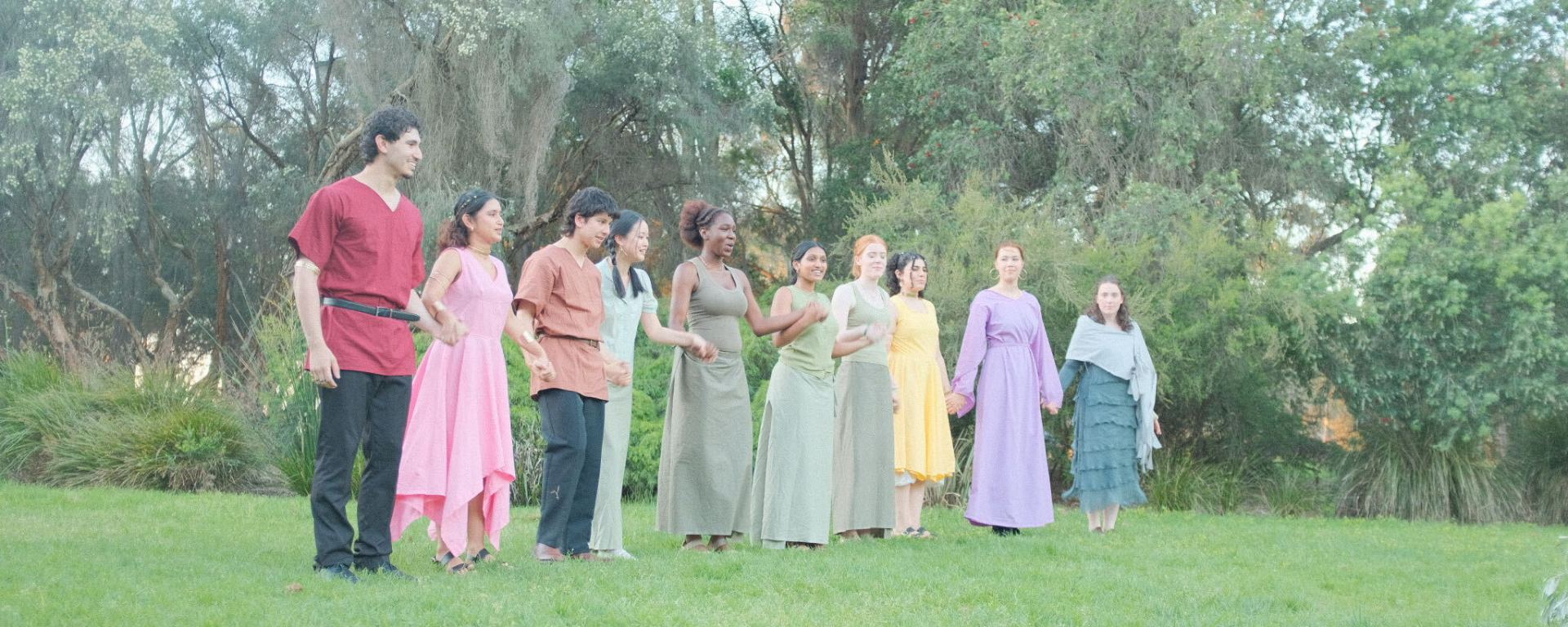
An old tale; a modern script. The warm summer evening welcomed the audience into a confronting and honest rendition of Sophocles’ Antigone. While some stories are difficult to hear, Four Letter World Theatre met these difficulties head on, diving straight into important conversations about grief, culture and identity. In a world that demands peace yet fosters violence, this staging of Antigone encouraged pause and reflection, an effective channel for anger and remorse through earnest performance.
Following young Antigone (Dahlia Karam), this Ancient Greek tragedy – adapted by writer and co-director Mya Helou – is an old story told again and again, raising new questions each time: who is allowed to mourn, and by who’s say so? After a battle that destroys her two brothers, Antigone is on a mission to disobey her uncle, Creon (Christian Caracoglia), by providing her brother Polynices with a proper burial. In the process, her rebellious decision calls into question Creon’s tyrannical behaviour, eventually causing a chain of sorrowful suicides that leave the audience raw.
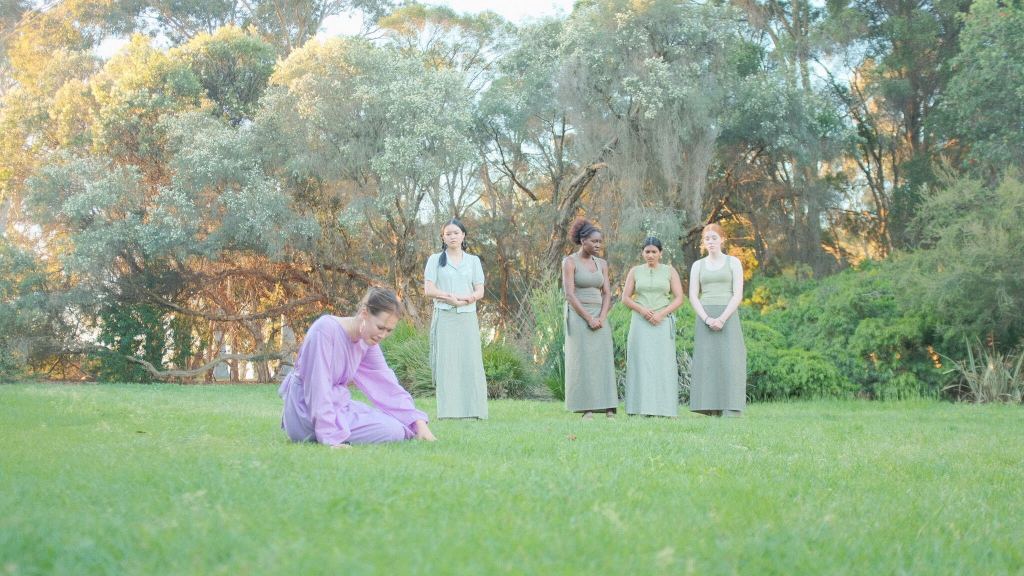
But as I stretched my sore legs after the show, there was less impact on my emotions than I had anticipated. I, for one, laugh when prompted and cry at the drop of a hat – but there was more laughing than crying in this tragedy. Did they intentionally expound on the classic one-liners to soften the exploration into truly difficult thematic territory, or did it lean too far into the conventional comedy? The show’s lasting impression was definitely subtler than I had hoped, but persistent enough for the niggling questions to rise eventually.
I have watched many a performance in the park, and I have always loved the human connection it brings. With the cast roaming among the trees before the performance, watching them greet family and friends brings a humanity that you don’t often see in theatre – another story being told on land so rich with history and storytelling that it makes you involuntarily smile at its relational quality.
The setting sun cast such a beautiful halo around the stage that my attention on buzzing dragonflies and swarms of bugs was almost too intense. While this natural setting left lighting reliant on the whimsical and quite remorseless mood of the sun, its effect was truly magnificent – with bright rays welcoming the passionate opening and the grey shadows matching the gloomy closing emotions. But it was the set, or lack thereof, that caught my attention as a natural backdrop. The greenery was as predictable as always and added to the honest performance without a need for further set. What could possibly be tacked onto a landscape to make it even more majestic? The only piece in sight was a small seedling downstage that represented the deceased Polynices.
Directors Mya Helou and Maneka De Silva took advantage of the natural land, curving character entrances around the bountiful shrubbery and using the pre-existing bench for distant exchanges. And there was a certain transparency of the thinness of the green ‘walls’ that I enjoyed which continued the lasting connection with the actors despite the hard-lined stage and audience areas.
The emotions in this performance ran high, with anger mounting that wave. But the continual fury eventually turned grating, almost surface-level in its execution in a way that wasn’t so much being intentionally uncomfortable but a missed opportunity to explore the depths of anger and its facets. In many instances, it made me cringe that the default rage was a raised voice and pointed fingers. Done well, anger is full of grief, sorrow, hatred and a deadly silence goes a long way. And I found only Dahlia Karam’s performance of it convincing. She played Antigone with a certain callousness that brought out the character’s innocence, and the simmering rage was clear under her immovable mask and still body. But Electra Noble as Eurydice truly blew me away. They brought a gravity to the character that deepened the mother’s love for their children, and especially their need for security. And Eurydice’s broken monologue when they finally cracked was reminiscent of a primal grief and fury that transcends rationality – a performance that left me to take in shaky breaths.
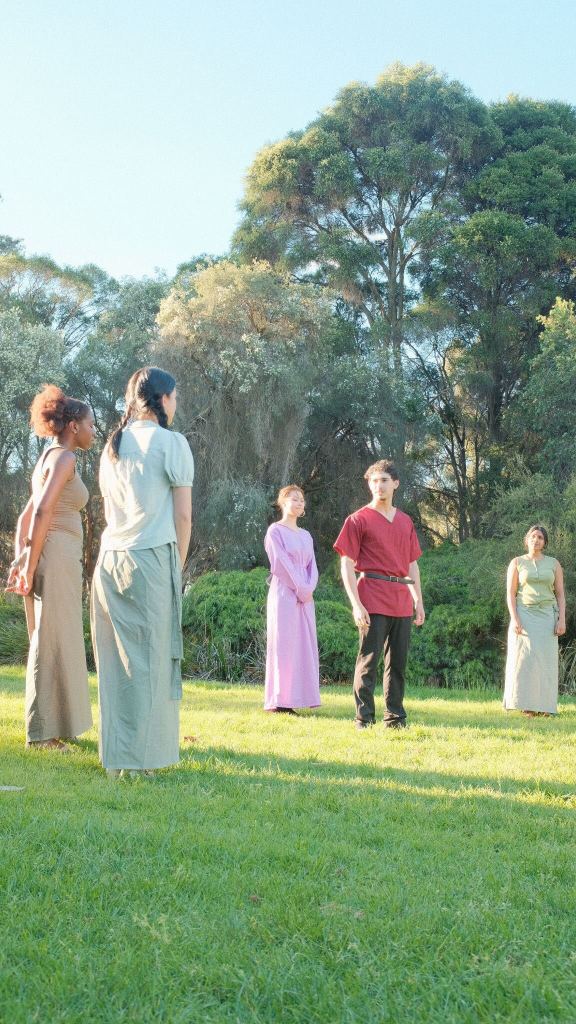
The interpretation taken by the creative team is very impressive. Tackling difficult themes of autonomy, ownership and grief with a cast composed mainly of people of colour established an atmosphere dedicated to effective, respectful confrontation that allowed for real conversation and beautiful collaboration. Helou’s modern script also enabled this accessible conversation that culminated in Tireseas’ (Harper Tierney-Hunt) bold question to Creon: “Where is your humanity?”
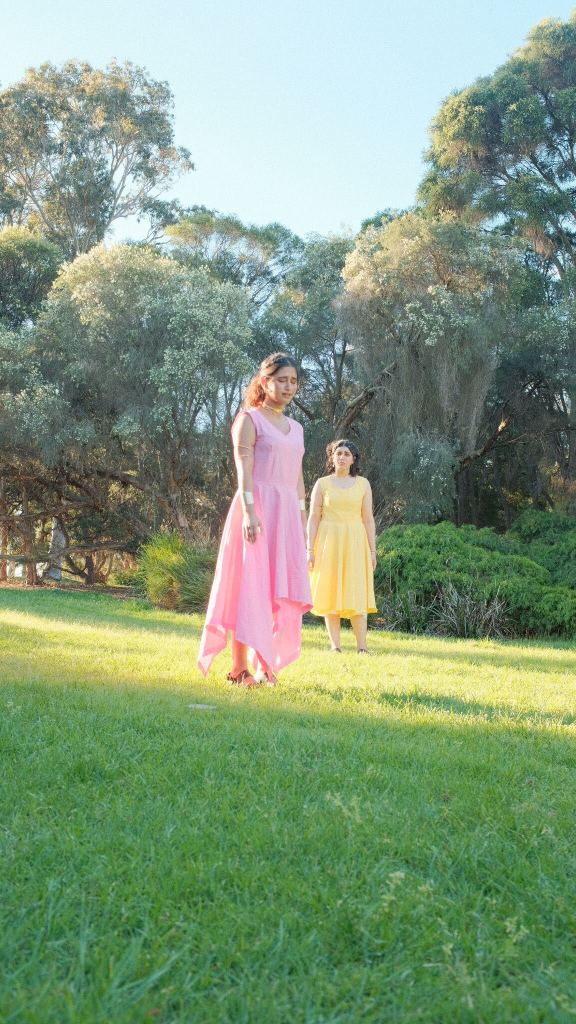
While at times the script (with its oddly timed swearing) felt unnatural and sudden, the overall modernisation served the performance well. This, alongside the homage to Ancient Greece through the costume’s gold circlets and hair ornaments, creates a simple blend of modern and ancient – resulting in a complexly undefined era.
The costume reflected this aspect, with solid colour designs by Sophie Edwards. The Chorus’ signature green seamlessly blended with the natural stage, and the colours of the other characters were wonderfully individual while related, with Ismene’s signature pink (Anaya Sircar) and Haemon’s orangey brown (Elijah Valery Slavinskis) stemming from the angry red of Creon.
Antigone was an invitation to an ancient conversation, and it certainly brought that urgency and honest love to the stage. This earnest performance excused any uncomfortable painfulness and awkward pace with an admirable desire for change that cast the nightmarish deaths in a refreshingly intimidating light.
Antigone was a site-specific performance that played 22-24 of October 2026.
JESS PARKIN (she/her) is a second year Arts student, majoring in English and Theatre Studies and an aspiring editor. With a performance background, she is keen to turn her practical knowledge into engaging pieces for an even more engaged audience!
CHARLOTTE FRASER (she/her) is a writer, performer and editor based in Melbourne. She holds a BA in English and Theatre Studies and is currently completing her Masters degree at the University of Melbourne. Charlotte is also the 2026 Dialog Editor.
The Dialog is supported by Union House Theatre

