
REVIEWED BY KIERA EDELSTEIN
EDITED BY CHARLOTTE FRASER
Tucked into an alleyway in North Melbourne and situated at the top of a Spirited Away-esque winding staircase, the foyer of Club Voltaire looks like you’ve stumbled into a student share house or the backstage of a Vaudeville show. The room was so small and stuffed with blankets, posters and trinkets that a defined closeness was created between audience members, one as physical as it was emotional.
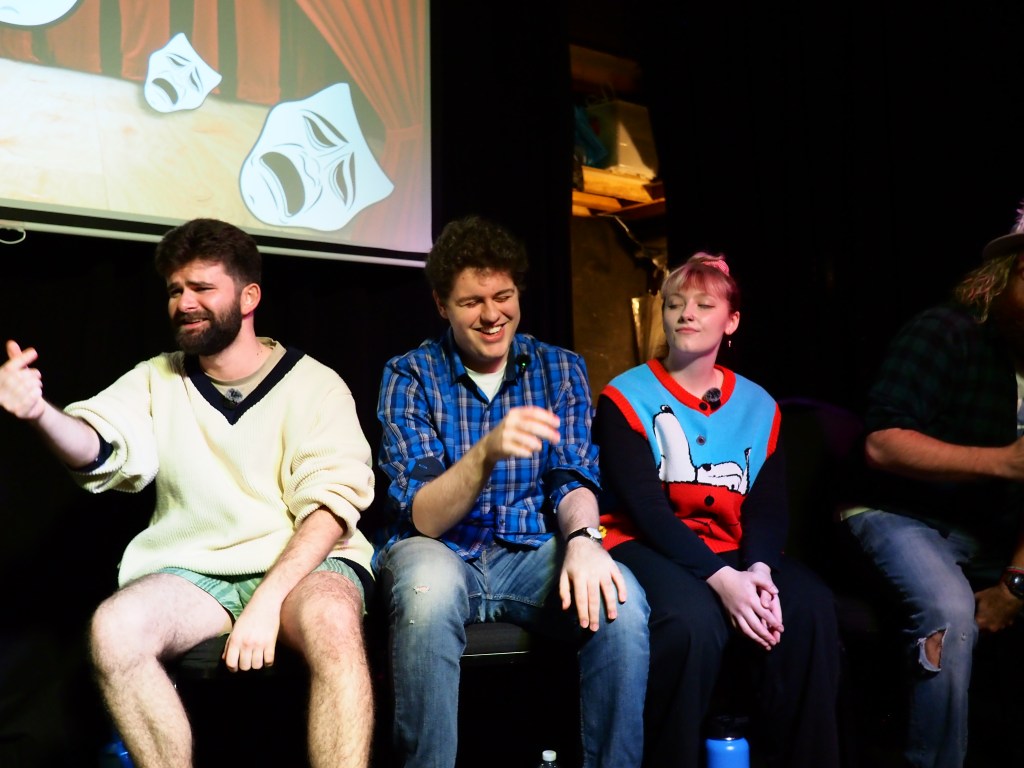
The Last Actor Standing is a semi-improvised competition between artists from Melbourne’s ever-interknitted theatre scene. Created by Noah Sargent and Jay Watts with writing assistance from Alex Watts and Pip Wiseman, is made up of a season of four performances that function much like a tournament, with the winners of the first three performances coming into the grand finale. Each performance is made up of multiple rounds of improv and theatre sports adjacent games that are hosted by the producing team. The winners, in true improv fashion, are decided by audience voting. In this Season 3 finale winners Joshua Bruce, Thomas Galanis, Alanis Kaitlin and David Tieck were united in a battle, supported by hosting from Sargent, to determine who truly is The Greatest Actor in the World. Settling into my collapsable chair, Coke Zero teetering on the floor, the room was exactly what you would want a late Friday evening at an independent improv to be: comfortable, intimate and a little bit dusty.
The show began with a warmup round titled ‘Deja Split’ where the four actors were required to improvise a two-minute scene based on an audience prompt and then repeat the scene’s key beats in 1 minute, 30 seconds and finally 10 seconds. The first go was burdened by a few eternities of 3 second silences that improv is notorious for. I braced for a long night.
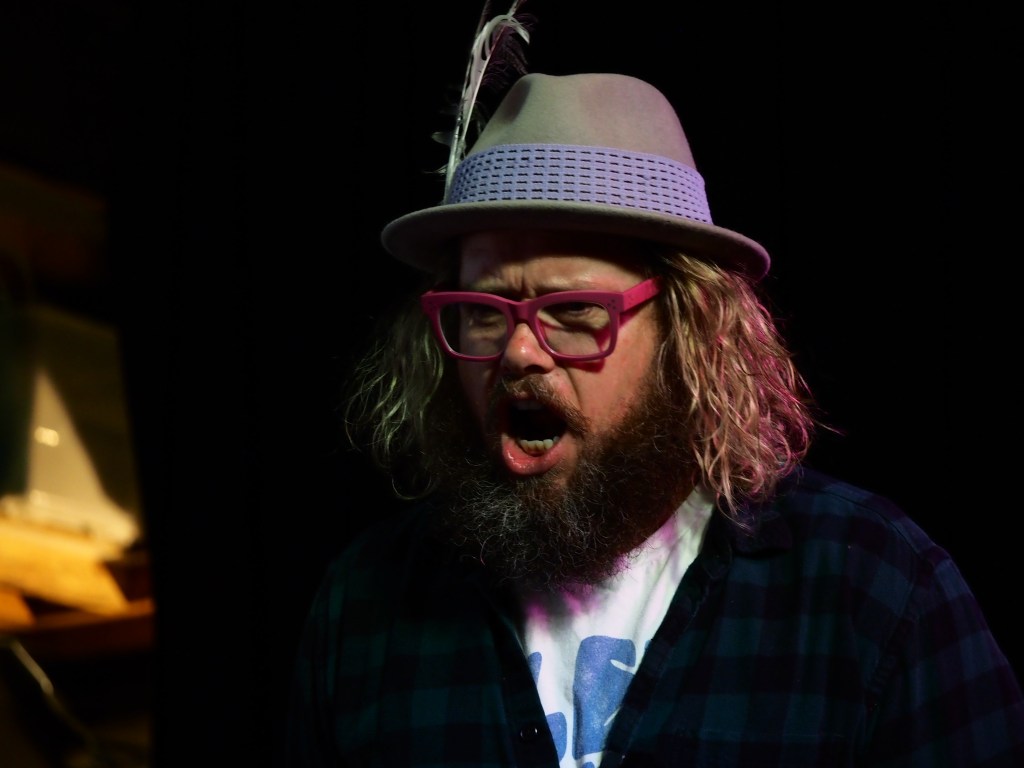
Yet, as fast as the second ‘split’ the stage was already coming alive into sharp beats and smooth witticisms and laughs swelled up with ease. Sargent’s unwavering comfortability through this opening stumble was a tacit signal at just how experienced the show’s writers are. The set up quickly prompted unscripted hilarity that subtly set everyone up, actors and audience alike, for an enjoyable evening. Kaitlin and Tieck were also highlights, guiding the scene with multiple levels, physical humour and deft ‘yes and-ing.’
And yet, the opening game was perhaps the only time throughout the show which showcased improv acting as its highest, as, with the second round – ‘Bingo But Good’ – nosedived the performance into good old competitive fun. Much as the name suggests, this round put the four performers head-to-head in a race to achieve the goals set out in the 4×4 prompts squares they were given in rotating two-hander improvised scenes. Bruce, in his candy-striped swimming trunks, occupied the self-proclaimed position of Brennan Lee Mulligan almost immediately, berating Sargent with a ridiculous number of preparatory questions. And yet, comically, his clarifications appeared altogether useless in helping him from completely misreading his instructions and charging straight into a failed coup-de-teat of the round. In this context, Galanis was able to swiftly carry himself to Bingo with such a worldly ease it almost felt like he had failed the task of making it funny to watch. Meanwhile, Kaitlin managed to release at minimum 3 demon-summoning screams and Tieck appeared in a competition of his own. Chaos, chemistry and humour were high, and a few impressive accents were flexed, but this round felt a bit closer to a game of family charades than testing acting skills. With this, my personal favourite from the prior round for her considered acting skills, Kaitlin, was ousted from the stage and into the audience.
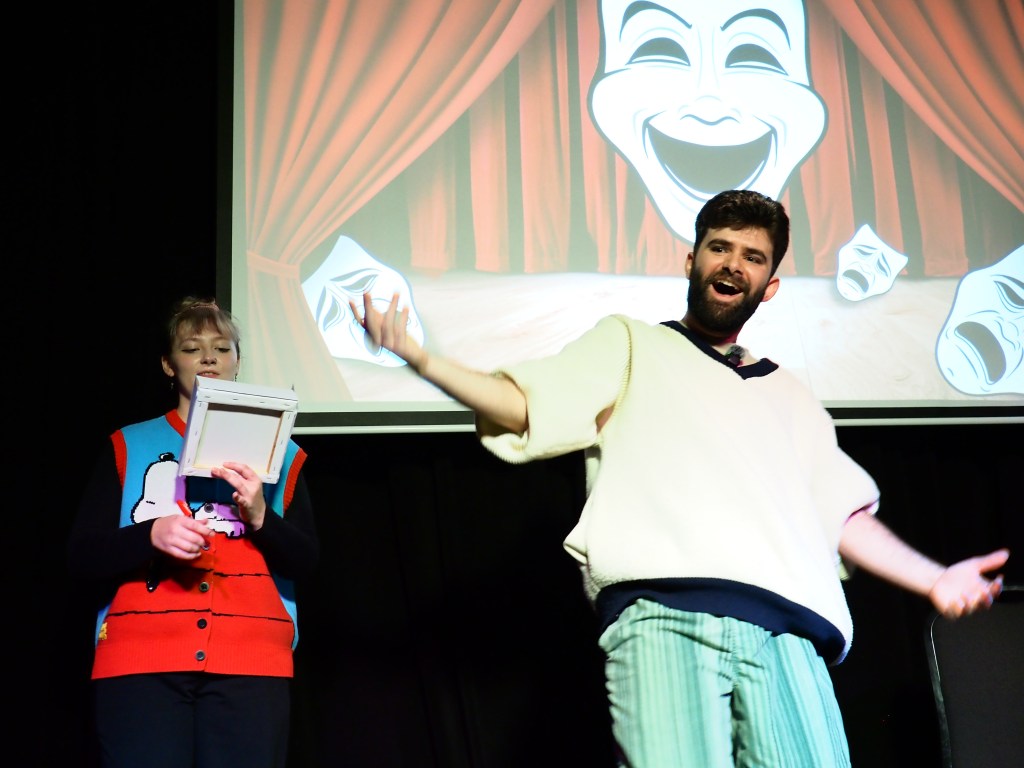
A similar competitive energy flowed into the following round, with a debate on the vitally topical question ‘what character has had the best redemption arc.’ Harking back to the days of DAV debating, each performer was to give opening statements, rebuttals and closing remarks on a chosen figure they believed apt for the topic. Bruce was well-spoken, leaning on his expert repertoire of Avatar: The Last Airbender knowledge, while Galanis was endearingly passionate in his defence of Ebenezer Scrooge. Yet, Tieck appeared to have the greatest cognisance of what it means to entertain, rather than to be right. His remarks, which were last out of the trio and positioned the soccer player Grani Xhaka against the classically known redemption-ees from the other two, were witty and joyfully unexpected. Sargent’s participation here was also a highlight, as disapproving looks and emotional support stopwatch brought me a good few chuckles. Even though Bruce’s remarks were empirically accurate – indeed, Zuko is undeniably the world’s greatest anti-hero – and Galanis’s reflection of cholera in the Thames were historically grounded, Tiek evidenced an asset I deem to be at the heart of the Last Actor Standing especially given their vision statement to ‘connect audiences with actors they love.’ I was saddened that this sacrifice to humour had him voted out in the round, even if it was the audience who ousted him.
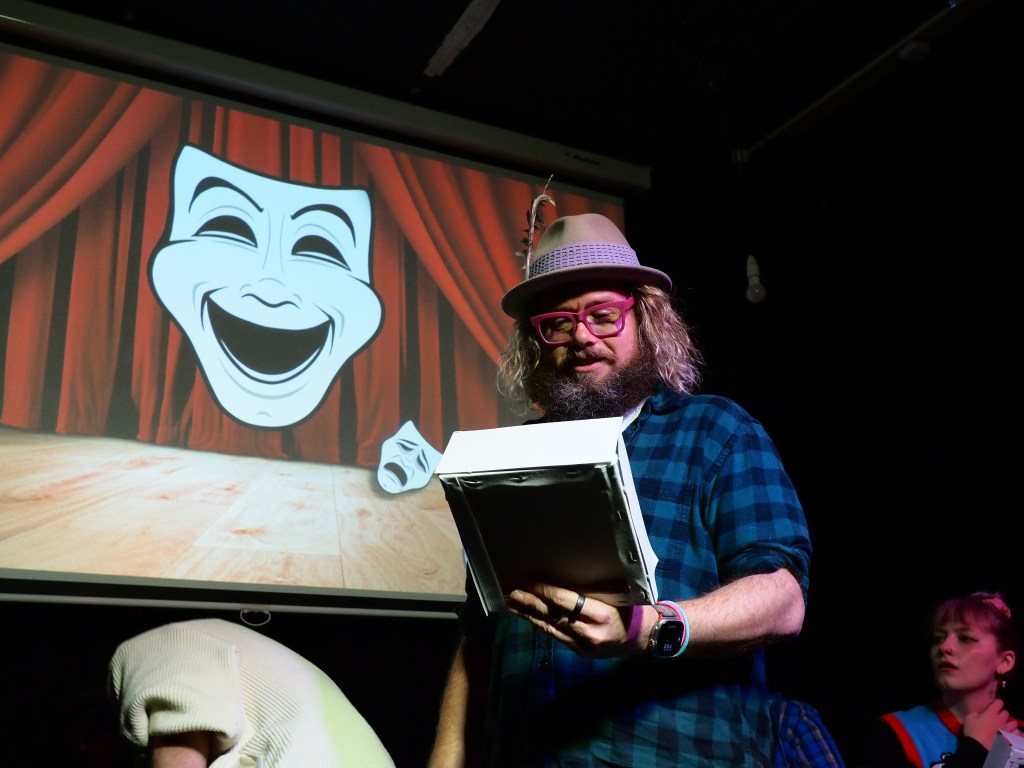
The final round, dubbed the Speed Round, though it was far from short, let Galanis and Bruce experiment further with their character work and quick-thinking skills. It featured a variety of challenges, including writing lyrics for song prompts, filling in the blanks for sentences and performing short plays based on prompts in a hint to Lost Theatre Company’s upcoming show Two Much Light Makes the Baby Go Blind. Galanis’s creative interpretations and Bruce’s intelligent character work – including a Jennifer Coolidge take on the character prompt ‘Meaty Steve’ – made this part of the show an all-round good time watch. By the end of the night, though Galanis was deservingly crowned The Greatest Actor of All Time, the best parts of the show seemed to be the result of collective effort. As audience participation ramped up, the writers popped in with quippy one liners, and even the tech operator Myra Barber came in with a few great PowerPoint-related bits, the room coalesced into a love letter to the art of play.
Blurring the boundaries between audience and actor, The Last Actor Standing was a prompt on who theatre truly is for. Good stories can take us deep into another world, out of our bodies and into new perspectives. Great theatre can make us feel a part of a whole, embrace the temporality of live performance and inspire creation from everyone, not just those on stage. Ultimately, Lost Theatre Company scores in every goal they set for themselves with this show, lifting up Melbourne’s best and brightest, encouraging a love for improvisation and, perhaps, most importantly crafting a good night out for all involved.
The finale of Last Actor Standing played at Club Voltaire on June 26, 2026.
KIERA EDELSTEIN is a First Year Bachelor of Arts student who loves all things reading, writing and storytelling. She doesn’t know what her major is yet but has decided in the meantime to take part in as many parts of the student-theatre that she can.
CHARLOTTE FRASER (she/her) is a writer, performer and editor based in Melbourne. She holds a BA in English and Theatre Studies and is currently completing her Masters degree at the University of Melbourne. Charlotte is also the 2026 Dialog Editor.
The Dialog is supported by Union House Theatre
 The Dialog