
REVIEWED BY CHARLOTTE FRASER
EDITED BY RACHEL THORNBY
It almost felt as though I was descending into Hades myself, walking into fortyfivedownstairs to see Eurydice. Whatever I had expected this play to be, it wasn’t. Melbourne Shakespeare Company brought us into a world both recognisable and yet unfamiliar – one full of music, plastic sheets, tap-dancing and talking stones.
The story of Orpheus and Eurydice has taken hold of contemporary culture in a fascinating way thanks to shows like Hadestown bringing it into the spotlight. This story, though, has always captured the attention of artists. Orpheus, son of a muse and – in some versions – the god of music and light, Apollo, marries a beautiful nymph called Eurydice. One of his defining qualities as a Greek mythological hero is the fact that he loves his wife. So much so that after she dies right after their wedding, he ventures down to the Underworld to retrieve her. He convinces Hades to release her, but Hades sets the condition that she can only go with him if they walk out of the Underworld single file – Orpheus in front, Eurydice behind. If Orpheus turns around, he loses Eurydice forever. Before they can make it back, he turns, sees his wife, and then she is gone. Returned to Hades, to the Underworld, forever. This, in turn, makes Orpheus go mad and end up facing the Bacchae but that is a whole other story.
Sarah Ruhl’s play takes this story and centres it around Eurydice. This version hinges on grief as its core theme – introducing Eurydice’s father as a central character, offering a poetic reimagining of the story. Directed by Gary Abrams, Melbourne Shakespeare Company’s production of Eurydice strays from the Alice in Wonderland-esqueinspiration of the original script and leans into a grittier, more darkly abstract world.
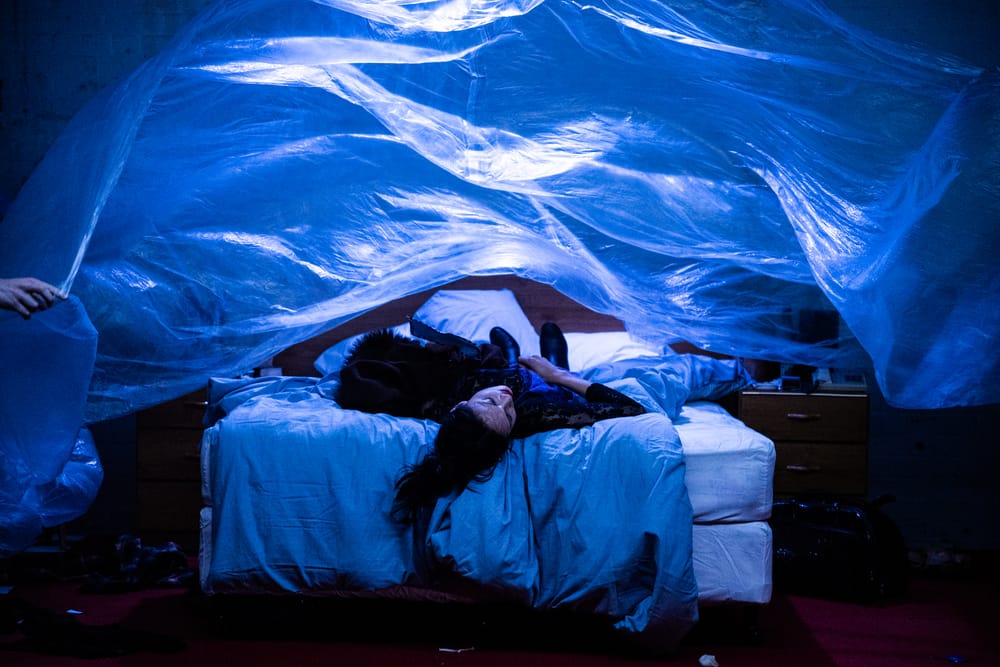
I was instantly taken by Nathan Burmeister’s gorgeous set design: a bedroom constructed in an almost-proscenium stage within the stage, separating it from the rest of the performance space. Within its three walls sat a bed, drawers and bedside tables, a TV playing static and a keyboard. Downstage, a phone box complete with Telstra branding, an abstract ‘river’ of – what I believe to be – black rubber pieces, a large freezer and a pile of miscellaneous items stacked up like someone was waiting for a hard rubbish collection.
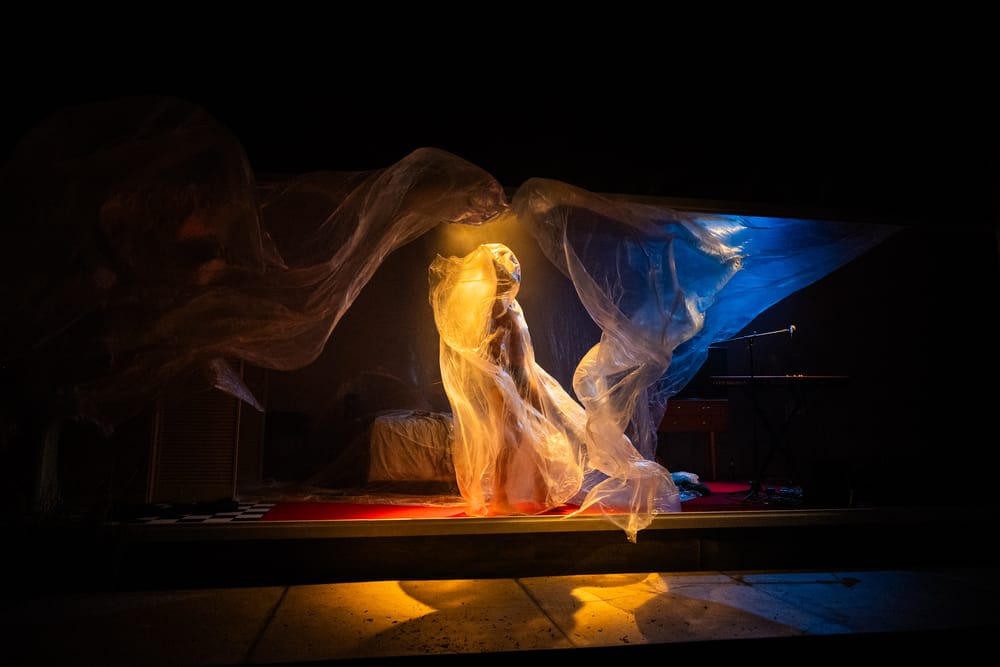
This worked alongside Spencer Herd’s lighting design to create one of the most visually stunning productions I’ve ever seen. One of the most poignant moments of the show was Orpheus’ journey into the underworld. As Orpheus (Tomáš Kantor) sings his wife’s name out, he ends up wrapped in plastic sheets that seemed to mark the boundary between the world of the living and the world of the dead. The lights focused in on Kantor, reflecting off the plastic in a hypnotic way, making the moment seem all the more magical and heartbreaking. It helped capture the desperation of his journey and I felt as though I was watching poetry be written.
However, this moment wouldn’t be nearly half as beautiful as it was without the music. The music in this production could have brought me to tears alone. I cannot understate how impactful Grace Ferguson’s work with this piece was. The ‘Eurydice’ piece is slowly constructed over a few scenes as Orpheus tries to figure out how to get a message to his wife in the underworld. He gives his letter, his song, to a worm and finds the right notes that will be able to speak through the barrier between the living and dead. Ferguson’s arrangement reminded me, as I sat in the theatre, why I love music as much as I do. Because it is nearly impossible for me to explain that feeling – the feeling of love, grief and desperation all wrapped into one – but the music in Eurydice managed to articulate it perfectly.
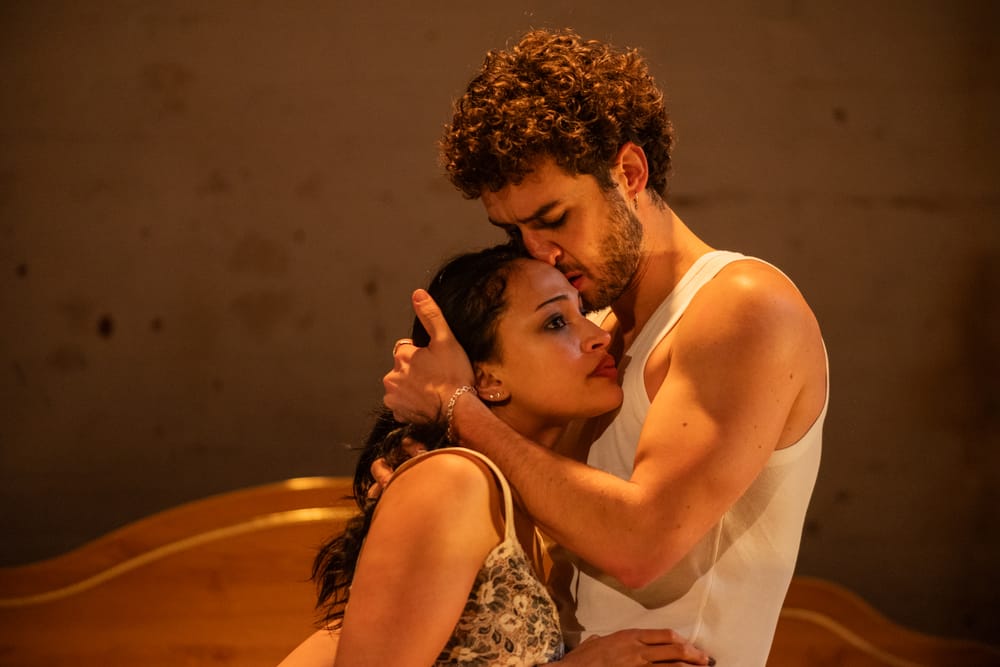
Aisha Aidara brought Eurydice to life in an interesting way. In the first scene, I felt as though I didn’t quite ‘get’ her as a character. I do think, though, that this had more to do with the abstract writing than the performance itself. Aidara brought a life and energy to Eurydice that made her engaging to watch. There was an almost child-like wonder to the way Eurydice spoke that heightened the emotional relationship between her and her father, played by John Voce. Voce’s performance was very grounded, in a show that was otherwise quite far removed from our world. It did a lot of work to cement the father-daughter arc and made the relationship feel real and lived-in. Their pairing was certainly the strongest in the cast.
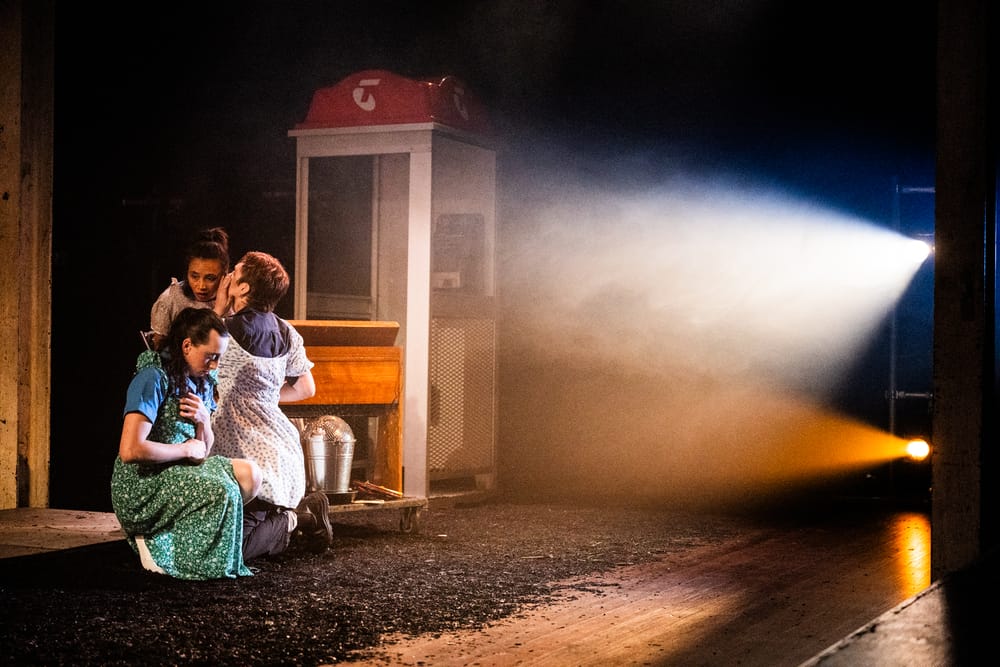
The three stones – Joshua Gordon, Fran Sweeney-Nash and Miles Paras – offered many moments of comedy, breaking up the darkness of the show. As an ensemble they moved in near-perfect sync, just enough to be unsettling and break the expectations of the audience. They aren’t the fates; their words aren’t practiced. If this was intentional, I thought it was extremely effective. Notable as well, Gordon’s unsettling little cackles whenever he moved through the space, eyeing the audience with a grin, always earned a laugh from the crowd.
Tomáš Kantor as Orpheus shone when they communicated through music – as Orpheus likely would. The strongest parts of their performance were in the moments where they were there, physically, lingering just beyond the border between worlds, so close to Eurydice, yet so alone. Kantor’s performance leaned into the grieving, doting husband in a soft way, contrasting effectively with Aidara’s spirited Eurydice.
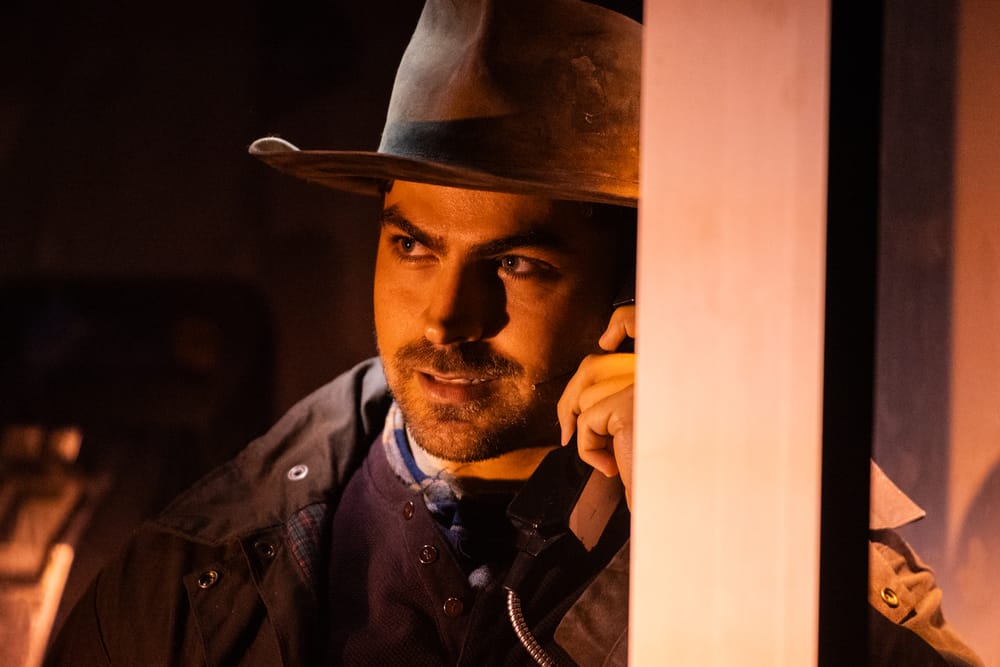
Devon Braithwaite as Lord of the Underworld balanced the comedy and intensity of this character well. One moment, he’s climbing out of the freezer in tight sequinned shorts and doing a tap dance, the next his voice is booming across the stage as he declares that Eurydice will be his. Braithwaite managed to embody a petulance in this character that gave it more depth than just being an all-powerful ‘Lord of the Underworld’. I also enjoyed the touch that Braithwaite was the only one wearing a mic, making his voice boom over everyone and everything else, conveying his power and status – a commendable job by sound designer Justin Gardam.
My main critique of this show is that despite the impressive production quality and visually striking world presented to the audience, it felt a little disconnected from the script itself. I’ll always commend an effort to reinterpret a show and stage it in an innovative way, and I think this production does present an original take on this script – I would have just loved it to be taken one step further. This abstraction from the original script and staging felt disjointed. Some moments felt too grounded, too literal. Like the ‘water’ in the first scene being a shower. It was quite distracting having the sound of the tap running playing under the dialogue between Orpheus and Eurydice. All I could think was ‘is she going to turn that off?’ and worry about them wasting water, they didn’t exactly seem to be made of money.
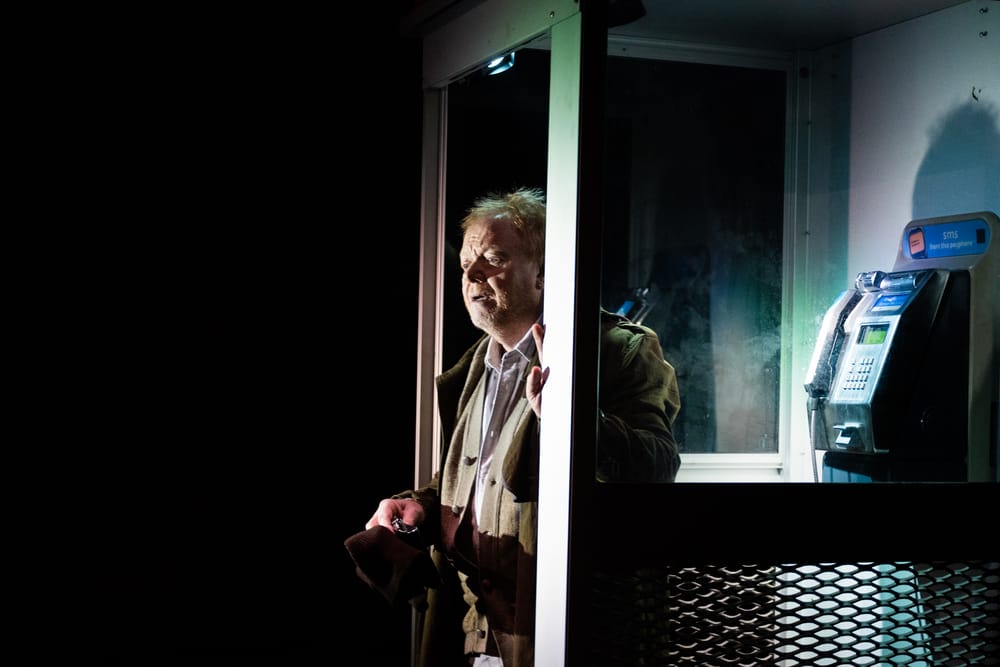
This disconnect also came across in the character of the ‘Lord of the Underworld’. Credited in Ruhl’s script as a ‘child’, that was lost in this version of the story and made references to him being ‘small’ and wanting to become ‘a man’ was puzzling, because we were looking at a man. A strange man, sure, who tap dances his way through pursuing Eurydice, but a man, nonetheless. This impacted the relationship between him and Eurydice significantly.
Eurydice, even though she is the titular character, seemed to be continuously defined by her relationships with the three men in her life: Orpheus, her father and the Lord of the Underworld. For the majority of the show, Eurydice was the lost wife, the grieving daughter and the reluctantly pursued. I craved moments where Aidara got to just show us Eurydice as Eurydice.
I think the production could have benefited from the application of a consistent image or motif to signal ‘death’ throughout the show. For instance, when Eurydice ‘dies’ I paused, unsure if having her fall onto the bed after realising she was trapped was meant to signify that she had died or whether it was meant to be read as the Lord of the Underworld assaulting her or if the looping video of Eurydice falling down the stairs on the upstage TV was showing us what actually happened. It was only clear that she was dead once she appeared in the Underworld.
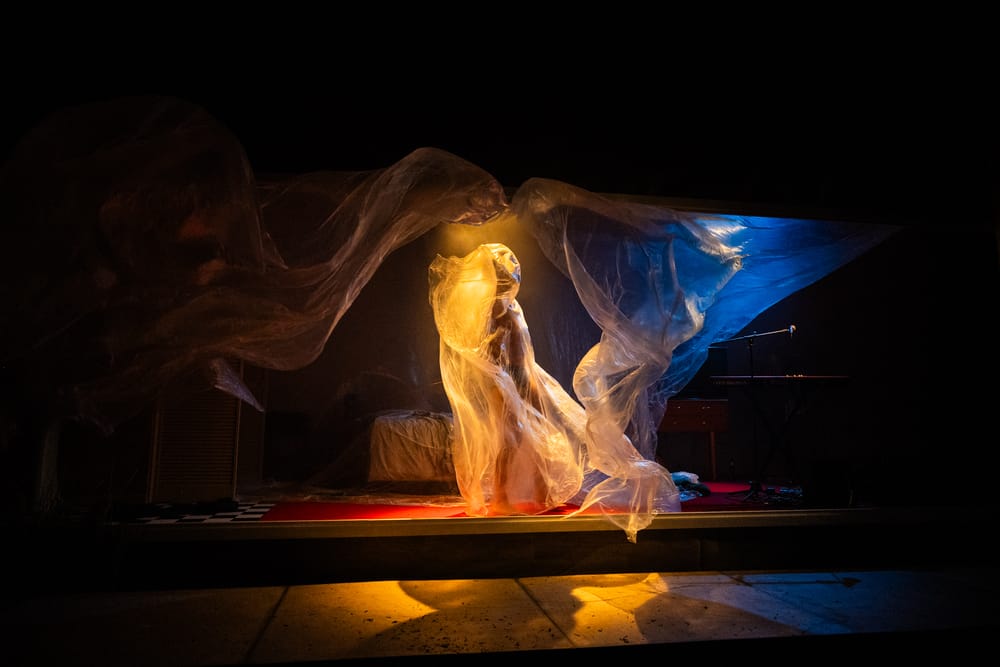
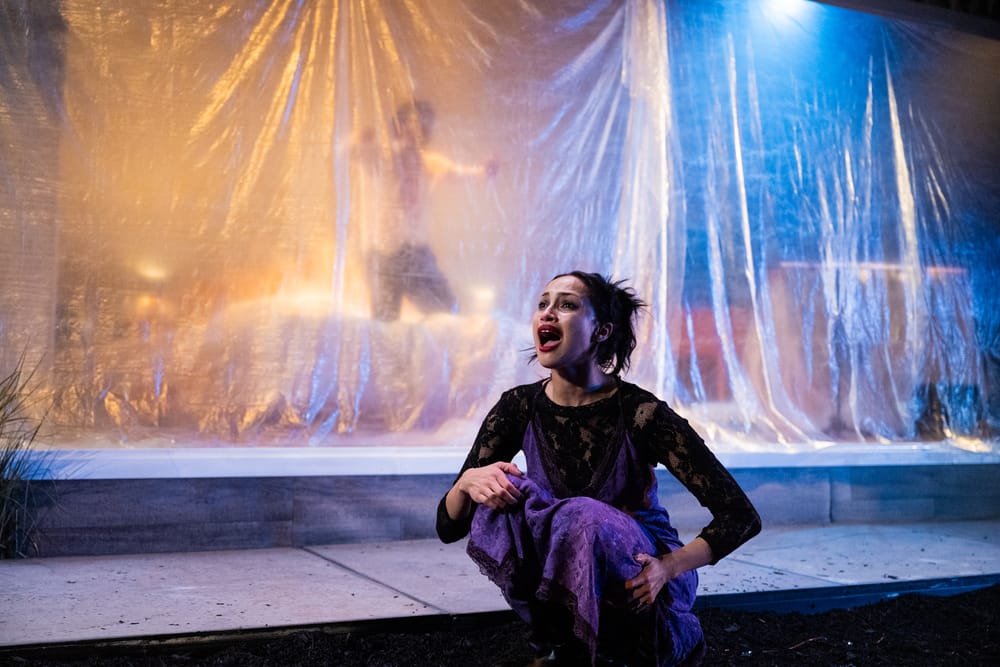
Similarly, the moment of Orpheus turning around to look at her betrayed the beautiful build up to it. As Kantor and Aidara walked between sheets of plastic, climbing over their wedding bed, around the room where they had been dancing and laughing with each other at the start of the show, I waited with bated breath for the inevitable to unfold. When Eurydice calls his name, making Orpheus turn around, it felt like the moment was lost. While I can understand that it’s not really the most important moment in Eurydice’s story, I would have loved a moment for the audience to sit with it, with what it means. Instead, Orpheus and Eurydice continue their dialogue conversationally, standing together, as though this hasn’t just changed everything for them.
This production did an excellent job crafting an aesthetic experience, the visuals, the music and the performances were fantastic. But I felt the logic of the interpretation wasn’t as sound as it could have been. I would have loved to see either a little more faithfulness to Ruhl’s original script or a more complete abstraction from it. Little details were lost, like the raining elevator, the metallic ‘ding’ of forgetfulness and Orpheus’ arrival in the underworld moments after Eurydice’s second forgetting, all of which I perceive to be essential moments and motifs in this particular retelling.
Despite all of this, which, I’ll concede, is rather nit-picky of me, Melbourne Shakespeare Company’s Eurydice was an evocative, beautiful production. It put forward an aesthetic world unlike one I’ve seen in theatre before. It’s a show I’ll be telling everyone even vaguely interested in theatre and performance design about for a while. The music wove through the story and gave it a soul and rhythm that made even the stones cry. Walking back up the flights of stairs to Flinders Lane, back to my world, I was careful not to look back at anyone. Just in case.
Eurydice was presented by Melbourne Shakespeare Company May 28 – June 14 at fortyfivedownstairs.
CHARLOTTE FRASER (she/her) is a writer, performer and editor based in Melbourne. She holds a BA in English and Theatre Studies and is currently completing her Masters degree at the University of Melbourne. Charlotte is also the 2026 Dialog Editor.
RACHEL THORNBY is a Media and Communications honours student writing her thesis on social media reviewing platforms. As a lover of reading and writing she is a sub-editor for both The Dialog and Farrago.
The Dialog is supported by Union House Theatre
 The Dialog