
REVIEWED BY BATRISYIA MD KHAIRIL
EDITED BY CHARLOTTE FRASER
It doesn’t take long for me to realise it’s going to be a full house. There are multiple people craning over the program noticeboard. I am barely able to see it, let alone scan the QR code of the program, before the show. The dense crowd chatter turns to an excited murmur as we file into the seats. People mutter hushed apologies as they climb over legs to find a place to sit.
The energy turns reverent during the show, but the silence never stays for very long. This is Legally Blonde: the musical journey of Elle Woods (Alice Murray) a Malibu Barbie brought to life, who enters the legal world in the search of true love. She finds it, not with her hometown beau Warner Huntington III (a determinedly middle-distance gazing Harry Underhill), but with Emmet, a friend she meets at Harvard Law School (Alex Mingay). Elle discovers her worth beyond being a pretty face and tests her determination in the face of opposition, with the help of colourful characters she meets along the way.
It’s a true romp: every character is dialled up to the extreme. Everyone thinks and feels so intensely that it’s only natural that they break into song and exuberant dance.
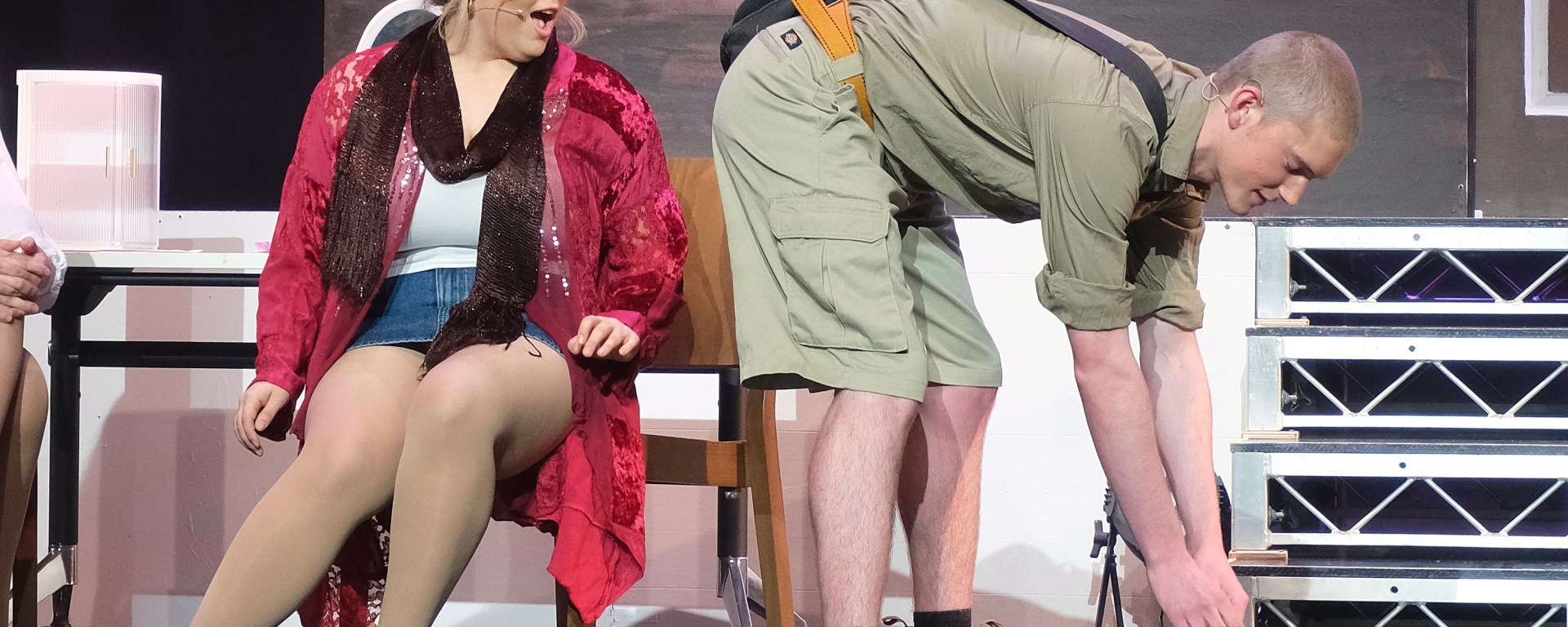
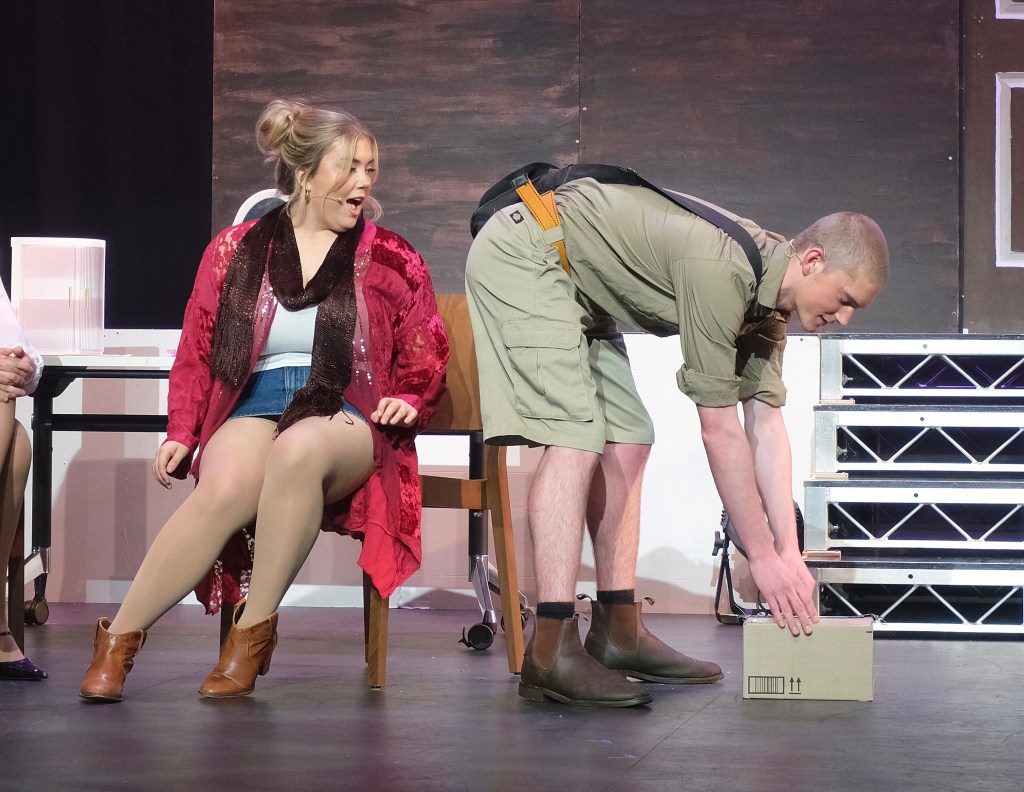
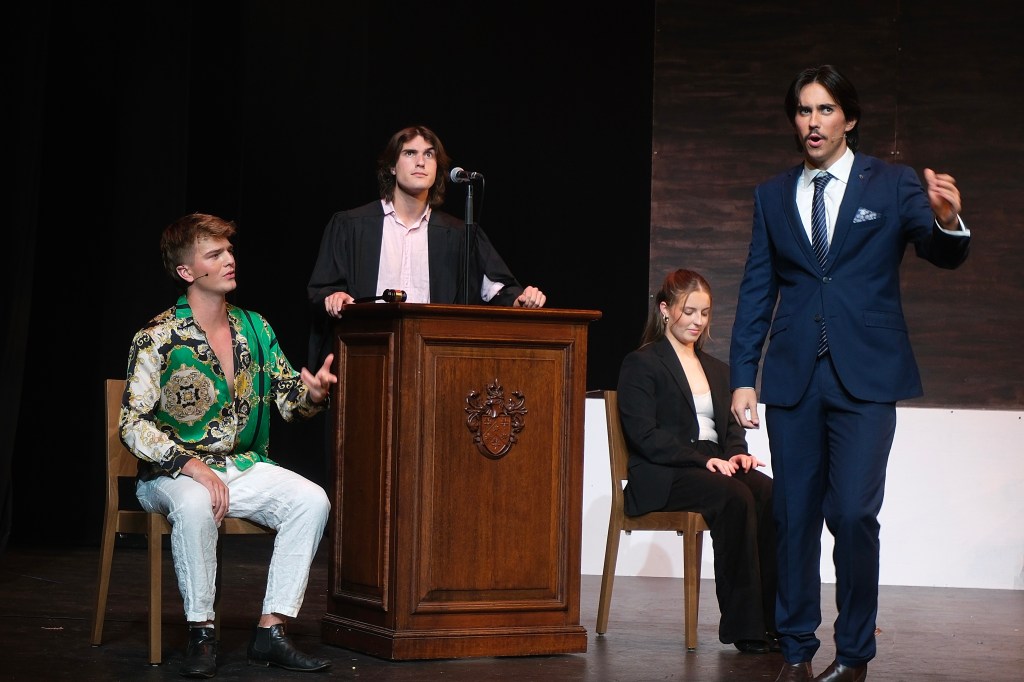
The fairy godmother hair salon artist, Paulette (Stella Rixon); the snooty rival, Vivian (Keira Kermode); the militant pacifist, Enid, (Maddy Mayo) intent on fixing the world; Carlos (Ollie Stewart), the witness with an eyebrow perpetually raised as far as it can go; the sexual innuendo spouting delivery driver, Kyle (Jack Perkins); the jump-roping tv exercise queen, Brooke (Bridget Roe); and the ruthless law professor, Professor Callahan (Liam Graham), with a number that I overhear is “the best [someone has] heard it performed” – the praise whispered in awe after the song.
They’re cartoon characters, goofy and enjoyable to watch.
Just as I’m thinking I’m up to my elbows in wacky characters, throw in a multitude more and an ensemble chorus just for good measure and suddenly every scene is practically a party. No character is too small to ham up to the most extreme. Every part comes with choreography, or a signature move or a plot beat to gasp at. With song and dance numbers peppered liberally throughout the show, there is plenty of opportunity for any decision made on stage to be appreciated by the audience – and appreciated they are. It became evident that sections of the audience had a particular favourite member of the cast. Often, I was reminded of the ‘bias’ concept from the K-pop subculture. When their ‘bias’ appeared with an opportunity to strut their stuff, they would whoop and clap especially hard. I sat in front of the fan delegation of the ensemble member Issy Hunt, and at no point did that delegation let me miss whenever she was on stage. The audience was an extension of the high energy of the play itself, a 4D-esque experience beyond the stage.
I would be remiss if I did not address how the story takes us to the early-2000s, which also includes the less comfortable hallmarks of the pre- “woke” era. Sexism is the lifeblood of the story, but this is clearly as intended. The plot of the show is, after all, a nuanced discussion on female sexuality and empowerment! Unfortunately, intended or otherwise, some characters dance dangerously close to racism left unexamined. There’s a royal character of indeterminate cultural background, effusively and inexplicably bowing, and another who sways in from a reggae-blasting party to tempt our heroine from her legal studies, practically floating on air as he sings in some accent – I couldn’t really pay attention on account of my cringing. These character choices are the product of the writers and the time in which they wrote the play, but a production made in the present day should consider present-day sensibilities. These moments of unintended cringe are fleeting, thankfully, as the appreciation for the delivery of jokes, plot beats, and songs far outweigh the discomfort.
Speaking of the music, the brassy instrumentation proudly blares for the more energetic punchy numbers like “What You Want”, but Legally Blonde also has the flexibility to adapt and become delicate for the more emotional scenes and the “Legally Blonde” title track and more whimsical to facilitate vocal acrobatics during Paulette’s “Ireland” number. The music is often indistinguishable from an impeccable prerecorded backing track, however, sometimes the instruments drown out any line that isn’t delivered at a near yell, losing some more subtle line deliveries.
Matching the whip smart energy of the play itself, the choreography glows with punchy cheer squad routines. Of note is the impressively intense cardiovascular workout number with skipping ropes in “Whipped into Shape”. Everything is well timed: the peppy, energetic numbers don’t feel relentless or overbearing, instead, the songs and dynamic energy propel the core plot from the slower sombre moments with the force of a jet engine.
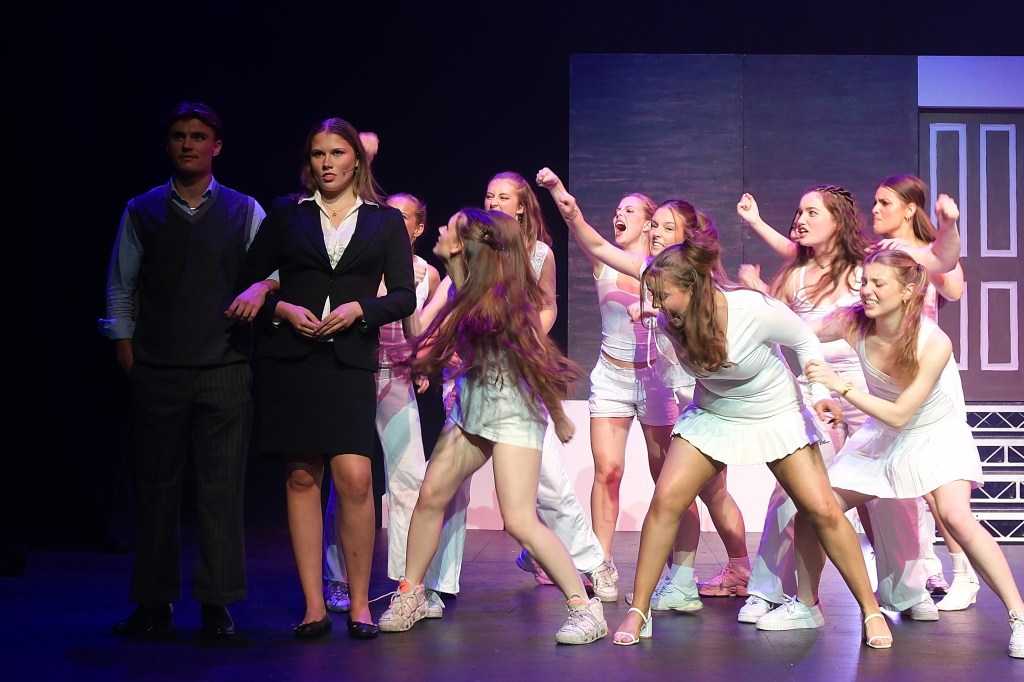
As for the choreography of the songs, Trinity College is a true ensemble, their teamwork and cohesion shines through. In particular, the Delta Nu numbers are a glowing example of how to execute such a large ensemble number, while still effectively showing the friendship of Elle and the chorus. Instead of trying for lock step synchronicity, the choreographer (Stella Iacono) gives the freedom for the ensemble members to clearly have fun with it with their own spins on the dance moves and reactions, paralleling the diversity of real-life friendship groups.
Individuality isn’t lost on the stage, and the fun we see from the cast is fun for us too.
The music and choreography manage tenderness as well as the more heightened emotions, and swells in time for moments of high drama. Speaking of drama, every character has an opportunity to make a big entrances or exit, not least from use of the impressive sliding door prop. This is used to great effect, being a prime vehicle for dramatic posing for a costume reveal or punchline.
Regarding the costumes: they’re all fantastic. I could very readily believe they may well had fallen through a wormhole to the year 2000. From the casual valley girl to the sharp legal style, everything looks straight out of a fashion magazine from the pre-smartphone age. Of course, there is no shortage of pretty dresses or hot pink and sparkle in Elle’s wardrobe to dramatically reveal.
The permanent set consists of the sliding doors, emblazoned with an “L. B.” (I confess it took me embarrassingly long to figure out what it stood for…) flanked by walls peppered with tiny flyers that serve almost as a motif throughout the show.
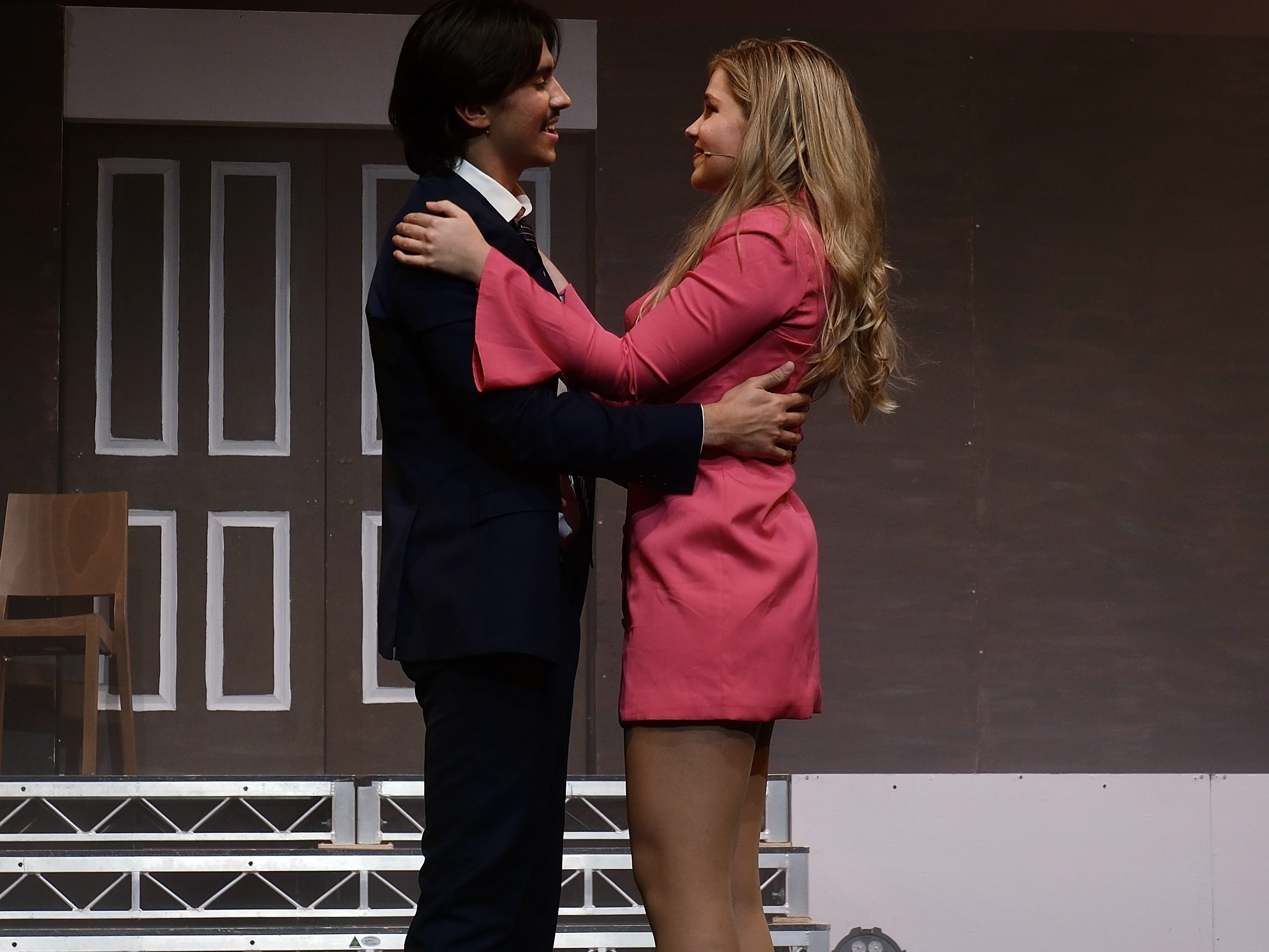
Every other location from the courtroom to the boutique is evoked through smaller props being brought in. A notable exception here is the salon set which was a table with tiny shelves and holders for beauty products without any visible beauty products. It might as well have been an ordinary desk, but thankfully its purpose was conveyed through performance. I particularly enjoyed Elle’s room, awash with all things pink and fluff and cutesy and neglecting functionality. Speaking of fluffy, an honourable mention to the stuffed dogs of various sizes (standing in for Elle’s dog, Bruiser, but also characters unto themselves), the largest of which gets jettisoned across the stage to the crowd’s horror.
The story itself isn’t carried with these kinds of cheap gasps for melodrama, despite how trivial and frivolous Elle’s life may appear. True, the show is filled with kooky characters and intricate peppy choreography, but this silliness stems from characters being themselves so intensely it’s impossible to ignore. The show is directed to centre the emotion of the story as performed by our leads – a necessary human element amongst the technicolour chaos. The performances and staging take care to treat Elle and her story with respect, making her heartbreak, joy and love sincere. Special commendations for Kathryn Mcinerney Sotomayor’s use of lighting for visual storytelling, particularly with the divided pink and purple lighting between the 2 leads to represent their emotional distance at a climactic moment.
It’s hard to separate Legally Blonde from its legacy: the combined weight of the feature film, musical and internet memes is a heavy burden to carry into any version made today. The show is executed with an air of trust in the story and being able to convey the truth in the emotions of the characters. Whenever things I recognised from the internet happened, it arrived at a natural point without fanfare, or a crowd cheer moment for weathered veterans to excitedly point at. As was my first exposure to the story in full, I was only vaguely aware that Legally Blonde is known as a celebration of femme camp, but this production helped me to understand why it’s still celebrated to this day by the musical theatre community: it is simply an undeniably adorable love story. Congratulations Mim Moran, the executive team and the entire Trinity College company for doing this story justice.
Trinity College’s production of Legally Blonde played at the Union Theatre 29 April – 1 May, 2026.
BATRISYIA MD KHAIRIL (she/her) is a student who does side quests alongside studying. She loves thinking about stories and storytelling and particularly likes the side quests that give her the opportunity to do so.
CHARLOTTE FRASER (she/her) is a writer, performer and student editor based in Melbourne. She holds a BA in English and Theatre Studies and is currently completing her Masters degree at the University of Melbourne. Charlotte is also the 2026 Dialog Editor.
The Dialog is supported by Union House Theatre

