
Review by Mya Helou
Edited by Charlotte Fraser
Everything is pretty normal if you ignore the fallen star emanating a slow pulsing light in the corner. Set designers Aisha Tabit and Julian Machin create a quintessential petrol station, complete with linoleum flooring, a scuffed-up counter and a shelf stacked with snacks and toiletries to really sell it. Sam (Ally Taueki-Gatt) has already clocked in, stocking shelves as they wait for their co-worker to arrive.
And we wait for their co-worker to arrive. It takes a moment, the fluorescent-esque lighting (designed by Allira Smith) accompanied by an appropriate persistent buzzing sound (designed by Jakob Schuster) stretching the moment out to an almost uncomfortable length. Just as the not-so-silent silence is a little too much to bear, Finn Corr’s Frankie dances their way into the scene – the audience chuckles, and the tension is broken.
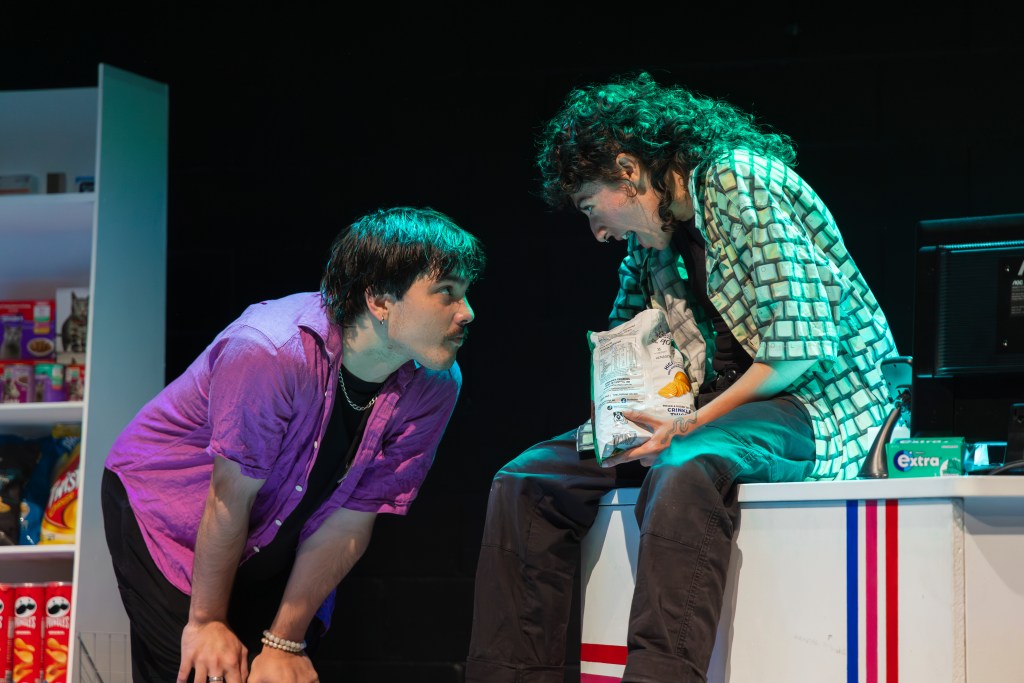
From here on we see two sides of the activist coin, with Frankie’s somewhat naive resistance clashing against Sam’s informed immobility. It’s the leftist debate amplified: what is the right way to be on the left? Every argument about performative activism, boycotting, state-sanctioned protests and more is countered, dodged, and weaponised in a theatrically melodramatic yet exceedingly realistic way. The work of writer Bronte Lemaire excelled at representing both sides in all their misguided glory.
I was struck not only by how well the writing displayed the differing perspectives, but how well both Corr and Taueki-Gatt did too. Corr’s portrayal of Frankie as an anxious, thrumming, over-the-top sweetheart was a physical embodiment of the optimistic activist; Taueki-Gatt’s style was restrained and true-to-life, providing a visual representation of the pessimistic realist.
Their verbal sparring is interspersed with stylised movement as wild sequences of techno music, strobe lights, and projections of overwhelming social media posts (by vision designer Max Vrancic) create a wall of stimulation. For as theatrical as it is, it snaps you back to reality – you recognise these protest clips, this AI slop, these social media trends.
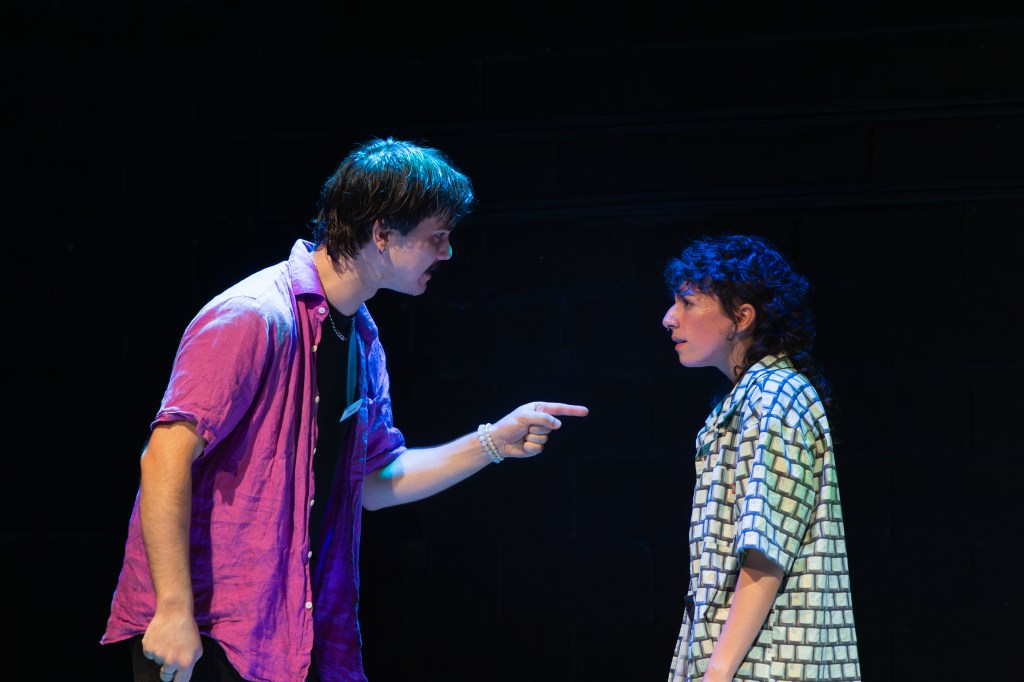
Each of these sequences is punctuated by a climactic interaction with the set, which is followed by a monologue. The sharp shift from high to low stimulation is masterfully done, being abrupt in the just the right way. Direction from Lemaire and assistant director Jacinta Klassen collides stunningly with the acting from Corr and Taueki-Gatt in these monologues, playing with speed and volume of delivery to take over for the lack of movement. Once again, we’re left in these moments for longer than would generally be appropriate, lingering in carefully constructed unease – something Lemaire excels at: stretching things just past the point of comfort.
It was towards the middle of the play that I realised I’d forgotten there was a fallen star on stage. No matter how many times Sam and Frankie referenced it being there, it always slipped my mind amid the in-fighting in front of me. This metaphorical monumental catastrophe representing the real-life horrors of our daily life becomes just a set piece, something ignorable.
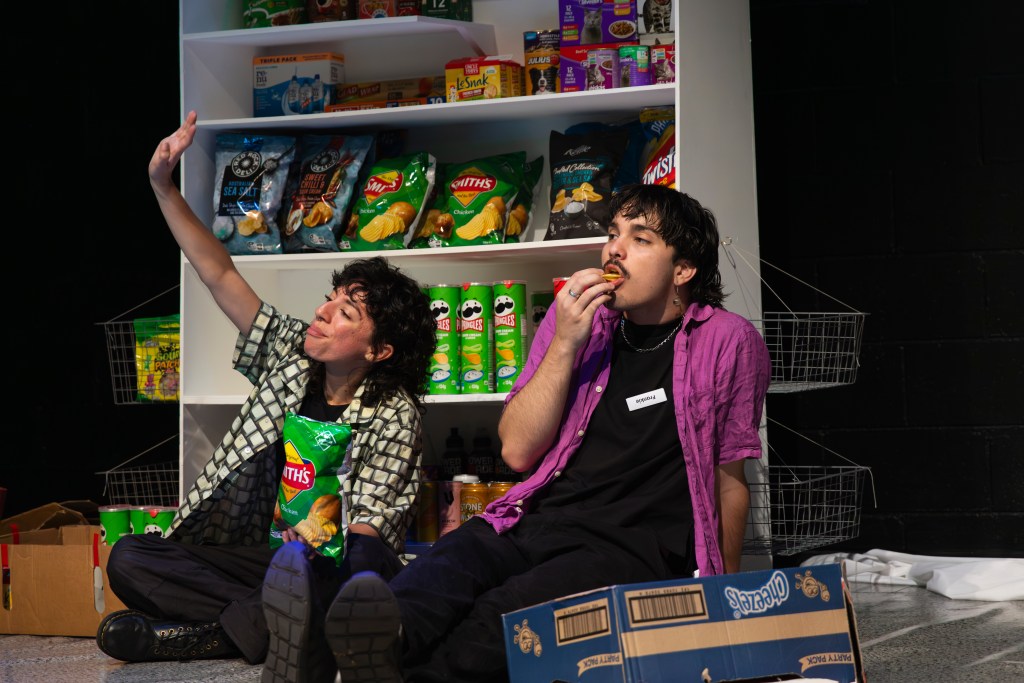
This is what the play gets at. For as well-argued and well-founded as some of Sam’s opinions may be, their striving for the ‘perfect’ action to take means no action is taken; for all the determination Frankie has to make a difference in others, they struggle to walk the walk themselves.
I Thought You Said doesn’t give you a step-by-step guide on how to be an activist, rather it forces you to look at the steps you’re currently taking and reckon with yourself. The brilliance of Lemaire’s writing is that it is wholly relatable, even if you don’t identify completely with the views of Sam nor Frankie. We’ve all had – or at least seen and heard – these conversations before, but how often do we have that conversation with ourselves? How often does that actually impact how we move about these spaces?
Not often enough, it seems. Talking is nice, theory is nice, but practice is what makes a difference. Perhaps it’s an uncomfortable experience to put words into action, but often that discomfort is necessary. I Thought You Said is an uncomfortable experience; the discomfort is necessary.
Note: the reviewer is close friends with people involved in this production but, as always, The Dialog aims to publish considered and genuine reviews.
I Thought You Said was presented by Tip Toe Theatre at Theatre Works Explosives Factory 25 Feb – 7 March 2026
MYA HELOU (they/them) is an English and Theatre Studies major whose love of theatre was fostered by Shakespeare and classical Greek tragedies. They will take every opportunity to discuss either.
CHARLOTTE FRASER (she/her) is a writer, performer and student editor based in Melbourne. She holds a BA in English and Theatre Studies and is currently completing her Masters degree at the University of Melbourne. Charlotte is also the 2026 Dialog Editor.
The Dialog is supported by Union House Theatre
 The Dialog