
Reviewed by: Oscar Hales
Editor: Sophia Zikic
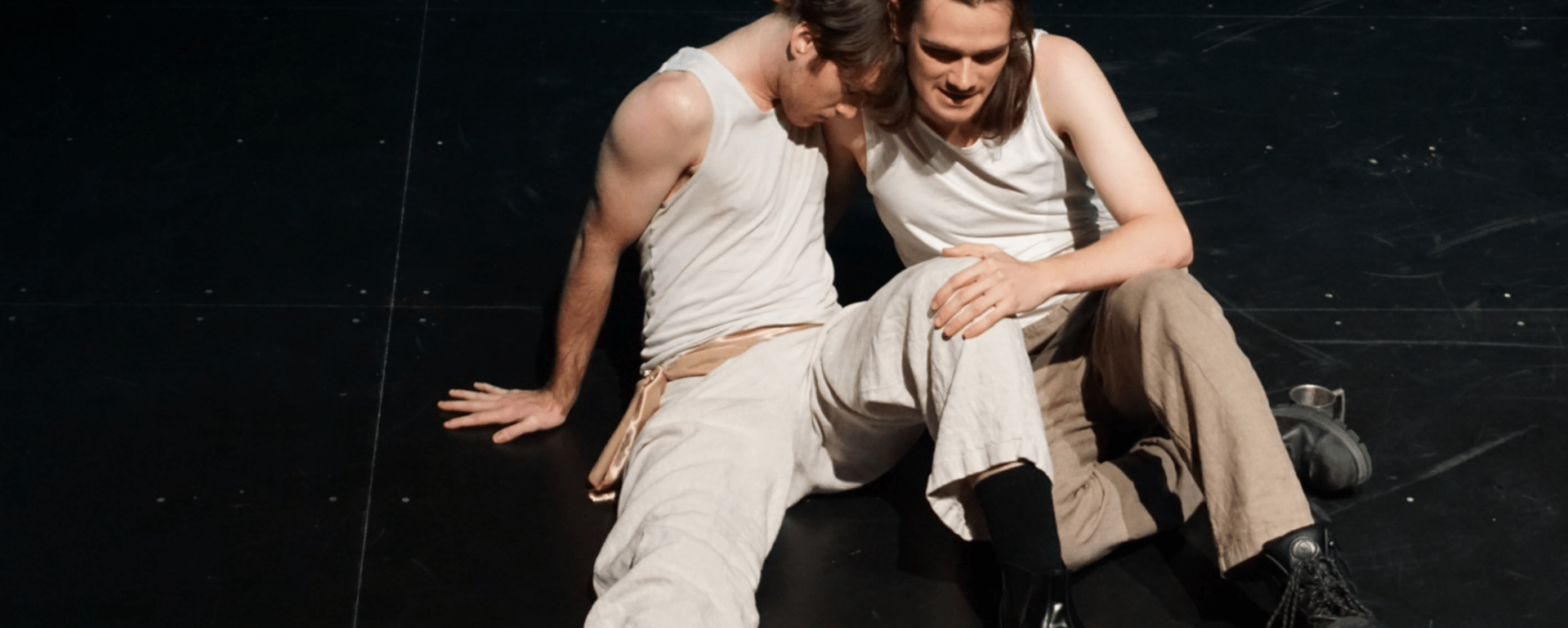
As an aspiring historian, I know too well the painful phenomenon of treating historical homosexual couples as “very good friends.” Given their ashes were mixed together so they could be together in death, it seems downright insane to treat Patroclus and Achilles as “roommates”. Yet this is just what Shakespeare did, not even mentioning it in Troilus and Cressida, his telling of the Trojan War. Thankfully, Melbourne University Shakespeare Company’s (MUSC) production of Patroclus and Achilles rectified history’s egregious error and tells their tale.
The story of Patroclus and Achilles is lifted straight from Homer’s Iliad, but regardless of one’s knowledge of the source material, it would still be an emotional, gripping, and cathartic experience. Using this love story that Shakespeare and many others have neglected, co-writers Josh Higgins and Alexi O’Keefe were able write a play as relevant to today as the Iliad was to its antiquarian audience. They weaved together Homer’s own themes of love, war, honour, fate, and rage together in two captivating and enthralling hours of theatre.
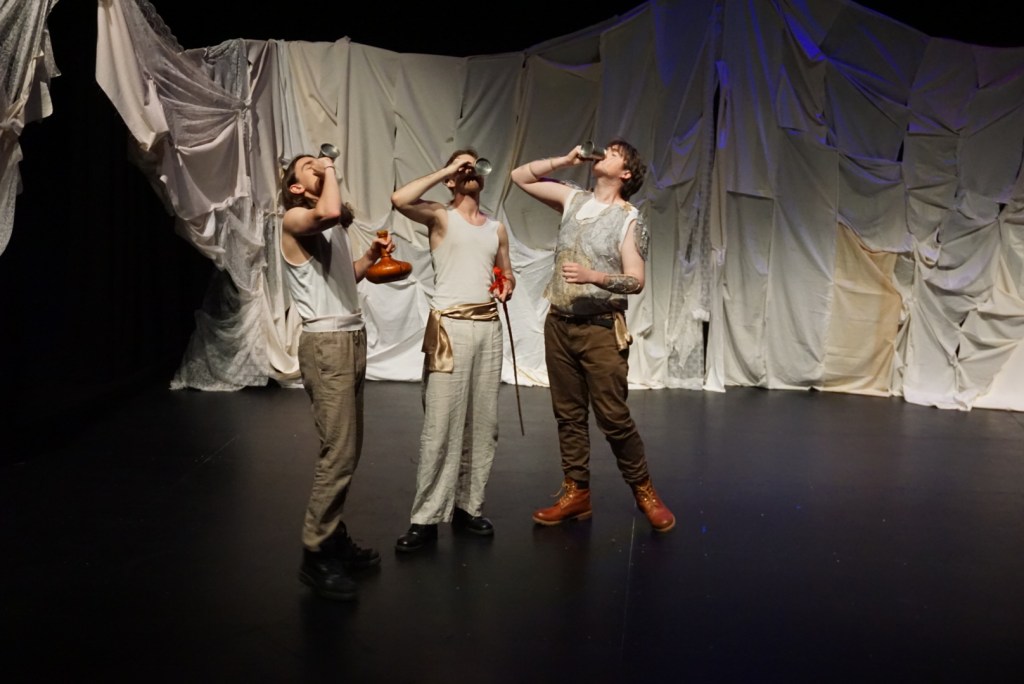
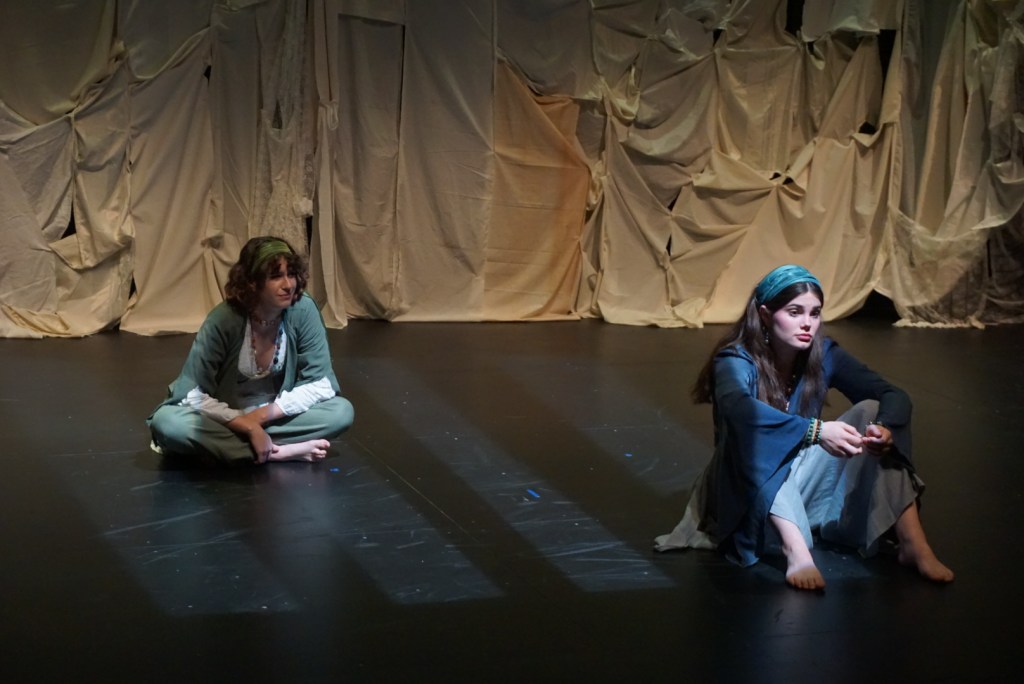
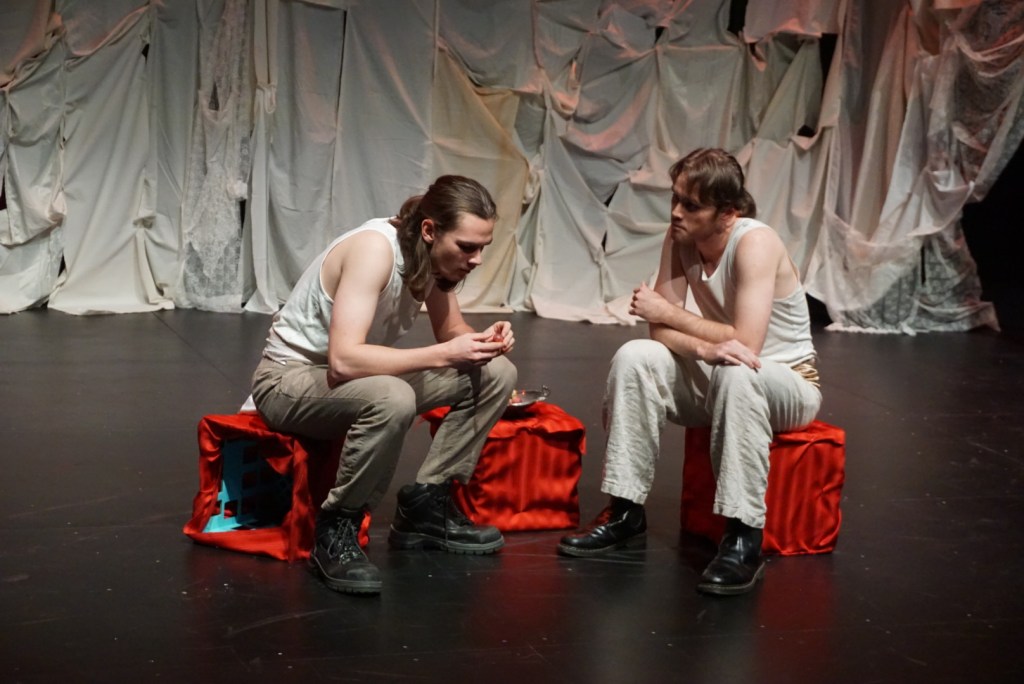
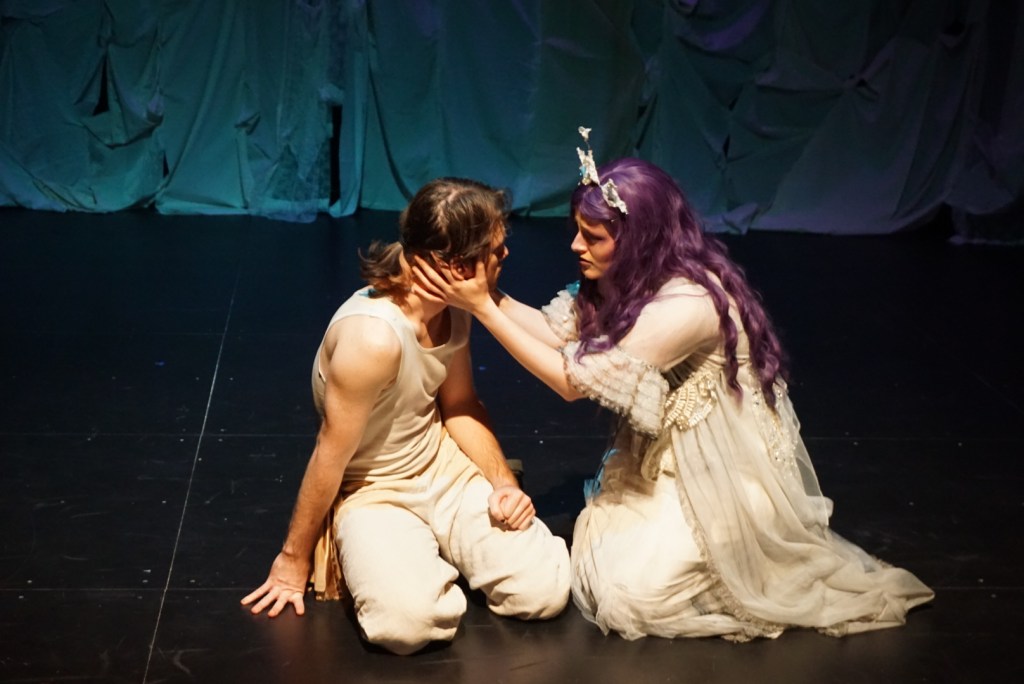
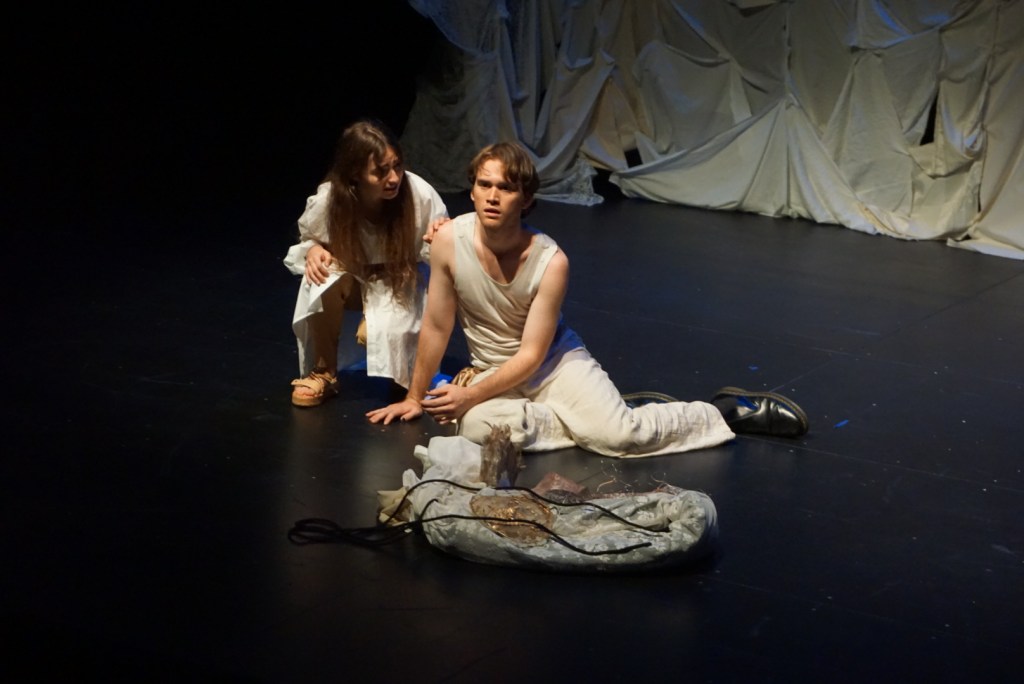
The first thing that struck me with this production was just how excellent the show’s visual design was. The costume design for all of the soldier characters was particularly brilliant. I applaud Eden McLean and Ella McDermont’s decision to dress these soldiers in white shirts and pants and Doc Martens which made them look modern and yet still evidently influenced by Antiquity. I also particularly enjoyed the stellar costume and makeup design of the non-human characters, Rage (Crystal So) and Thetis (Madeleine Ryan). The set design by O’Keefe and Meg Bonnes consisting of a heap of sheets hung up and woven together formed an effective background, especially when saturated with Banujee Samarathunga’s powerful lighting design. One moment that especially stood out was when Achilles (Narii Salmon) was filled with rage, So’s otherworldly and skeletal hands would emerge through the sheet background accompanied by flashing red stage lights. Such design choices gave an incredible and engaging emphasis to text and its themes, which completely captured attention of the audience.
Another strength of this show was the cast themselves. Each actor managed to balance the weighty themes and emotions of the text with a touch of humour. Notably, Oscar Lidgerwood’s characterisation of Ajax managed to oscillate from physical clowning to satirise toxic masculinity, to then a gut-wrenching outpour of grief in response to the loss of his child a few scenes later. I particularly enjoyed how the themes of foresight, prophecy and destiny were used for emotional depth by Cassandra (Tulipa Rodriguez-Quinn) and for comedic relief by Stoixima (Emmaline Vagg). The contrast of Stoixima’s dramatic irony in fabricating prophecies to an unaware Agammemnon, compared to Cassandra’s solemn reflection and understanding, knowing what the future holds, these contrasts within the performances cannot be applauded enough. The chemistry between Patroclus (Cassidy McCreedie-Pledger) and Achilles (Narii Salmon) felt genuine, heartfelt, and real. I particularly must commend Salmon for the strength of their acting and emotional depth when dealing with Patroclus’ death. Salmon’s grieving wail will stick in my mind forever, and it made me cry harder than I could ever have expected from a student theatre.
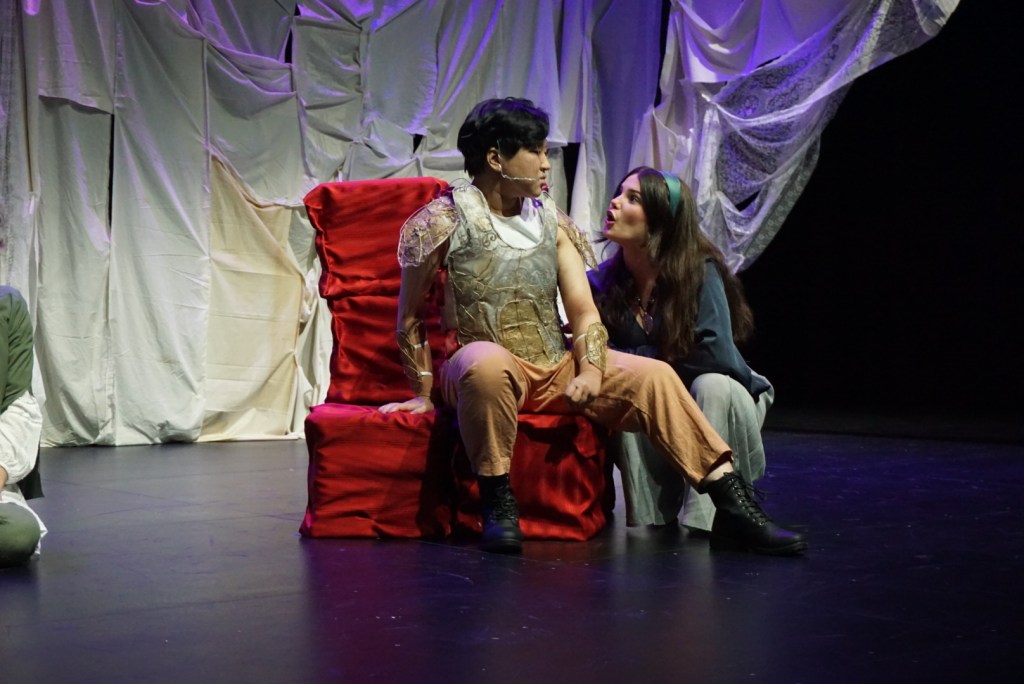
However, though I was moved and thoroughly enjoyed the play, it unfortunately was not perfect, with some questionable characterisations within the performance. I really disagreed with the version of Agamemnon that the directors and actor Han Li went for. I felt Agamemnon was portrayed in a much less theatrical, intimidating, and powerful way than what was required for the production. This characterisation was a strange contrast with the rest of the cast, and a lack of dominance lowered the stakes of the scenes they were in. Not only did this rob the play of an effective antagonist, but it encouraged Li to speak in a very whispery and unassertive tone. I was in the front row and struggled to hear them, so I wonder what it was like for those at the back. Perhaps I am just not familiar enough with the source material, but to me this did not seem like an effective characterisation of Agamemnon, one which did not allow Li to showcase the antagonistic presence I had looked forward to. Another moment in the play which I found confusing and, in all honesty, quite bizarre, was when Rage lost one of their fingers. Though at first, I thought this was just a somewhat clumsy attempt to cover a mistake, allegedly this was scripted in what I presume was an attempt to be either humorous or “meta.” Now perhaps I did not get some great metatheatrical statement or joke but to me this came across as jarring rather than self-aware, funny, or intelligent.
It is also worth noting that the ending of the play felt a bit like the ending of Lord of the Rings. There were many times I felt like I should begin applauding, only for the show to go on. After Achilles’ death and being reunited with Patroclus, I thought the show had ended. However, it then proceeded to a funeral of Achilles and Patroclus being disrupted, and the memory of their love being wiped away by Achilles’ homophobic son Neoptolemus (Claudia Scott). Then this was followed by Ajax and Odysseus discussing the clear love shared by the titular characters, definitely more than friends despite how history may choose to remember them. This continued for a few more possible endings, and despite being well-written, moving, and doing justice to the themes of the play, it was ultimately just felt like an over-indulgence and unwillingness to finish the show.
Yet, with this all being said, I thoroughly enjoyed this play and completely bawled my eyes out – which is a very rare occurrence. While there could be definite room for improvement, it was still of an incredible standard, and I look forward to seeing what MUSC do next.
Melbourne University Shakespeare Company’s Patroclus & Achilles ran May 11th to 13th at Guild Theatre.
Photo Credit: MUSC – Ella McDermont

