
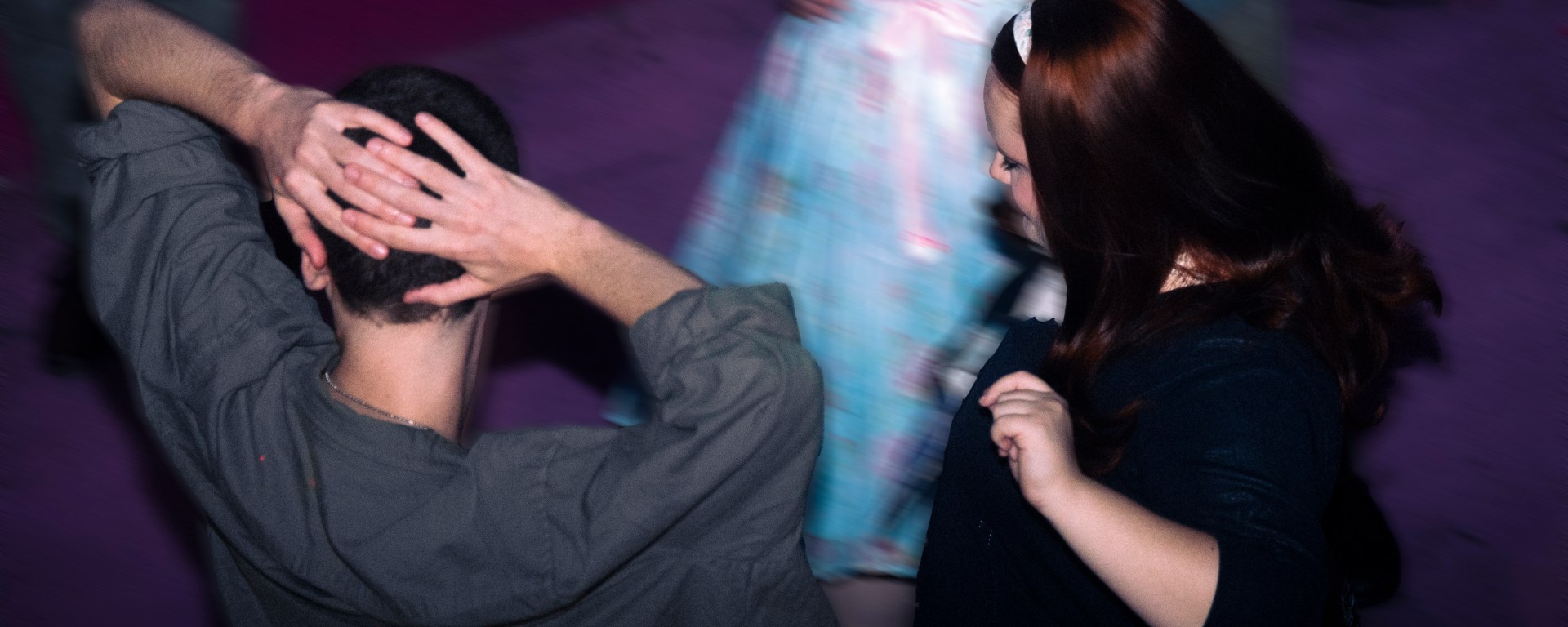
INTERVIEW BY CHARLOTTE FRASER
In the lead up to RedActs’ production of Dogfight, I had the opportunity to sit down with the director, Eadie Milne, to discuss what it has been like bringing this show to life. Eadie spoke about the impact that having an all female and non-binary production team has had on a show with very complex themes of misogyny, the process behind having a swing – something slightly unusual for student theatre – and how, as a director, she approaches the more difficult scenes to ensure that everyone is comfortable while also maintaining the respect that the show’s themes deserve.
Additionally, after speaking with Eadie, I reached out to one of the choreographers, Isla Teague, to hear their perspective on what this production process has been like.
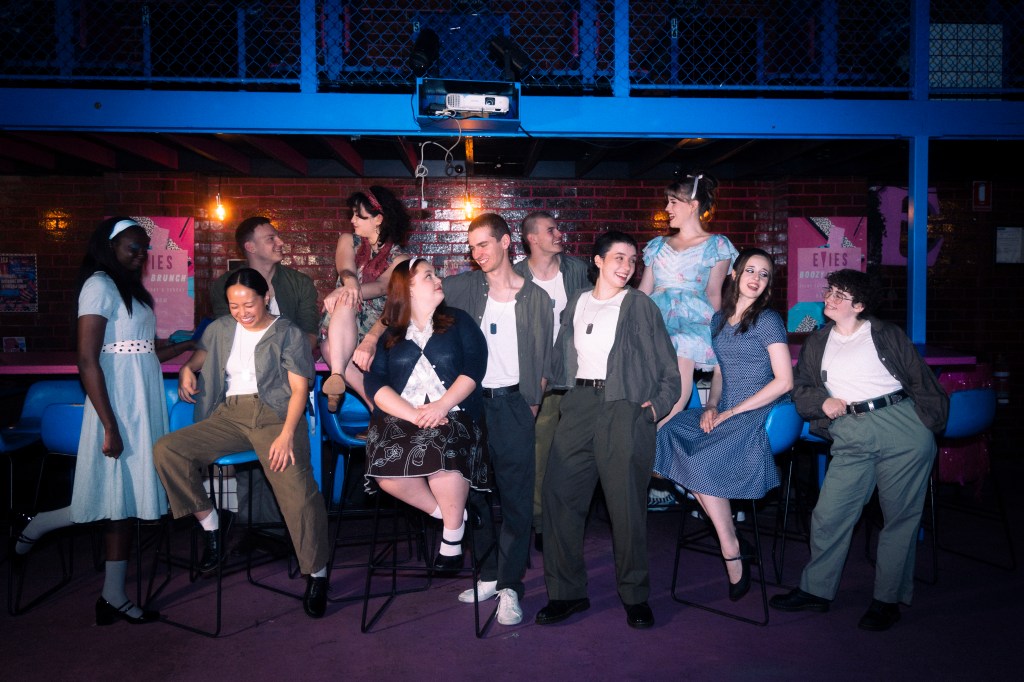
CHARLOTTE: Tell me a little bit about this production? Did you choose it? Why?
EADIE: Mia [Mazzarella] and I were really keen on doing it because we just love the music and so I pitched it like – ‘Hey! I’d love to direct it’ – and the [RedActs] committee was like well if we’re doing the show, [we want] someone who actually cares about it to be on board. They knew we would treat [Dogfight] with respect that it deserves where, a lot of times, shows with heavy subject matter can go really wrong. I’ve loved this show for a while, and I feel like the longer we do it, the more relevant it becomes. I just love Pasek and Paul [and] I think this is their best music.
CHARLOTTE: I’m not super familiar with the show personally and, for the sake of the readership who also might not be can you give me an idea of what the show is about?
EADIE: It follows six marines in San Francisco right before right before they’re about to get shipped off to what they think is Okinawa in 1964. [The dogfight is] a tradition that happened in the marine corps back in the 60s – well, I don’t know [how] common [it was] but it was a thing that they did, it was a real tradition. It’s based on Bob Comfort’s real veteran story where they would do this thing called the ‘dogfight’ and they tried to get the ugliest girl they could, ask her to a party and then whoever brought the ugliest girl won a bunch of money.
We share a moment of awkward tense laughter. Put like that, it sounds more like material for an episode of 60 Minutes or a true crime podcast rather than a Broadway musical.
EADIE: Really, really beautiful stuff! It follows Eddie, who asks this girl, Rose, to the party and then he slowly starts to feel bad about it because he starts to respect her as a human being. She has a different opinion to him, in a lot of ways, she’s very anti-war and more peace oriented, whereas he’s very nationalistic and things but, I think he respects her for that sort of thing and [how] she can speak for herself. The dogfight happens, Rose finds out, and the second act is Eddie trying to make it up to Rose and then eventually getting shipped off to Vietnam.
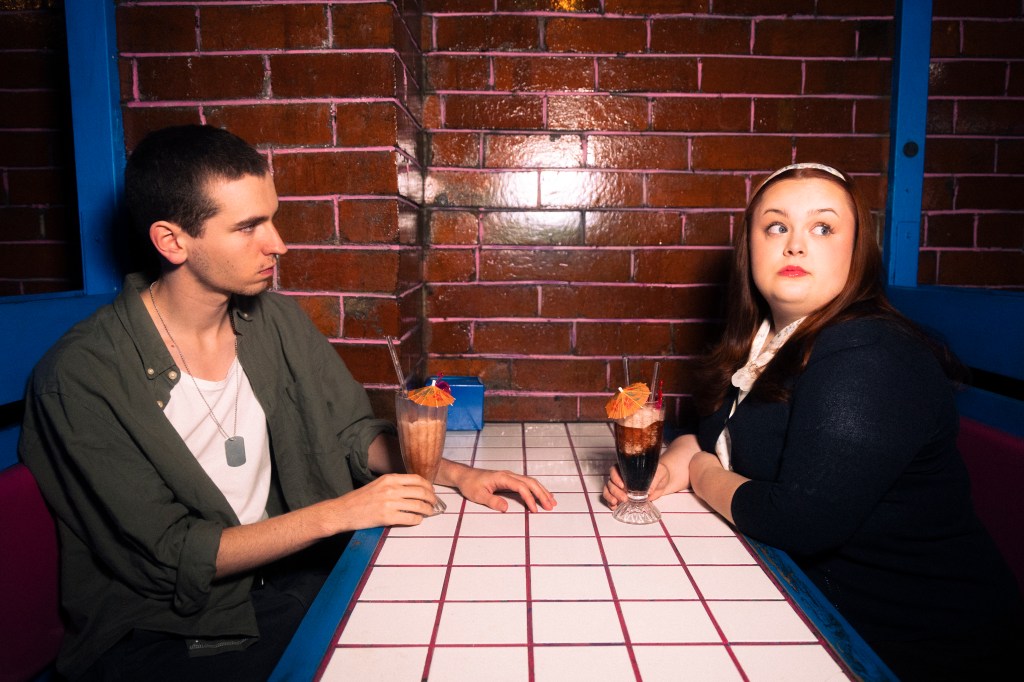
CHARLOTTE: Given the misogynistic themes present in the script, how do you think having an all-female and non-binary production team has impacted the show so far?
EADIE: I think it’s really done a lot. We’re able to draw on a lot more of our own kind of experiences, but also, we’ve really tried to make it a retelling through the feminine lens. The show starts at the end of it, if that makes sense, it starts with Rose and Eddie meeting again after the war and the way it kind of sits and shifts is very much controlled by the ensemble around it. Our ensemble is all female – because we’ve got our 6 marines and we’ve got 6 girls as well – and we’ve kind of shifted it so that every set change is done by girls. So, it’s like they’re literally shifting the story and telling the story. It’s been hard in some moments to do that, especially towards the end where it’s the little things like [the boys] could just pick up their chair and walk off but we think it is an important, symbolic thing that these girls are the ones telling the story. I think that … the guys have felt a lot more comfortable talking about [these more difficult themes] as well because we will be the first ones to bring it up and then they’ll happily expand upon it. There’s lots of themes of toxic masculinity and very male-centred issues that, with things like Andrew Tate and Alpha male and looksmaxxing, that are quite relevant.
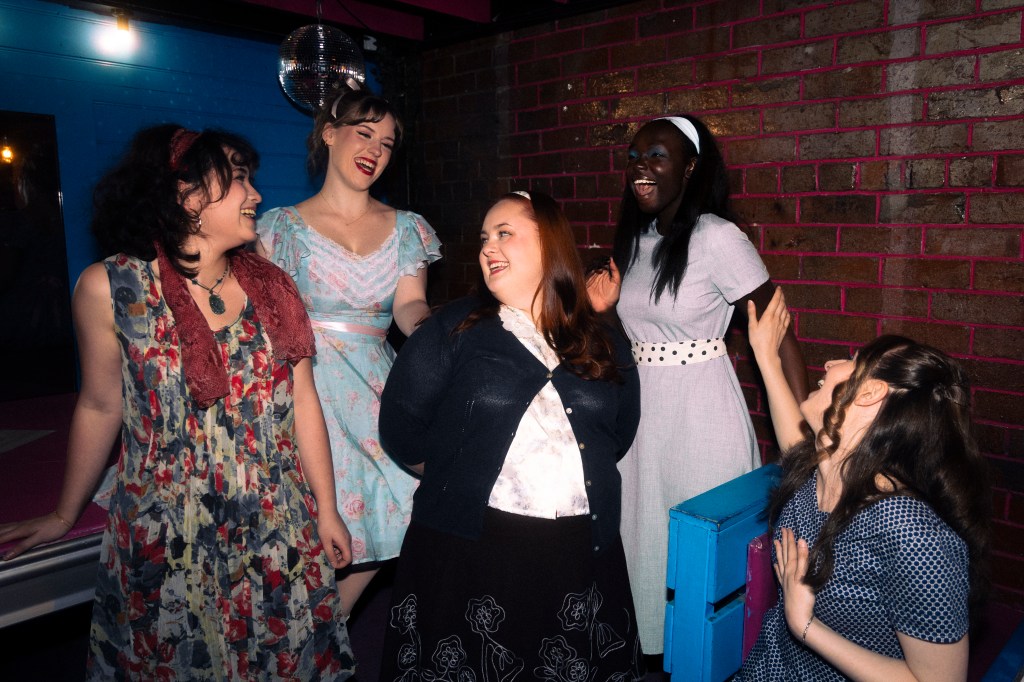
CHARLOTTE: As a director, how do you approach those more difficult scenes with actors?
EADIE: I said something at the start [of the process] that was like, yeah, these things are difficult, but they deserve respect and they deserve to be spoken about explicitly. [We have] very open communication about what we’re trying to achieve. And doing lots of … de-rolling afterwards. For a lot of the scenes, I [said] we’re going to go through the traffic and the blocking of it and then we’re going to act it. So you know where you’re standing, you know where you’re going and then we’re going to take a few deep breaths and say to each other ‘this isn’t real’ and then we’re going to do the scene. Then after the scene, we’re going to take a few deep breaths and have some time to come back to yourself. A lot of our cast have been really good at taking the time for themselves after a run and we have a longer time between notes and runs now, [compared to what] I’ve had for a lot of shows because we want to give a lot of them time to listen to a song or something just to de-roll. And giving them that space, I think, has really helped them want to move forward. And they also know that if we don’t show things explicitly or give things enough effort, it’s just going to be 10 times more awkward and it’s going to not do it justice.
Eadie went on to say something later that I feel is particularly pertinent here. When it comes to performing in these intense shows and working through more confronting scenes Eadie commented: ‘I think as an actor the hardest thing is playing a bad person. It’s easy to get hit onstage, it’s ten times harder to hit someone’ – and I think anyone with acting experience would be inclined to agree with that.
CHARLOTTE: You were telling me earlier that you guys have a swing in your show. Tell me about that process and what that has been like.
EADIE: In the very, very early stages when we were doing callbacks and the dance call, we noticed that the guys were going to be on their knees a lot. If you listen to Hey good lookin’, you’ll know why. [We knew] that they were going to do a lot of physical [work] and they’re going to be dancing a lot. And … so we [thought] worst case scenario we get a Marine that can’t do the show for whatever reason, and we do not have someone who knows the choreography. It’s dangerous to go on a show like this and not have someone who knows it. We have a war sequence, if we have someone thrown in, or even just someone taken out, that’s dangerous because it messes up the traffic and then people get stressed and people can’t relax into it. We also have lots of lifts and that sort of thing [where] we needed to know that we had an alternate game plan.
It’s true. Anyone who has worked on a show where someone hasn’t gone on, for whatever reason, knows the stress of trying to frantically teach someone an entire part in a matter of days or even hours. Or even the feeling of knowing that there is no real back up plan and subsequently actors push through their discomfort, or have to step out and the show feels incomplete. I can’t help but admire the thought to stop and take stock, looking at the physical demands of the actors and planning ahead for that worst case scenario – it’s something more productions could benefit from considering.
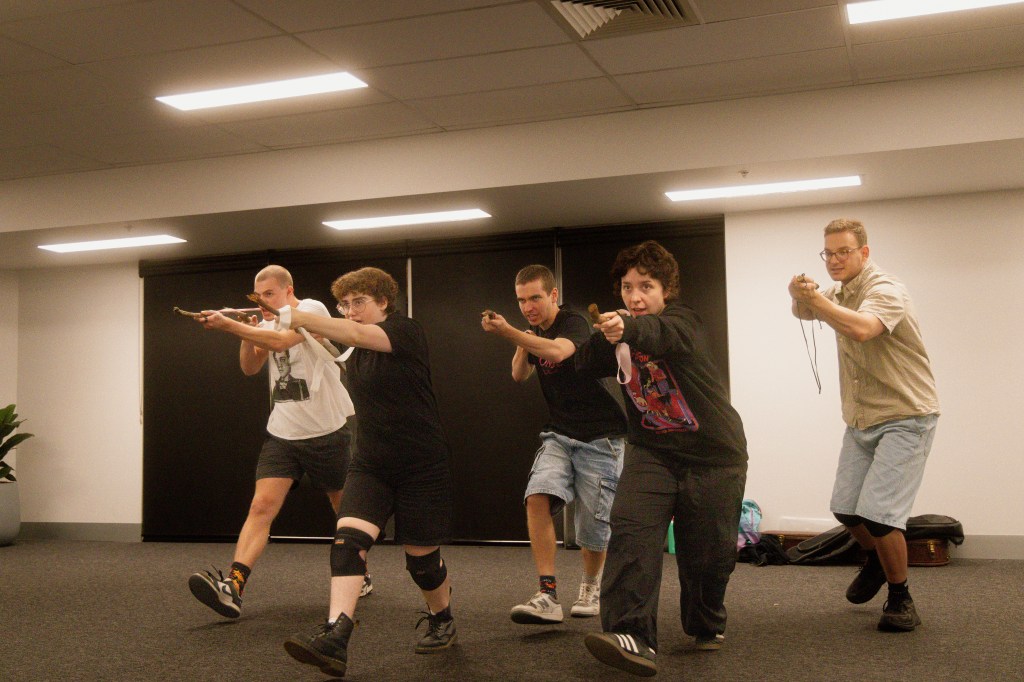
EADIE: Jas [Carr] is one of our female ensemble [members] and we spoke to her early on and said ‘hey, how do you feel about coming to every marine rehearsal, watching all the videos, coming in, asking questions [and] learning all the marine choreography?’ Jas is also the one playing guitar onstage and playing bass in one of the songs. So, she’s got a lot to learn. But she was really excited because the guys’ dance is really fun. Seeing her grow, seeing her take theatre a lot more seriously [has been amazing]. She’ll sit down with her notebook during a marine rehearsal and write down everything that all six of them do because … she has to know what everyone is doing onstage at a time because if she gets thrown in, she doesn’t know which one she’s going to get thrown in for. Her notebook is super detailed. I knew that we made the right decision when we were going through the war sequence and we were trying to get some traffic blocked, and we went – ‘oh who takes this gun off?’ and Jas, from across the room, goes ‘oh, Archie [Jacka] does it.’ It’s awesome to have someone across it from a performer perspective rather than a creative perspective. The first time I cried in rehearsal they were doing the Act I opener and I was watching the guys, and they looked awesome and out of the corner of my eye I see [Jas]. She’s never been taught this choreography before – we learned it two days before – she watched the choreography be taught that day and she was doing it perfectly side by side. [We said], we’ll get her in for a dress rehearsal to say thank you for all this hard work, and then one of our actors ends up getting a really amazing professional opportunity on one of the nights, that they can’t turn down for student theatre, and so we went: ‘Jas! You’re in!’
CHARLOTTE: Yeah, that’s interesting because I don’t think I’ve heard of any student shows really having a swing like that before. What do you think has been the biggest challenge so far?
EADIE: Other than room bookings?
CHARLOTTE: That’s a valid answer; the people are going to love that one.
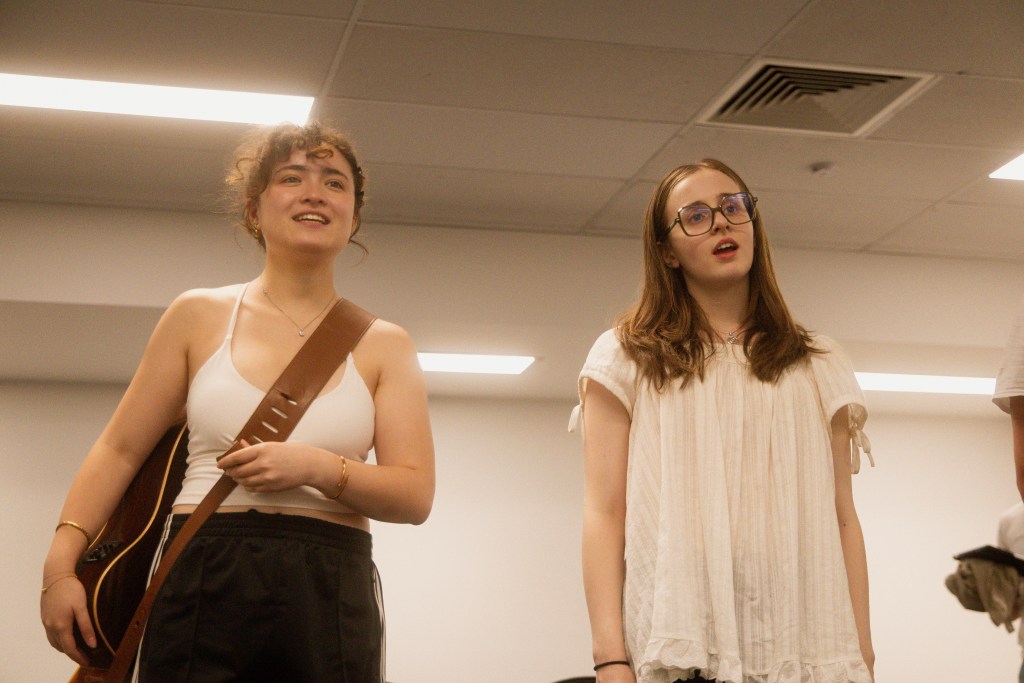
EADIE: We’ve just been unlucky. Things have just been happening, and we’ve adapted and overcome them all but, I think logistically the most difficult thing is getting a band onstage in the Kaleide. It takes up like a third of the space, so using space well. I also have an anti-blackout policy, so we’re not going to be doing a blackout for set changes, set changes are happening during a scene. I think [blackouts] are stupid because it holds the show.
CHARLOTTE: What is it about Dogfight that you think makes it relevant for a contemporary audience? Or what do you hope a contemporary audience gets out of seeing this show?
EADIE: I think that people should be open-minded going in, especially after seeing the ending of it. I think it’s a very nuanced show and I think that if you look at it, [on] face value, it’s easy to go ‘oh, you’re just following a bunch of really awful men.’ Well, yes, you are, but if you look deeper into it, you see why they’re so awful. You see that they’re falling victim to political propaganda, you’re seeing that when they’re alone they’re completely different people to when they’re in this echo chamber of toxic masculinity. [These] are things we see online with … the manosphere and [how some] people are very different when they’re with their girlfriends versus when they’re with their buddies, you know? I think that taking the time to acknowledge [that] yeah, it’s confronting and yeah, it’s awful but it’s not removed from what we’re experiencing today, and just because it makes you feel a bit gross doesn’t mean it’s not true. Art is one of these places where we can safely explore these things and talk about them and give them a place.
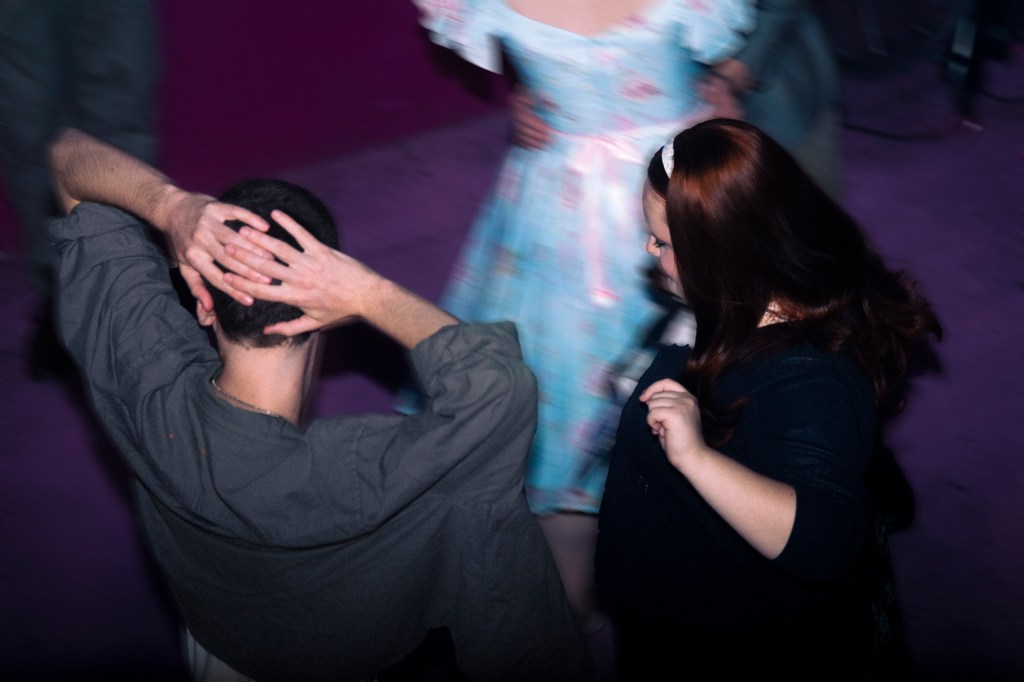
Our conversation continued for some time, Eadie telling me about many of the parallels between the world Dogfight and ours – a world that is, perhaps, not so distant – however, writing all of that would spoil too much of this production ahead of its production week (and make for an extremely long article). After my conversation with Eadie, I reached out to Isla Teague, co-choreographer for the show and asked for their thoughts on what it’s been like working on this production.
ISLA: As this experience was my first time choreographing a full musical, I had a lot of support from Eva-May Tegart my co-choreographer and Eadie Milne our director, who both have experience in creating musicals, and bringing that vision to life. We took inspiration from several different sources including, 60s swing dancing, military training and marches, show girl performances and naturalistic movement to create the world of Dogfight. Rather than choreographed dance breaks, Eva-May and I worked to create a more natural feel to the songs, so they don’t take you out of the serious topics that are being discussed and creating characters that feel realistic. This results in less stereotypical ‘dance’ and more intentional movement, which adds to the setting, emotion and energy rather than taking away from the story. … Due to these darker themes that are seen throughout the musical, especially in the second act, it was interesting to learn how to create a space to experiment with more difficult scenes and ideas, while ensuring the safety of the actors. Balancing this with making the scene or song look realistic and evoke the emotion that we want has been a learning experience for me especially. Working on the Dogfight production team has been challenging in some respects like learning how to explain what movement, energy and formations I want to create, but it’s also been easy working with such a talented cast and dedicated production team.
RMIT RedActs’ Dogfight will be performed at the Kaleide Theatre 21 – 23rd May. The matinee performance on Saturday 23rd will be a relaxed performance. Additionally, Eadie tells me that there will be note in programme for audiences with information on exiting the theatre for the more confronting scenes.
CHARLOTTE FRASER (she/her) is a writer, performer and student editor based in Melbourne. She holds a BA in English and Theatre Studies and is currently completing her Masters degree at the University of Melbourne. Charlotte is also the 2026 Dialog Editor.

