
REVIEW BY JADE BREEN
EDITED BY AUDREY MUELLER
A tale as old as time.
Warring households.
Star-crossed lovers.
An intense age-old rivalry.
Sound familiar?
It’s that time of year again, the annual share house showdown where Bourke Street and Vine Street go head-to-head in a tense game of ARTICULATE. The winners will leave victorious beaming with eternal glory, bragging rights, and dominion over the streets of North Melbourne. But the losers? Shame, disappointment, and the faces of their enemies framed in their kitchen, a constant reminder of their bitter defeat.
Anyone who has dared to host a friendly games night knows that board games have a tendency to bring out the worst in people. That being said, Gumboot Theatre has created an infectiously competitive show, testing just how much joy can fit inside the battered box of a board game.

Written by Finn Hoegh-Guldberg & Penelope Gordon, ARTICULATE offers a fascinating character study, where friendships and morals are ruthlessly tested. No one escapes unscathed. On Vine Street lives the overly committed Ben who is strategizing, stretching and preparing before the show has even begun. Hank Harris brings a wild unpredictability to this role, as if they might jump out and recruit you for their team at any given moment. Penelope Gorden as Romi, equally competitive yet tentative knowing she must face her ex-boyfriend. To finish off the house, Charlie Veitch plays Lilo, the ultimate golden retriever friend, and once he has woken up from his pre-show nap, is just happy to be included. Over on Bourke Street, Esther Younge plays Nadia, meditating and manifesting peacefully, encouraging her housemates to do the same. She is joined by Finn Hoegh-Guldberg as Jules, who vehemently insists he is over his ex-girlfriend and finally Alice Schlipalius as Tilly, who despite her focus and winning attitude is really going through it.
The six performers work as a tight ensemble, with witty, overlapping dialogue punctuated by well executed moments of movement. I particularly enjoyed the training sequence; the two households practicing questions as they slipped in and out of freeze frames. The choreography and focus of this scene were impeccable, and as the characters orbited each other, it genuinely felt like I was watching a juggling act. The clear cast cohesion was complimented by a brilliant use of space, the cavern of the Motley Wherehaus transforms perfectly into a cramped share house living room. While quite an intimate venue, the cast should be commended for their ease and coordination while navigating the space, the proximity allowing for a great immersion in the narrative and some golden moments of audience participation.
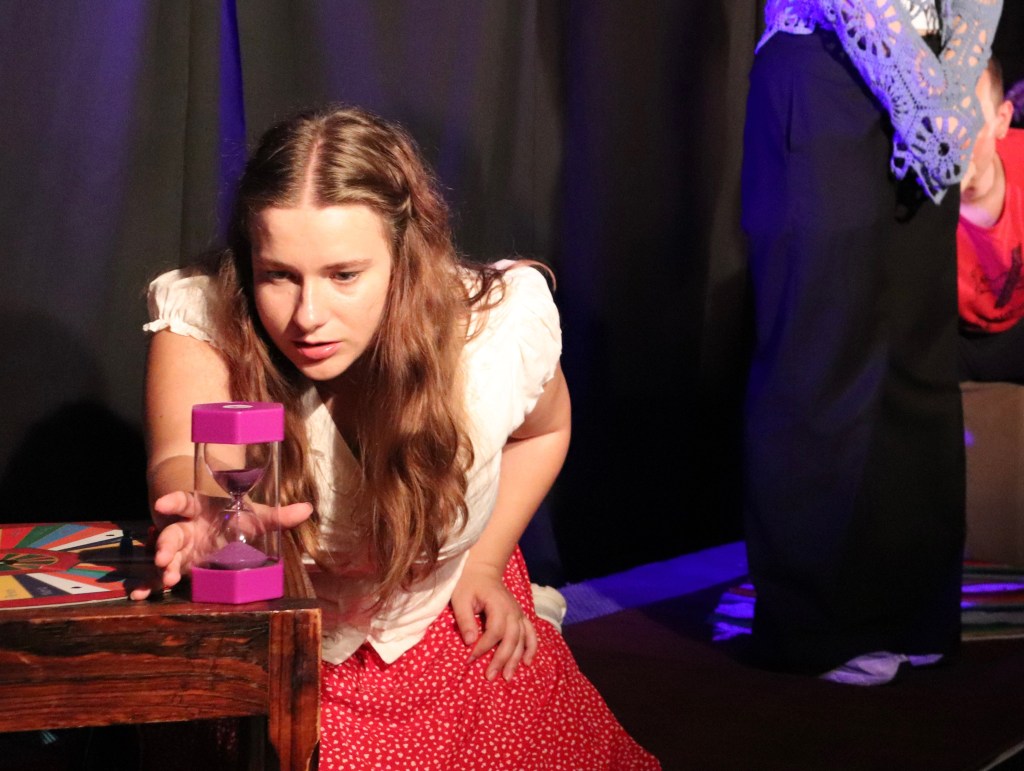
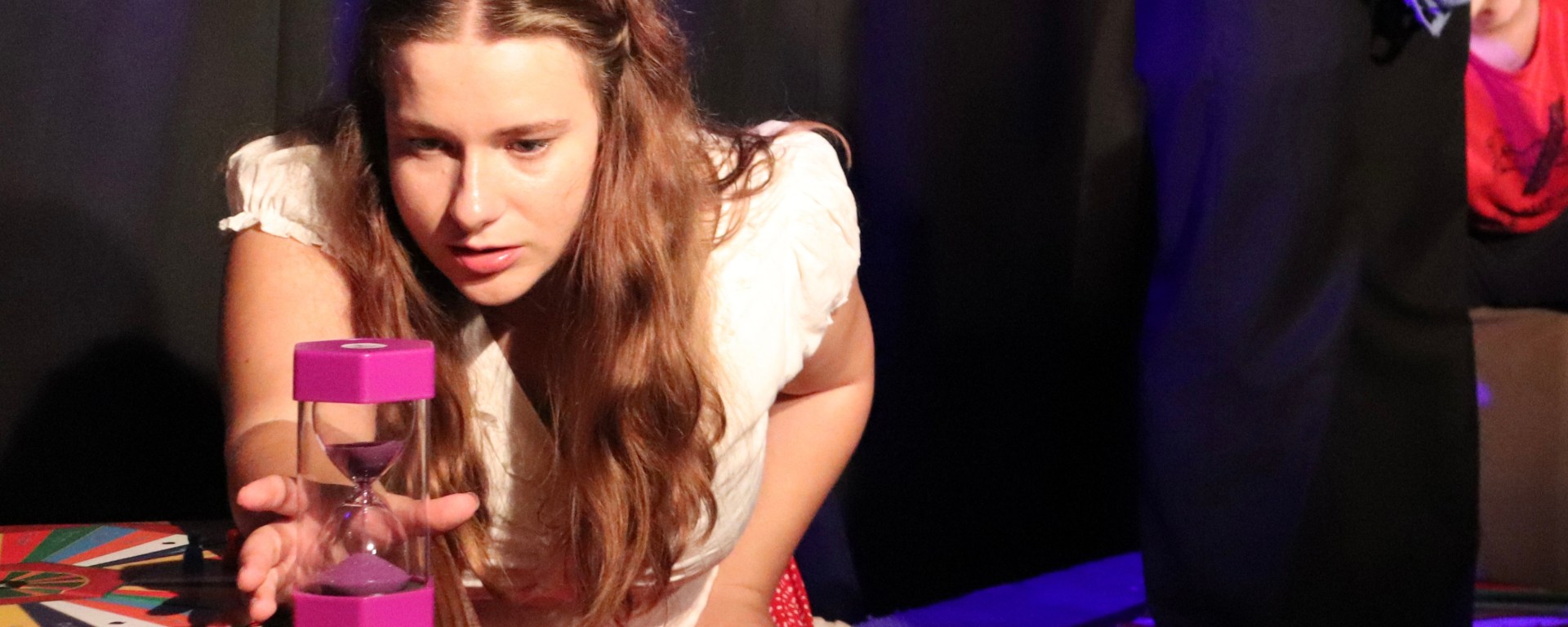
The atmosphere was genuinely infectious, and I was on the edge of my seat as the audience were encouraged to participate in a round of the game. I could feel tensions rising around me, my own primal instincts kicking in as I too was consumed by the battle on stage. While audience participation can be very hit or miss, it was an absolute joy to be included in the work as seamlessly as if I were just another housemate. Unfortunately, the real world is not all sand timers and categories, and the show intelligently confronts the damage that gets done in the pursuit of victory.
Simmering just under the comedy and heightened competition is ruthless tension, conflict, and unresolved arguments just waiting to boil over. Central to this tension is Tilly, she carries a huge weight, one she hopes can be lifted temporarily in the pursuit of some good competition. Schlipalius portrays the fine line between being ok and having your world crumble beneath you, with a tenderness and care that was heartbreaking to watch. Similarly, Romi’s competitiveness is a front for immense feelings of inadequacy, and Gorden’s explosive monologue at the show’s climax was a cathartic outburst resonating with anyone in the audience who has felt left behind by their friends. Opposite to these raw themes, I was grateful for the comic relief provided by Veitch’s Lilo and Harris’ Ben, two characters who were genuinely just very invested in the game. It would be easy to fall into comic stereotypes, but both performers carried themselves with empathy, creating interesting and layered performances. I found myself particularly drawn to Younge’s portrayal of Nadia. Relatively unproblematic Nadia grapples with a crush on her rival Lilo. Younge is grounding and honest, a breath of fresh air as cards are thrown across the room, and the friendship group begins to fracture.
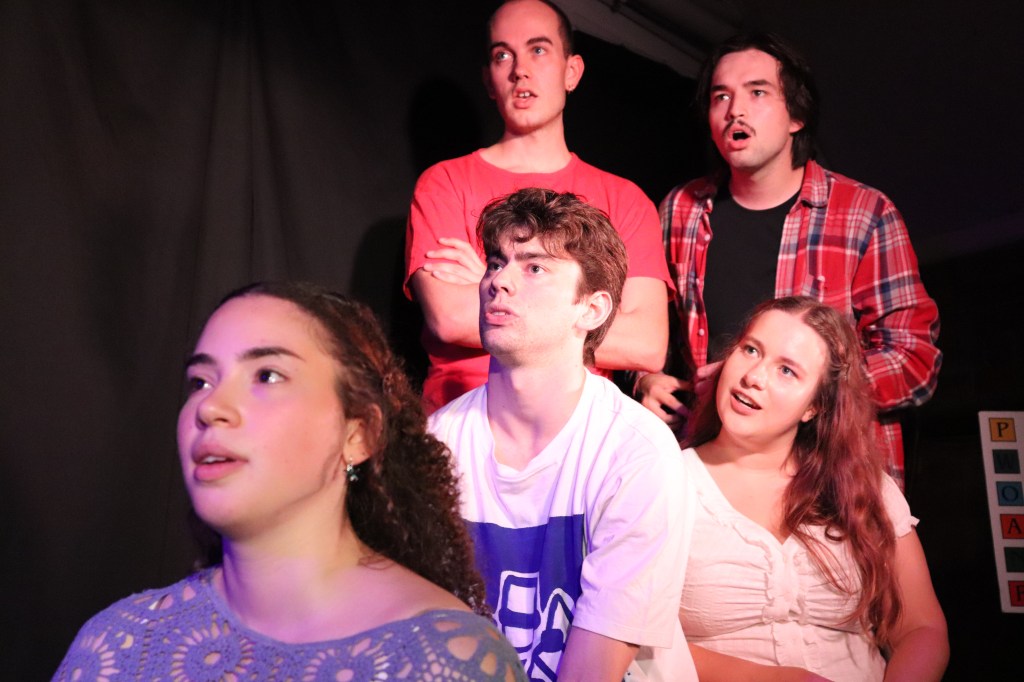
Hoegh-Guldberg and Gorden explore the duality of friendship, the familiar and comforting textures of drunken laughter in the living room and meals shared amongst a group, contrasting betrayal and pain that lies in cutthroat honesty and broken trust. These intersecting relationships are beautifully entangled, and it is easy for an audience member to fit right in amongst the cacophony of friendly fire and bickering of six friends. The play ultimately discovers that the greatest friends are the ones that hold you accountable for your slip ups, call you out when you cheat during games, and find room for love amid the carnage of growing up.
As the night comes to a close and the two teams clear up the detritus of scattered cards, it becomes clear that ARTICULATE is so much more than a game. It is a testament to tradition, community, and the families found and forged even in the most heated of rivalries. A beautifully layered and joyful work by Gumboot Theatre.
Articulate was presented by Gumboot Theatre Company at the Motley Wherehaus 23 March – 5 April, 2026 as part of the Melbourne International Comedy Festival.
JADE BREEN is a young playwright and theatre practitioner based on Boonwurrung and Wurundjeri country. A proud advocate for diverse and intersectional storytelling, Jade is excited by work that encourages resistance, change and a celebration of identity.
AUDREY MUELLER is a second year arts student, majoring in creative writing and media communications. Her love for theatre was sparked in high school and she carries this passion into her uni work, performances, reviewing and sub-editing at Unimelb.
The Dialog is supported by Union House Theatre
 The Dialog