
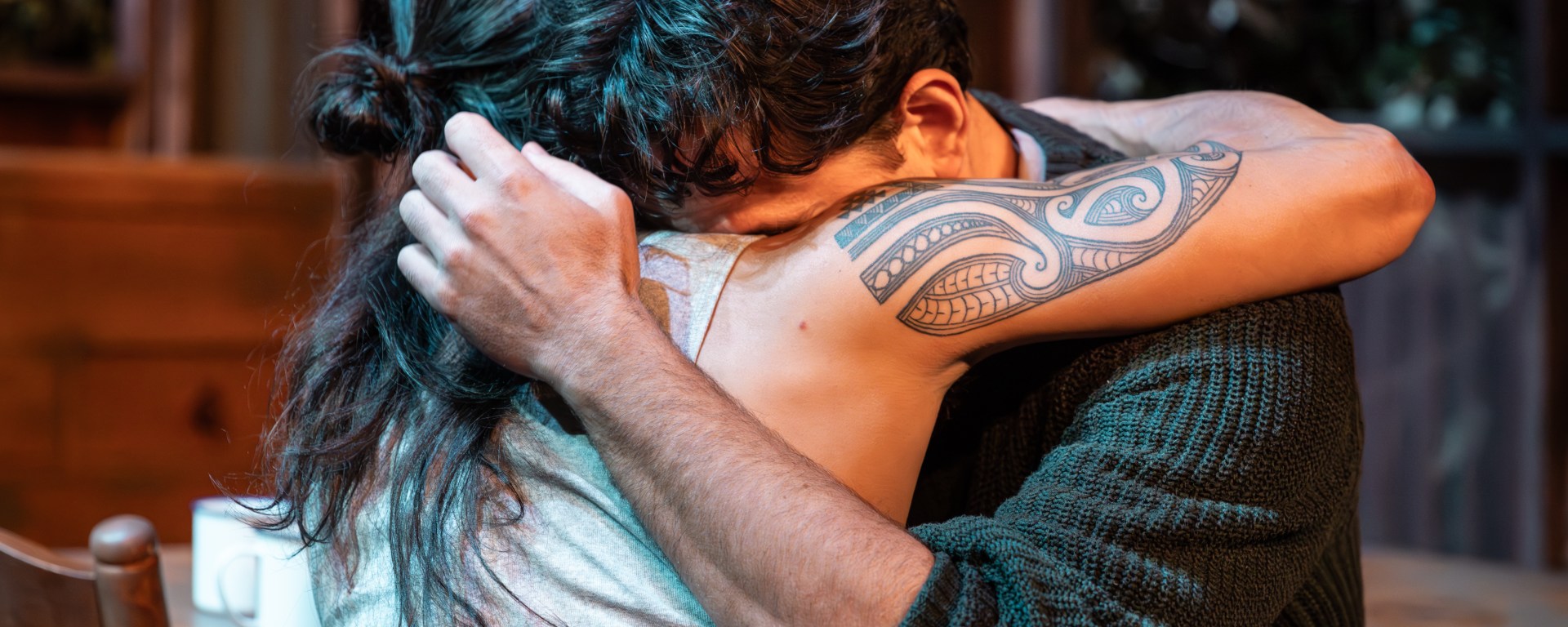
REVIEWED BY ELLA CALLOW-SUSSEX
EDITED BY CHARLOTTE FRASER
There was a sense of warmth in the alleyway next to the La Mama Courthouse. It was my first time back since they reopened and I was flying solo. My guest had to pull out last minute and I’ll admit I was a little intimidated. It was their closing afternoon, a 4pm show and it was sweltering – to the extent that the ushers let us in early to avoid the heat. Once we shuffled inside the hall though, a whole world unfurled before us.
Back to Te Maunga by Joe Teira and presented by Antipodes Theatre Company at the La Mama Courthouse – now back and open for business with an incredible line up of new shows. Back to Te Maunga follows two men, Tāne and Isacc who return to a cabin from their youth on the ten-year anniversary of their best friend’s passing. Issac has long since left Aotearoa, New Zealand while Tāne has stayed and built a life in the aftermath of such a cataclysmic event. It is an original Māori drama that investigates the friendships of men and the relationship that one has with their own history, all in the shadow of the mountain from which the play gets its title.
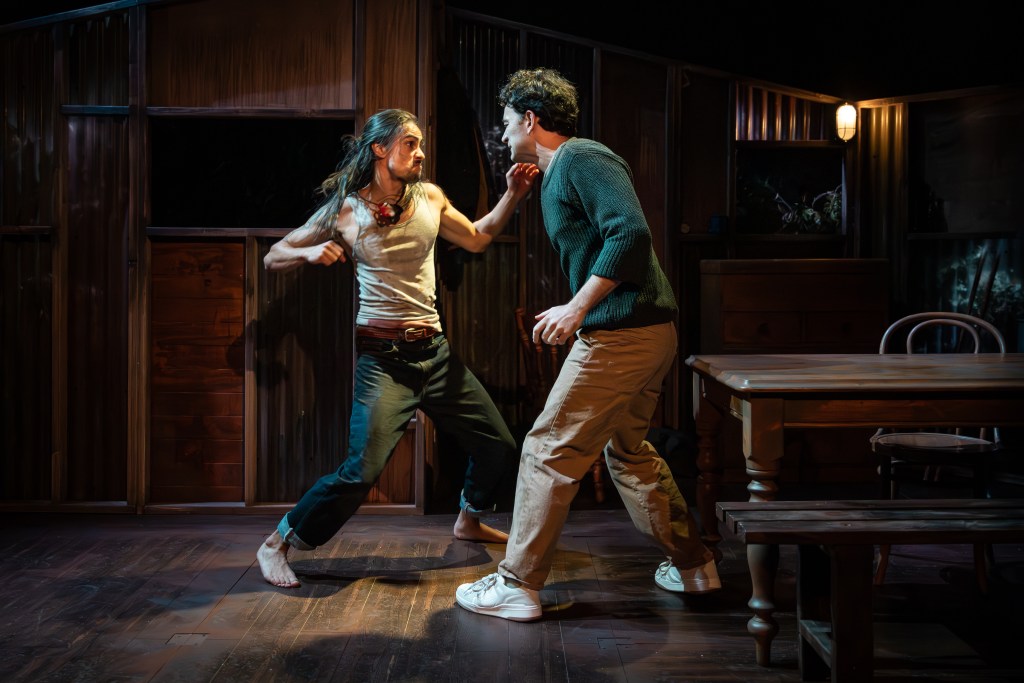
The structure was particularly striking is that the whole show takes place in real time, in a fixed location in the space of a little over an hour. This deliberate structure for pacing served the show exceedingly well in holding audience anticipation and focus. If I were to nitpick, I found some of the entrances and exits a little odd. Their timing meant that sometimes it seemed that Issac stormed out only to almost immediately walk back in which lessened some of the tension.
The set, designed by Zoë Rouse was deceptively detailed. At first glance, it’s just a cabin. But through the show you realise there are sheer sections of see through but muddied corrugated plastic on the set. At key moments, in conjunction with lighting, these allow for the outside world of the mountains and trees of Aotearoa to peek in on the men. Similarly, I was impressed at the ambition to get a full set into the courthouse. The cabin they were standing in feels structurally sound; it was even raised off the floor with a front step at the door. Everything, down to the little tins and broken lights, worked to create a realistic house, positioning the audience in the missing fourth wall. The set was cohesive and dynamic insuring that there was enough for the actors to do as they talked.
It wasn’t until about halfway through the show that I remembered to look (or listen) for the sound, lighting and costume design and this is an incredible testament to the intelligent designer’s work. The sound design and composition by Ethan Hunter never overwhelmed the audience, but it was there. There was a distinct moment that I realised the whistling in the trees was artificial because, of course, that sound would never be present at 5pm on Drummond Street! Hunter masterfully controlled the balance of immersion and dialogue which made for a seamless auditory experience that reminded the audience that there was still always a hum of life outside.
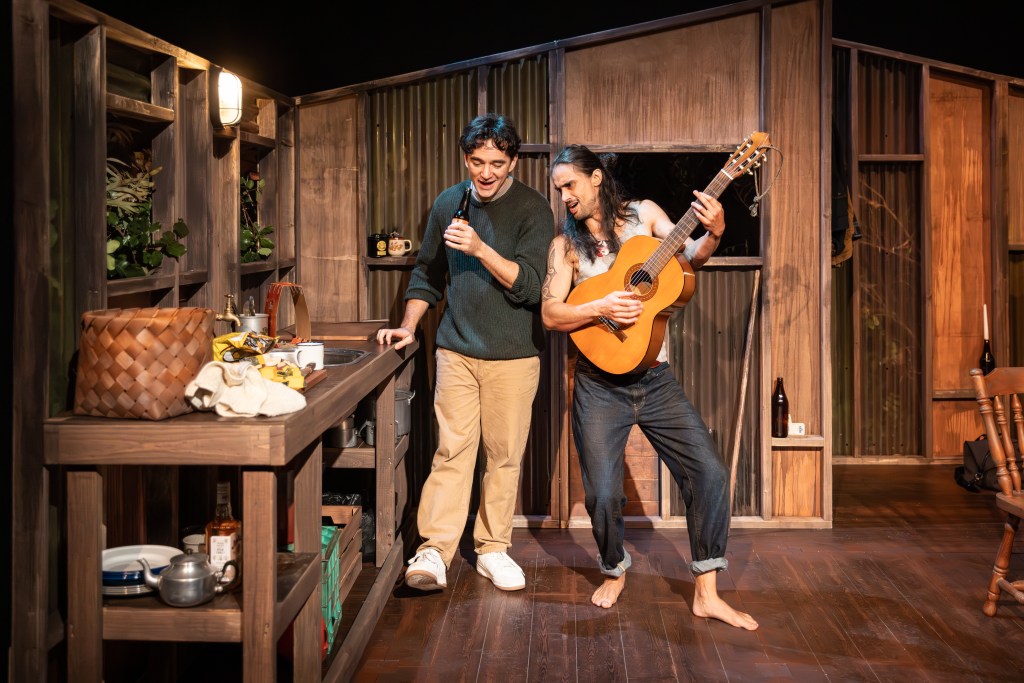
Harrie Hogan’s lighting design cleverly captured the passing of time through an intricate use of shadow and soft lights. I was particularly struck by the moving headlight of Issac’s car pulling up to the cabin at the top of the show. It instantly placed the audience in a moment and then held us there. Similarly, Zoë Rouse’s costume design was so detailed for something so naturalistic. I was delighted to note the small holes in the jumper that Issac was wearing or the cuffed jeans of Tāne. It showed such a sense of pride and confidence in the design work on the show.
Pulling off a two-hander shows with the rhythm required to keep audiences engaged is no mean feat. It was evident that the creative team – writer Joe Teira, director Keegan Bragg and Dramaturg Tainui Tukiwaho – was a well-oiled machine pulling off a masterclass in subtlety. I will not deign to guess how impactful this show was and could be for someone with an understanding of the stories, history and culture it builds upon but no matter who you are this is a show that warmly welcomes. This team of creatives ensured that anyone could see themselves or a loved one in a part of this show.
At the heart of this show were the actors. Joe Dekkers-Reihana played Tāne, the one who stayed in the aftermath of their friend’s death. Opposite him Jordan Selwyn played Issac, the one who left in an attempt to get away. Dekkers-Reihana and Selwyn are a dynamic partnership bouncing off each other’s lines and looks with ease. To create such intimacy in a close friendship in such a short amount of time is incredible. Of note was Dekkers-Reihana’s physical control and hypnotising voice and Selwyn’s focus and precision. Both are performers I would delight to see again and would insist are brought back for any future runs.
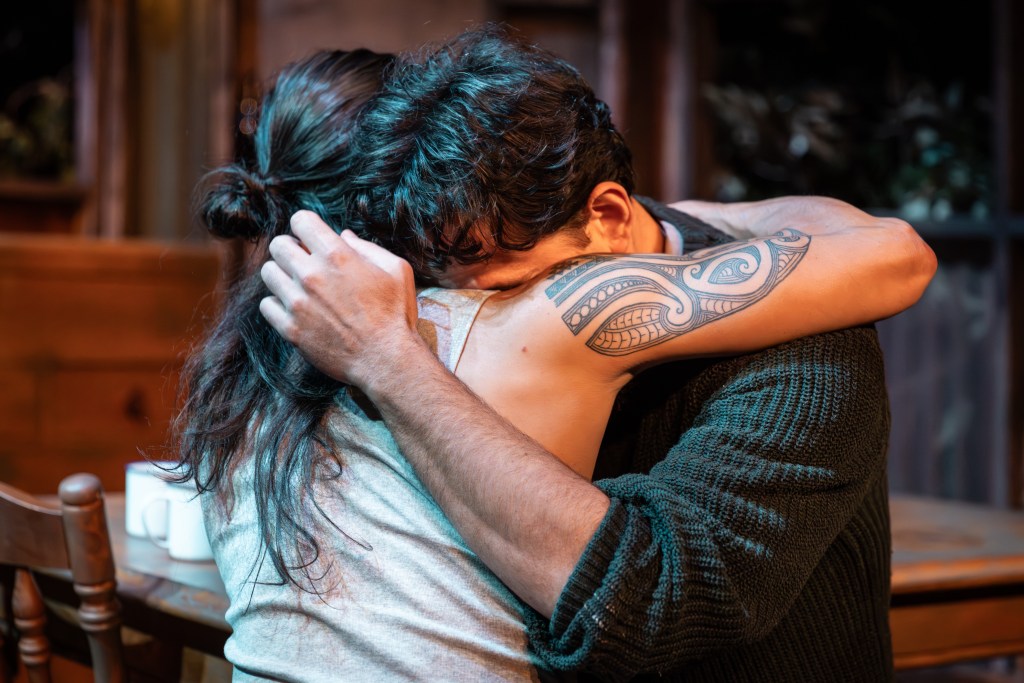
I wish I could tell you to go book tickets but unfortunately the season has closed. Luckily however there will be a digital on demand season from April 1st to April 6th which you should quickly snap tickets up for. Antipodes Theatre once again has platformed a worthwhile and impeccably done show. Having been previously developed as part of their Winter Lab in 2025, the script and the clarity of meaning in the show proves what dedication and focus can do for a show. Sometimes good things take time, and this was pretty brilliant.
In conversation with La Mama, Jordan Selwyn discussed how a show isn’t finished until closing night, how you must keep the piece alive and wanting as you learn new things about the world and the characters. However, to briefly go against Selwyn, as someone who was there on closing night what they created was so magical I don’t think it could truly be finished then either.
Back to Te Maunga was presented by Antipodes Theatre at the La Mama Courthouse 4 – 22 March 2026.
ELLA CALLOW-SUSSEX is a theatre maker and reviewer for the Dialog. She is currently completing a Bachelor of Arts majoring in English/Theatre Studies and Creative Writing.
CHARLOTTE FRASER (she/her) is a writer, performer and student editor based in Melbourne. She holds a BA in English and Theatre Studies and is currently completing her Masters degree at the University of Melbourne. Charlotte is also the 2026 Dialog Editor.
The Dialog is supported by Union House Theatre
 The Dialog