
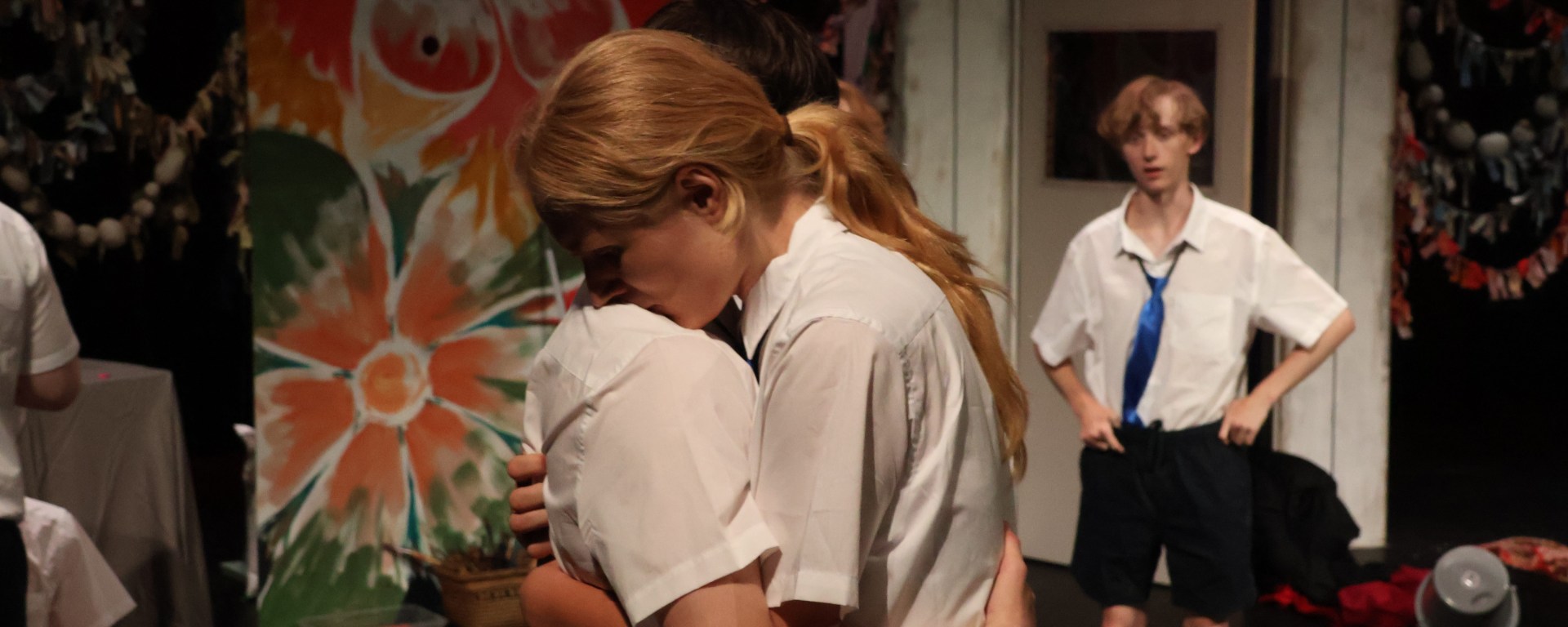
REVIEW BY JESSICA FANWONG
EDITIED BY CHARLOTTE FRASER
We all remember that one teacher we particularly disliked in high school. Whether they were no-nonsense rule-enforcers who dispense detentions like spraying insect repellent, or full-on Miss Trunchbulls who should not be within 100 meters of minors. Hijinx Theatre Company’s Bathory Begins takes it to a higher notch – what if that teacher is a reincarnated vampiric mass-murderer, and it is up to a bunch of teenage girls to concoct a plan to save themselves?
Written by Emme Hoy and Gretel Vella and directed by Laura Henderson, Bathory Begins is a part-farce, part-paranormal take on high school drama where the public and private school systems are forced together in a claustrophobic art classroom. We are introduced to the girls of Butt-Road High, largely left to their own devices in a strangely adult-free environment.
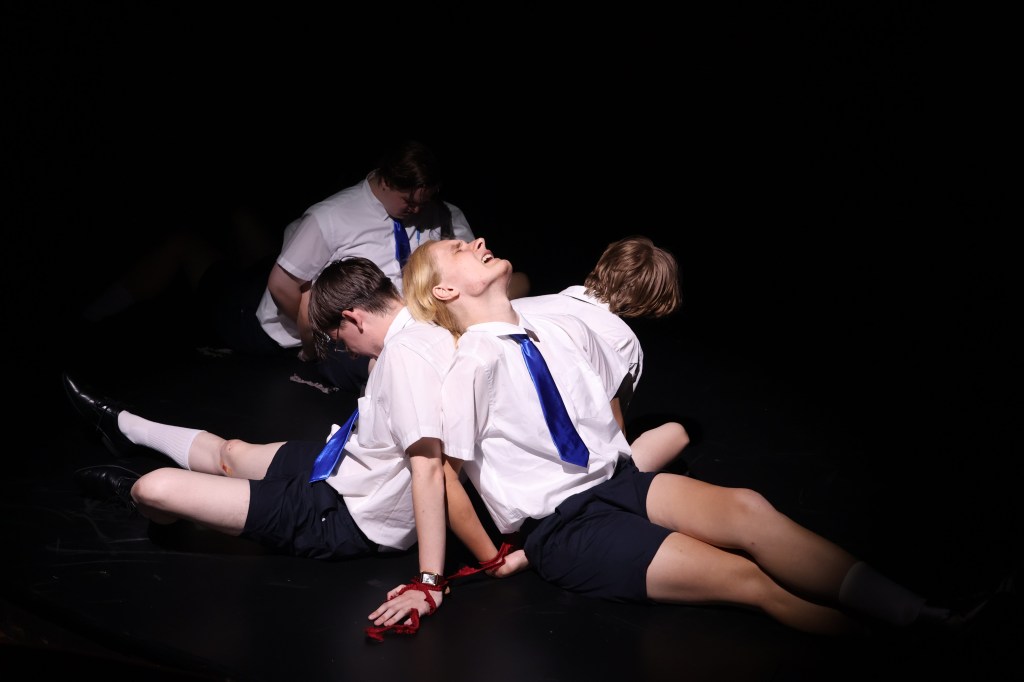
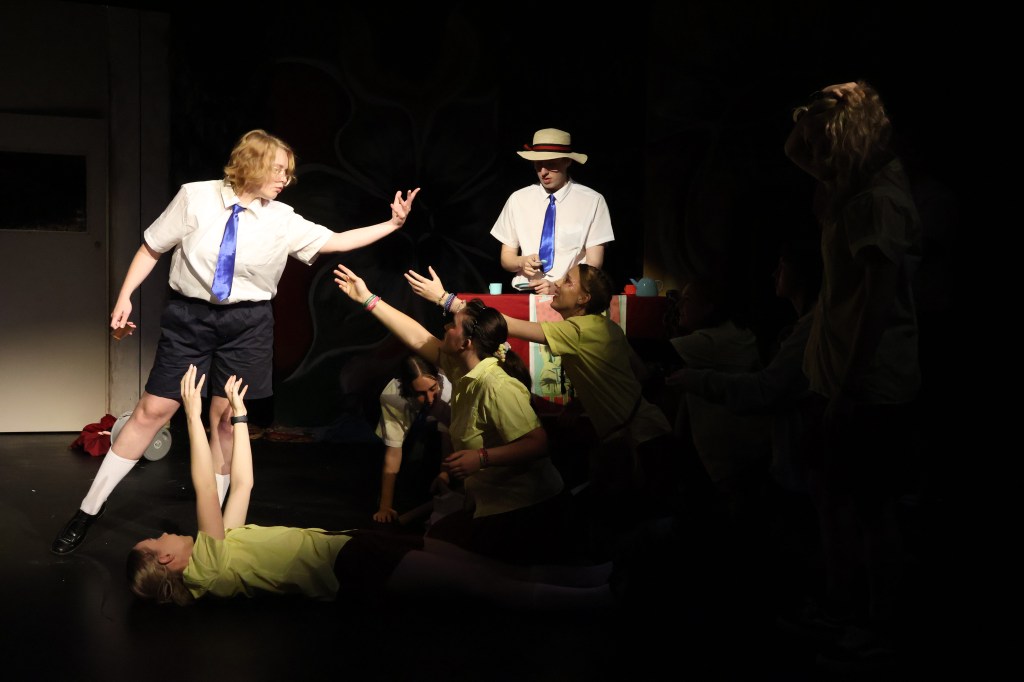
The story follows: while the girls are brainstorming outlandish plans to defend against the threatening Bathory, they receive an unwelcome visit from the elitist private school boys from Judas Gents. The boys serve as nothing but uncooperative distractions, only interested in protecting their reputations with intimidating NDAs and asserting their patriarchal privilege over the girls.
For a 90-minute show with no interval performed in a small-medium black box theatre, the show had a massive cast. True to high school drama, the characters are familiar tropes. On the girls’ side, we have: the strong-willed head girl, Taylah (Amelia Miller); the rebellious vice head girl, Valerie (Emily Lorna); the nerd, Jane (Theresa Cornelia); the wiccan, Summer (Sena (Mieke) Nuske); the angry lesbian, Maude (CJ Du Blêt); the loner, Sylvie (Camrynn Brown); and the emo-artist, Lily (Laura Henderson).
On the boys’ side, we have: the snobby head boy, Royce (Ben Buenen); the ambitious vice head boy, Walter (Violet Fleming); troubled teen, Gabriel (Brennyn Ingvorsen); the girl-hater, Simon (Annabelle Ryan); the nerd, Tom (Aidan Buckley); the young entrepreneur, Charlie (Lochie Macdonald); and the pretty boy, Ricky (Sam Bain-Morris).
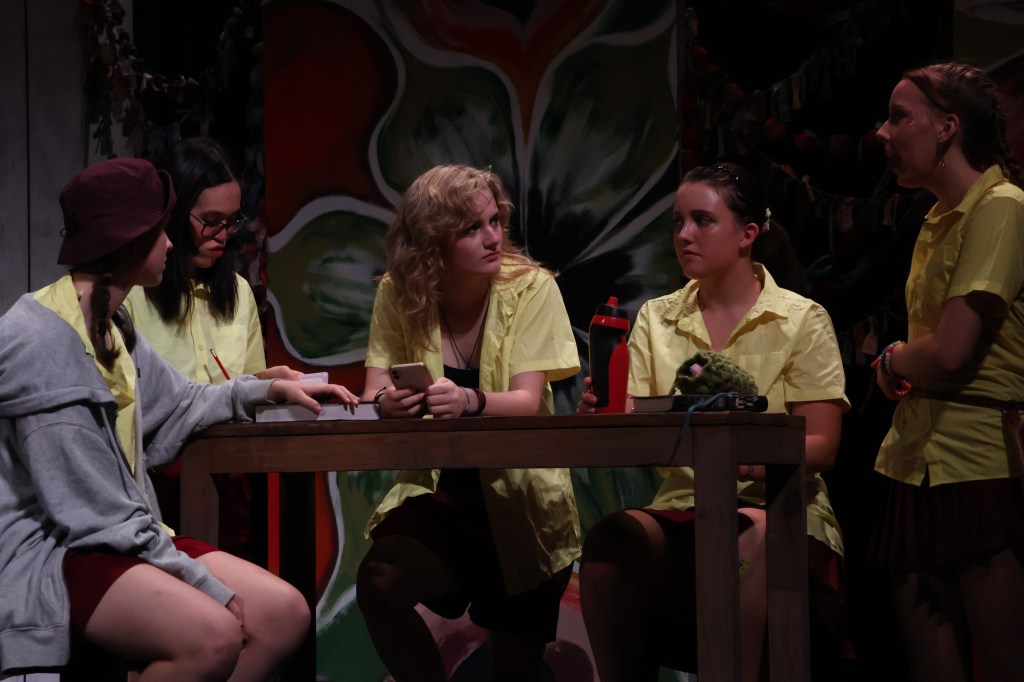
14 characters packed into one show did feel very clustered. While I thought the small stage space actually lends itself well to creating the atmosphere of a claustrophobic, underfunded public school art room, the narrative felt very crowded. This meant there were many narrative threads that felt underdeveloped. Some characters’ roles were given so little time and opportunity to shine that they were competing for narrative space against more developed characters. The overall pacing of the show would also have become tighter with a smaller cast. The clustering of tropes and endless deliberations that seem to go nowhere felt laborious and was at the expense of plot development.
Despite this, the show did feature some very strong performances. What impressed me was the diverse representation of toxic males within the Judas Gents. Ben Buenen immaculately captured the privileged golden-boy suffering from hypochondria who talks like a liberal politician. Hearing Royce sprout a series of misogynistic remarks between fainting spells and sanitising a packet of Smiths chips is deliciously hilarious.
Ripe with ambition, strong-willed and eager to assert his masculinity, Violet Fleming’s Walter acts as a foil to the delicate Royce. Fleming plays the entitled second-in-command with a measured nuance, revealing the vulnerability beneath the tough, ruthless exterior he is environmentally conditioned to perform. Walter’s time-freezing Shakespearean monologues were a nice touch, painting his elitism and allowing audience members to see different facets of the character. Although I do wish some of the other characters were also given the space to voice their thoughts outside of the pressure of the collective crowd.
Because this is an elite alpha-male grooming boys’ school, one of the insecurities is repressed sexual tension. i.e. we learn of Walter’s crush on Royce, which is nicely built across a series of undeniably charged interactions, culminating in an adorable coming-out scene when Royce believed they were all about to die.
On the girls’ side, Amelia Miller brought out an attention-commanding portrayal of head girl Taylah, who is bold and manipulative, willing to go to any lengths to protect her classmates. This includes an amusingly ill-fated attempt to seduce the Judas Gents’ head boy into going along with their plan to secretly dispose of Bathory, with exaggerated flirts and sashays. This plan fails as we learn that Royce is a closeted gay boy.
Emily Lorna’s Valerie also presented a complex character. New to the school, an outsider to the closer-knit girls, she is most likely to turn against her classmates (Royce attempts to poach her, appealing to her loner insecurity), so it is a relief to see she does not follow the girl-against-girl trope.
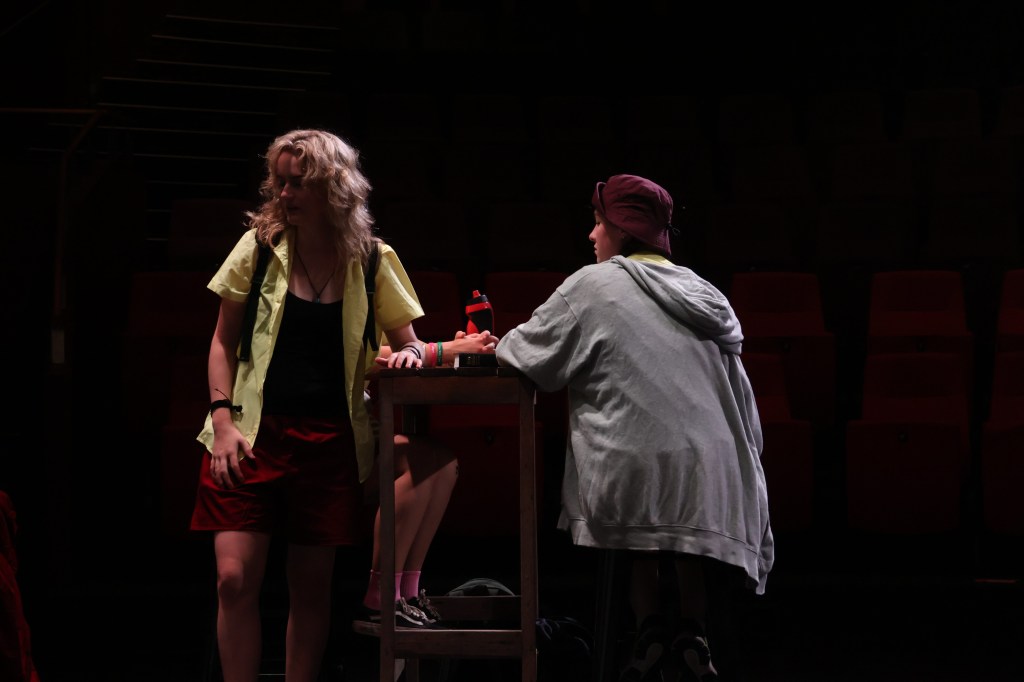
However, outside of these four, the rest of the characters come across as very one-dimensional and underdeveloped. Sylvie remains silent until she suddenly begins speaking in the second half, though her selective muteness is never addressed or unpacked. Nor is Gabriel’s emotional trauma, which never gets contextualised but gets appropriated for comic relief. Tom and Charlie change sides, but their sudden switch back to the boys’ side felt rushed – justified as the pull of the boy band, but I felt it could have been built up earlier in the show. Ricky and Maude also seem to have no other role than attracting girls and resisting attraction.
As an ensemble, both sides captured the divide between social classes exceptionally. Placing the two different worlds in such proximity to each other, we can glimpse the dangerous extent to which institutional sexism and classism are reflected through the thoughts and actions of the teenagers.
However, the discussions around class and gender, I do feel, sometimes ignore the presence of the dead Bathory, who lies prone on the ground for most of the show as the students debate what to do with the corpse. The puppet was well-constructed and comically scary. Though I wish Bathory were better integrated into the overall story and debate regarding class and gender. I also found it slightly unbelievable that the students could be left unsupervised in the art room for so long after school hours without raising any suspicions.
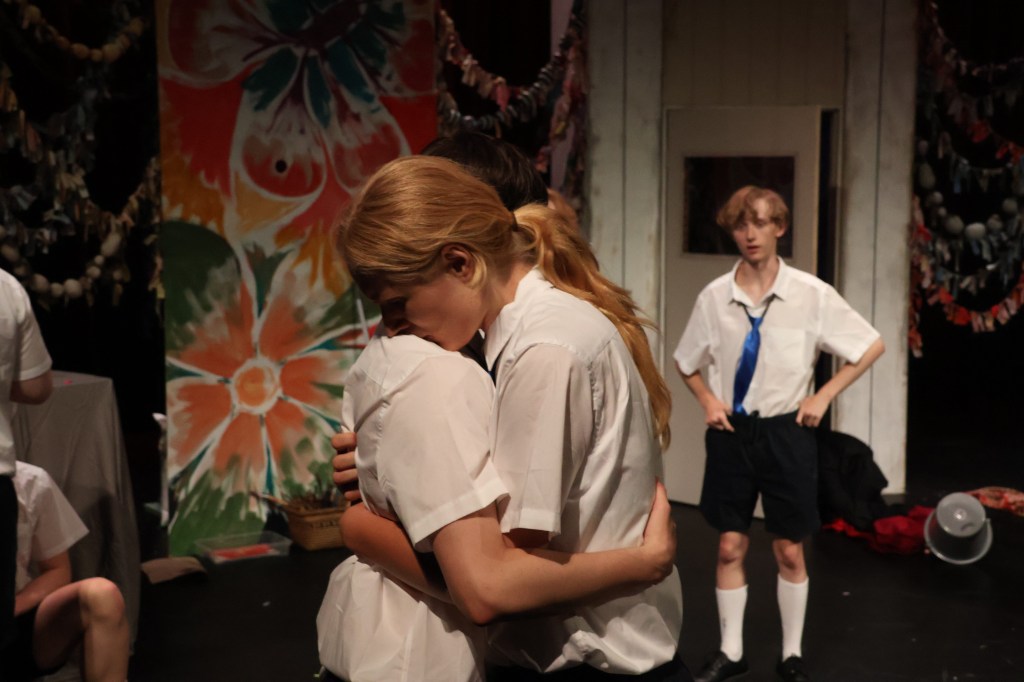
Directions by Henderson very cleverly kept the two schools divided across battle lines throughout the show, demarcating the fluctuating dynamics within the room. Only in brief moments of truce do the lines get crossed, and true communication happens. But these moments are brief, as their instilled ideologies inadvertently drive the two apart. As the play progresses, the storyline also evolves into carnage until the sudden return to life of Bathory interrupts the class war and unites the two sides. Only when faced with the possibility of death do they finally realise “we’re all the same – murderers.”
CJ Bu Blêt’s set has a DIY aesthetic very evocative of a public school art room. Decked with nature-themed wall art and hanging art projects, with one door in the centre lit with blood-red lighting, walking into this setup really feels like entering a chaotic crime scene. Jason Sridher and Leaf Rynehart’s lighting designs and Harvey Lansley’s sound designs were also very atmospheric, smoothly capturing the emotional tensions within the room.
Bathory Begins is the ultimate nostalgic tribute to our high school years. At the heart of it all, the play paints a portrait of a group of teenagers, faced with adult decisions, trying to make sense of the world. Across gender and class lines, maybe there is one thing that unites all teenagers – a shared dislike of teachers and authoritarian figures.
Bathory Begins was presented by Hijinx Theatre Company at the Hellenic Art Theatre 23 January 2026.
JESSICA FANWONG (she/her) is a Naarm/Melbourne based writer, theatremaker and creative arts enthusiast currently studying Masters in Arts and Cultural Management. Her work can be found on Farrago and the independent theatre scene.
CHARLOTTE FRASER (she/her) is a writer, performer and student editor based in Melbourne. She holds a BA in English and Theatre Studies and is currently completing her Masters degree at the University of Melbourne. Charlotte is also the 2026 Dialog Editor.
The Dialog is supported by Union House Theatre
 The Dialog