
REVIEWED BY JESSICA FANWONG
EDITED BY CHARLOTTE FRASER
Presented as part of the Melbourne Fringe Festival 2025, the University of Melbourne Musical Theatre Association (UMMTA) presented a delightfully absurdist new work (slash dating app with the quirkiest app sound) Quelched!
Written by Conor Boussiotas and directed by James Pringle, this Fringe run is the full-show debut of Quelched! following its development session at UMMTA’s Sitzprobe earlier in the year. The show follows 23-year-old Phil Todd (Matthew Ho), whose mundane life gets turned on its head when a sexting leak leads to his serendipitous skyrocket into online fame. Reasoning: that his ‘appendage looks exactly like Christian Bale’. What follows is a mishmash of corporate exploitation, broken relationships, algorithm addiction…the whirlwind that trails behind 21st century celebrity culture.
Cautionary tales of the corruption of fame and toxic celebrity culture have become a trendy topic within student theatre of late. Which, considering the choke hold that social media has on a lot of us and the somewhat frightening rise of parasocial fixations on celebrities and influencers – it’s not hard to see why.
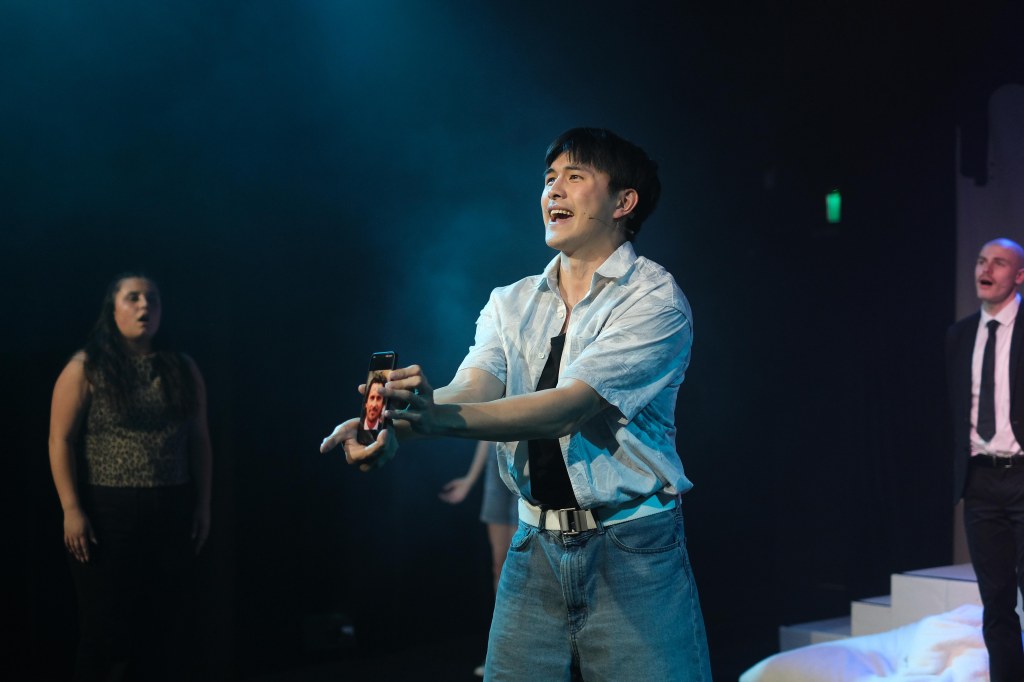
Phil Todd is the archetypal urban-dwelling, TikTok-obsessed single Gen Z going through a quarterlife crisis. Ho brings to life a convincingly self-centered and entitled protagonist, that while I found unlikeable, still found myself having sympathy for at times. Despite how some songs felt out of range for the actor – more so due to the scoring rather than actors’ vocals – Ho gave an engaging performance that felt readily real and relatable.
Ruben Jaworski brought Phil’s grounded bestie, Mike, to life with an adorable boy-next-door energy. Ella Nixon gave a nuanced performance as Olivia – the high school it-girl who exploits Phil while simultaneously being exploited by media tycoons. Olivia and the oft-sidelined secretary Mel (Ava Ruljancich), casted light on the grim exploitation of women in the male pursuit of building patriarchal empires. Both get discarded as Phil’s fame rises.
Archie Jacka’s Mr Dankworth, aka the ‘inconspicuous man’ – the villainous corporate megalomaniac – commanded threatening stage presence. Mr Dankworth dominated each scene he schemed and exploited and Jacka masterfully brought to life the invisible hands that controlled online virality.
While seeing comically evil villains at work is always enjoyable, there were times when Dankworth came across as excessively violent and aggressive. Narratively, it makes me question why Phil would want to work with someone so visibly abusive. Without a balancing veneer of allure (reminiscent of sociopaths) that draws-in the unwitting protagonist, I fail to see why Phil will trust him. Additionally, the inclusion of workplace abuse also does not get unpacked much. The lack of consequences for Dankworth’s actions seemingly further the trope of celebrities needing to put up with anything to achieve fame without condemnation of abusive behaviour.
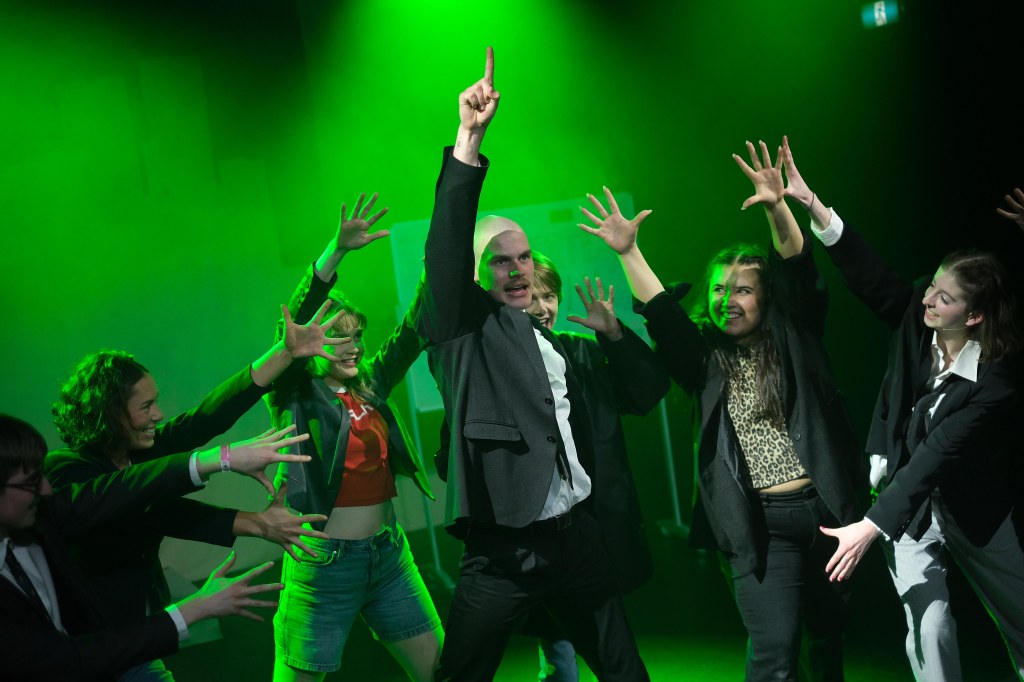
The music, directed by Riley Brennan and Harry Vreugdenberg, was fun and energetic, though not very memorable. This may be due to the lack of any leitmotifs or reprises in scoring which made the music across the show feel disconnected. There are many songs that are strong on their own. Highlights include Ella Nixon’s electrifying Dua-Lipa-esque dance number, the opening number with strong ensemble choreography and the hilariously witty penis rap battle between Ho and Bethany Oliver.
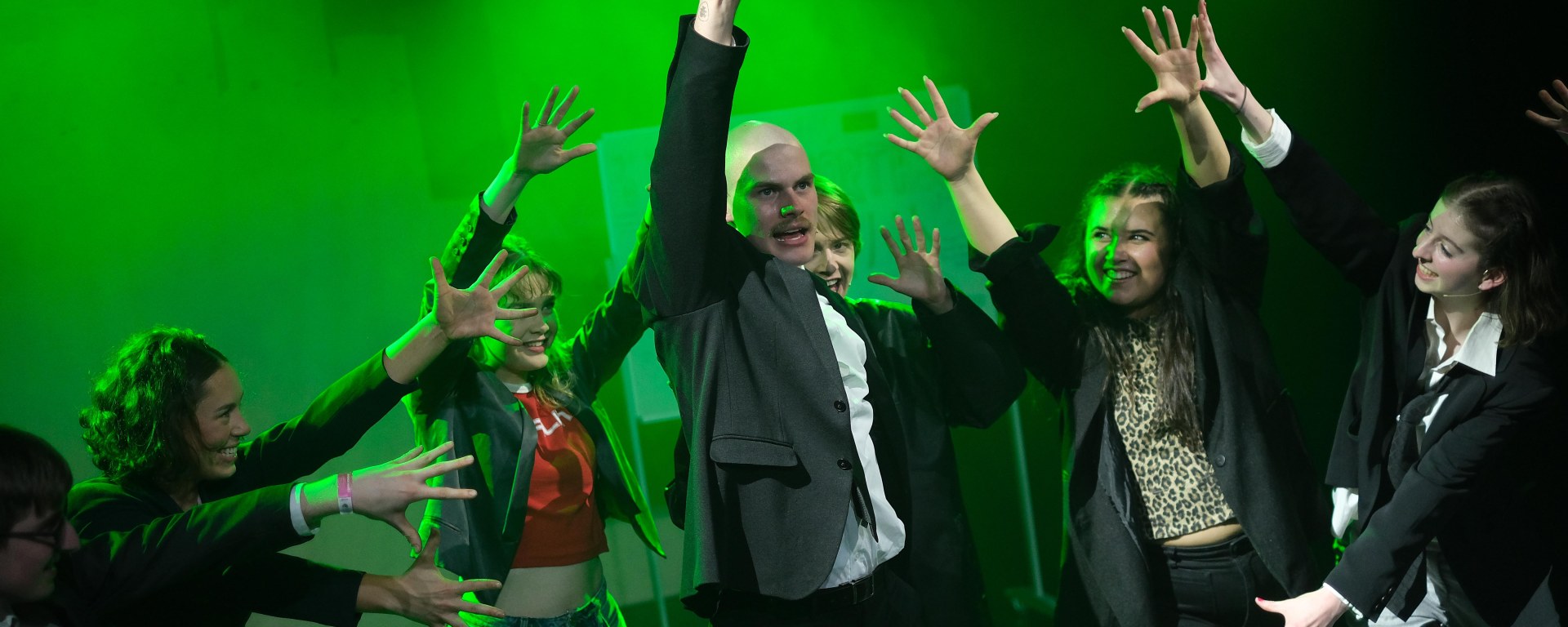
Musicality also affected the character development for the main cast members. Characterisation for the ensemble is stellar. The over-the-top performance style of the ensemble heightened Phil’s alienation and lack of belonging. Phil is the only real person in a sea of tropes and exploiters. The ensemble is also consistently well directed and choreographed, often mirroring the main action but portraying an ideal – like the perfect couples to contrast Phil and Olivia’s disastrous dating scene.
In the main cast however, characterisation felt quite one-dimensional without much character growth across the narrative. One key example of where song choice could have improved characterisation is Phil and Mike’s duet. Their reconciliation song at the end of the show, reminiscing about their high school days, is heartwarmingly sweet but felt unearned. If there had been a friendship song at the start of the show delving into the power of their friendship, and then we see that friendship damaged by corruption of fame and the course of the narrative, returning to the reconciliation song as a reprise, I feel would have made the journeys of both characters stronger. It would have also fit in deeper thematically of which relationships are real (Mike’s friendship) vs which are artificial (Dankworth, Olivia, Quelched! app, etc.). Similarly, I feel Olivia and Mel could have been given greater character development instead of existing purely as pawns, used and discarded by Phil in his rise to fame.
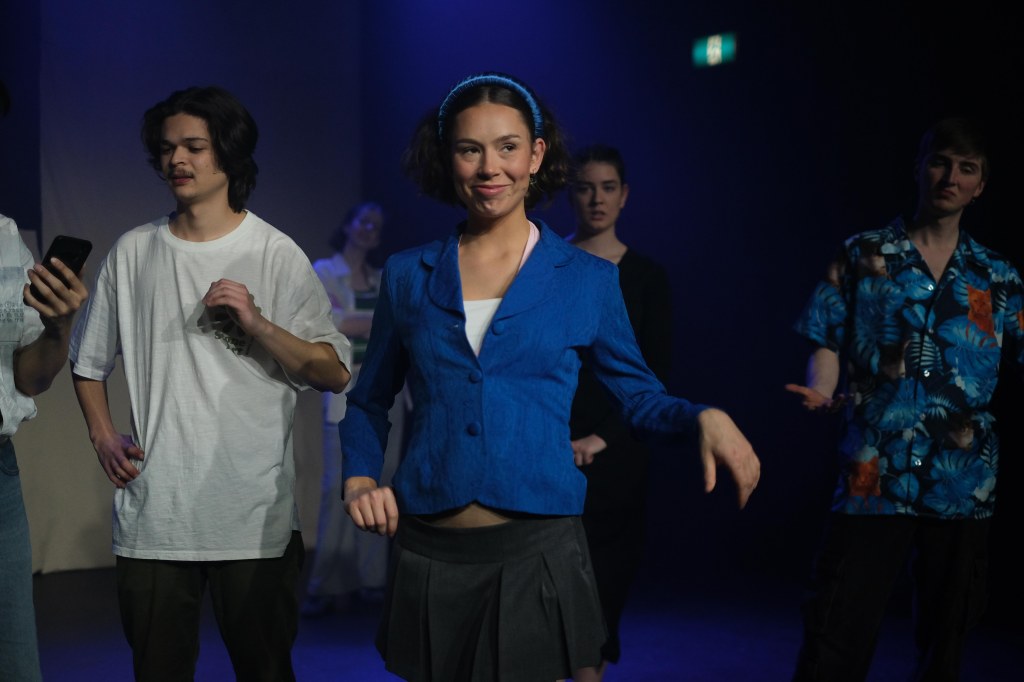
The set design by Harry Nguyen, Jamie Tran and Lekzi Kyriakou is minimalist but effective. The cyclorama featuring skyscraper silhouettes and doubling as projection screens, cleverly set the urban setting as well as the social media landscape that surrounds the story. This complements well with lighting and Quelched! app projections (designed by Iris Donaldson and Charlie Campbell) that powerfully set the mood of each scene, although I believe projections could have been used more to further the concept of artificiality and media scrutiny.
Amid the absurdity and campiness of the show, is the alienation that surrounds our social media dominated world. Phil’s hubris is the desire to feel validated and seen – leading him down the dangerous path of algorithmic success, not realising that one real friend is better than a million artificial likes. This, I believe, is a unique angle that could have been tapped into more. The fame equals corruption narrative has been done to the point of cliche, but effectively tying it to the dangers of instant fame, parasocial relationships and the desire to feel authentic connections is what sets Quelched! apart and makes it immediately relevant. The energetic cast brings the show to life engagingly, and the audience clearly enjoyed the performance. There is much potential for an ambitious new musical like Quelched! and, with some polishing, we will certainly see it become a rich, cohesive show.
UMMTA’s Quelched! played at Chapel Off Chapel 2 – 4 October 2025 as part of the Melbourne Fringe Festival.
JESSICA FANWONG (she/her) is a Naarm/Melbourne based writer, theatremaker and creative arts enthusiast currently studying Masters in Arts and Cultural Management. Her work can be found on Farrago and the independent theatre scene.
CHARLOTTE FRASER (she/her) is a writer, performer and student editor based in Melbourne. She holds a BA in English and Theatre Studies and is currently completing her Masters degree at the University of Melbourne. Charlotte is also the incoming 2026 Dialog Editor.
The Dialog is supported by Union House Theatre
 The Dialog