
REVIEW BY AKSHITA BENNY
EDITED BY EMMA PARFITT
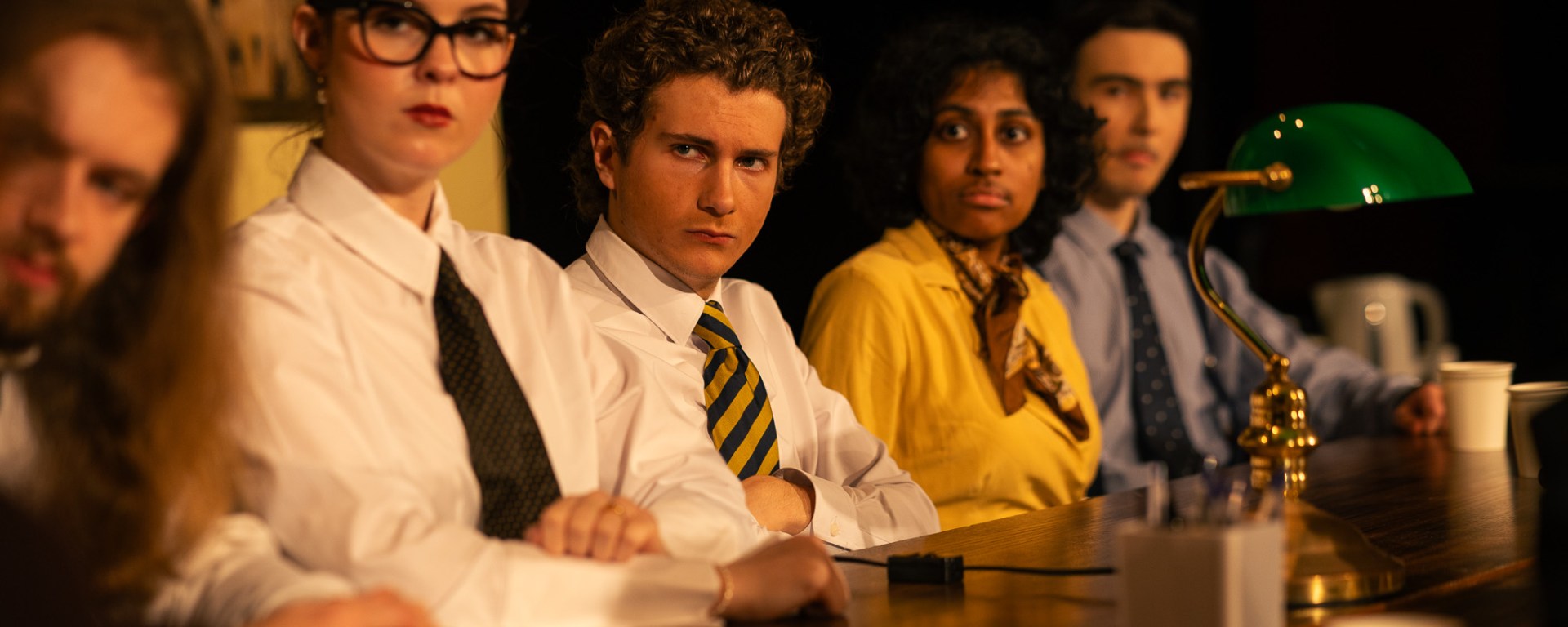
The tension is already palpable upon entering the confines of the Kaleide Theatre, when the voice over of the judge plays in the space and you can hear from the left the voice of a guard. Twelve jurors file to the stage from the door on stage left, fanning themselves and complaining about the heat. When the door clicks shut by the guard closing it, you get ready as inklings of anger and frustration are evident in the jurors, because what could go wrong when a man’s life is in your hands?
As someone only exposed to Reginald Rose’s classic Twelve Angry Men for the first time, RMIT Redacts have worked with the text carefully, presenting a considerate rendition of the play thanks to the effort of directors Ethan Francis D’Amour and Dylan Manson. Their work captures the moments of stillness as well as the outbursts with care and respect to the source material, while maintaining a very natural environment for the actors to move around freely and not be overly restricted by the text.
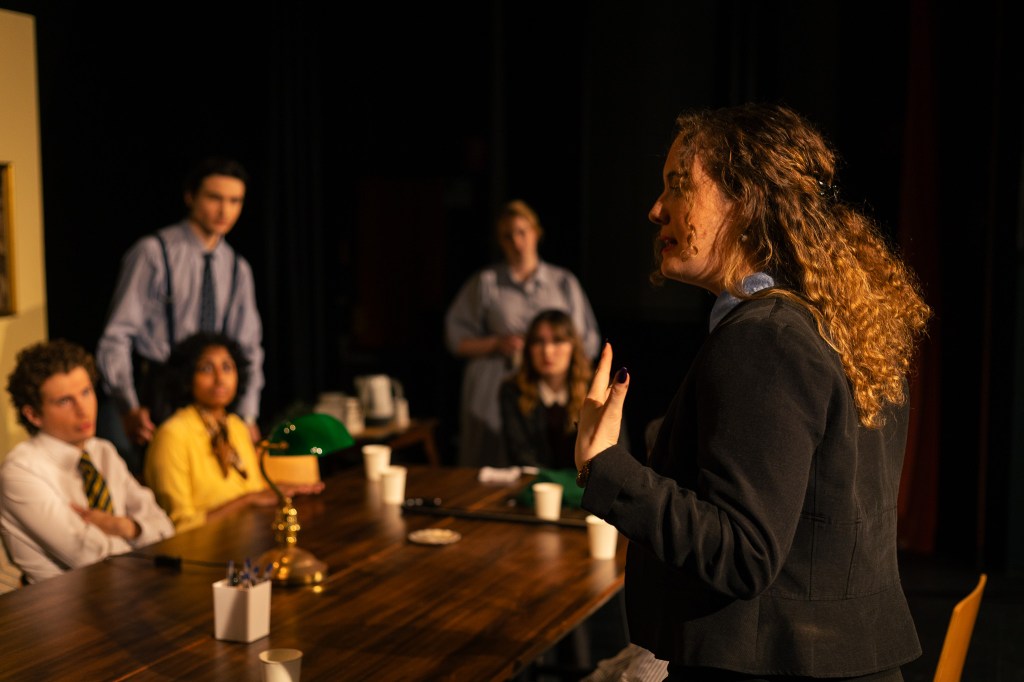
To briefly summarise, Twelve Angry Jurors is a courtroom drama in which the life of a young man is on the line as twelve jurors need to decide whether he is guilty or not guilty for the murder of his father. You are only with these jurors, therefore you only gain understanding of the case from them, ranging from where it was done, to testimonies and room plans.
Juror Eight (Elena Stuckey) has one of the most notable performances in the play, being the initial juror that votes “not guilty”, who then attempts to share their perspective and analysis on the evidence provided throughout the case. Stuckey embodies the cautiousness and will of the character, especially in the dilemma of being ridiculed by the other jurors who consider the case “clear cut”. Stuckey’s subdued performance is contrasted by Dylan Gough’s explosive Juror Three. I especially loved how Gough maintains tension throughout the whole show, breaking apart with defeat in the final moments of the show. Kailen Missen’s Juror Seven and Paige Thompson’s Juror Twelve created areas for comedy throughout this very serious show, lightening the mood with their funny accents which is frightening due to their lack of consideration for the welfare of the young man on trial. Juror One (Leila Edelstein) kept everyone in control as the foreperson and was very good at being the leader-like figure for all the jurors. This was noted in how Edelstein was able to capture the terse nature of the juror, radiating a collected and controlling aura which manifested as affecting the other jurors. The softer performances of David Wang (Juror Two), Josh Drake (Juror Five), Ravindi Fernando (Juror Six), Madeleine Cheale (Juror Nine) and Keona Siaw (Juror Eleven) helped round out the cast along with the feisty performances of Jessica Harrison O’Toole as Juror Four and Charlotte Fels as Juror Ten. I must tip my hat to the whole cast for their interesting embodiments of the jurors as under the direction work of Francis D’Amour and Manson, as every character was unique, reminiscent of how a jury consists of people from all walks of life.
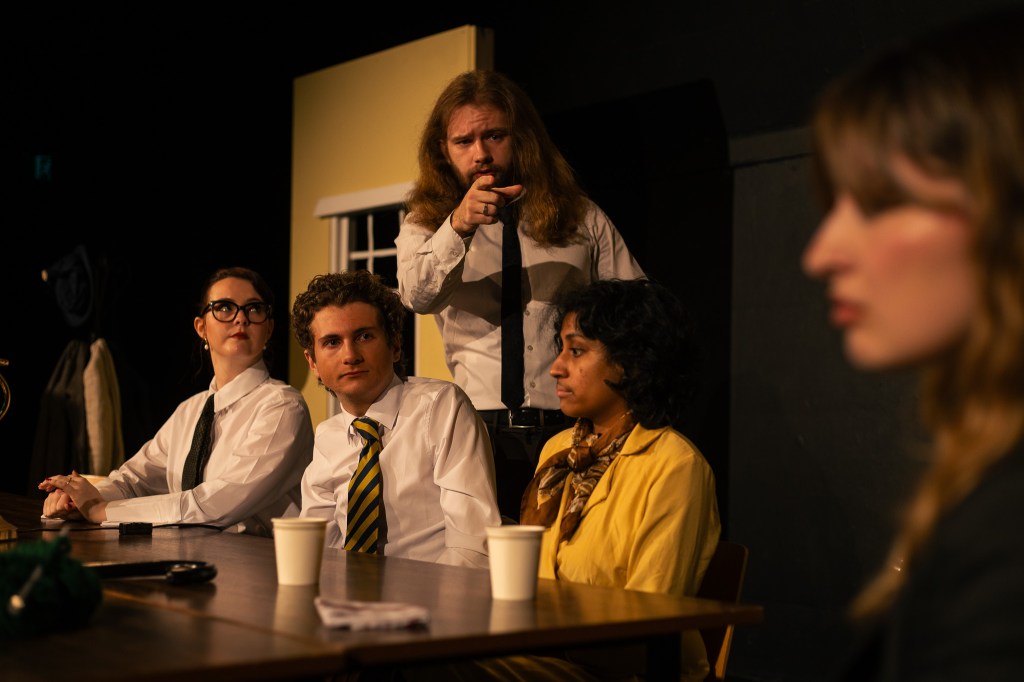
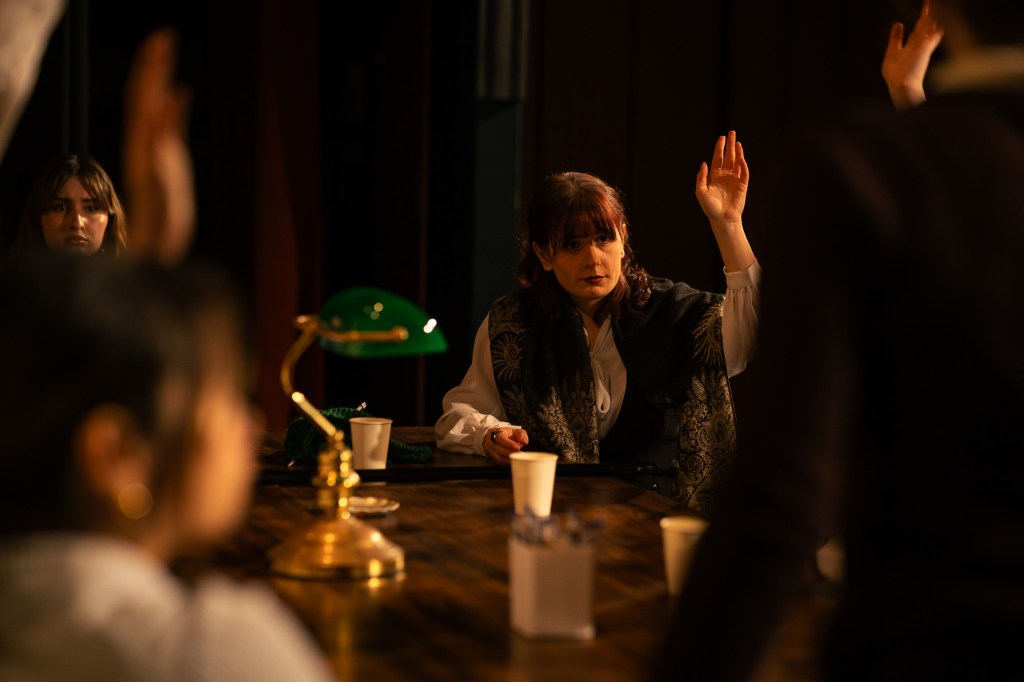
One question I had upon entering the venue was “where the hell did they get the green lamp that looks like the ones you find in the courts and a functional water cooler?” As I was pleasantly surprised that the set and props team consisting of Lana Videroni, Ciel Giles-Manor and Emi Ciccarelli were able to source these items because as someone who has worked alongside set and props teams, sourcing very niche props or set pieces can be an absolute nightmare. The work they had done with such attention to detail was phenomenal. The costuming by Nicholas Short with assistance from Lucinda Ryan was cheeky and I loved how they captured the essence of each character from the heavy skirts of the wise Juror Nine to the more modern “office baddie” appearance of Juror Twelve, solidifying how the play still resonates with modern audiences. The warm and dim lighting was an interesting choice made by technical designer Hugo Iser-Smith as it helped make the stage very intimate, but I do think there were other lighting choices that could have been made to heighten certain moments of tension or the shifts in the dynamics of the jurors. However, props to Iser-Smith for operating both lighting and sound as the sound for this show was difficult, especially with matching the door locking to the actual door closing. Doing both jobs is a hard task which was still very well executed! Some moments of the play did feel a bit stilted as there were issues with vocal projection, making it difficult to hear the cast even though I was in the centre of the venue, but I do understand that I watched the show on its first night, so this could relate to how the show was still finding its bearings in a different venue.
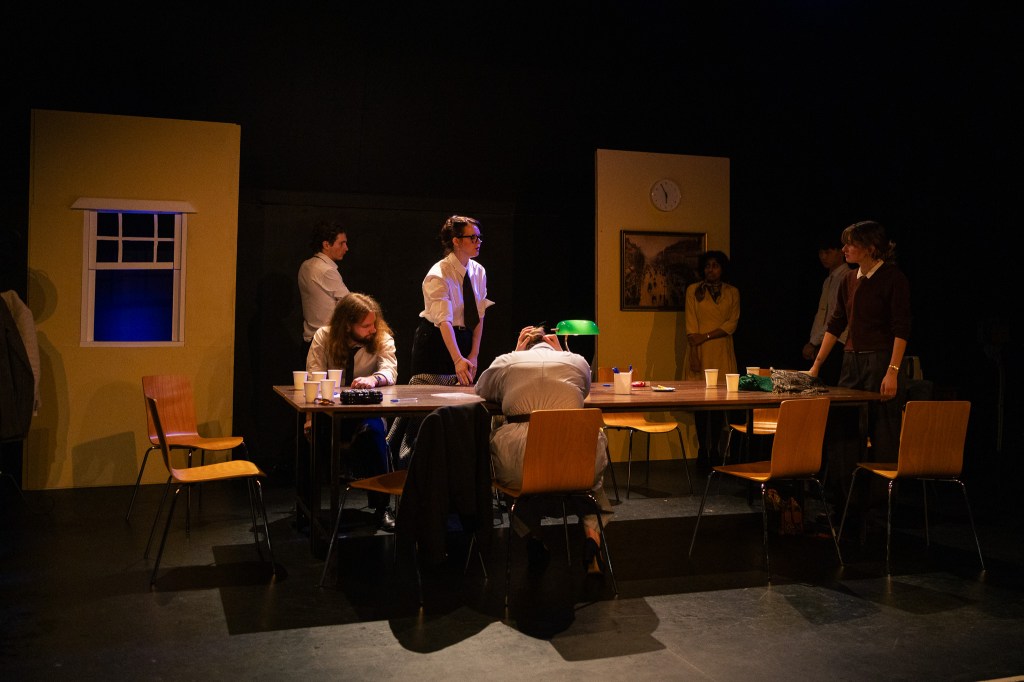
RMIT Redacts’ Twelve Angry Jurors was a wonderful performance to view, excelling in numerous factors such as performances and design choices, elevating a well-studied text to be refreshing to a modern audience. It was an intriguing choice for Redacts to put on this show written over 70 years ago, but their efforts prove that it was worthwhile. The considerate direction enabled the performance to carry the same weight at its source material and serves as a poignant reminder of how nothing is one-sided especially when striving to find the truth, still relevant to this day and age.
RMIT Redacts’ Twelve Angry Jurors played July 17th – 19th at the Kaleide Theatre.
AKSHITA BENNY is someone who likes to go to nice cafes, and not to forget also enjoys watching theatre!
EMMA PARFITT (she/her) is the Dialog’s head editor and has written Dialog reviews alongside studying towards her science degree for the past two years. She is a production manager, stage manager and producer on the Melbourne indie theatre scene and a veteran of student theatre at Union House Theatre.
The Dialog is supported by Union House Theatre.
 The Dialog