
REVIEW BY JESSICA FANWONG
EDITED BY EMMA PARFITT
Golden sand, roaring waves, happy families sunbaking under the calm tropical breeze as kids splash about in the pristine sea… that is the iconic image of an Australian Gold Coast summer. The school holidays are a time to leave the humdrum 9-to-5, escape the doom of finals, the pains of heartbreak, keep all other life grievances in your garage under lock-and-key and get away.
But in a chaotic country that is, as director Max Pickering notes, “devastated by decades of foreign conflict finding its national identity” amidst “the harsh realities of people who are hurting”, Monash University Student Theatre’s Away asks pointedly just how far away you can truly get.
Directed by Max Pickering with assistant director Esmé Stripp, Michael Gow’s Australian classic Away paints a raw nuanced portrayal of a nation that just wishes to forget and live in its own illusion.

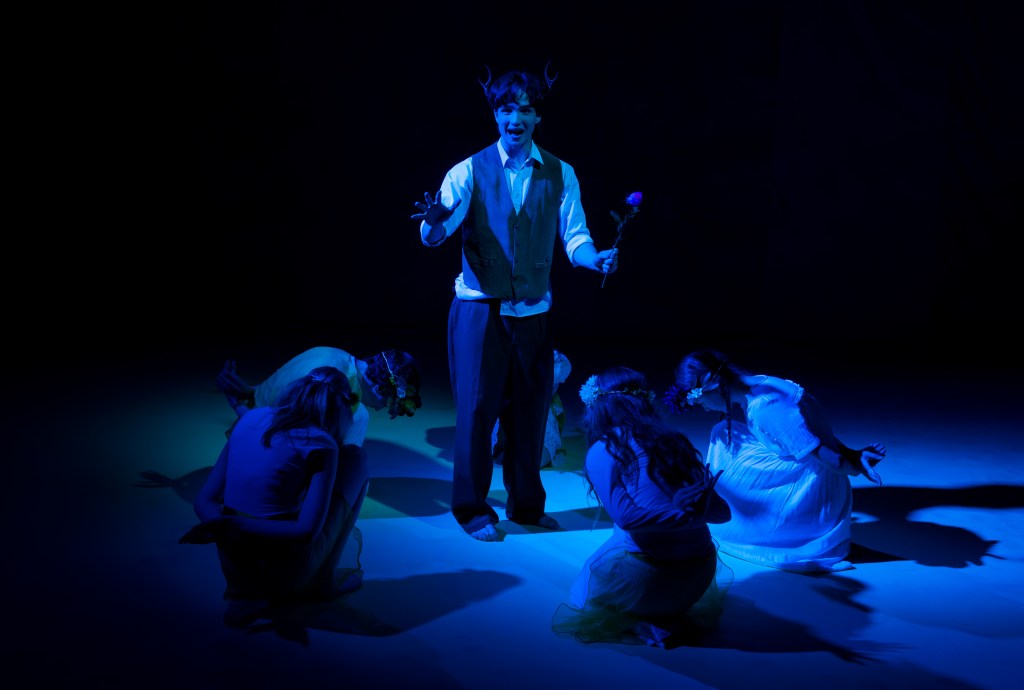
Beginning with a pagan dance featuring an ensemble dressed in ethereal shades of white, green and floral against a soft soundtrack of bird chirps, the play dives headfirst into its own theatricality. The characters Tom (Patrick Leong) and Meg (Grace Jackson) are actors, performing the closing sequence of A Midsummer Night’s Dream.
Yet their performance does not stop there at close of the Shakespearean play. As the three core families – Tom’s, Meg’s and the headmaster Roy’s (Quinten van Dalen) – each depart for their holidays in the Gold Coast, it soon becomes clear that all three families are hiding secrets and trying to perform an image of a happy holiday.
Lucy Fraser delivers a strong performance of Meg’s overbearing perfectionist mum Gwen, who upholds the work-hard-get-far mentality with a snobby disdain for immigrants and the working class (like Tom’s family). Her dynamic with the cowering but unwaveringly devoted dad Jim (Will Beechey), are some of the most comedic moments. Watching the panic of searching for lost keys, misplaced gifts, family bickering and heart-warming reconciliations are glaringly real, relatable experiences.

This is contrasted with the highly stylised performance of Felicity Barrow as Roy’s traumatised wife Coral. Barrow gives many poignant, emotionally moving Shakespearean-styled monologues to elicit her pain of losing her child at war. This is a feeling of loss that is not mirrored by her cold, reputation-obsessed husband, the headmaster Roy (Quinten van Dalen), who is embarrassed by Coral’s antisocial weird behaviour and threatens to institutionalise her if she does not rein in her grief. This compels Coral to put on a facade of forced positivity, that strangely reveals the turmoil, anguish and discontent, brimming under the surface of the holiday-goers at the idyllic beach.
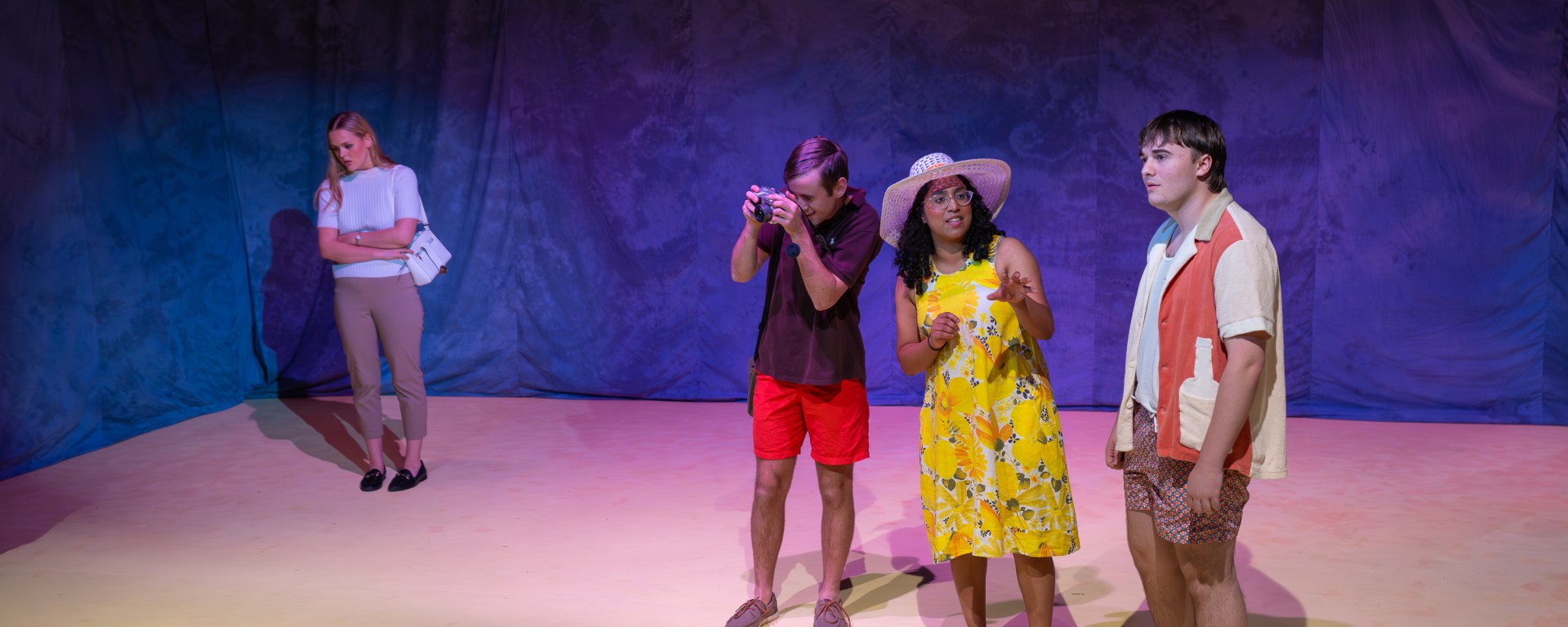
Tom’s overprotective parents, Vic (Thimuthu Dassanayake) and Harry (Will Goldmann), on the other hand, are struggling immigrants who are trying too hard to have a happy holiday like any other family, despite their financial hardships.
Amid all the familial chaos are Leong and Jackson, giving a convincing portrayal of two ordinary teenagers, navigating the uncertainty of teenage relationships. Their interactions are characterised by the hesitant gestures and awkward dialogue of teen rom coms, a world away from the tumultuous adult world around them.
The use of choreography and physical theatre by Konon Kuboi was also very effective in drawing the thin line between the real and theatrical world. From the idyllic pagan dance in Midsummer Night’s Dream to the vibrant ‘60s-inspired moves to Coral’s dance-overlayed trauma sequence, Kuboi enmeshed the two realms to create a surreal world that bites back on its own illusion.
Costuming by Kirra O’Keefe also plays a large part in situating the show, setting the era (with the vibrant, colourful hippie robes and print beach shirts) and the social classes (the rigid, corporate headmaster’s suit and Gwen’s chic upper-middle class outfit) of the characters. The costume change of Coral from the prim, restricting housewife dress to the free-flowing hippie robe also effectively conveys her liberation. She is no longer the aesthetic image of the happy wife, instead she is now the artist (even believed to be an artist by the other characters who no longer recognise her), with the agency to create her own art.

A highlight is the picturesque scene created by set designers Marni McCubbin, Alexandria Sagripanti and Isla Hickey. The simple, staged backdrop of the overly fluffy clouds is deftly adjusted for different scenes by movements of the curtain. This, coupled with the reuse of props by the three families, makes the characters in the show appear almost like actors performing in a show-within-a-show.
However, the storm that ravages the picturesque scene in the act two opening, brutally sabotaging the curtain, also symbolically ripped away the characters’ masks. The storm blew away the cover and washed up onshore all the issues the characters tried to bury away. Tom is revealed to be suffering from leukaemia with limited time to live. Gwen and Jim are grappling with their depressing pasts and fear the alienation and loss of their daughter. Coral finally drops her facade, escaping from her husband to embrace freedom.
In a heart-breaking scene that blurs reality with fiction, Tom performs his final show, sending a touching message to the audience, and his family, of confronting the inevitability of morality and the importance of letting go. This is ensued by a powerful sequence of physical theatre enhanced by resonant sound and lighting designs by Alex Aidt, Leler Dai, Madeleine Willshire, Isabel Betts, Robbie Tatham, who created a dreamlike sequence as the characters move about the stage in a trance, picking up the pieces and trying to grapple with Tom’s sudden implied death depicted by a haunting shade of red lighting on the side stage where Leong last exited.
Pickering and Stripp created an emotional rollercoaster, taking the audience from light-hearted moments of hilarity and absurdity to confronting, moving moments of grief and trauma. Through their carefully executed directions, they managed to seamlessly weave together the light and shade of Away’s highly difficult script.
MUST’s Away is a masterpiece of theatre, imbued with strong direction, powerful emotive performances and carefully crafted staging that revels in its own theatrics. While the characters and we as the audience might wish for the summer break to be a time of rest and relaxation, of escaping to the beach where all our problems will vanish, 1960s Australia is not the magical world of a Shakespearean comedy. There are moments of joy and moments of pain, and conflict is riddled in almost every aspect of daily life. It is inescapable. Away meditates on the necessity of confronting fear and heartbreak and making the most out of life. As Roy puts it, “that’s what history is, picking things up and moving on.”
Monash University Student Theatre’s Away by Michael Gow played May 15th – 24th at the MUST Space.
JESSICA FANWONG (she/her) is a Naarm/Melbourne based writer, theatremaker and creative arts enthusiast currently studying Masters in Arts and Cultural Management. Her work can be found on Farrago and the independent theatre scene.
EMMA PARFITT (she/her) is the Dialog’s head editor and has written Dialog reviews alongside studying towards her science degree for the past two years. She is a production manager, stage manager and producer on the Melbourne indie theatre scene and a veteran of student theatre at Union House Theatre.
The Dialog is supported by Union House Theatre.
 The Dialog