

First performed in 1978, Betrayal paints the picture of an affair over the course of nine years in reverse chronological order, from its resolution to its inception. We were bounced between the three characters, following the affair between Emma (Michaela Bedel) and Jerry (Gabriel Partington) who attempt to keep Emma’s husband and Jerry’s longest friend Robert (Heath Ivey-Law) none the wiser. Simple yet meticulous, Thursday’s Child Theatre puts forward a new look into deceit and lies and their felt necessity.
The restraint Bedel brings to Emma is gut wrenching to watch as I saw these men and their incompetencies through her eyes, exposing every little way in which they fail her. It’s always a difficult job to perform an older text where you can feel the time period in the lack of agency gifted to female characters, but Bedel manages to gift us with a sense of urgency and doom that Emma reckons with and yet can’t quite find herself escaping.
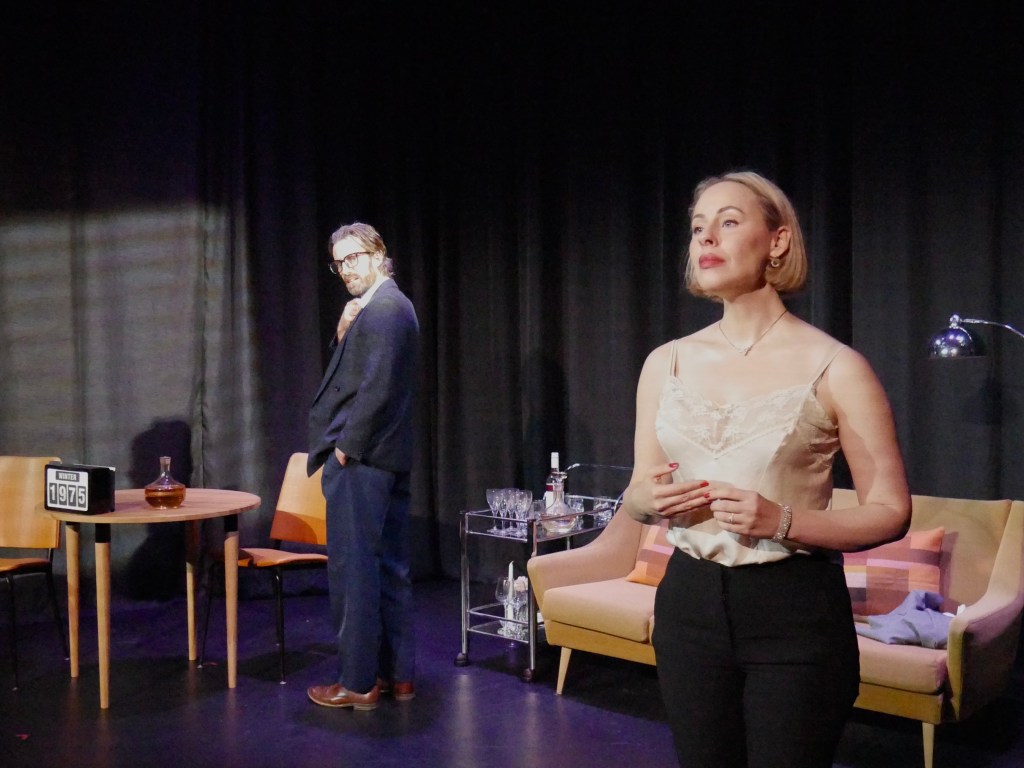
Ivey-Law oozes dangerous charisma as Robert, being one of the most self-assured characters of the show despite suffering disloyalty from both his wife and best friend. His layered anger is meticulously planted and peeled back through the show until we get to see the ugly yet calculated wrath he is capable of. The effortless tension he brought when acting against Partington and Bedel brought the room to a stillness as we waited to hear what guilt inducing remark he’d casually throw in ring.
Pathetic yet endearing, Partington brings the needed humour to the play, letting us laugh at both his earnestness and body that seems to fling and drape itself across the stage and furniture alike from the slightest push. Jerry’s intensity–from his anxiety to his arousal–was matched perfectly by Partington’s energy and largeness that contrasted against his controlled counterparts, exposing Jerry as the often-deluded weak link.

Bringing a stylised and exciting directorial approach to Betrayal, Baring exposes the nuance in the script to make the text and the actors pop. To hone in on the idea of performativity within an affair, Baring had the actors start facing the audience, barely allowing a glance to each other until their real thoughts began to spill. As the tension grew between the messy internal and curated external, the actors grew to reach and look for each other, no longer presenting themselves stiffly. The blocking therefore had a satisfying through-thread that would have allowed us to understand the content of each scene without a single word being spoken.
There are a few moments that do disrupt the momentum of the show, such as blackouts that could have been omitted and the script’s unfortunate choice of having a waiter appear for one scene. This hurdle is a distracting part of the show that did break the built-up tension and pacing nevertheless.
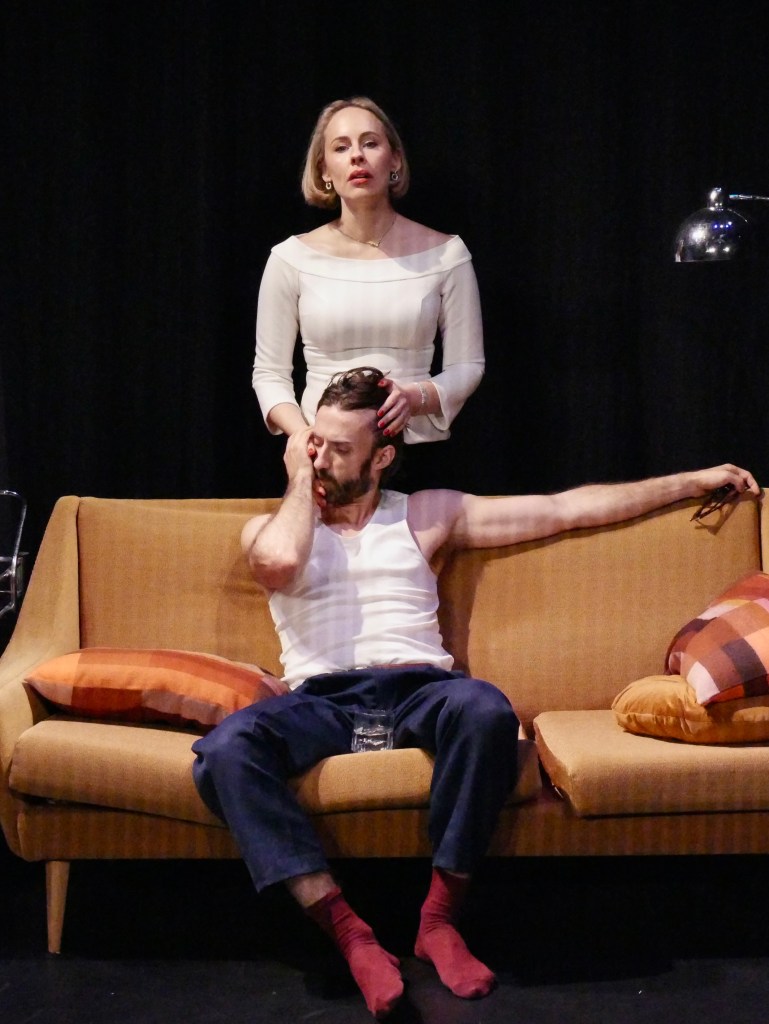
The set (Ella Firns) of shifting and transparent curtains did well to add to the symbolic effect, starting the show once more with the curtains shut and the actors in front, not allowing us into their personal history. The curtains begin to open as the characters and the past do, until we end on the other side of the coin, shut out from the scene that happens behind closed doors.
Betrayal did a remarkable job of showcasing the range and skill of these actors, as well as bringing empathy to a forever controversial situation that many pretend to know nothing about. When I next hear of cheating and affairs I’ll wonder where they fit in the tapestry of mistakes these characters fell prey to and wonder if I ever could have caught the signs of what happened behind closed curtains.
Thursday’s Child Theatre’s Betrayal by Harold Pinter plays at Chapel Off Chapel until May 25th.
BRONTE LEMAIRE (any) is a writer and theatre maker who loves witnessing what emerging artists can achieve. Bronte loves analysing and picking apart what makes art work and function (or not!) in order to learn and steal some inspiration for herself.
EMMA PARFITT (she/her) is the Dialog’s head editor and has written Dialog reviews alongside studying towards her science degree for the past two years. She is a production manager, stage manager and producer on the Melbourne indie theatre scene and a veteran of student theatre at Union House Theatre.
The Dialog is supported by Union House Theatre.
 The Dialog