

Reviewed by: Mya Helou
Edited by: Lola Sargasso
Walking into the theatre, it was clear that this would not be your average Romeo and Juliet production. As the curtains parted for the prologue, 70s style disco-funk pounded and you just couldn’t help but bop along as a somewhat bare but elegantly draped set was revealed. The prologue contained even more surprise, as we learned that this iteration takes place in “fair Melbourne,” strong Aussie accents garnering a chuckle from the audience. All this combined to wonderfully set the tone for the rest of the play: groovy, humourous, and exceedingly well thought out.

As the bulk of the play begins, the dedication to Shakespearean language is immediately evident. The choice to modernise the setting yet retain the original play script is a bold one, but one the cast more than pulls off. The use of contemporary mannerism, clothing, and vocal inflection in combination with the near unflinching delivery of Elizabethan dialect far from confuses the context, rather it made the language more understandable and the simple set more extravagant – a testament to director Cosima Gilbert’s and assistant director Narii Hamill Salmon’s attention to detail.
With very, very few slip ups in language, the care each actor took with their character was evident. The choice to have Romeo (Indra Liyan) be dorkier and more excited rather than debonair or intense worked well to communicate the childish innocence of his love before the tragedy strikes, a characterisation wonderfully performed by Liyan. Innocence, however, is best exemplified by Hannah Campbell’s Juliet, not only in her well-thought-out white costuming (by Ellie Dean), but in her persistent naive and wistful nature throughout. A particularly notable shift in characterisation is Aaron Wilson’s Friar Lawrence, who is hippy-ified to match the 70s setting. His new-found “peace and love” persona adds dimension to his support of Romeo and Juliets union, while having the added benefit of earning a hearty chuckle each time he spoke.

The balancing of comedy and tragedy so prevalent in Shakespeare is handled with extreme care here, such as with Benvolio (Gabs Rota) and Mercutio’s (Jack Straker) dynamic duo, displaying cracking humour up to and even including the point of death. Lord and Lady Capulet (Lochie Dew and Isobel Connor-Smithyman) take a more delegated approach, with Lord Capulet’s smarmy, seemingly coked out aggression adding a more comedic lilt (while still nailing the more serious expressions of anger), whereas Lady Capulet sells us the tightly wound mother dissolving into grief devastatingly well.
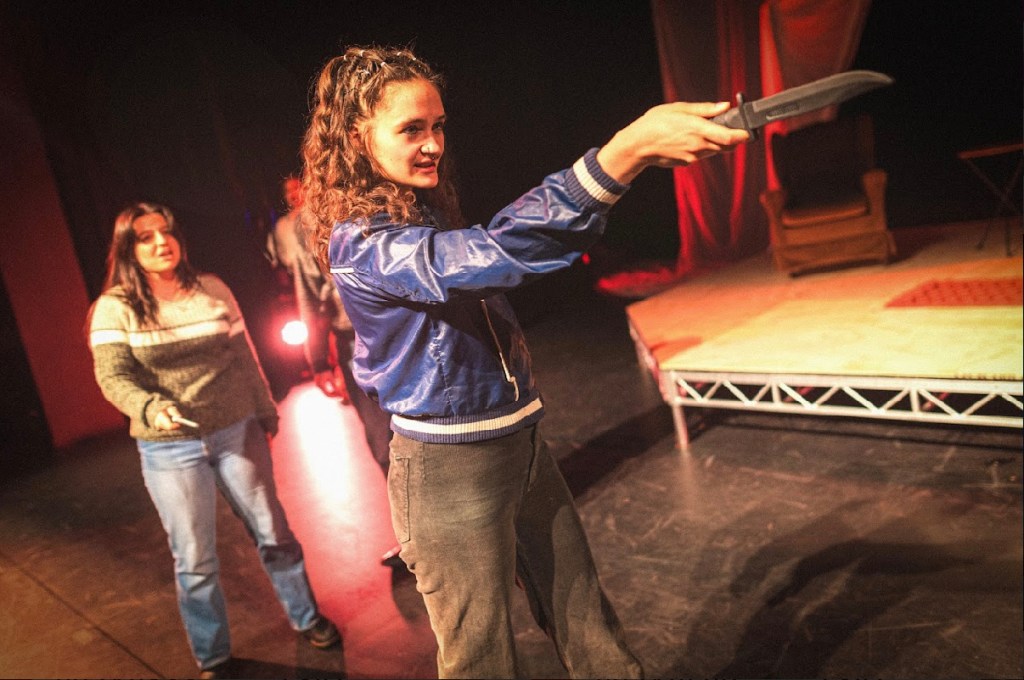
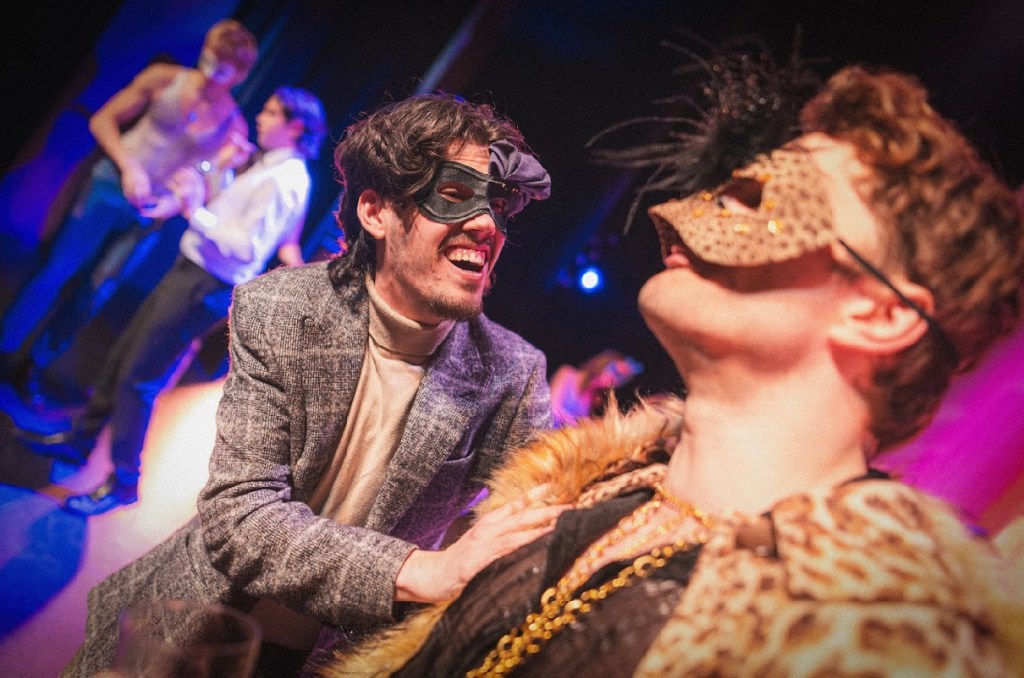

Any Shakespeare play would be remiss without a top-notch chorus, something this production certainly had. Each actor had their own moment to stand out and shine, their dedication evident in their humour which worked to round out the play beautifully.
Though the 70s setting seems inconsequential to the plot itself, this fact does not make the play any less enjoyable. Personally, I feel Romeo and Juliet doesn’t need to say anything new anymore, it simply needs to be fun, fresh, and entertaining. Considering the funky music, groovy costumes, and incredible acting, I’d say this Barkly Theatre production certainly pulled it off – and with style.
Romeo and Juliet played September 19th – 21st 2024 at the Union Theatre.
The Dialog is supported by Union House Theatre.
 The Dialog