
Reviewed by: Dempsey Doyle
Baz Luhrmann’s 2013 adaptation of the F. Scott Fitzgerald narrative classic The Great Gatsby is not only an ambitious, aesthetically stunning filmic experience, but an ode to the lavish yet licentious times of the Roaring Twenties. Considered to be both a cinematic and literary masterpiece by many, Trinity College rose to the trials that come with portraying the tale’s melancholic merriment.
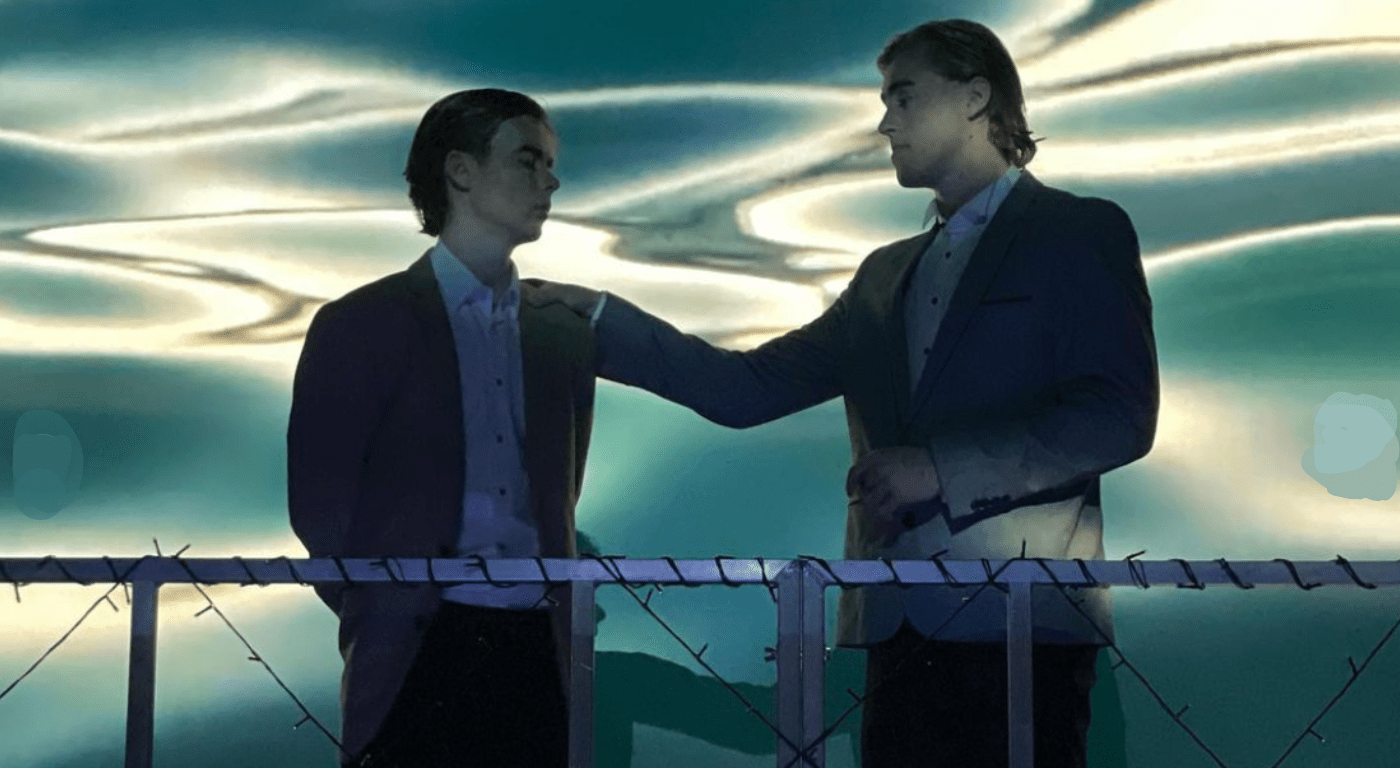
The Great Gatsby delves into the lives of New York’s most wealthy through the eyes of Midwesterner Nick Carroway (Francis Heath), who narrates his fascination and friendship with his mysterious neighbor, Jay Gatsby (James Bourke). Despite being a self-made millionaire with a penchant for extravagant parties and expensive cars, Gatsby only yearns for one possession: the long-lost love of Nick’s cousin, Daisy Buchanan (Tallulah Thorrowgood). However, as Nick is roped into a scheme to reunite the duo, the story begins to explore how hollow materialism and unbridled ambitions formulate the dark realities of the American Dream, ultimately culminating in a tragic ending. While this play adaptation, written by Gary Peterson, is based on Fitzgerald’s novel version of the tale, director Georgie Ferreria and the rest of Trinity’s creative team accompany Peterson’s script with elements from the aforementioned 2013 film- a decision which enhanced both its storytelling and entertainment value.
Choices made by the lighting and sound designers work together well to engross the audience. There was clear collaboration within the design team of Alex White, Rianna Tilbrook, Sam Murry and Oscar Mitter, choices which worked well together to engross the audience. This was especially evident in the show’s most pivotal scenes, such as those set on the beach of Gatsby’s mansion. The unnervingly dark lighting, broken only by a green spotlight to symbolize a light from Daisy’s dock, was applied in combination with the calming sounds of waves and seagulls to create an eerie setting, successfully expressing the depressing unattainability of the American Dream. The team’s lighting choices were a particular standout, as they could also create contrastingly flashy atmospheres. During each and every one Gatsby’s parties, I couldn’t help but admire the charming arrangement of fairy lights adorning the scaffolding and the clever incorporation of the Guild Theatre’s disco ball. These scenes were captivating and four-dimensional, that I wanted to get up from my seat and dance!
Contrarily, the employment of both modern tracks and 20’s jazz tunes throughout was a double-edged sword. I could appreciate these opposing choices for themselves: the old, staticky jazz, mostly heard during scene changes, shielded the audience from awkward silences between transitions, and engaged viewers in the production’s Jazz Age setting. Meanwhile, the modern melodies paid great homage to the film’s most iconic moments, such as when Lana Del Ray’s ‘Young and Beautiful’ played over Daisy tour of Gatsby’s mansion, and when Fergie’s ‘A Little Party Never Killed Nobody’ backgrounded Gatsby’s big bashes. Nevertheless, I found the combination of genres to be slightly more clunky in a play than a film, as the contemporary music felt almost disruptive to the show’s immersive vigour.
The costumes, however, were perfectly reflective of Gatsby’s flapper era, as the lineup of Bella Ladbrook, Miles Tawns, Poppy Glenning, Sophie Courtney, Thais Aubault and Tom Reith fitted the cast in fringed dresses and classy suits which glittered and danced as they partied around the stage. In particular, I found the sultry Myrtle’s (Emma-Rose Neil) poofy red dress to be absolutely gorgeous and reflective of the times, especially when paired with her over-the-top persona, and an overgenerous boa and gloves.
The set design team of Isabella Smith, Nicolai Skogstad, Amity Jacobsen and Peilin Feng accompanied the other elements decently, with few pieces save for chairs, tables, and- most strikingly- bunches upon bunches of hanging white roses, which added a dreamy ambiance to the show’s most romantic moments. I believe this aspect of production design was the weakest of the bunch due to its minimalism within such a maximalist show, but the crew’s originality still shone in their usage of the Guild’s projector. In using moving clips depicting backdrops such as running water and passing roads, they created pleasant scenery where background pieces couldn’t. Furthermore, the projections of the ‘The Eyes of Dr TJ Eckleburg’ painting, yet another subtle nod to the book and film, augmented more desolate scenes by creating an omnipresent feeling that the characters were being watchfully scrutinized for their decisions throughout the plot.
Finally, I think it is absolutely worth acknowledging the cast’s ability to top off the work done by the crew. While I did notice American accents being dropped at times, it was something I could easily disregard as nothing more than nerves, as interesting life was breathed into each and every one of this story’s iconic characters. Bourke’s portrayal of Gatsby was akin to that of Lin-Manuel Miranda’s Hamilton: confident and lively, yet enigmatic and hungry. His exchanges with Heath’s awkward but expectant interpretation of Nick were heartwarming to watch, as he acted as Gatsby’s one true confidant throughout the show. Opposingly, Bourke’s physical and verbal chemistry with Thorrowgood as Daisy gradually tumbled from tranquil to tense. This was a process which I thoroughly enjoyed watching, as Thorrowgood did a fascinating job of exposing the imperfections to Daisy’s seemingly perfect facade.
More minor characters also had memorable performances: Hamish Devonshire’s characterization of mechanic-turned-murderer Wilson was just gawky enough for him to appear slightly unhinged, and
Sam Prins’ Meyer Wolfsheim was impressively aggressive in his physical movements- so much so
that he shook and almost shattered a few water glasses by smashing his fist on a table. Director
Ferreria also took advantage of the experienced dancers in her possession by choreographing dance
numbers for Gatsby’s parties. In particular, watching Josh Roberts lift and cartwheel Izzy Fanning
across the room as the audience cheered and clapped for them truly made me feel like I was in the
midst of a fiery festivity.
A personal standout for me, however, was Katya Ewing’s performance as Jordan Baker. Truth be told, prior to watching this production, I had no reason to watch Lurhrmann’s film version of Gatsby, but had read the Fitzgerald novel. After having watched it, I personally felt that the film removed much of Jordan’s character and involvement in the plot, making her appearance tepid to the point that the film could have removed her, and it would have made no difference to the story. However, in Trinity’s show, Jordan is much more plot involved. From her poised and self-assured conduct, to her keenness to set Gatsby and Daisy up, to her pleasant romantic interactions with Heath (yet another key item that was cut from the film), Ewing absolutely succeeded at revitalizing her character.
Overall, Trinity’s production was a lovely testament to the stories retold by Luhrmann and Fitzgerald,
and they did a commendable job of leaning into its themes, inspirations, and challenges. Cheers to these not-so-old sports for putting on a fun performance!
 The Dialog