
REVIEW BY ZENA WANG
EDITED BY EMMA PARFITT
English version below.
《晚安,莉莉安(Bonne Nuit, Lilian)》由 元素剧团(Element Theatre Company)出品,Carol Song(及其团队)执导,剧本由 Fleur Gao 创作。这是一部极具野心的当代改编作品,灵感来源于Charles Dickens的《圣诞颂歌(A Christmas Carol)》和刘添祺(Tianqi Liu)的《巴西(Brazil)》。整部剧以“双重叙事”结构展开——上半场重访狄更斯笔下的温情与救赎,下半场则转向对科技时代孤独与爱的反思。导演通过复古与未来两种空间的对照,探讨情感在时间与机械之间的延展,营造出一种甜中带苦的剧场体验。
观众入场时,两位演员已在舞台上轻声移动,仿佛故事早在我们到来之前便已开始。在故事开场后观众将会得知,他们是斯克鲁奇(金昱成 饰)与他的职员鲍勃(张奕洲 饰)。柔和的爵士圣诞曲与星形蜡烛让人瞬间置身九十年代的冬夜——温暖、微微忧伤,又带着某种熟悉的惆怅。剧情从斯克鲁奇侄子来拜展开,服装设计(Gloria Li 及其团队)精准地捕捉了那个年代的质感:鲍勃的针织衫、侄子的皮夹克、斯克鲁奇的翻毛西装与皮鞋,不同色调与质地仿佛都在讲述各自的故事。即使一名演员在不同场景中分饰多角,服装的线条与色彩变化也让角色转变自然可信。唯一略显突兀的是几位男性角色的韩式烫发,与整体复古氛围稍有不协调。
故事讲述斯克鲁奇与亡友(李宇轩 饰)及三位圣诞幽灵(孙蕴娴、胡天慧、陆向冰 饰)的相遇,她们引领他重新发现善意与人性。场景转换由一组装扮成雪人和圣诞树的群演完成——既俏皮又可爱,让节奏保持轻盈。第一个登场的“过去的幽灵”(孙蕴娴 饰)带领斯克鲁奇回望童年的孤独与年轻时的爱情。场景温情而怀旧,既有青春的甜蜜,也有笨拙的酸涩。孙蕴娴的表演充满能量与肢体表现力,她的灵动与斯克鲁奇的沉稳形成鲜明对比。不过,她过高的音调和偏快的语速让台词略显仓促;情绪主导了表演,而非通过表演阐释情绪,使台词反而模糊不清。这种节奏的不平衡在与其他角色对戏时尤为明显。
随后,“现在的幽灵”(胡天慧 饰)带斯克鲁奇来到鲍勃简陋却温馨的家。音效设计(Agnes Xiong 及团队)在空间塑造上发挥了关键作用。寒冷的户外与温暖的室内形成鲜明对比,简单的环境音有效地引导观众的想象,让不同场景在有限舞台上自然衔接。全剧的选曲从始而终,基调细腻轻盈,但不流于甜腻,同时带着一点蓝调式的柔和。音乐的串联让整个故事氛围始终温暖而连贯。
最后登场的“未来的幽灵”(陆向冰 饰)仿佛一位摇滚明星。她身着皮夹克、复古 T 恤、爆炸头,占卜师般的语调与松弛的节奏感,以及模仿摇滚歌手的动作为舞台带来几分略带脱线的幽默。斯克鲁奇与她的互动堪称对《圣诞颂歌》最独特的改编之一:触动他心底的并非自身的死亡,而是鲍勃妹妹去世的消息。这样的改写将主题从原本的“宗教式救赎”转向“被掩埋的亲情”,并与前两位幽灵的情感线索形成呼应,通过对人性和良知的呼唤,使斯克鲁奇的转变显得真切而动人。唯一稍显遗憾的是结尾铃铛表演的节奏略长,极大程度地削弱了原本的情感积累。
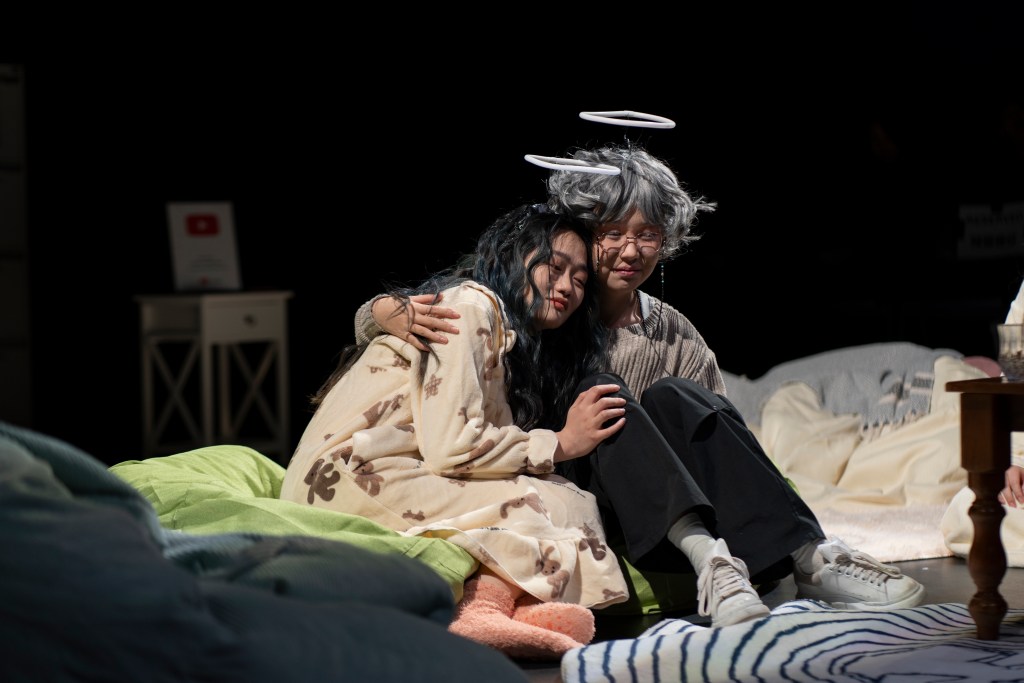
在Guild Theatre中建立三面观众席设计非常巧妙。除正面外,两侧也设有座位,让观众能从不同角度享受这部话剧。当斯克鲁奇被幽灵们带往过去或未来时,他会坐入观众席,仿佛与我们一同观看他记忆的重演。而在这群观众中,还坐着第二幕的主角——莉莉安(单嘉彩、孙蕴娴饰),她正与外婆一起观看《圣诞颂歌》。直到后来观众才意识到,上半场其实是她记忆中的录像,而我们也一直在通过她的视角“观看”。
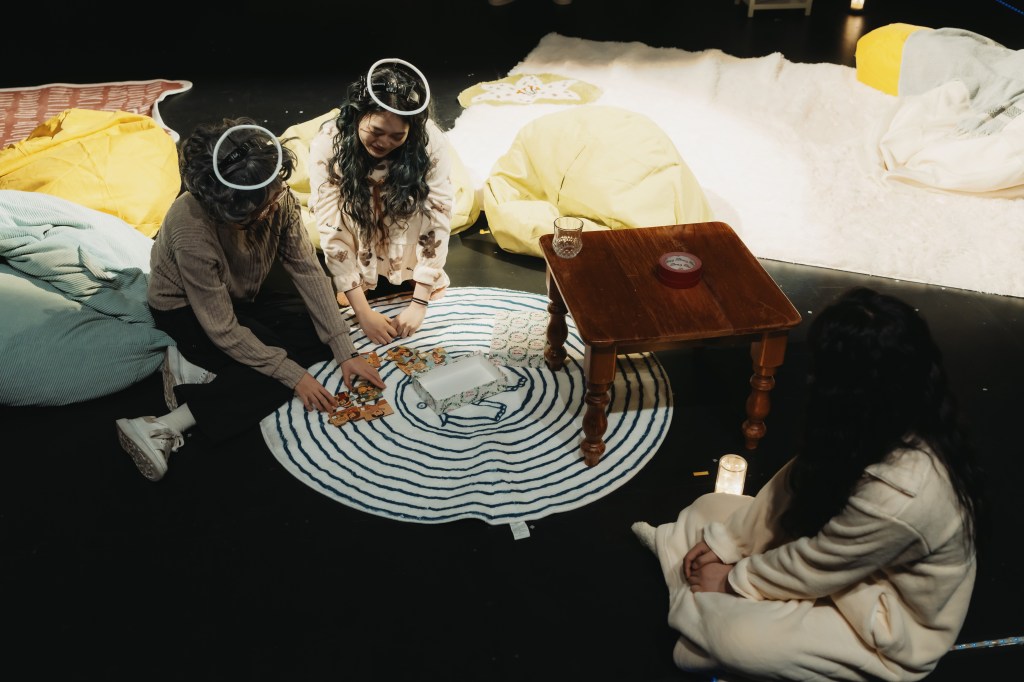
当场景从斯克鲁奇的世界切换至莉莉安的卧室,爵士乐再次响起,带着温度的旋律轻轻延续。莉莉安曾是一名 YouTuber,在登山事故后成为植物人,由一个机器人(陆向冰 饰)照料。舞美设计(Helen Zhang、Ying Liu 及团队)用豆袋沙发、地毯与柔和的材质营造出一种温暖的空间。舞台绘景的色彩与布料层次带有现代感,与上半场的复古形成对比。女性角色的形象各具能量:快递员(胡天慧 饰)的黑色冲锋衣与无指手套显示干练,苏菲(Rika Ren 饰)的造型则体现出雷厉风行的职业女性风格。
单嘉彩的表演极为动人,令人印象深刻。成为植物人五年后,莉莉安第一次借助科技“醒来”,从迟疑、惊讶到喜悦与试探,她在缓慢呼吸、试图坐起的过程中层次丰富。表演克制却饱含情绪,即使没有台词,也充分传达了复杂感受——这种沉默瞬间抓住了观众的注意力与共情。
莉莉安的父母早已抛弃她,只留下一个老旧、无联网的机器人照料她。但她的好友苏菲仍旧坚持每周探望,她的陪伴成了全剧最温柔的情感线之一。家庭的缺席与友情的温度交织,成为下半场的情感核心之一。莉莉安的外婆(胡天慧 饰)在去世前录下视频,由苏菲在圣诞节播放给她——那一刻的真挚让人无不动容。在两人的测谎游戏中,苏菲透露了自己怀孕的消息。她坚强而温暖,也会在朋友面前流露脆弱——担心自己无法成为好母亲,因为她连植物都养不活。莉莉安虽自身仍卧床,却展现出善于安慰和鼓励他人的一面。她安慰苏菲的焦虑,就像她曾经鼓励快递员露露掌握自己的人生那样。然而,观众也在此时得知她内心的孤独与创伤依然未解。
告别苏菲后,莉莉安意外收到十年前写给未来自己的信。她与机器人一同朗读,回望青春的憧憬、对外婆的怀念与对痛苦的逃避。即使不断对自己说“我知道你们都在”,疑虑仍在暗暗滋生——她不确定自己还能撑多久。父母的争吵录音成了压垮她的最后一根稻草:那些血缘上的亲人称她是婚姻失败的累赘,甚至希望她去死。愤怒、悲伤与孤立交织成彻底的绝望,她最终请求机器人关闭维生系统。
陆向冰与单嘉彩的表演都极具感染力。由陆向冰分饰的两个角色对比鲜明:冷静无情的机器人与夸张滑稽的“未来幽灵”。可惜结尾节奏过慢:虽然情绪积累充分,但缺乏恰当的节奏与张力,导致观众情绪被拖疲,高潮不够集中。最终,机器人拒绝执行莉莉安的最高指令,选择自我关闭,只留下那句信息:“希望你能找到真正的幸福。” 然而,莉莉安与机器人的情感铺垫不够,使关于“家人与爱的形式”的思考不自觉回到“每个灵魂最终都是孤立无援的,真正的救赎唯有自身”的命题,这种表达与全剧强调的爱、家庭、友情主题完全背离。尤其结尾字幕对观众打出“你会拥有『真正的幸福』”,使那些温馨积极的鼓励与情感连接反而变得讽刺——凸显痛苦、孤独与失落的本质。
走出剧场时,我注意到入场时发放的那张票根——画着两个人走在雪地上,雪下叠印着孩子的手写日记。直到那一刻我才明白,那是莉莉安童年与外婆一起看《圣诞颂歌(A Christmas Carol)》的记忆。这个小小的细节,为整部作品画下了温柔而苦涩的注脚。
总体而言,《晚安,莉莉安(Bonne Nuit, Lilian)》是一部大胆又细腻的作品,它在“过去”与“未来”之间搭起桥梁,用反思与情感编织出一段关于爱与孤独的故事。尽管节奏上仍有打磨空间,但整部作品真诚、充满质感,也让人久久难以忘怀。
Bonne Nuit, Lilian, presented by Element Theatre Company and directed by Carol Song (and her team) with a script by Fleur Gao, is an ambitious contemporary adaptation inspired by Charles Dickens’ A Christmas Carol and Liu Tianqi’s Brazil. The play unfolds in a dual-narrative structure — the first half revisiting the warmth and redemption of Dickens’ classic, and the second turning toward a meditation on love and loneliness in the age of technology. Through the contrast of retro and futuristic settings, the directors explore how human emotion stretches across time and machinery, creating a bittersweet theatrical experience.
When audiences enter the theatre, two actors were already moving quietly on stage, as if the story had begun long before we arrived. They later turned out to be Scrooge (Jared Jin) and his clerk, Bob (Joey Zhang). The soft jazz version of Christmas carols and the white candles arranged in star shapes instantly transport me to a nostalgic 1990s winter evening — warm, a little melancholic, and oddly familiar. The play opens with Scrooge’s nephew (actor’s name) paying him a visit, inviting him to dinner. The costume design (Gloria Li and her team) beautifully captures that sense of time: Bob’s knitted jumper and shirt, the nephew’s worn leather jacket, and Scrooge’s suede suit and shoes each suggested a distinct social world and personality. The colour palette and textures themselves seems to tell small stories about who these people were. Even when the same actor took on multiple roles, the costume design made each transformation feel immediate and believable; a quick shift of silhouette or tone was enough to bring an entirely new character to life. One minor mismatch is in the hairstyling: the slick, modern, Korean styled perms for male characters clashed slightly with the nostalgic tone.
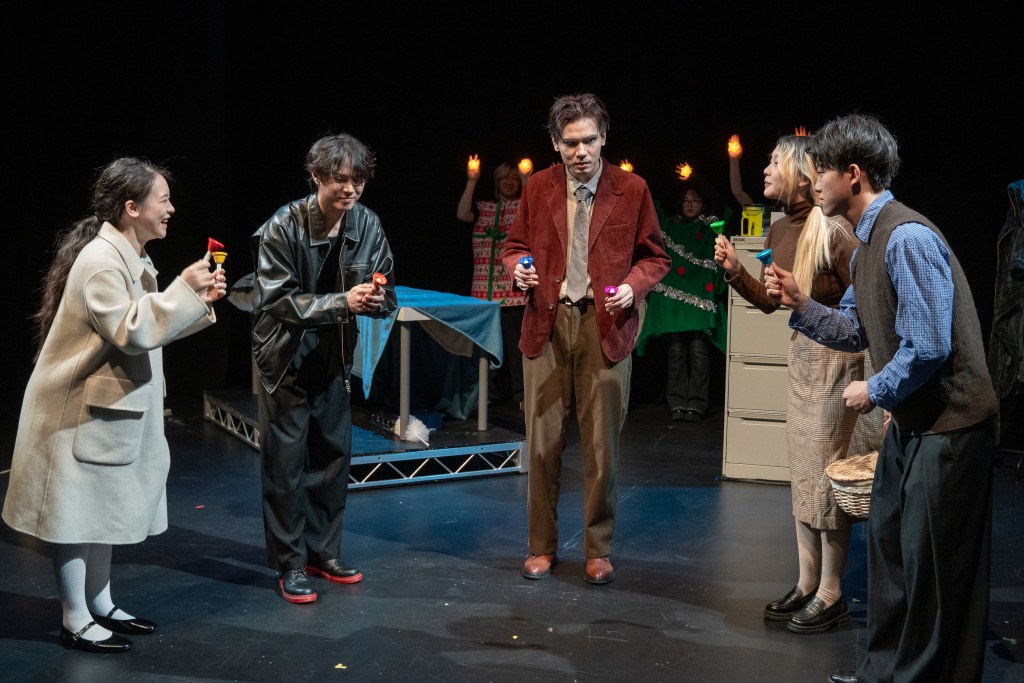
The story follows Scrooge’s encounter with his late business partner (David Li) and the three Christmas ghosts (Flora Hu, Ximena Sun, Icy Lu) who guide him on a journey of rediscovering kindness and humanity. The scene changes are handled by an ensemble dressed as snowmen and Christmas trees — a playful and charming touch that keeps the rhythm of the piece light and engaging. The first to appear is the Ghost of Christmas Past (Ximena Sun), who leads Scrooge through memories of his childhood loneliness and his youthful romance at an office Christmas party. The scene balances tenderness and quiet nostalgia, capturing both the sweetness and the awkwardness of young love. Ximena brings great energy to the role, but her high pitch and rapid delivery occasionally made the dialogue feel rushed. Her movements carry a lively rhythm that contrasts beautifully with Scrooge’s calm maturity. Her delivery seems entirely driven by emotion rather than letting the lines and performance express that emotion, which often made her dialogue difficult to hear clearly. This contrast became particularly noticeable in her exchanges with other characters, where the uneven pacing slightly disrupted the rhythm of the performance.
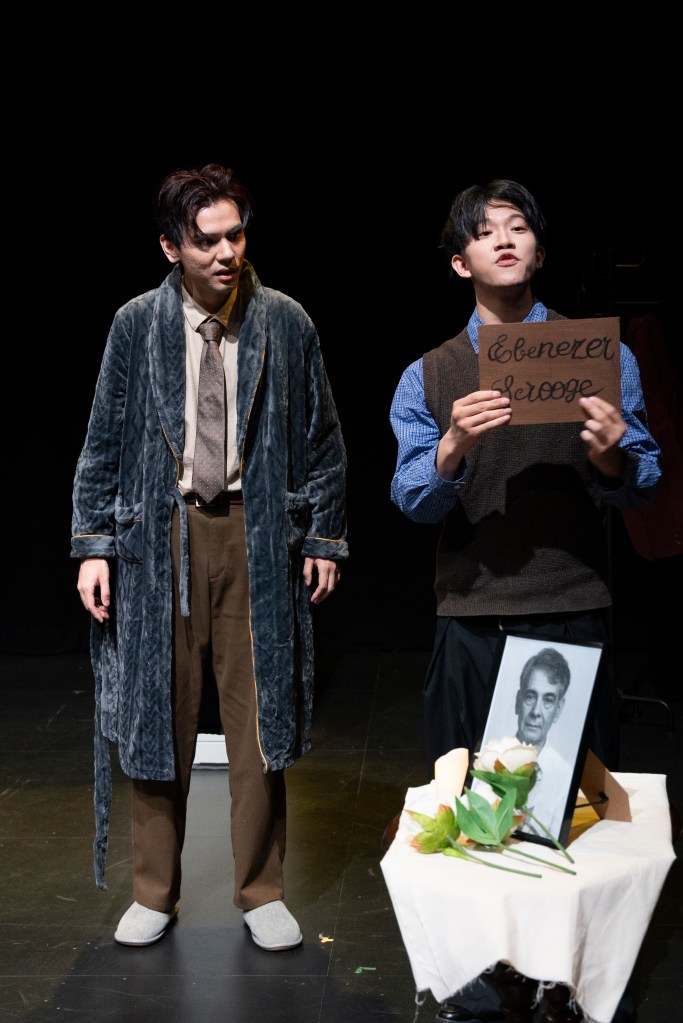
Later, the Ghost of Christmas Present (Flora Hu) brings Scrooge into Bob’s humble home — a space that radiates warmth despite its poverty. The simple yet precise sound design (Agens Xiong and her team) captured the contrast between the cold outdoors and the cozy interior. Simple yet well-crafted ambient effects effectively guided the audience’s imagination, especially during spatial transitions, allowing each scene to unfold seamlessly within the limited stage. The musical choices carried a consistent tonal warmth, light and fluid without feeling overly sentimental, touched with a subtle bluesy softness that evoked a sense of winter comfort.
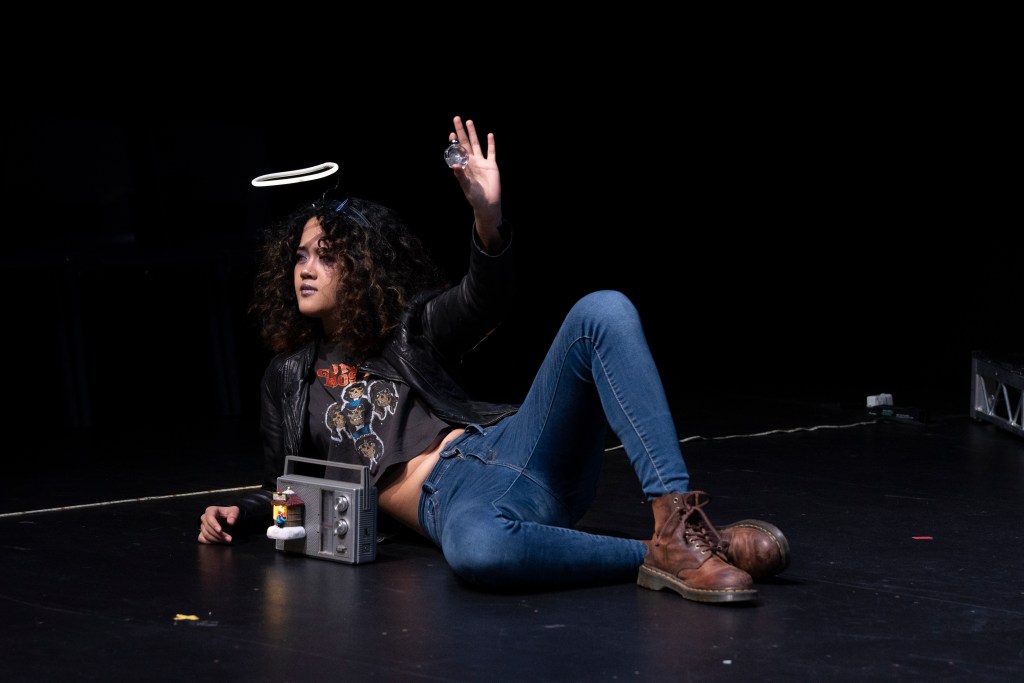
The final ghost, the Ghost of Christmas Yet to Come (Icy Lu), appeared like a classic rock star in a leather jacket, vintage T-shirt, and wild curls. Her fortune-teller-like cadence and loose, rhythmic movements brought a slightly unhinged sense of humour to the stage. Scrooge’s interaction with this ghost felt like one of the most distinctive reinterpretations of A Christmas Carol. Instead of confronting his own death, he is shaken by the news of Bob’s sister’s passing, a bold change that shifts the story’s focus from religious redemption to the rediscovery of buried familial love. This transformation connects beautifully with the emotional groundwork laid by the previous two ghosts, making Scrooge’s final awakening feel sincere and earned. The only moment that slightly broke the flow was the extended bell-ringing finale, which lingered longer than necessary and softened the emotional impact that had been carefully built.
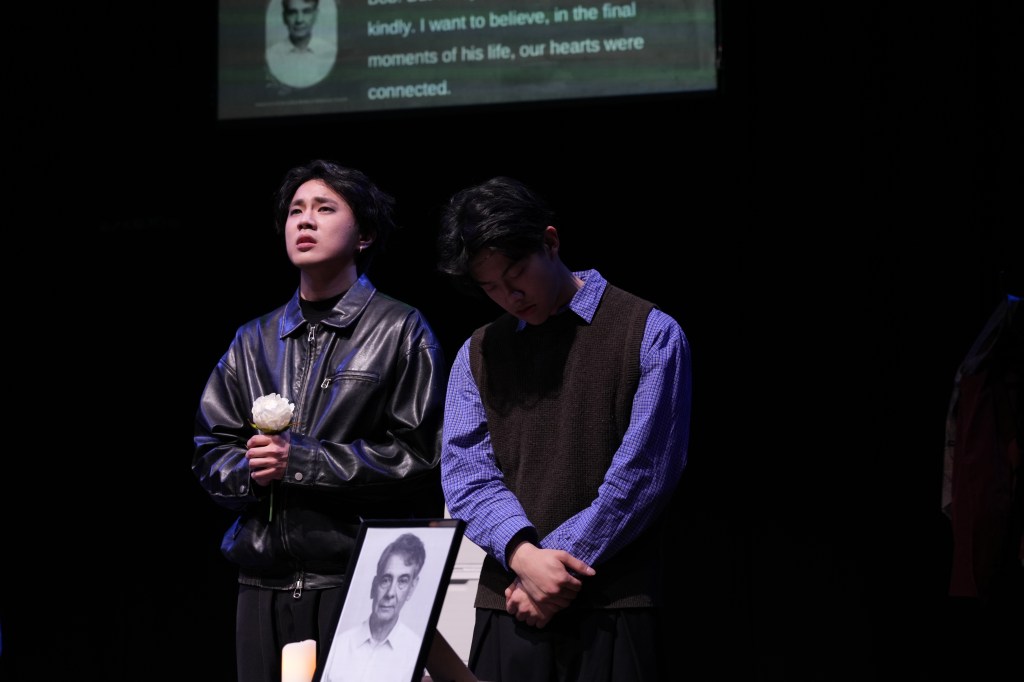
The Guild Theatre’s three-sided staging is particularly clever. In addition to the front rows, audience seats extended along both sides, allowing multiple perspectives. When Scrooge is transported through time, he sat among the side audiences, watching his memories unfold — as if he were one of us. Among those seated was Lilian (Iris Shan and Ximena Sun), the protagonist of the second act, watching A Christmas Carol with her grandmother. Only later do we realize that the first act exists inside her recorded memory, and we, too, have been watching through her eyes.
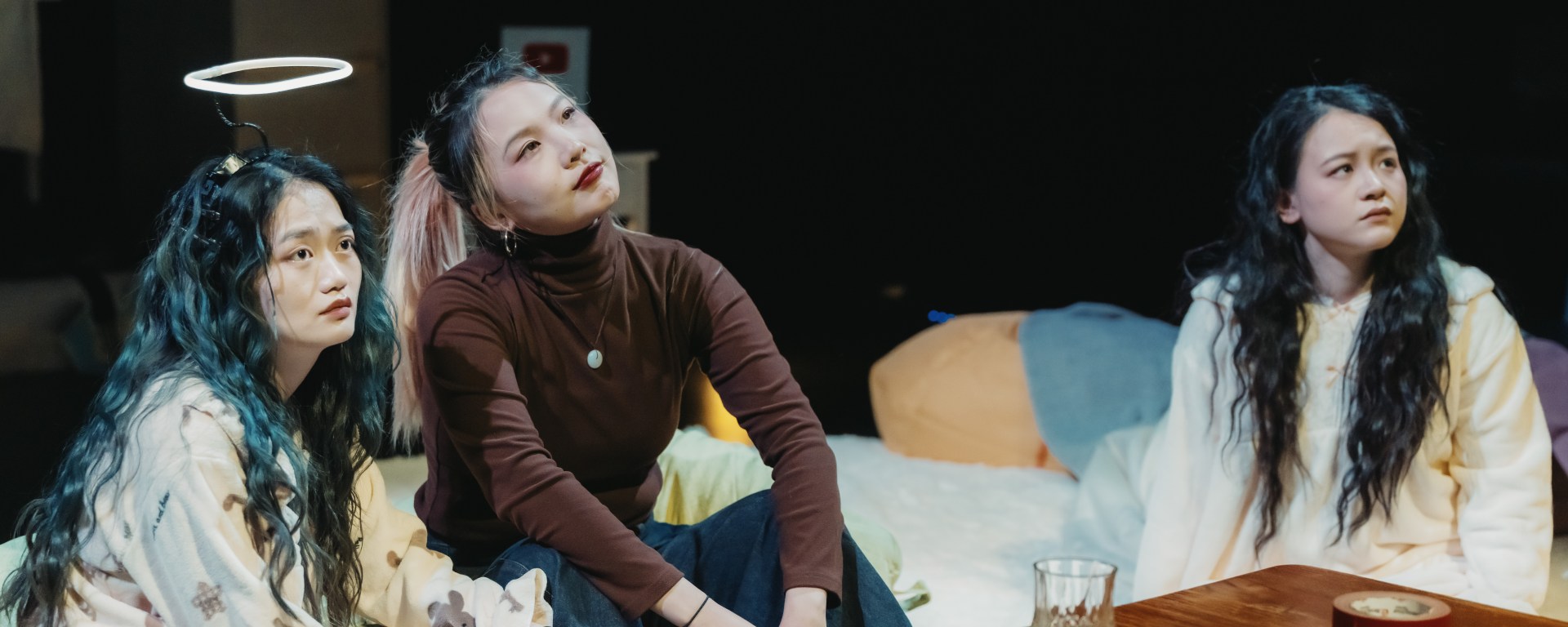
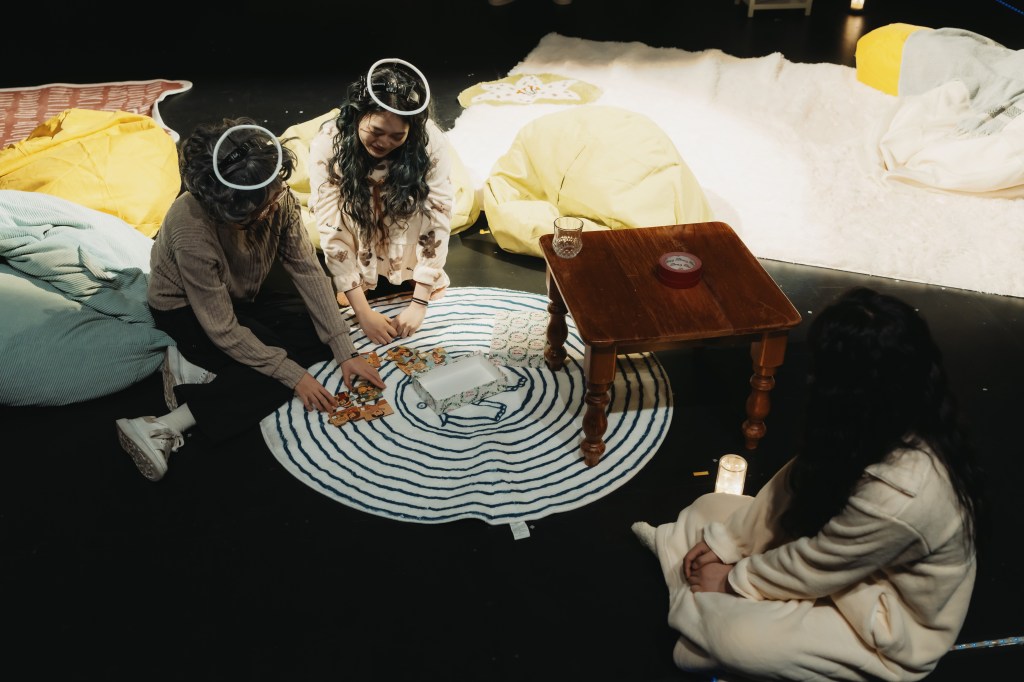
As the scene shifts from Scrooge’s world to Lilian’s, the lively jazz returns, carrying warmth into a completely different setting to a young woman’s bedroom. Lilian, once a YouTuber, became a vegetative patient after a mountain accident and now lives under the care of a robot (Icy Lu). The set (Helen Zhang, Ying Liu, and their team), filled with beanbags, carpets, and soft textures, glowed with comfort. The scenic art, with its modern colour choices and carefully layered fabric textures, added a fresh, contemporary tone that contrasted beautifully with the vintage atmosphere of the first act. The costume palette echoed this softness — fluffy pajamas and warm socks. Female characters here embodied diverse energies: the courier (Flora Hu) in a black jacket and fingerless gloves exuded practicality, while Lilian’s best friend Sophie (Rika Ren) appeared as a composed and determined professional.
Iris Shan delivered one of the most memorable performances. When Lilian gradually‘awakens’ after five years, from hesitation and wonder to cautious joy, she is conveyed through breath, gaze, and the smallest shifts of movement. Even without dialogue, she holds the entire audience’s attention.
Lilian’s parents have long withdrawn, leaving an outdated robot to care for her. Her friend Sophie (Rika Ren) visits every week, and that quiet persistence becomes one of the story’s most moving threads. The absence of family, intertwined with the tenderness of friendship and memory, forms the emotional core of the act. Lilian’s grandmother (Flora Hu), who passed away during her coma, had recorded messages before her death — one of which Sophie plays for her as a Christmas gift. The sincerity of that recorded love cuts straight to the heart. Also during Sophie and Lilian’s lighthearted lie-detector game, Sophie reveals her pregnancy and her fear of not being a good mother. Lilian, despite her paralysis, comforts her with humour and warmth. Yet beneath Lilian’s composure, loneliness and grief linger, giving these scenes a quiet ache.
After Sophie leaves, Lilian receives a letter she wrote to her future self ten years earlier. She read it with the robot, revisiting her teenage hopes, longing for her grandmother, and her fear of confronting pain. Even as she repeats, “I know you’re all with me,” doubt seeps in. She isn’t sure how much longer she can hold on. The recording of her parents’ arguments becomes the breaking point. Her family thaht bound to her by blood, speaking of her as a burden, even wishing for her death. Overwhelmed by anger, grief, and isolation, Lilian finally asks the robot to shut down her life-support system.
Both Lu’s robot and Shan’s Lilian are powerful performances. Icy Lu’s two roles, the emotionless robot and the flamboyant Future Ghost, stand in striking contrast. Still, the pacing toward the end felt slightly prolonged, and the emotional tension lost some momentum before the conclusion
However, in this adaptation, the relationship between Lilian and the robot feels underdeveloped, which causes the reflection on love and family to unintentionally shift toward a more solitary message, that in the end, everyone is alone, and salvation can only come from within. This idea sits uneasily against the play’s earlier emphasis on love, family, and friendship. The final line projected on the caption screen, ‘you will find real happiness’, therefore lands as painfully ironic, turning what might have been a comforting affirmation into a haunting reminder of loneliness, loss, and the fragility of human connection.
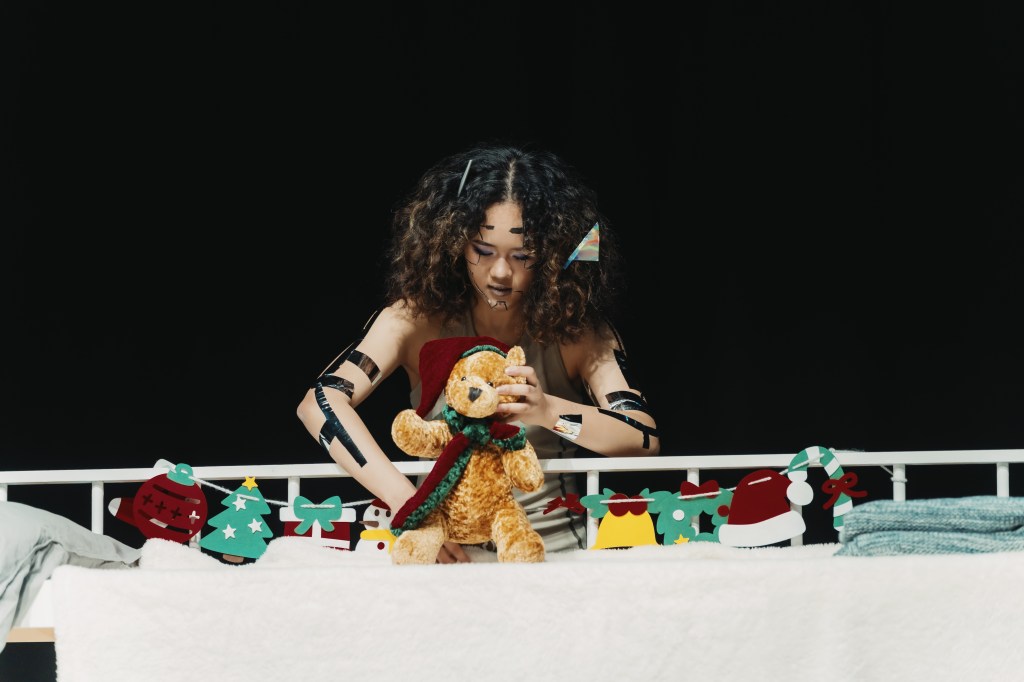
Upon exiting, I noticed the small, illustrated ticket handed out before the show: two figures walking through the snow, beneath which lay a child’s handwritten diary. Only then did I realise it depicted Lilian and her grandmother watching A Christmas Carol years ago, which is a quiet, nostalgic gesture that tied the story together.
Overall, Bonne Nuit, Lilian is a daring and tender piece that bridges the past and the future, combining sentimentality with reflection. Despite a few pacing issues, it radiates sincerity, emotional depth, and visual charm. It’s a great production that lingers in memory long after the lights fade.
Element Theatre Company’s Bonne Nuit, Lilian played October 9th – 12th at the Guild Theatre as part of the Melbourne Fringe Festival.
ZENA WANG is a student at the VCA with a strong interest in theatre and visual storytelling. She loves exploring the intersection of space, performance, and audience experience.
EMMA PARFITT (she/her) is the Dialog’s head editor and has written Dialog reviews alongside studying towards her science degree for the past two years. She is a production manager, stage manager and producer on the Melbourne indie theatre scene and a veteran of student theatre at Union House Theatre.
The Dialog is supported by Union House Theatre.
 The Dialog