
REVIEW BY TARAS SCURRY
EDITED BY RACHEL THORNBY
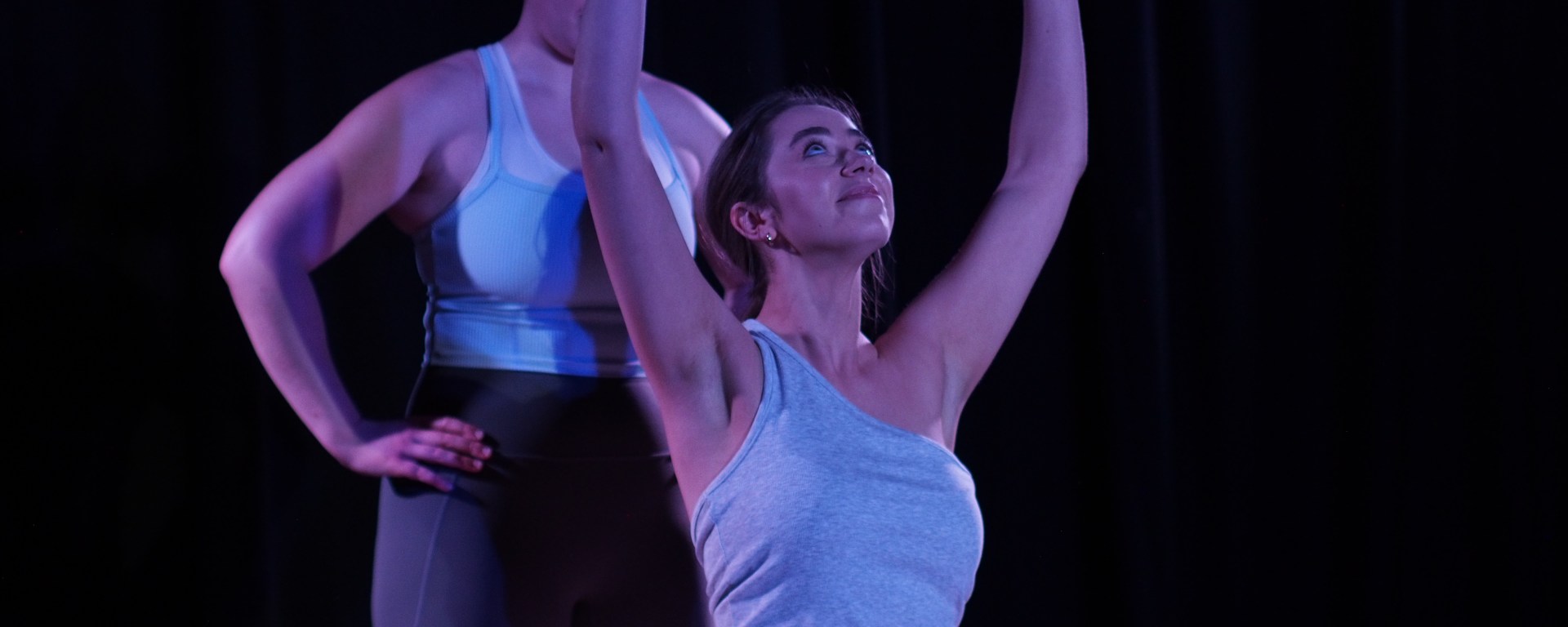
It was a consummate and well-executed display, a machine so to speak. It all started in a small and cosy theatre at the Meat Market as part of Melbourne’s Fringe Festival. Hyping up the diverse crowd of performatively dressed males and others, Brat blasted and then the lights dimmed turning a cool, nightclub-esque bluey-purple. And so, it was on, as Jaz Hosken playing Maddy (also performer/writer/producer) and Chloe McShane as Pip, introduced themselves to the stage, bringing director Bryan Shaw’s vision into the light.
The play begins with the glossy familiarity of chick-lit, drawing upon the conventions of the genre to create a warm and self-aware theatrical space. The Machine trades in the humour and rhythm of a feel-good film, using exaggerated character sketches and conversational comedy to invite the audience into its world. What keeps it from feeling lightweight, however, is the undertow of mental health, a theme that surfaces gently but persistently beneath the humour. Rather than allowing the show to drift entirely into the frivolous, this layer of seriousness grants it a subtle depth, anchoring the laughter in moments of sincerity.
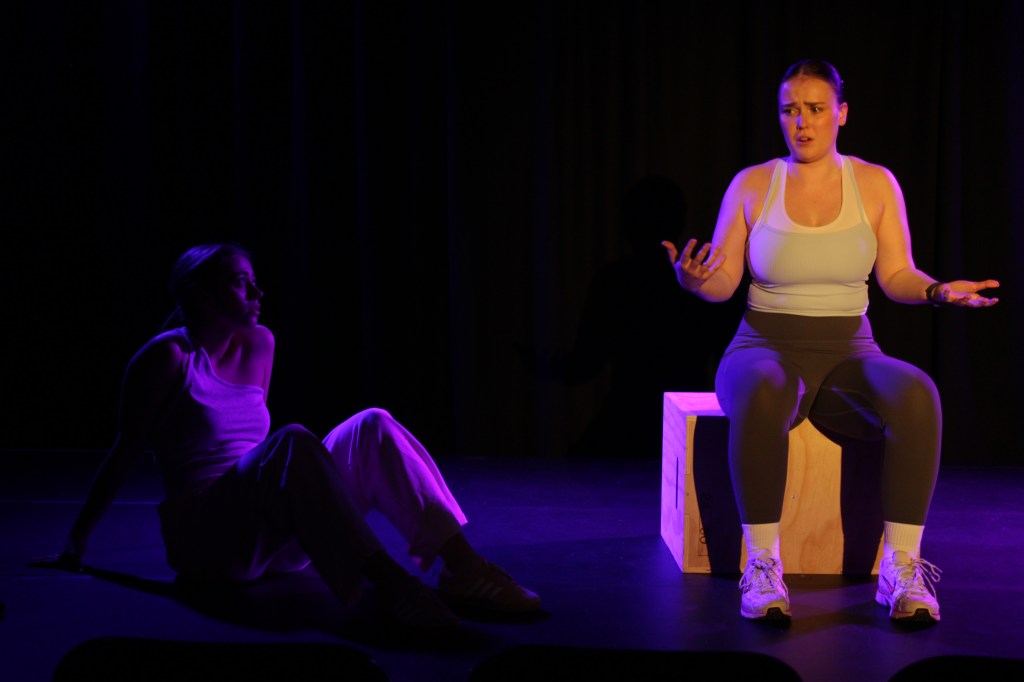
The comedy is at once cheeky and pointed. Jokes about vibrators, the failings of men, and the absurdity of gym culture set the tone: light, accessible, and unashamedly playful. These jokes are never incidental, though. They function as a way of voicing frustrations, drawing on the collective recognition of women’s everyday experiences, from disappointing relationships to the cultural obsession with fitness and appearance. The writing has an ear for timing, often setting up punchlines with a casual rhythm and pivoting sharply into laughter. While some jokes lean on stereotypes, the energy with which they are delivered keeps them buoyant, and the audience appears ready to embrace their knowingly broad strokes.
Lighting is used sparingly but effectively, cleverly shifting the mood without overwhelming the scene. At times, it signals a movement away from comedy into more reflective territory as though dimming the volume of the play’s chatter to let something raw emerge. These moments of tonal change are crucial. They remind us that beneath the sparkling humour lies a more complex emotional terrain, one that gestures to questions of resilience, self-image, and how mental health weaves into daily life. Although these shifts are not always fully integrated, sometimes feeling abrupt or underdeveloped they nonetheless break up the comic surface in interesting ways.
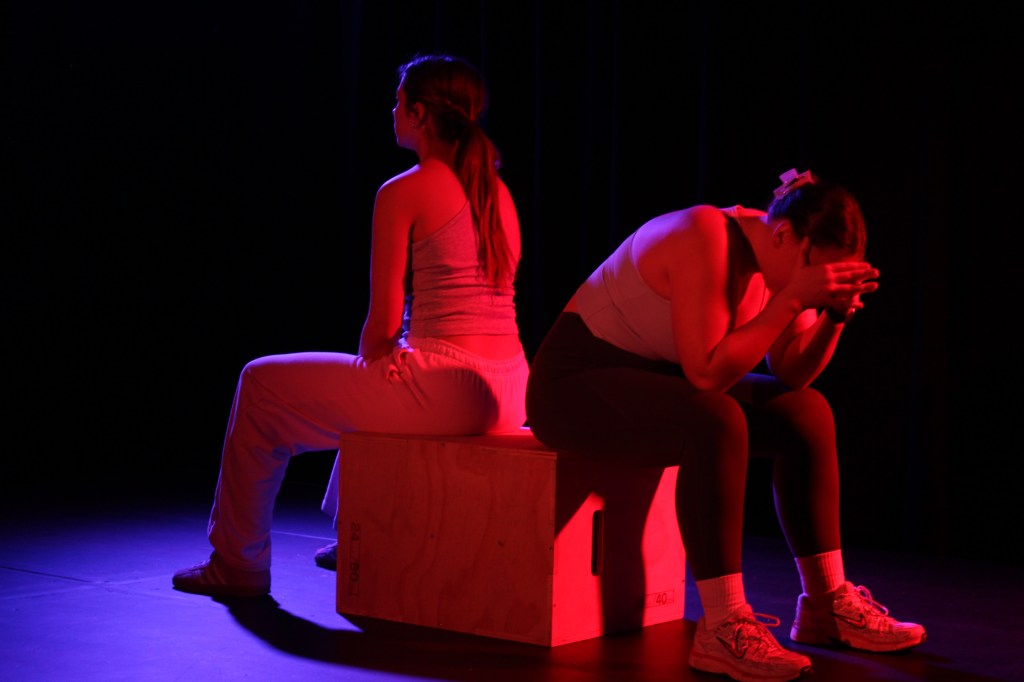
Performance drives much of the show’s impact. The pair lean into the vibrancy of the script, balancing self-deprecation with exuberance. Their chemistry creates a sense of intimacy with the audience, almost as though the theatre has been transformed into a shared gossip session among friends. This atmosphere is key to the production’s charm. Rather than aspiring for theatrical grandeur, The Machine thrives in its informality, presenting itself as both accessible and inclusive.
Still, the play occasionally risks being too comfortable in its genre conventions. The feel-good friendly play’s structure, while endearing, can make the narrative predictable, and some comedic beats feel overextended. The handling of mental health, though commendable for its presence, sometimes feels gestural rather than fully explored. These limitations do not undermine the experience so much as they define its scope; this is not a production striving for profound psychological dissection, but one interested in framing those struggles through humour and relatability.
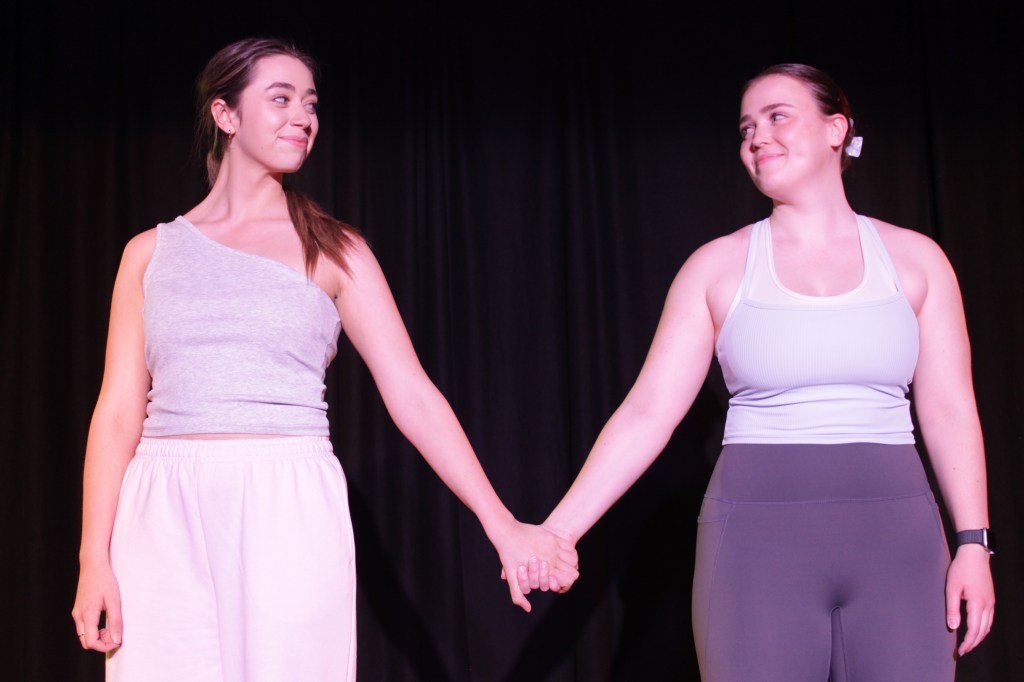
Ultimately, The Machine succeeds in creating a feel-good night at the theatre, one that pairs laughter with flashes of sincerity. It demonstrates that comedy and chick-lit tropes can coexist with a thoughtful awareness of the difficulties people carry into their daily lives. The show may not revolutionise form or subject, but it wins its audience with charm, humour, and a disarming frankness about everything from vibrators to vulnerability.
The Machine played at the Meat Market Craft Room September 30th – October 4th as part of the Melbourne Fringe Festival.
TARAS SCURRY is currently studying a Bachelor of Arts majoring in Philosophy. He deeply enjoys the arts and is thrilled to be part of The Dialog.
RACHEL THORNBY is a media and communications and creative writing student currently studying in Melbourne.
The Dialog is supported by Union House Theatre.
 The Dialog