
REVIEW BY CHARLOTTE FRASER
EDITED BY OLIVIA DI GRAZIA
We’ve all heard about changelings, haven’t we? The spooky old tales of fae, trolls or elves replacing human babies with ugly, wicked creatures pervade European tradition. This is the myth that Charlie Simmons’ play Changeling draws upon and subverts, blending folklore and the fantastical in order to tell a profoundly important story about the dangers of stigma and how fear of the unknown can lead to violence and destruction.
In Simmons’ play, we are introduced to a mother and father whose child is believed to be ‘fairy touched’. The child is ostracised from the small village, and their only source of comfort and connection is their complicated relationship with their mother. Fairy doctors attend to them and keep them bound in iron, which is thought to ward off/weaken fairies. The child eventually learns more about changelings and what it means to be one and, with this newfound knowledge, strives to find a ‘home’ or a sense of belonging while battling the narrow-mindedness of their town and father.
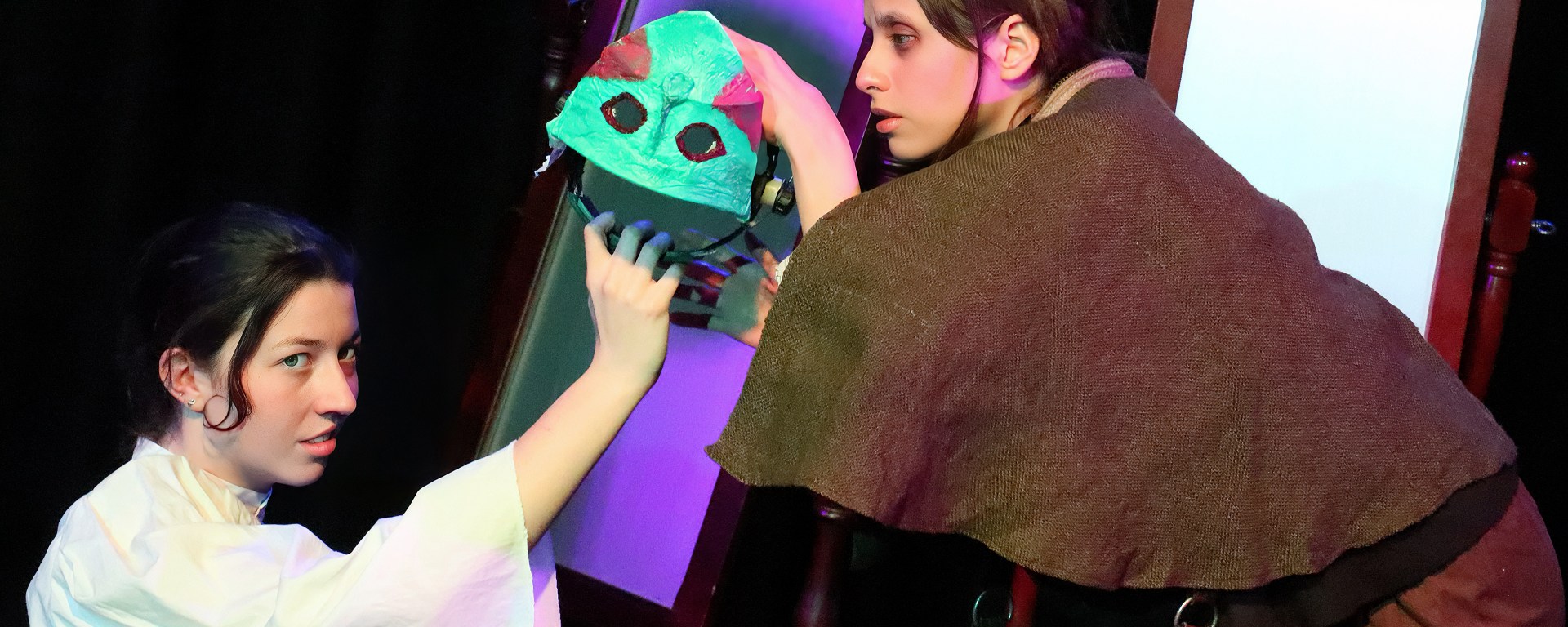
Simmons’ play is an immensely creative one, set in a fantastical town inspired by the Middle Ages/Medieval era where these folktales are very much reality. Having followed this play’s journey on Instagram, I was already aware going in that the play was intended as a metaphor to explore the stigma surrounding neurodivergence and disability. The most notable way this metaphor was conveyed was through the use of masks on the non-fairy characters – a direct allusion to ‘masking’.
Based on all of the incredible promotional material I saw in the show’s lead-up, particularly those regarding its key themes and ideas, I had high expectations going into the production. However, I did leave feeling a little bit confused. Towards the end of the play, the mask metaphor seemed to get a bit jumbled. When the Mother removed her mask, it remained unclear whether she was just seeing the Child clearly for the first time and empathising with them, or if she too was a changeling since the only other characters without masks – or seemingly with the ability to remove them – were fairy touched. Though intended to be a profound and emotional moment, the removal of her mask didn’t match the impact of the other instances of characters adding or removing their masks. The ending, too, was vague; while it was clearly intended to be hopeful, the ambiguity as to whether or not the child finds a home – or even if they get to remain with their mother, the one person they care for and that cares for them in return – was unclear and came across rather pessimistic. The play, despite being largely centred around the negative stigmas, violence and dangers faced by these marginalised groups, did not offer a hopeful image of the future. In all honesty, it didn’t really offer any image of the future for other ‘changelings’. Some revision to the script in these areas could have further strengthened an already thought-provoking and emotional story. Nevertheless, the majority of the play confronted these themes with tact, and the fantastical lens provided the perfect foundation for the raw humanity of the story to come through.
Directed by Monique Wing-Yun with assistance from Amelia Joy Fraumano, Changeling is a comedic and emotional play. With such a richly emotional story filled with magic and masks, Wing-Yun and Fraumano created a production that was engaging and packed an emotional punch. Their direction breathed air into the world of Simmons’ play and conveyed the story in a considerate, meaningful way. The ensemble cast was a highlight; their physicality and comedic timing kept the energy high and the larger scale scenes engaging. Crystal Haig, Bella Crawford and Amelia Joy Fraumano as the Tanner, Blacksmith and Weaver respectively all bounced off one another seamlessly and had the audience giggling along. I ought to also note that the entire cast managed to cope extremely well with some last-minute casting changes, and even the performers who were on book gave stellar performances.

Akira Hockley Miric and Amelia Pawsey as the double-cast Fairy Doctor and Merchant gave two interesting and engaging interpretations of a similar character. The physicality of Miric’s performance was commendable, and Pawsey’s accents and use of voice – always chirping up and effortlessly commanding attention with a witty delivery – made for many comedic moments. I found these two characters a bit confusing at times, however, as it was difficult to discern whether they were the same person or not. More clarity on whether the fairy doctors were the same or different people in the beginning and middle sections of the play could have assisted in this, as there were times when they both were referred to as having met the Child as a baby, when only one of them was shown to be. Despite this, their performances – as the Merchant/Fairy Doctor(s?) and in the movement ensemble with the rest of the cast – were charming, comedic and suitably animated.
The three leads, Elizabeth Gordon-Saker as the Child, Tristan Bell as the Father and Cassandra Hart as the Mother, led the story and commanded the stage with the intensity of their scenes. The relationship between the Child and their parents was the driving force throughout the play, and the scenes Gordon-Saker and Hart shared were especially emotional and, at times, profound. Bell embodied the fear and violence that Simmons’ play is actively critiquing in an effective and impactful manner. Gordon-Saker and Hart’s performances were the stand outs of the show; they both captivated the audience – even from behind their masks – and portrayed a relationship that drove the emotional development of the story.

One thing I would have loved to see from the performers was a little more attention to their eye lines and facing the audience. This could have allowed for the audience to better connect emotionally with the story and the characters. The few instances where we could see an actor’s face fully were some of the most captivating scenes in the entire play, and it set the movement ensemble’s sections apart from the rest of the action onstage. It’s a small detail that makes all the difference.
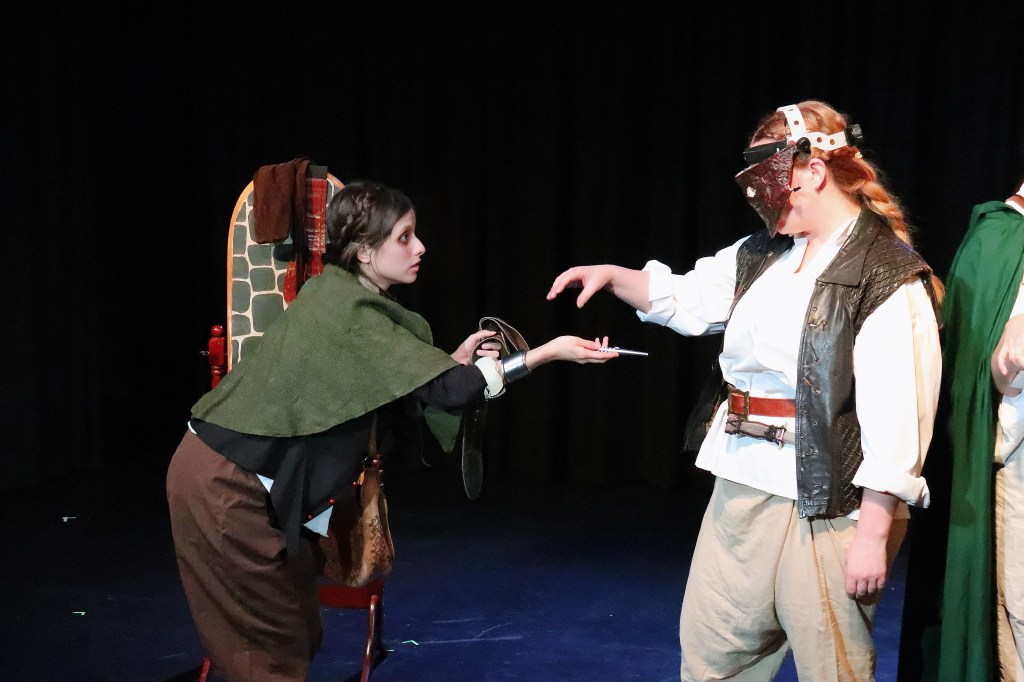
The set, designed by Helen Guan, was simple but incredibly effective. The three double-sided flats that easily transformed into ploughs, walls and even fairy mounds were such an effective use of space and set. Actors were able to interact with all of the set pieces in various, meaningful ways, and they were never just there to ‘set the scene’; each piece was involved in the blocking and movement, always adding texture to the storytelling.
Similarly, Luka Vannutini’s lighting and sound design worked seamlessly with the set and the action of the play. I attended a low sensory performance of the show and, even with the lighting and sound reduced somewhat, they still managed to create a distinct aesthetic and capture the fantastical energy of the play. Something that may likely be attributed to the low sensory nature of the performance was a slight lack of music. When music was used in the show (mainly at the beginning and end), it helped to amplify and accentuate the emotions of the scenes and the messages at the heart of the play. This is also, of course, a credit to the show’s composer, Lore Phoenix Burns.

The costumes, designed by Maia Ramos, helped to further cultivate the fantastical vibe of the show. My favourite costume was the Child’s, flawlessly transforming Gordon-Saker into an 8-year-old and capturing the Middle Ages/Medieval era. The masks, as well, were colourful and brought to life one of the key metaphors of the play. However, the execution of the masks could have been refined: the fabric used to cover the headwear beneath the masks often moved, exposing the headwear beneath and covering the actors’ faces, which obscured them completely from the audience. Additionally, the masks themselves seemed ill-fitting on some of the actors’ faces, sitting over glasses and hovering off of their faces in sometimes awkward ways. This, naturally, was quite distracting to watch. But, with that said, I think the masks themselves realised the key metaphor of the story in an impactful way, and the colourful, textured designs enriched the fantastical aesthetic of the show.
Overall, Changeling is an enjoyable production that has a very clear theme and metaphor grounding it. Everything was well put-together and, despite last-minute changes to the cast, the show was well-paced and mostly smooth sailing. The entire Changeling team should be incredibly proud of their work on the production. A few refinements to the script could have helped with some clarity issues and to strengthen the play’s conclusion, but even so, this show had one of the strongest themes and use of metaphor I have seen in some time. It’s a story that will stick with you and have you questioning if you – or the rest of the audience – are ‘fairy touched’ too.
Changeling played September 29th – October 5th at the MC Showroom as part of the Melbourne Fringe Festival.
CHARLOTTE FRASER (she/her) is a writer, performer and student editor based in Melbourne. She holds a BA in English and Theatre Studies and is currently completing her Masters degree at the University of Melbourne.
OLIVIA DI GRAZIA (she/her) is a passionate director, writer and performer in her third year at the University of Melbourne. She is a sub-editor for The Dialog, and is developing a disability initiative for Union House Theatre to ensure student theatre is accessible to everyone.
The Dialog is supported by Union House Theatre.
 The Dialog