
REVIEW BY ZENA WANG
EDITED BY EMMA PARFITT
Student theatre thrives when it dares to capture both the nostalgia of the past and the restlessness of youth. The Mutineers, set in the very old English grammar school–styled Bellview Academy, does exactly that. With its 1990s backdrop of cassette tapes and schoolyard banter, the production becomes not just a story about teenagers, but a reflection on identity, rebellion, and the fleeting purity of growing up inside the ivory tower before stepping into adulthood. Playwright & co-director Tavisshi Dhawan, with co-director Tiara Pires, leads this student production with both sensitivity and ambition.
The opening scene’s lighting (Jane Pekin and her team) and music (Sofia Jorgovic and her team) immediately transported the audience back to the 1990s, full of nostalgia and innocence. This beginning not only established a strong sense of era but also set the overall tone of positivity and youthful energy, highlighting the essence of a coming-of-age drama. The first standout moment came from the contrast between the two teachers: Mr Pierce (Sam Pringle) and Mr Hallward (Vedant Pithia). One stiff, the other flexible, their differences created a charming and humorous effect. The teachers were not presented as simply rigid or old-fashioned; instead, they were given lively and three-dimensional portrayals. Make-up and costume design (Marissa Chen, Abi Wood and her team) contributed significantly here, enhancing credibility while celebrating the actors’ personal characteristics and highlighting their endearing qualities — even while portraying adults.
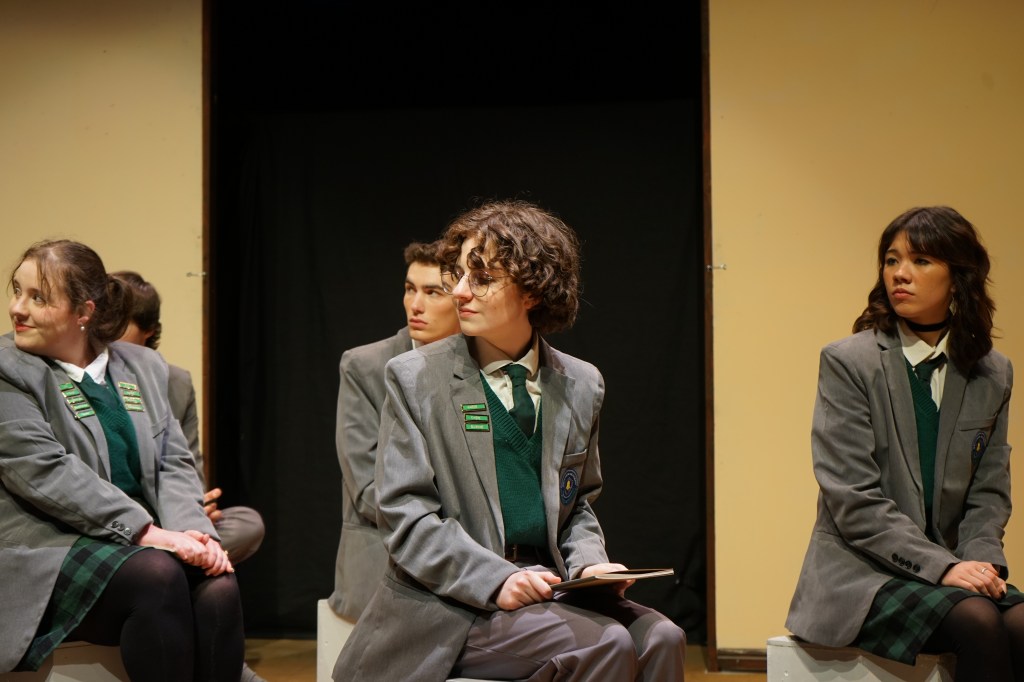
Costume design deserve recognition for their thoughtful choices. Especially when students appeared in their casual clothes, the costumes were both character-specific and expressive. The palette and tones added a narrative layer of 1990s nostalgia, grounding the ensemble in their world and amplifying the storytelling without ever feeling forced.
The sets (Brendon Holmes and his team) provided another clever highlight. Scene changes between indoor and outdoor spaces unfolded with the ingenuity of a pop-up book, opening and closing with smooth theatricality. This inventive device not only streamlined transitions but also contributed to the play’s sense of youthful wonder.
The directors’ ingenuity was evident in the handling of numerous scene transitions. Many scene changes were not simply functional shifts of setting, but were staged through ensemble images and movement. These group compositions resembled cinematic or television ‘montages’; through simple gestures and frozen tableaux, they communicated character traits and conveyed minor subplots that were not explicitly voiced.
These ‘tableau moments’ were reinforced by excellent use of both sound and lighting. Music ensured the continuity of narrative and mood — a poorly handled scene change can feel disruptive or tedious, but here the design carried and extended the story, maintaining a smooth and comfortable rhythm. Meanwhile, the lighting design (Jane Pekin and her team), was equally thoughtful. The use of side light during scene change was particularly effective: it provided sufficient contrast in the upstage darkness to allow for set transitions, while also sculpting the actors in ways that lent the frozen images a natural beauty. The qualities of Fresnel side lighting — soft yet directional — gave figures clarity and dimensionality, strengthening characterization.
The sound design (by Sofia Jorgovic and her team) was particularly effective in shaping atmosphere and narrative rhythm. For instance, during school classroom scenes, the triple-meter instrumental music successfully set up the environment, reminiscent of background tracks from RPG games or the everyday music of a small town. This treatment created a psychological sense of ‘safety’ and ‘daily life,’ while also carrying a playful lightness — a classic example of theme music well deployed.
Pekin’s design also created moments of pure romance. For example, when light streamed through a window frame, it indicated both space and time while adding poetic atmosphere. In the scene where James climbs through Veronica’s window, accompanied by jazz-pop with a retro flair and followed by a duet-like dance, the stage evoked the old-time aesthetics of La La Land or Singin’ in the Rain. It was, without doubt, one of the production’s most beautiful moments.
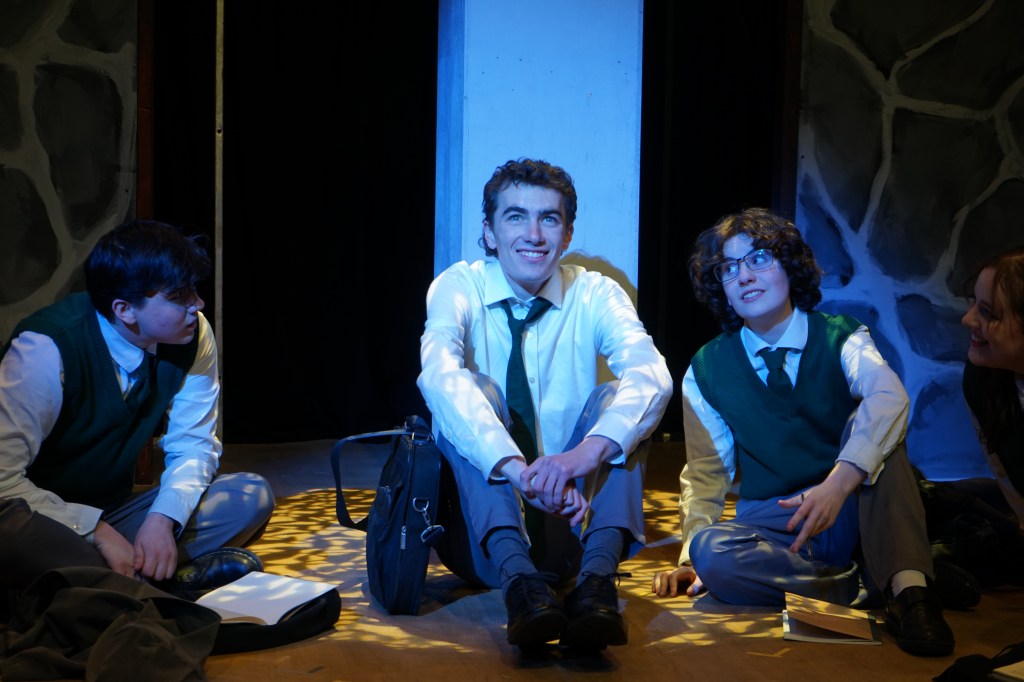
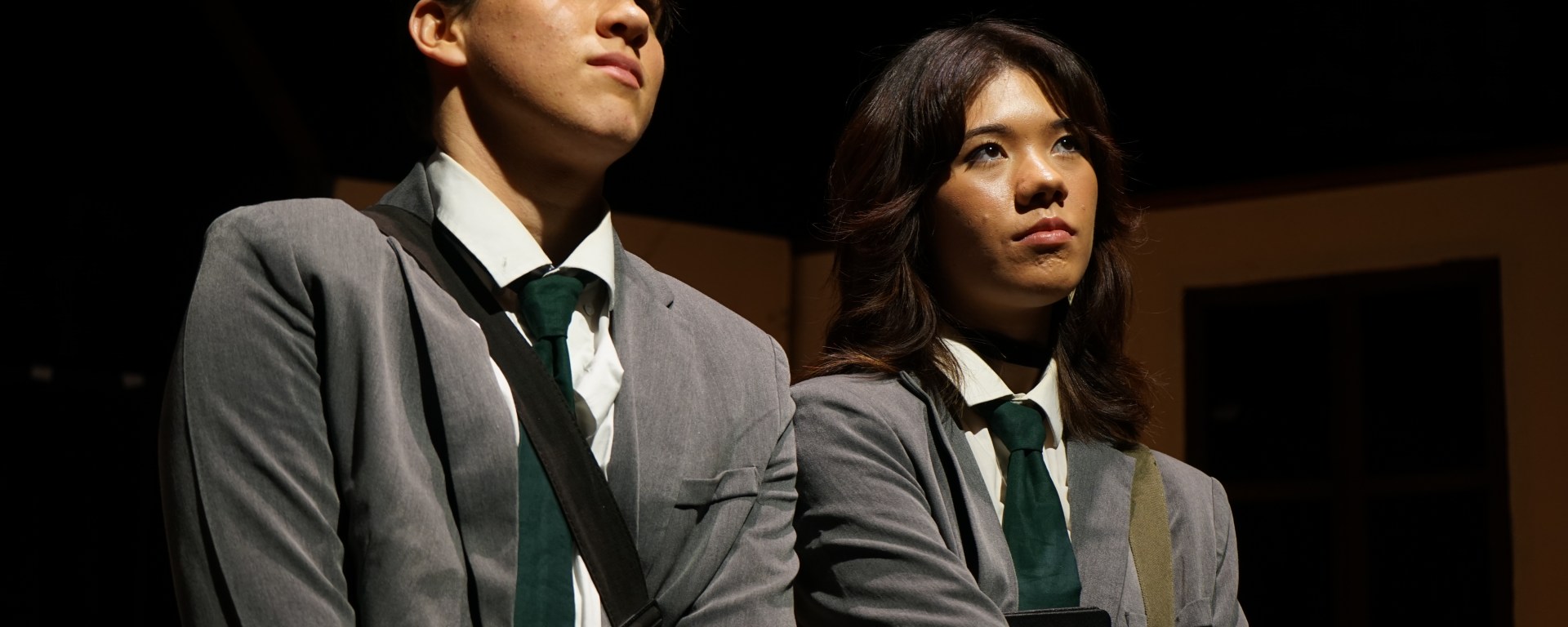
Among the central characters, Theodore Lewis (played by Lucas Lines) was rendered with nuance and depth. His layered personality was established from the beginning: a “brotherly” figure who outwardly seemed mature, conciliatory, and caring — especially towards his sister — while privately revealing moments of doubt and vulnerability. His nervousness, masked by a façade of maturity and reluctance to stir conflict, exposed both conscious and unconscious questioning of himself and his environment. For a boy growing up under precarious circumstances, this felt fully convincing, and the performance consistently captured these complexities.
By contrast, Veronica Hughes (played by Jada-Li Crossey) initially came across as overly forceful and stereotypical. Her motivations were not clearly explained until very late, and her isolation felt ungrounded. For much of the early story she embodied a ‘Wednesday Addams’-style gothic archetype — a familiar trope for a rebellious teenage heroine. Although one might interpret this as a form of self-protection, masking insecurity and confusion, it resulted in a performance marked by physical tension and vocal choice – a quickened pace and flattened intonation – that sometimes clashed with the rhythm and movement of ensemble dialogue.
However, in the latter half of Act 2, Veronica gained greater emotional release and delivered some of the production’s most moving moments. After Veronica is suspended from school and the girls talk together about their ‘daydreams,’ the exchange felt tender, genuine, and bittersweet — a very touching moment. Another highlight came in a high-tension, dramatically powerful scene stripped of music and excess lighting, where a frozen image held the atmosphere and heightened the emotional weight.
Immediately following scene was the argument between Theodore and Veronica, which became one of the play’s most authentic highlights. Both characters exposed their emotions fully, demonstrating the raw honesty of two people bound by family. Their quarrels revealed care, worry, and love — the reality of siblings whose connection runs deep even when they cannot agree. This moment underscored that friendship and kinship can feel more genuine than romance.
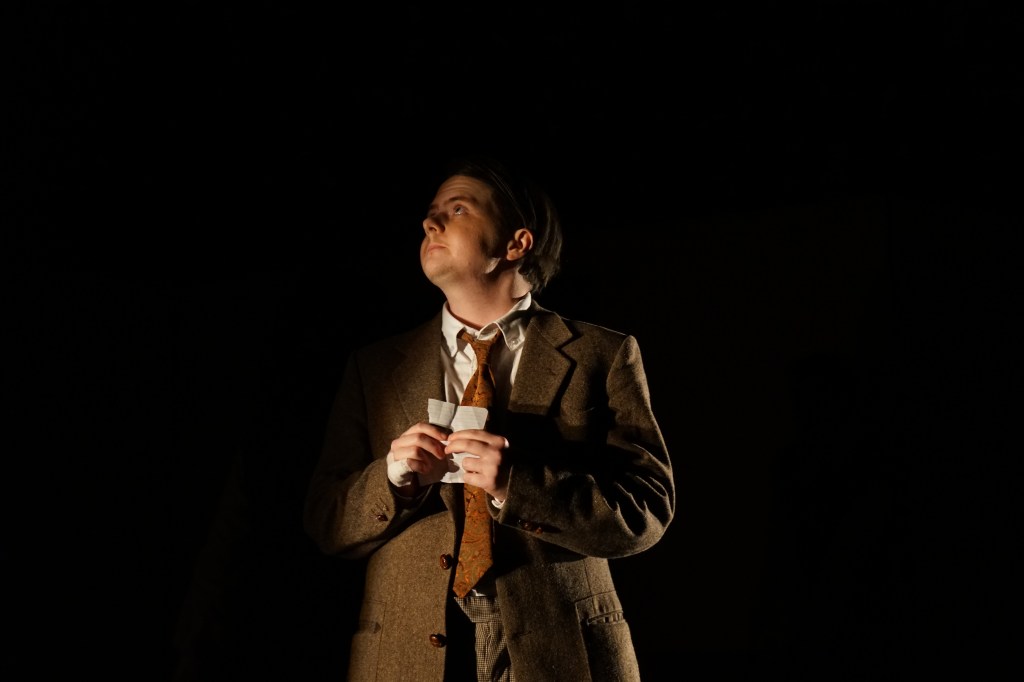
This production leaned more toward an ensemble piece than a two-lead drama. Even characters designated as antagonists were given narrative weight. The late dialogue between Mr Hallward and Mr Pierce was particularly moving, showing them as opposites: Pierce’s background story, running as a throughline from the founding of The Mutineers,the student literary study group, to his gradual drifting away from literary friends, suggested the inevitable distance of adulthood after school. High school, the play suggested, is the one period of life that remains purely devoted to beauty, longing, lyricism, and unfiltered emotion. Hallward, by contrast, represented pragmatic realism, but somewhere in his deep inner world still carried a hidden dream of ‘sowing seeds’ — nurturing in his students the ability to perceive and express truth, goodness, and beauty. Teachers are not as powerful as students imagine; they too can be easily displaced by society. Yet in this story, their inner spirit of rebellion remained, making them guardians of the ‘nestlings’ in the ivory tower. Their portrayal gave the conclusion deep authenticity.
Similarly, Kenneth Freeman (Bridget Hyde) added a distinctive touch to the story. Though his stage time was limited, he was given surprising depth. His persistence in repairing a broken recorder made him the character most aligned with ‘future’ and ‘dreams.’ He reminded us that youth is not only about immediate conflict but also about cultivating personal interests and imagining what lies ahead. The callback in the final scene was especially poetic: once fixed, the undefined noise rather than music came out of the recorder – it was searching for radio signals. At he Mutineer gathering that night, this noise symbolised the yearning of young people for the vast unknown world beyond them. The recorder’s restless ‘search’ became a hauntingly beautiful metaphor.
However, this left me hoping for more complexity in some other characters which learnt more into stereotypes than characterisation.
Donald Gibson (Danny Dominic Hartono) disrupted the group’s idyllic world as the designated antagonist. Played by an actor with typical East-Asian appearance, the role carried an uncomfortable irony in a multicultural Australian context. Although the character is not written as Asian, the casting and styling in this antagonistic, utilitarian role evoked familiar stereotypes often seen in Western media. Character-wise, he symbolised selfishness and elitism, valuing wealth, background, and talent above all else. However, the writing and direction added complexity: when he sought recognition from his father, the silence on the other end of the line revealed his loneliness and fragility beneath the bullying exterior. Hartono’s performance and the atmosphere built around him successfully conveyed this layered humanity — a reminder that “hurt people hurt people.”
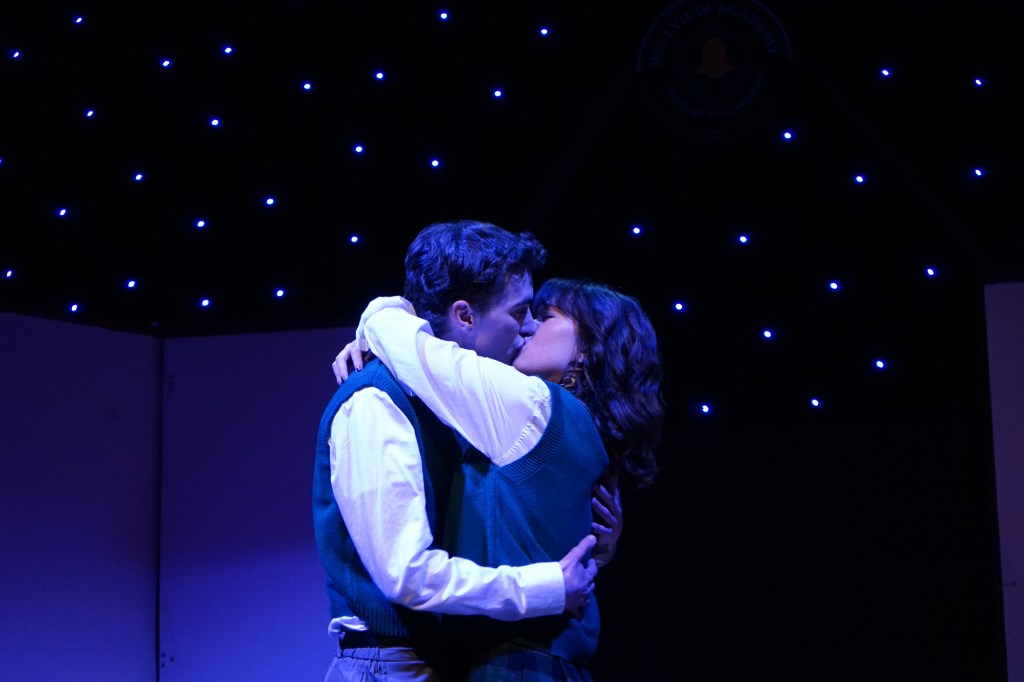
The romantic plot was another major element in the story, though for me it felt less fully developed than other aspects. With too many instances of love at first sight, they often felt unmotivated. While it is true that adolescent romance can be impulsive, its idealisation here made the work lean into the soap opera genre rather than a drama of rebellion. Act 1 lingered on romance, diluting the central theme of resistance against strict school rules. Repetitive dialogue about ‘rich people’ and ‘smart’ further framed James Finley and Veronica Hughes’s relationship as an old-fashioned ‘prince and Cinderella’ tale. Veronica’s identity seemed tied solely to being loved and recognised, which weakened her arc of self-discovery. Consequently, James Finley’s character also suffered. Despite Marcus Leder’s dynamic physicality, stage presence, and sharp rhythm in his opening scenes, by Act 2 his role had thinned into that of a rescuer. His impulsive actions read more as romantic ‘saving’ than as acts of defiance. This felt like a missed opportunity to deepen his role. As the leader of The Mutineers and a proactive figure within the school, he is a character who resents his father’s and the principal’s single-minded focus on authority and academic achievement. He carried far more potential than what was ultimately explored.
Overall, The Mutineers is an ambitious student work that embraces the messiness of adolescence with sincerity, humour, and no small amount of artistry. Its strengths lie in its ensemble spirit, inventive staging, and occasional moments of poetic resonance. While some narrative choices — particularly an overemphasis on romance at the expense of rebellion — diluted the play’s thematic sharpness, the production ultimately returned to the core of what matters: identity and rebellion as intertwined forces of youth. In the best sense of student theatre, it reminds us that original works by young people pulse with honesty and imagination. That authenticity, and the courage to explore it on stage, is precisely what makes student theatre so invaluable.
Monash Uni Student Theatre’s The Mutineers plays til September 27th at the MUST Space.
ZENA WANG is a student at the VCA with a strong interest in theatre and visual storytelling. She loves exploring the intersection of space, performance, and audience experience.
EMMA PARFITT (she/her) is the Dialog’s head editor and has written Dialog reviews alongside studying towards her science degree for the past two years. She is a production manager, stage manager and producer on the Melbourne indie theatre scene and a veteran of student theatre at Union House Theatre.
The Dialog is supported by Union House Theatre.
 The Dialog