
REVIEW BY ASHLEIGH SHEARMAN
EDITED BY BRONTE LEMAIRE
Shakespeare’s Midsummer Night’s Dream is perhaps one of the most beloved and performed plays of all time: a story about the messiness and beauty of love and relationships. Josh Drake and the MUSC committee lean into these aspects in their production, adding a modern twist to the classic tale.
As I first enter the Guild Theatre, I am struck by the unique set – created by set design team Ava Brown, Josh Drake, Tom Worsnop, Gina Ramsey and Rachael Vassallo – who have turned the typical black box theatre into a stunning thrust stage. Here, the wood of Shakespeare has become “The Wood”, a club and bar, complete with checker board dance floor, vintage couches, chairs, and a live band (Connor Boussioutas on sax, Harry Vreugdenburg on keys, and Pacey Dunshea on bass) providing smooth and soothing music. The black curtains have been replaced by plush green drapes that hang behind the audience, pulling us into the world of the play.

Before the show has even begun, the space is alive thanks to the colourful and striking lighting design of Liam Bradford. Coloured lights slowly pulse and shift between shades of red, purple and green, catching in the smoke machine’s haze. The ultimate effect is hypnotic and mesmerising.
The lights dim, and the show begins. On a single piece of white curtain upstage, a TV broadcast of Greek parliament is shown. The scene shifts down onto the couches where Theseus (Patrick English) lounges watching the broadcast. From the first lines, we see the queer message and new direction director Ava Brown and assistant director Alana Collins are taking this classic play. Egeus (Josh Drake), usually the father to Hermia, is now the older brother to Hercules (Surya Phipps). Egeus is not happy with Lysander (Tiger Robotham) and Hercules’ relationship and begs Theseus to not give them his blessing. Egeus instead proposes Hercules marry Deianira (Charlie Fraser) – gender bent Demetrius. Deianira loves Hercules, but he does not love her, while Helena (Emma Boyce) is in love with Deianira. Hercules and Lysander resolve to run away to the club “The Wood” so they can be together in peace. With Deianira resolving to follow them, Helena tags along to prove her love.

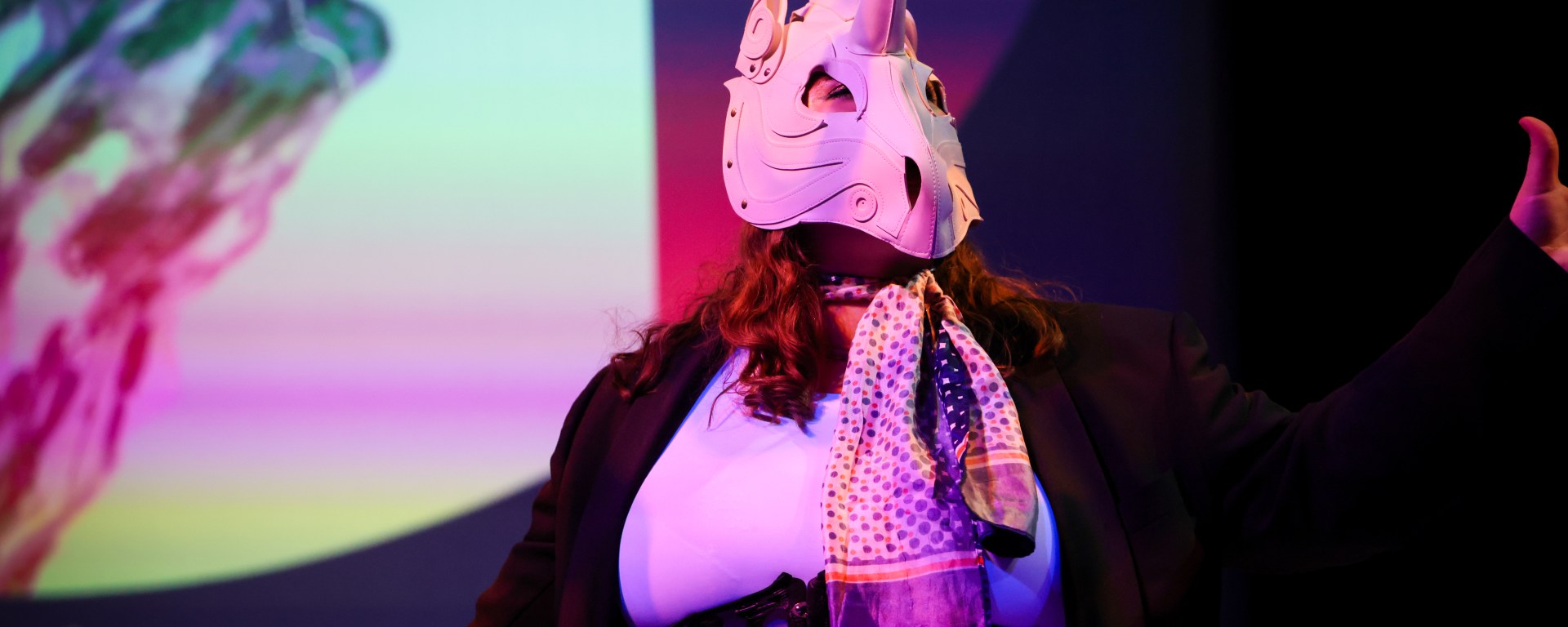
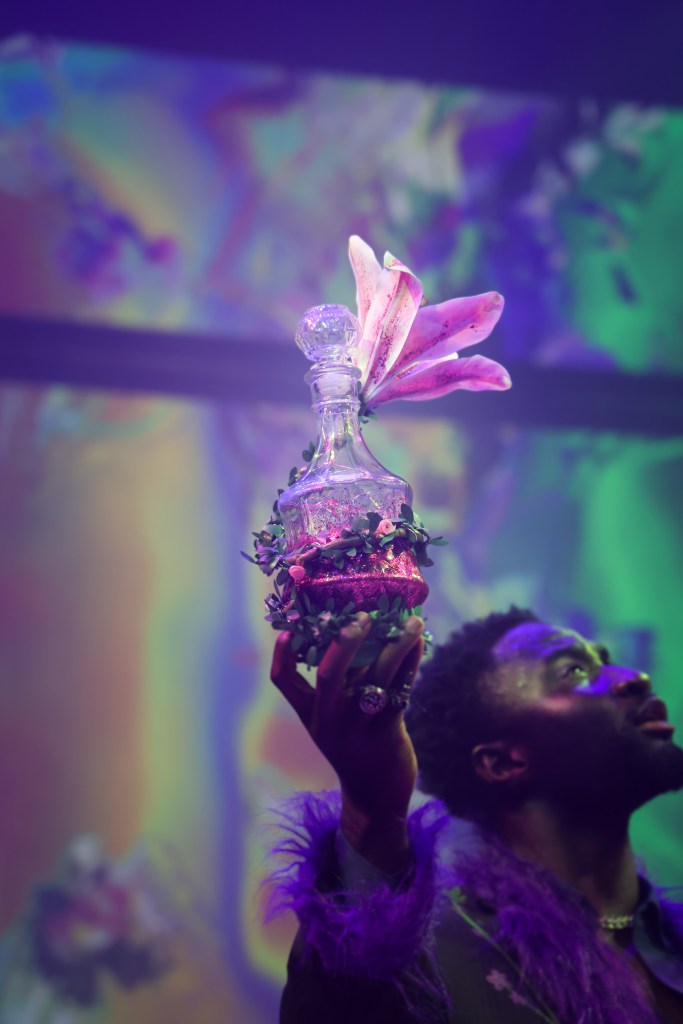
The white drape falls to the stage and we are welcomed into “The Wood” properly. Ella Barrett’s costume design is on full show here as fairies (played by Ravindi Fernando, Ede Maeleea Parkins, Aruna Brown, and Maya Hall-Davis) fill the dance floor, their club outfits made up of an assortment of skinny jeans, leggings, body suits, leather harnesses and bikini tops. Grace Barnes’ hair and make-up complete the looks as everybody looks ready for a magical night on the town. We’re also introduced to Lilianna Crismani’s ethereal Titania and Kwasi Darko’s commanding Oberon, “The Woods” owners, and we learn of the trouble in paradise brewing between them. Oberon has Puck (Jemima Christie) give Titania a love potion so that he can make her fall in love with a hideous creature. Oberon also attempts to ‘fix’ the relationships of the four lovers, leading to disastrous results. With Lysander and Deianira both falling in love with Helena.

Throughout all this action is also The Mechanicals, the club’s live band (Boussioutas, Vreugdenburg, and Dunshea). The part of the Mechanicals in the original Midsummer Night’s Dream I always struggled with understanding, as in the grand scheme of the play they don’t impact the plot all that much. The exception is of course Bottom who is transformed into the donkey headed object of affection for Titania. In MUSC’s production, the presence of the Mechanicals is made more real and grounded in the world of the play.
The band, who has been present throughout but never directly involved, become the members of the tradesmen turned actor’s troupe. Joining the trio on stage are Grace Barnes as Bottom and Michael Werden as Quince. The sexual energy emanating from every member of this group is evident and palpable. Flirtatious advances and innuendos are thrown around with such bravado and confidence it’s clear each member of the band has a very special relationship with the others.
Throughout much of the performance, the trio of Boussioutas, Vreugdenburg, and Dunshea provide underscoring, featuring leitmotifs and returning melodies to help set the tone for each scene. These musical additions not only keep the play moving but also create a fitting atmosphere for the piece. There were times, however, I found it difficult to make out or understand what was being said. Unfortunately, this began from the start of the performance as the Greek parliamentary broadcast continued throughout the opening scene, meaning much of the nuance of Brown and Collins’ changes were lost. This issue was compounded by the difficulties of having the audience on three sides, as at times lines were delivered facing away from where I was sitting. But with such a strong and clear atmosphere being set by the music, I was consistently able to follow the action and understand what was happening, if not the exact why.
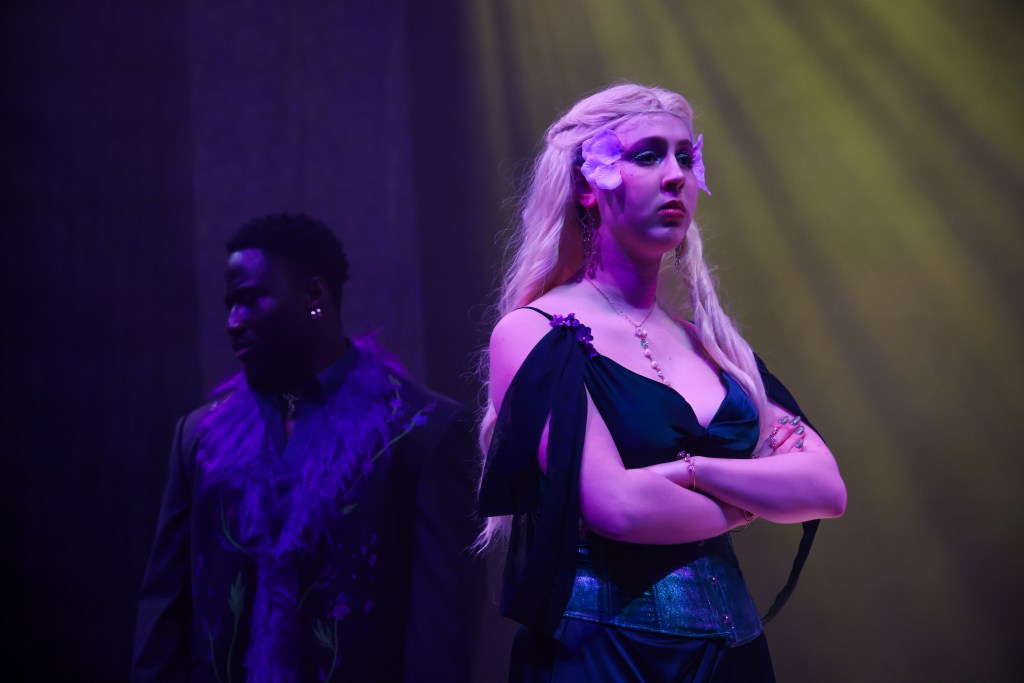
This atmosphere is only further enhanced by the stunning and psychedelic visuals created by Lochlan Maher. It features technicolour, kaleidoscopic visions of flowers, insects and birds to accompany the magic moments of Oberon and Puck preparing the love potion or Puck’s adventure to tire out the four lovers and set all their mistakes right.
Every aspect of MUSC’s Midsummer Night’s Dream seems to have been so carefully considered and lovingly crafted – from the set aesthetic that feels straight out of your favourite Brunswick bar, to the sparing use of sound effects to heighten those moments of pure magic and emotion. Every member of the cast gives new and grounded life to the characters. Each line holds meaning.
The simple changing of Hermia to Hercules and Demetrius to Deianira means the relationship triangles take on new depth and relevance for today. The fight between Lysander and Deianira is no longer a battle of ‘manliness’ but a feminist fight for equality and the right to be taken seriously as equals. Deianira now demands Lysander take her seriously as a contender for Helena’s love, and be seen as someone equally worthy and capable of strength and compassion. Lysander and Hercules’ relationship turns from simple teenage rebellion to a search for an accepting world where two men are allowed to love one another. The show uses these deceptively unimportant changes and asks us as an audience to consider our own values and beliefs about the world.
Even the wood, originally just a space for our characters to become lost in, turns into a refuge for them to be who they truly are and escape the challenges of the outside world. It’s a credit to Ava Brown and Alana Collins, as well as producers Josh Drake and Tom Worsnop, and the entire team behind MUSC’s Midsummer Night’s Dream that they have created such an engaging, gorgeous and timely piece of theatre out of a play nearly 500 years old.
Melbourne University Shakespeare Company’s A Midsummer Night’s Dream played September 28th – 30th at the Guild Theatre.
ASHLEIGH SHEARMAN (she/they) is a trans theatre maker originally from Sydney and currently studying a Masters of Theatre (Writing). Fostering theatre has been at the heart of Ash’s life having grown up around musicians, writers and performers. She is so incredibly honoured to continue that tradition with The Dialog this year.
BRONTE LEMAIRE (any) is a writer and theatre maker who loves witnessing what emerging artists can achieve. Bronte loves analysing and picking apart what makes art work and function (or not!) in order to learn and steal some inspiration for herself.
The Dialog is supported by Union House Theatre.
 The Dialog