
REVIEW BY GRACE DWYER
EDITED BY EMMA PARFITT
Chicago is big. It’s the hit 1975 musical that went on to claim 2002’s Best Picture, enjoy long-lasting intercontinental theatrical success, and ensure every theatre kid has their own favourite Merry Murderess. A perfect show for Ormond Drama, who blew us away last year with their 2024 production of Into the Woods, so my friends and I are on the edge of our seats as the band starts up and the red-washed curtain parts.
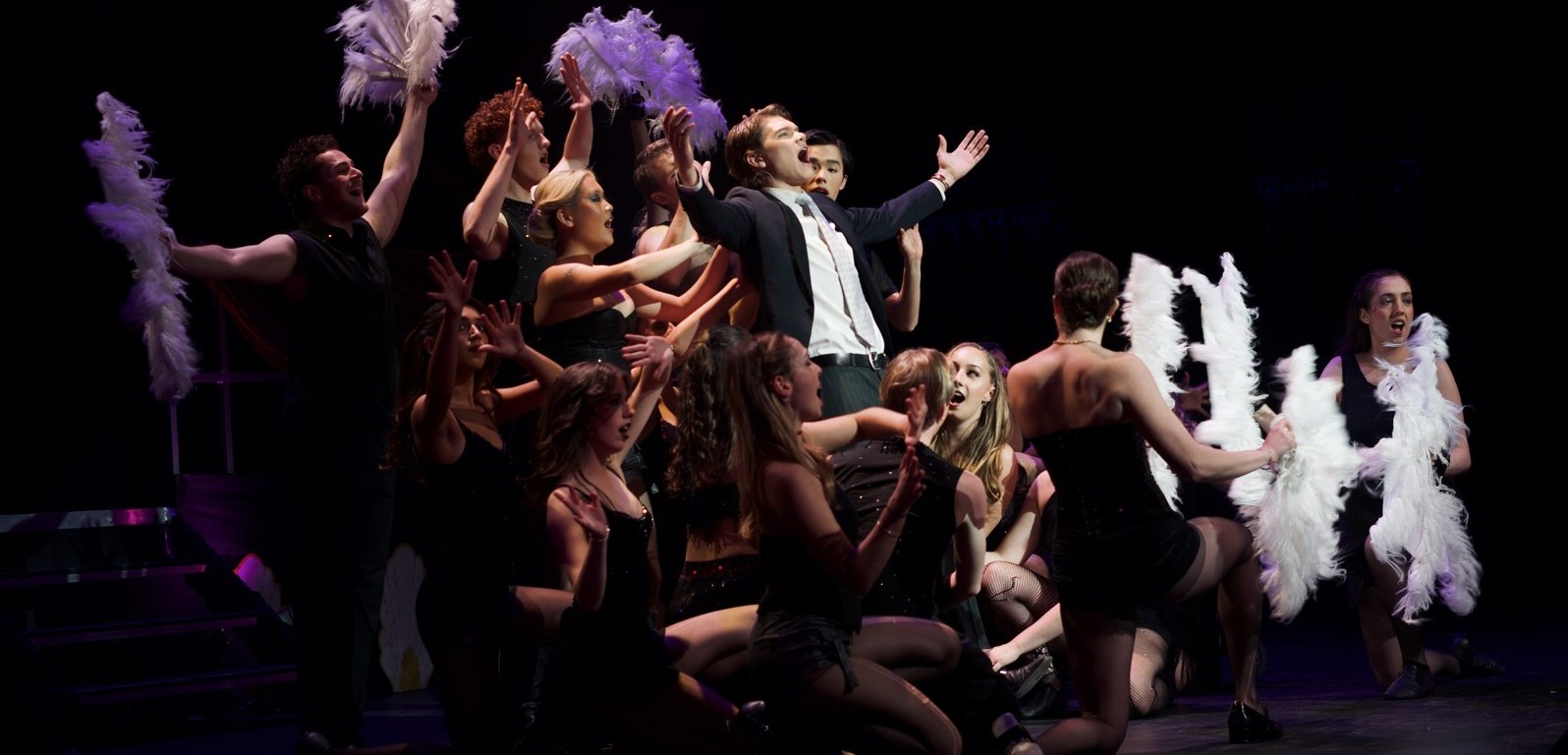
As the Overture kicks into gear, the dance ensemble runs on from the wings and takes centre stage. Their infectious, instant high energy signals we’ve well and truly arrived in 1920s Chicago. The frenetic music slows for ‘All That Jazz’ – a certified classic – and we are introduced to one half of our leading ladies, Alexis Saddler as Velma Kelly. Saddler’s voice instantly commands, perfect for a jazzy nightclub veteran, and she carries herself like the star Velma wishes she was.

Thematically, Chicago is a show about the media’s blinding spotlight, and the ways in which its darlings will damn morality and loyalty for another fifteen minutes of fame. These fifteen minutes are costly, though – Fred Ebb and Bob Fosse’s book quickly establishes that gaming the justice system is much more a question of rich or poor than right or wrong. This disconnect is truly embraced by Chicago’s musical numbers, dynamically positioning the grizzly world of 1920s violent crime against big band jazz. Ormond’s cast is adept at embracing both the hardened exterior of their characters in the more grounded scenes, while conveying their innermost (and often selfish) desires through song. Oh, and also while doing the splits.
When new murderess on the cell block Roxie Hart (Lucy Tervit) arrives at County Cook jail, she threatens Velma’s grip on the city’s newspapers. With the help of showbiz savvy lawyer Billy Flynn (Dan O’Regan), Roxie experiences a rise, fall, and comeback of her own. Tervit is a cheeky, cunning Roxie, charming the money out of her husband Amos (Finlay Maltby) with a twinkle in her eye and nailing the showstopper ‘Roxie’ – complete with a suited ensemble of boys who appear, at least, to be having the time of their lives. O’Regan is a standout, with excellent comedic timing and stage presence, chewing the scenery in his numbers ‘All I Care About’ and ‘Razzle Dazzle’. Maltby embodies Amos’s quietly desperate need to be seen – especially in Act Two, and elicits plenty of sympathy from a captive audience. In the interests of fairness, it is opening night: there are a few shakes that are almost certainly attributable to nerves, understandable for a production as well attended and intricate as this.

Directors Kite Stephen, Blake Wright and Trieste Doumani evidently know how to put a large ensemble to fantastic use. Performers in featured roles such as Mary Sunshine (Zoe Meiers), Sergeant Fogarty/Judge (both played by Jack Lowman for tonight), the Narrator (Nick Sharr), Kitty (Jemima McLeish) and Harrison/Aaron (Lloyd Freckleton) fully commit to the spectacular and at times absurd delivery needed to spur the show’s momentum. The Six Merry Murderesses (Zoe Cowlishaw, Laura Vivian, Millie Snell, Victoria Wang and Scarlett Bardelli-James) are a delight to watch, obviously in their number ‘Cell Block Tango’, but also lounging in the background of scenes.
Wang, playing Hungarian inmate Hunyak, deserves special recognition. Not only is most of her dialogue in Hungarian (for which she thanks Duolingo), but she delivers a performance that truly highlights her character’s separation from the rest of the murderesses: as the relatively powerful Velma and Roxie can use their wealth, connections and American identity to sway a guilty verdict, the innocent Hunyak is powerless. Some productions play with delivery and staging to suggest she is, in fact, guilty – personally, I think this strips an already cynical show of potential pathos. Stephen, Wright and Doumani’s choice to double down on her innocence is greatly effective and appreciated.

Luca Hooke’s choreography also makes fantastic work of a large cast. The show comes to life in group numbers like ‘We Both Reached For The Gun’, and typically less populated songs like ‘Cell Block Tango’ and ‘When Velma Takes The Stand’ are elevated with the addition of dancers. The dancers themselves are insanely talented – from Meiers dancing en pointe and singing opera, to everybody doing the splits. One decision I found a little dramaturgically questionable, however, is the addition of dancers in ‘Mister Cellophane’ – the choreography is lovely, but for a character as solitary as Amos, it would have been powerful to make his the only number with no backup. Conversely, ‘When You’re Good to Mama’ is such a fun song, and Scarlett McLellan has vocal and acting chops in spades to embody Mama Morton (‘Class’ is a personal highlight), but there’s some moments of physical stagnation where embracing the choreography and giving the background dancers more direction would have added extra punch. Regardless, Hooke’s dances are sharp, kinetic, and every number that ends in a tableau is genuinely gorgeous. She should be incredibly proud of her work and the cast.
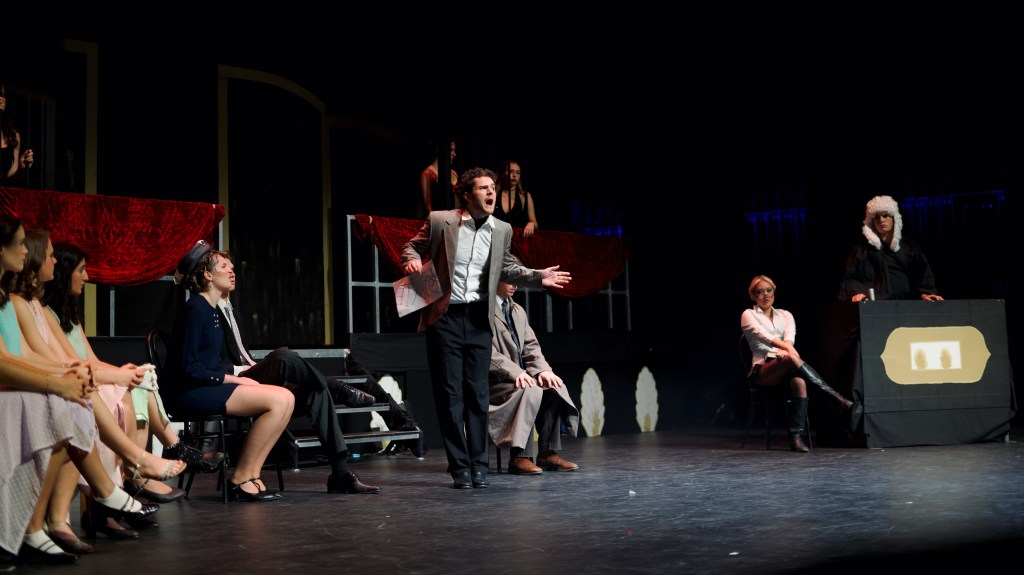
Ormond’s production team truly brings the razzle and dazzle – all elements working cohesively for impressive production value. The sound design (Lydia Colla, team members Spencer Kelsey and Kiana Senevirante) is impeccable – I particularly enjoyed the immersive use of reverb and filter on Mary Sunshine’s radio announcement. The raised, more minimalistic set is used thoroughly, as a walkway, platform, or jail cell. Stephen, Wright and Doumani block scenes with an eye for scale and aesthetics, and the actors and set work best together when there’s movement going on in every level. Set designer Xavier Duffy and assistant Kate Chappell’s strongest and most interesting creative choice is a white fabric curtain hanging between the raised flats, used as an entryway with flair, or, with red lighting to create striking silhouettes. Lighting (designed by Allira Smith, team members Molly Simpson and Abigail Escott) effortlessly transforms the stage into the County Cook jail, a colour-washed nightclub, and a courtroom, with fantastic use of follow spots. Smith’s design literally illuminates costume designer Chelsey Webster’s chic, bedazzled costumes, with costume team Emily Joyce, Emma O’Neill and Chavindi Sinhara Mudalige. Roxie’s pink flapper suit, Mama Morton’s white corset top and fur coat and the collection of 1920’s inspired pastel dresses are standouts. Makeup and hair are fantastic; designer Serena Xie with team Georgia Hildenbrand and Phoebe Sheehan transform the cast with pin-up girl inspired makeup and up-dos. The two leading ladies’ hair and makeup is particularly striking.
If there were to be an MVP of the show, it would be Max Kielly, the musical director and vocal coach. The cast sounds wonderful, and vocals are solid across the board – especially duets like ‘My Own Best Friend’ shining with harmony. The undeniable high point, however, is Chicago’s band, who are nothing short of flawless. I have genuinely never witnessed a band this in sync with each other and their conductor, also on keys. Vamps, cues and transitions sound fantastic, and there is no weak link among the musicians. John Kander would be proud, I’m sure.
Ormond Drama deliver success after rousing success. My friends and I leave the theatre with a revitalised appreciation for the show’s hits and immense admiration for their entire team. With sequins, feathers and spotlights galore, Chicago’s killer leads, roaring ensemble, and phenomenal band bring a classic to life!
Ormond College’s Chicago played August 7th – 9th at the Union Theatre.
GRACE DWYER is a third year Arts student majoring in English and Theatre Studies. She fell in love with student theatre during her first year at college, playing a frog prince – and loves watching and talking about productions almost as much as she loved hopping around the stage.
EMMA PARFITT (she/her) is the Dialog’s head editor and has written Dialog reviews alongside studying towards her science degree for the past two years. She is a production manager, stage manager and producer on the Melbourne indie theatre scene and a veteran of student theatre at Union House Theatre.
The Dialog is supported by Union House Theatre.
 The Dialog