
REVIEW BY BRONTE LEMAIRE
EDITED BY EMMA PARFITT
Adapted for the stage by actor Robert Meldrum and director Richard Murphet, Still takes us through six different prose pieces written by Samuel Beckett. These include Fizzle Still, Variations on a Still Point (which was comprised of Still 3 and Sounds), Stirrings Still, Heard in the Dark and One Evening. What you will quickly notice is that the titular word features in most of these pieces and you’ll be unsurprised to hear that stillness is forefront and examined. Each piece featured a character trapped by stillness, in the literal and more abstract, situating someone who can’t exit their ordinary day and is suppressed by monotony.
Samuel Beckett’s hefty sum of works have been examined, performed and discussed for three quarters of a century, beginning with his first produced play Waiting for Godot (my cliché favourite of his work). So, with such a known history of work behind him, it’s incredibly intriguing that Meldrum and Murphet look to his prose instead.
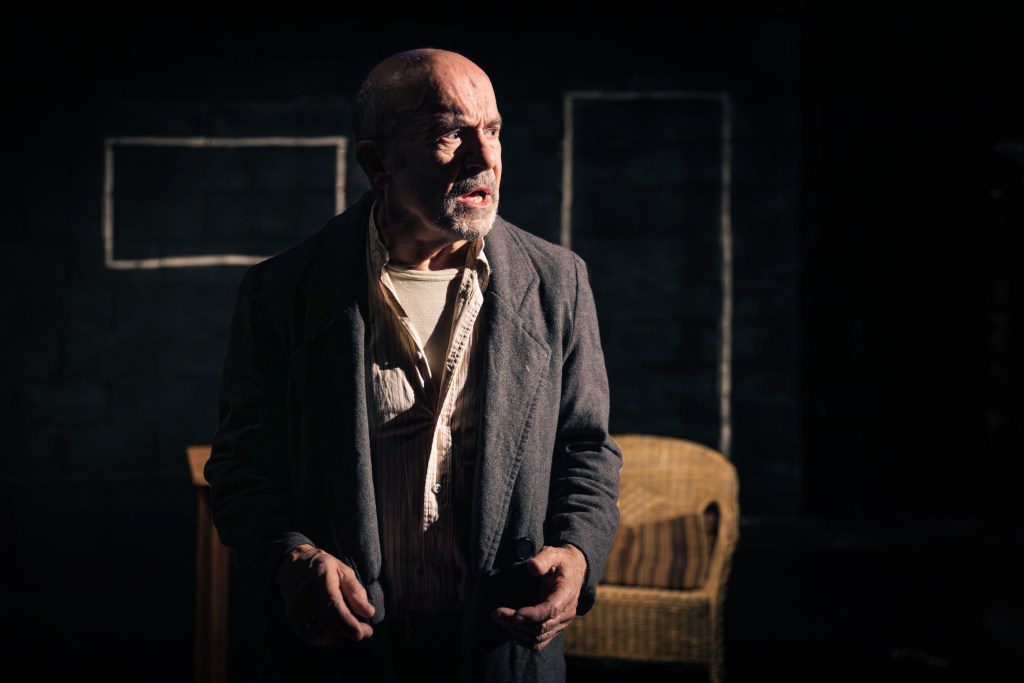
Still was performed only by Meldrum, an intimidating feat for any work, but especially to hold your own with only Beckett to keep you steady. Perhaps it was due to the change of pace, but I enjoyed Meldrum’s performance in One Evening the most. Meldrum brings a quiet humour and authority to the text that works seamlessly with Beckett’s absurdist charm.
The adapted script included the third person descriptions of the character which allowed for a disassociated effect that Still continuously employed at every opportunity, building towards a fantastic painting of existentialism. This included a voice-over and Meldrum himself narrating his actions both before and after they were made; “eyes open.” Due to Beckett being known (sometimes infamously) for his extensive stage directions that must be followed to a T, this felt like a loving gesture towards his need for his visions to be realised past the spoken dialogue.

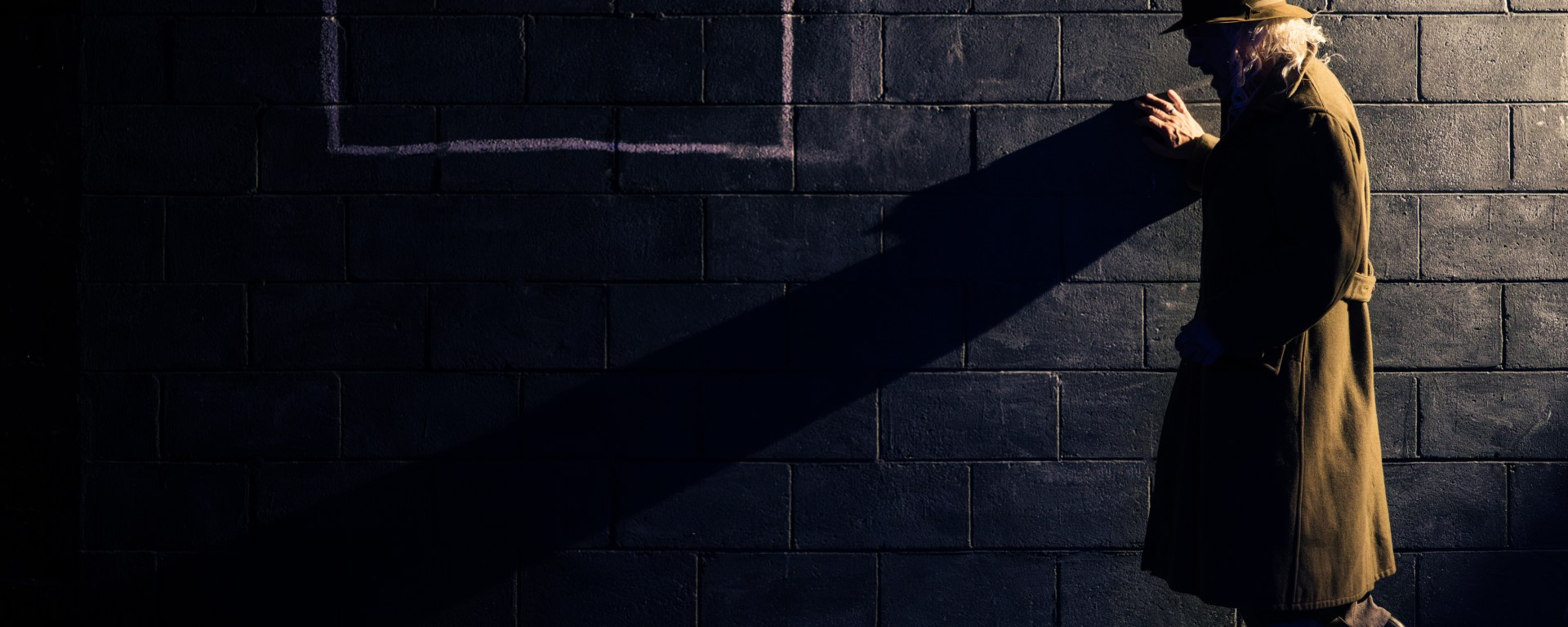
The set, led by Jenny Kemp’s vision, is purposeful and simple. It’s comprised of two black flats that close in the space, a coat rack, and a table and chair. Across the walls are white painted outlines of windows and a door, further creating an atmosphere of entrapment through these non-useable escapes and leaving us with just the gesture of their pointless existence. There is nothing I enjoy more than watching an actor alter and add to the set, so I was delighted as Meldrum drew on the floor a white chalk outline of a body which replicated the texture of the painted outlines. It felt especially touching for him to cover the body with his own coat to bring further humanity to this outline, his coat sweeping and smearing the chalk.

However, during the show I became confused about the decided ordering and inconsistent signalling of the six pieces. The first four melted into each other, especially as I wasn’t familiar with them, and therefore I had no idea where one ended and the other began. The decision to not create barriers between the pieces would not have been an issue if the last two weren’t so specifically signalled to be different through costume changes. To transform into the fifth piece Heard in the Dark’s character, Meldrum changes costume for the first time, swapping his coat for another and donning a wig and hat. For One Evening, Meldrum takes off the wig, hat and coat. With the added tonal shift of these pieces–especially One Evening which had more humour embedded within the text and delivery–I felt I was watching two separate collections.

Overall, Still is a performance for any Beckett lover; lesser-known pieces of his body of work deserve to be examined like any other. Despite these pieces’ original form as prose, Beckett’s relationship with the theatre is inseparable and his prose works flow just as easily from the mouth of an actor as his major plays.
Victorian Theatre Company’s Still: Late Works by Samuel Beckett plays til July 26th at Theatre Works Explosives Factory.
BRONTE LEMAIRE (any pronouns) is a writer and theatre maker who loves witnessing what emerging artists can achieve. Bronte loves analysing and picking apart what makes art work and function (or not!) in order to learn and steal some inspiration for herself.
EMMA PARFITT (she/her) is the Dialog’s head editor and has written Dialog reviews alongside studying towards her science degree for the past two years. She is a production manager, stage manager and producer on the Melbourne indie theatre scene and a veteran of student theatre at Union House Theatre.
The Dialog is supported by Union House Theatre.
 The Dialog