
REVIEW BY JESSIE WILLIAMS
EDITED BY OLIVIA DI GRAZIA
Our Seventh String made its way into the world subtly, but not without notice. Tucked away in the back of the Motley Bauhaus in Carlton, Our Seventh String captured the complexities of life in a surprising and moving way. The development and collaboration that goes into building such a microcosm of life truly reflects how connected we are through art and creation. The original script and music are no small feat; with the use of repeated melodies and playful pacing, each song brought depth and importance to a character, plot or moment. This original work from Four Letter Word is one that truly changed the brain chemistry of those in attendance.
Our Seventh String is set in the modern day, in an old apartment shared by a friend group that was once used as a creative space. The story follows this group of seven, reuniting for one last hurrah before the old apartment – owned by one of the members, Kaia – gets sold. These friends, all gathered here, reminisce about times past as grudges find new fire, and love thought lost is found once more. Seven years of distance comes with changes. This musical tackles major ideas around art and how we value it within our society. With the aid of music that traverses a wide range of genres from folk to musical theatre to bossa nova, it draws heavily upon the complexities of young adulthood, cause and effect, and how artists use their passions to express themselves in different ways.

The intimacy of the space is apparent as you walk in. The wings and stage are configured to their most effective, nearly impossibly so. Yet the energy and warmth of the space is the kind you crave on a particularly cold winter day, with many audience members greeting Cecilia Liu, the stage manager, on their way in. The set, the main living room of the apartment, was carefully curated and reinforced moments of tension and emptiness with little blocking of other actors. Of course, you can’t forget the one immovable instrument and beloved member of the apartment, the piano from Berlin, which was decorated with vinyl records. Safe to say, I know this kind of home and felt a sense of familiarity in the setting.
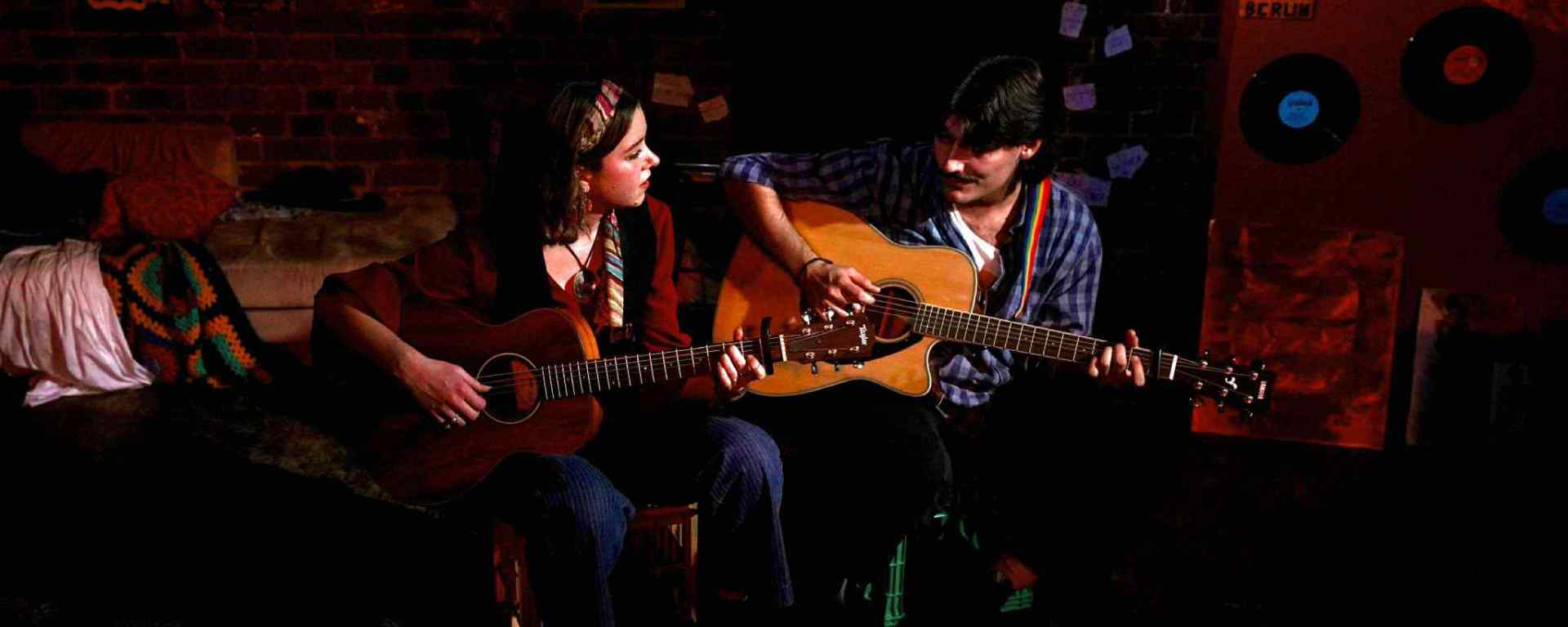
After having read the synopsis, I was still unsure of what I was in for. To say I was pleasantly surprised by the fact that all members of the cast not only played their own instruments but did so while portraying their character’s motivations and emotions, is an understatement.
The story follows seven characters with tightly intertwined and interconnected pasts. By the end, it felt as if I needed yarn to figure out how to connect them all. First to arrive at the empty apartment are Bo (Milo Pennefather), an art teacher that seems to have lost the meaning of their art, and their partner Rowan (Josh Drake), the anxious and bumbling science teacher that sticks to facts and patterns. Next is Baz (Jesse Anderson), the finance guy who had to choose between pursuing his music or settling for a job that provides security. Then Iris (Alecia Joanne Scott), quiet and reserved, who has drifted away from song writing. The newlyweds of the group, Mick (Jack Taylor) and Thea (Harper Elwyn), arrived by way of their transformed van, one feeling the need for growth and the other not wanting to leave familiarity. Frances (Miriam E-C) moved away to the ominous city to pursue artistic opportunities, yet left a lot unsaid. Lastly is Kaia (Nano Muna), the one who brought them all back together – the singing sensation looking to reignite her spark and become a hit once more.
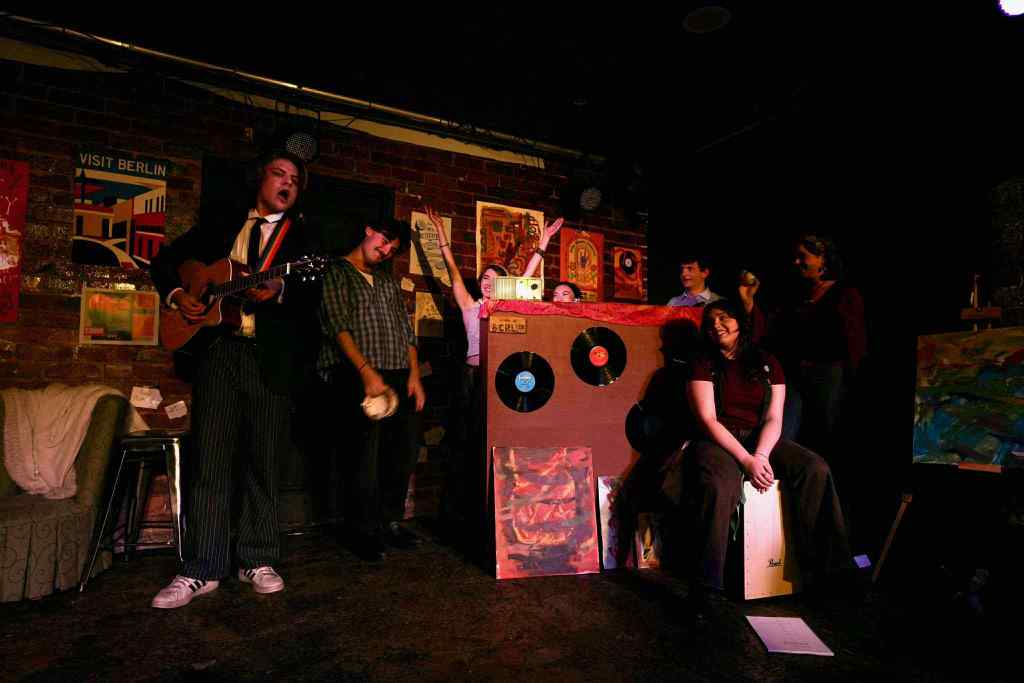
The team behind such a thought piece are Lauren Green, Henry Smith, and Emily Napolitano, who all share writing credits. As the show’s director, Lauren Green exhibited talent in understanding both space and staging. She also took into account the many ways lighting, sound, and framing come into account to realise a piece like this. Smith and Napolitano’s work as co-music directors was clear; the genre changes, characterisation and moments of tension were clear as day. Working with seven actors of a variety of vocal styles is one thing, but their willingness to learn a mix of ten different instruments in different genres takes great care and importance, especially for a show so intimate to the audience.
Overall, this was a stunning piece to watch with lots going on. The intimacy of the theatre allowed us to see the actors’ micro-expressions and the cogs turning in their brains. I truly felt stuck in that apartment with them. Drake’s embodiment of Rowan is clear from voice to body and this was juxtaposed when he came on as musical support, playing both bass and violin, where his confidence was clear. Anderson’s character allowed for quick-witted ad-libs that felt wholly natural to Baz. His larger-than-life personality plays into the idea he is making up for past choices or mistakes, a realist that remembers what it was like to dream. Taylor and Anderson’s chemistry was on true display when there was a small mishap with the electric guitar. Both played it off in a manner befitting their characters and were able to secure a laugh from the audience in the process.

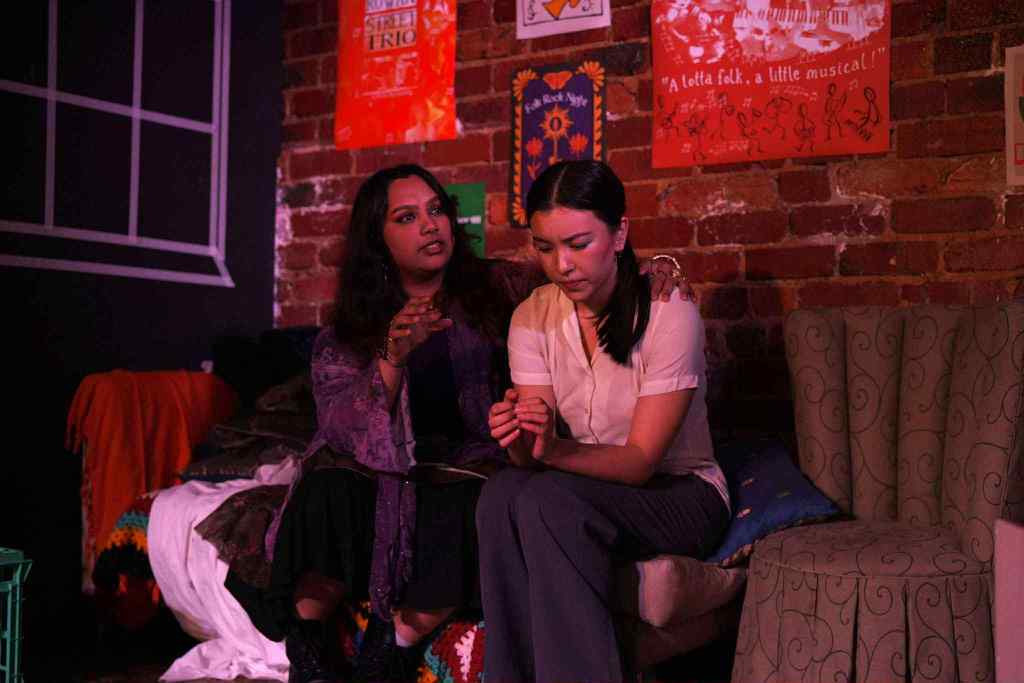
The character of Kaia, deceptive as she was, was brought to life through Muna’s choice of strong voice and powerful embodiment. It was clear that she was getting more and more spiteful while still maintaining her stance and views. As a plot device, Kaia worked well; however, I do think her arrival pulled away from other major tensions that were peaking, such as Bo and Rowan’s relationship. I also would have loved to see more development between Ivy and Kaia, as their history was touched on but did not feel as present. Bo and Rowan’s peak tension received audible gasps from audience members, as did Mick and Frankie’s. However, I felt that at times the added backstories made some tensions and characters’ connections fall flat or pull away from the current developments. For example, Thea’s relationship with her mother was the link between her and Rowan, yet the depth of the characters’ reactions to each other was not explored. Likewise, I think Baz as a whole was amazing; yet, at times, it felt like he was just taking up space until his character was needed to push the plot forward. Joanne Scott’s vocals were something to behold. The cleaning use of her isolation and withdrawnness from the group led to an explosion of emotion in Act Two. Each actor felt connected to their character and felt well written.
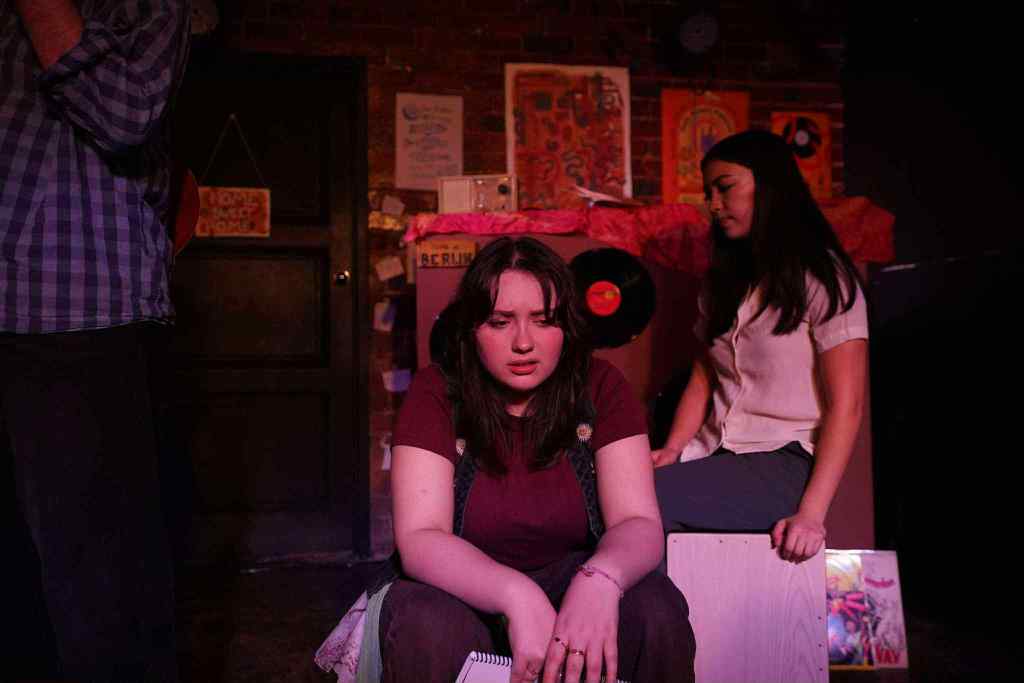
From a technical perspective, the co-techs Enje Hazia and Hayley Francis-D’Amour did a wonderful job. The use of recorded audio was amazing: the radio introduced its importance from the start and aided in the development of key tension points. The lighting was also phenomenal – each character had specific colours that made their feelings of isolation or togetherness clear. This was especially true in the songs about relationships, divided lighting on the left and right that merge into a middle warm tone. In Bo and Rowan’s song where he proposes, both characters’ feelings were demonstrated beautifully with blocking and lighting that highlighted the physicalisation of isolation then togetherness.
Overall, Our Seventh String was an amazing commentary about art and its place within society. This commentary comes at a critical time, as art funding within Australia (and Melbourne specifically) is often a point of contention. Art and expression come in all forms, and yet they are always undervalued. Artists often need a primary job to allow for this pursuit of their passion. This musical intentionally raises questions about the importance of art and self-expression as well as its complexities. Day to day we use many art mediums, from music to nail art; art is everywhere. So how do we change the system to allow art and artists to exist in this world without worry? If the system can be changed, where do we even start? All I know is that Four Letter Word is providing space for original work to flourish. I will be keeping an eye and ear out for more projects.
Our Seventh String by Lauren Green, Henry Smith and Emily Napolitano presented by Four Letter Word Theatre played June 4th-7th at the Motley Bauhaus.
JESSIE WILLIAMS has been involved in theatre for over 10 years in many different areas, including directing, acting and production management which has been a huge part of their life. She is finishing up a major in media and communications, so this combines two big passions.
OLIVIA DI GRAZIA is a University of Melbourne student and sub-editor for the Dialog.
 The Dialog