
INTERVIEW BY EMMA PARFITT
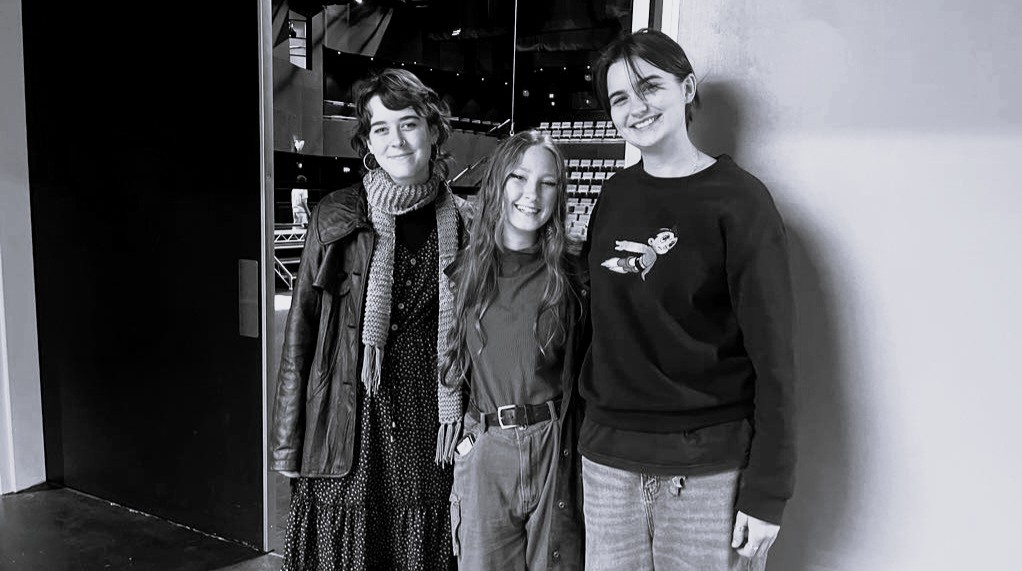
On this cold, drizzly day I met with Bronte Lemaire of Four Letter Word Theatre, Blue Jordan of CIPTA and Avi Walsh-Davis of Eleven Eleven Theatre. These student writers and directors have written the mainstage shows that these student theatre groups are bringing to the stage over the coming weeks. I brought them all together for a round-table chat about their works, their process and seeing words come to life.
Content warning: this interview contains mentions of sexual assault.
Emma: Tell me a bit about your shows.
Bronte: Medusa is very loosely based on the myth of Medusa and Perseus. But it delves more into making her a central figure and reading the reason she got cast out from the Athenian temple as a sexual assault, and then therefore seeing sort of the ripple effect that happens from that. So it’s less so about “why does this sort of thing happen,” but “how do people react to this sort of situation,” including the perpetrator and the victim, but also the people around them and whether they, how they choose who to believe or how they navigate that situation. Whether it’s a private matter or whether it’s something everyone should know for everyone’s safety or whether they keep some people in the dark ’cause they’re too young and they’re too naïve to know about the dangers of the world. And so it’s about sort of the complicated nature that sexual assault brings to social environments and seeing them sort of interact and butt heads basically.
Blue: I love that.
Avi: That’s so cool.
Blue: Exit The Boy is an original play about two boys who meet at Father Kirk’s Bible camp, Jonah and Wilhelm. It’s about them navigating a demon encounter with a demon that they believe to be the mare, which is a German folklore demon. That’s the story on a plot base. But more in, I guess a symbol/theme space, it’s really about terror and how different people respond to that, especially children. And how we can, when we don’t understand something, make it into something very different than the actuality of what’s actually happening. It’s also about toxic masculinity and the effect that that can have on young boys. And how when we don’t know how to deal with our fear, we do very rash things and we act out and we yeah, do really terrible things because of that. Toxic masculinity that we’ve been taught that, you know, boys are too strong to cry and fear is a “girly” emotion and stuff like that.
Avi: Okay. I don’t wanna follow this. Everyday is a play that’s meant to be about just confronting the everyday. On like a base plot level, seven people get into an elevator and then it breaks down. And so there’s an hour and a half roughly of them in the elevator with nothing to do but to talk to each other and to maybe share their own experience. It’s awkward and hopefully a bit wholesome. It’s gonna be confronting and funny, hopefully. But really what I wanted to create is a reflection of real life when you actually just have no choice but to stop and confront it and think about it and talk about it with people that you might not know. So on maybe a very base level, it seems like nothing really happens, like they’re in an elevator. That’s kind of it, but on a deep level, hopefully a lot happens within and between characters.
Emma: So what all of you have kind of said is that your shows are asking tough questions of your audiences and about society, and you’ve all written plays as your means to get these messages across and ask these questions. So why is theatre your chosen medium?
Bronte: I think there’s something I particularly love about plays, especially because for this show I’m doing no mics and I’m getting the [orchestra] pit is up and so they’re as close to the audience as they possibly can be ’cause we’re in the Union [Theatre]. And there’s something so intimate and confronting about theatre. When it’s like a film or a book, you can just stop reading or you can pause the movie. When it’s theatre, it just has to keep going and you just have to continuously confront it. You can’t look away and I think that’s a very powerful thing about theatre. And I also do love – not to spoil my show too much – but I think the fun, cyclical nature of theatre, the fact that it’s gonna keep being performed. Obviously the show is only for this week, but the fact that it’s gonna keep going has a fun symbolic effect on it as well. But yeah, and I just, I just love theatre. It’s so fun. I love acting.
We all agree – there is a lot of theatre love at this table.
Blue: I absolutely agree. Theatre’s such a fun medium, because there’s no stops and you are really, you’re in the room with the actors and with the plot. There’s no escape, which can be scary. My play is short, so there’s no interval, but I really like that because there’s no time for the audiences to get out of that world. They are in the world, and they will be in the world during the plot twist.
“Ooh”s from the rest of us – but no spoilers here.
And I just, I don’t want them to be able to leave the room and discuss. I want them to stay in that room with those emotions and really experience the trajectory of the story. I also really like how every night is different because it’s theatre. And how even in rehearsals, my actors are taking it upon themselves to kind of change little bits of the lines and the story and the actions. And it’s really exciting to see every time we do rehearsals how things change and how it gets better every single time. And I’m really excited for show nights and how, you know, these actions might change again and how they might bring a new theme to the story. It’s very exciting.
Avi: I feel like you guys have said amazing things. I wanted to do theatre partially ’cause also I feel like that’s the most accessible as someone already in a Unimelb theatre group. Like that’s something I know. Also making the audience stay and sit with the emotions and the plot and everything. Like, I’m the same. I don’t have an interval in my play. I want, I really want my audience to feel like they’re stuck in the elevator with my actors or with my characters. And I feel like that just brings it to a whole new level. Because like you guys said, you can’t pause it, you can’t stop and think about it or anything like that. You like have to be there.
Bronte: Yeah. I think, to add on to this one as well, that theatre’s so collaborative ’cause like, when it’s like just you, it’s just you and your thoughts. But all my actors are bringing such a different reading, or not necessarily completely different reading to the characters.
The other writers nod enthusiastically in agreement – this is a common sentiment.
I’m like, oh, I would’ve never thought about that or thought about the implications of that line and the way that you are. Or even when it comes to the set and the costume, all of them are bringing things I wouldn’t have considered. And so everyone’s sort of bringing their brain power together. It’s very fun.
Avi: Yeah, I feel the same way. Like it’s so… almost terrifying watching the characters being brought to life by actors. It’s so, it’s so exciting. It’s so like, not how I expected in the best possible way.
Emma: So you all have this shared mission of keeping everyone in the story and in this space by using theatre, but you’ve all adopted a very different genre. Medusa is a re-imagining of a myth and Exit The Boy takes on magical realism. Everyday is very much grounded in reality. So what appealed to you all about writing in the style and in the genre that you chose?
Bronte: Well, I love tragedies. Particularly this type of tragedy of like, you know exactly how it’s going to end and you’re watching them make the decisions, but there was never another decision they could have made. And I think with it being a myth, you go in knowing it’s gonna end like that. You know, Romeo and Juliet is saying that they’re gonna die, and you know that. And I think that’s a really interesting way to engage with a text of when you already kind of know the ending and then therefore, how does it still make you care that that’s gonna happen? I think it’s really fun and I think looking at Medusa particularly, the iconography of Medusa has had a very kind of recent cultural shift, like Medusa being a very common like sexual assault tattoo as of recent. And so she’s very much shifted, um, to be quite a symbol of what the themes of the show are about. But also interestingly, there’s not really any media that actually centres her, which is very strange. Like everyone knows Medusa, everyone has seen her, knows the whole story, but no one’s actually written a film explicitly about just her as a central figure, which I think is really interesting considering how long she’s been around. And you would think she would be everywhere like Achilles is, or any of the other Greek gods.
Blue: That’s so cool. I’m so excited to see that. I have been wanting to write in magical realism for a really long time. Because my favourite author is Murakami, and he’s very magical realist and I really like how he can explore such deep themes of being a human-being through these magical things. And then you only really notice what he’s doing if you read really deeply into what he’s doing in his works. So this was my first magical realist piece and it was really exciting to write, especially ’cause I love writing unreliable narrators. And that goes hand in hand with magical realism, I think. Especially ’cause they’re kids as well and they have a very particular view on the situation at hand. So all of those pieces really tie very nicely together into something that is magical realist, I think.
Avi: That sounds really cool. Yeah, I think for me it was like a bit of in high school studying like absurdist literature and stuff, Waiting for Godot. I loved the whole idea of it. I really wanted to write a play or write something where nothing happens. Like, I really loved that idea and so this was the best way to have that. Then also I wanna make my audiences feel like they could leave the theatre, get the elevator to go down, and this exact thing could happen to them, you know, because it’s so sort of realistic. I mean, obviously it’s not very common that elevators break down, but it’s something that could happen. I want people to be thinking about that. Like, that could happen to me. And how would it go? What would happen?
Bronte: Like the elevators that go up to level two and have the signs of “don’t hold the thing open otherwise the elevator will shut down”.
Blue: Yeah, exactly. One of my friends was stuck in there for like two hours.
We’re all in fits over this because anyone who has worked in these theatres has had a confusing elevator experience.
Emma: It could happen!
Avi: Hopefully on the way back from my show.
We all laugh at the thought of people being late to a show about being stuck in an elevator because they were stuck in the elevator.
Emma: I would love to get a sneak peek into your writing process. So where do you start? What do you do when you get stuck, and what happens after you have a finished draft sitting on your desk?
Tough question – these writers would talk for days about their plays but this requires some reminiscing.
Whoever wants to chime in first.
Avi: I can go first if you guys wanna think about it. For me, the process was over the summer I worked two retail jobs and I was just basically just folding clothes the whole time. I was so bored. And I was like, I need to do something with my mind to entertain myself. So I was thinking about this, you know, random little idea that I had and just letting that kind of develop and stew in the back of my mind when I had like nothing else to be thinking about was really good. Then obviously just going home, going into my bedroom and just getting into it or even sketching it out on paper, I found really helpful to do it as a diagram or to imagine exactly what’s happening on paper. And then with the finished draft, I feel like I will never have a fully finished draft until, at least, until you guys are seeing it on stage. Like we were saying with having actors come in and play the characters. Everything is changing in this really amazing, beautiful way. And it’s so exciting, but it’s this whole new light and I can really see the play adapting to this, this cast that we’ve got.
Blue: I wrote this play for a class last semester, um, or the first rendition of this play. It was only 10 pages at that point. I wrote the first draft for the class and I liked it so much that I wanted to continue it. So over the summer break, I just continued writing and decided to flesh out my characters more. They changed a lot, especially Father Kirk. Like I reread the first draft and I was like, wow. He’s completely a different person in this now draft. And like you say, the characters change so much once you’ve casted them, which is so exciting to see. It was really hard to extend it because for the class we had to write an entire play in 10 pages, so it was start to finish. And I was like, well, I know how it starts and I know how it finishes. Now I have to fill in the gaps. So I added five more scenes of them just talking. It was really difficult to come up with how the plot should progress to where I know it needs to be. Just like, you know, detailing the characters. I added more characters. I extended the monologues, I created different monologues, and I changed the ending completely. And now it’s objectively much better.
Bronte: Mine’s quite a long play. It’s two hours and it has [mumbling sheepishly] 59 scenes. But it meant that some of these scenes I wrote almost two years ago, which were the very first scenes, one of the sort of integral thematic climaxes for one of the characters. And the last scenes were the first scenes that I wrote, and so I knew exactly where the whole plot was heading the entire time. Of course then I had the structure of the myth itself and I was like, what am I keeping in? What am I throwing out? And that sort of thing. But I was very trying to be as structurally rigorous as possible, which seems like I’m not ’cause so many scenes. But it meant I had to make sure every single scene I kept in had a very specific thematic purpose, otherwise it had to be thrown out. I had to really question each of my characters to be like, is this person relevant enough to keep in here? Can I justify their space, or do I have to throw them out? That almost happened for one of my favourite characters of the show. But I managed to keep her in, which is good. But yeah, and so I was just really rigorous with my planning and my structure and then I started attacking it over the summer once I had gotten the guarantee that I was gonna be putting on the play after the Four Letter Word AGM last year. So, I was just going at that, and the first act took a bit to sort of get through because it’s sort of, the first half is always a bit harder ’cause you have to establish all your plot lines, establish all your characters. The second half was like, it’s already on wheels. Like it just kind of goes. I think my second act particularly, I’m quite proud of in terms of its pacing. But yeah, a lot of it was making sure I was justifying every single page. Because when you have a show this long, you can’t have it drag, you can’t have it sit. And so, then once I’ve finished, every so often we’re still tweaking lines, especially with the actors where they go “it always feels awkward to say this line”, I’m like, “okay, we can change it up. It’s fine.”
Blue: I’ve had my actors so many times go, this line doesn’t make sense. And I went, “oh yeah!”
Another shared experience between writers – they all agree fervently.
Oh my God. I had, sorry, this is good. I’m using the Nightingale and the Rose Story by Oscar Wild and they kind of like play it out. It’s really fun. And it’s about the Nightingale and the Prince. No, not the Prince [in the context of Blue’s play], the student! And I had the Nightingale say, “oh, prince” to the student. The actors went, “prince, wait?” really recently, like last week they went, he’s not a prince. Yeah, it’s crazy.
Bronte: What was particularly interesting, what was really hard to do is ’cause I, I only have two male characters in the entire show, which are Poseidon and Perseus. And they interact a lot with each other, especially in act two. But what I was trying to do is, ’cause Poseidon is a perpetrator of sexual assault. But I had to sort of have these very masculine, very locker room conversations between the two of them. So like, I watched these videos of guys being like, “how to raise masculine sons”. But it’s so difficult to write the scene without it seem over the top satirical. Because it’s like, as soon as you try to satirise something, you realise that’s just how people are. And so it’s, it’s so difficult to try and land in a sweet spot with it. But I think I’ve made it okay.
Emma: Amazing. All right, we’re onto the last question. You’re all young writers, working with young artists to bring these plays to life. So what’s it like to be able to make these works of theatre with other students in particular?
Bronte: I guess going on what I’ve been saying before, it’s particularly fun working with actors. It’s even just fun during the audition and the callback process as well, seeing all these different interpretations of characters, and of course you pick the ones that you feel are either the most interesting or coincide the most with what your vision was. But it’s so interesting to see what people bring. Like yeah, like there was this one line that the character Thoosa has, and the actor was like, “oh, they’re saying divine here because of this particular bit here.” And I was like, so true. Yes, so purposeful. Because when you’re just writing a script, sometimes you kind of just do things instinctually and you don’t necessarily think about it and you realise that all these people are analysing every single word that you’ve put down and trying to find meaning in all of them, which is why they’re so sensitive to when there’s a discrepancy and they’re like, this feels awkward. They’re so close to the characters and like, they all know these characters better than I ever will. Which is I think, such a privilege to have, especially my cast, they’re so invested in this show, which is so lovely. And to also just see people react to the show. Like when we did the first read through, or we did an act two run a few weeks ago for the first time and half the room burst into tears, which was so, so lovely. But to first just like have people who, of course, bringing it to life to have that effect in the first place. But also to have these people who so deeply care about the show is just so lovely to have and makes me have faith in the show myself, even though it’s like, oh, I wrote it and I know it’s bad. But it’s like, yeah. It’s just, it’s so lovely. And seeing people just spend, especially in student theatre, we’re not getting paid for this. Everyone just investing so much time and money into making this happen is just. Yeah, it’s beautiful. It’s amazing. I love theatre.
Blue: Yeah, I completely agree. It’s so incredible seeing just everyone being so dedicated to this show that they’re not even getting paid for. Like, it’s so cool. Their absolute dedication to the characters and the things that I wrote, like that’s crazy! And I think working with people your age, this is probably the same with all theatre, but the script changes so much in such a good way. I didn’t write Exit The Boy to be a comedy, but it’s so funny and I’m saying that from an audience perspective. I will sit there for the entire first four scenes laughing so hard. And then I go, I like reread the script and I’m like, what happened? How did it get to this point? Which is really cool because it makes the plot twist or the realisation so much more depressing. When you are hit with like, “ah ha ha, this is so funny. Oh my god. This is actually devastating.” So it’s really cool to see how like, I guess powerful the play has become through the actor’s choices. And also like on that note, I guess like working with crew is so incredible because a lot of my crew, not to sound like nepotism, but a lot of them were my friends before and they were my friends during the original writing process. So they’ve seen Exit the Boy through it all. They’ve seen through dark days, through, you know, everything. So it’s really awesome to see them so dedicated to my work and wanting to bring it to life. And then, you know, everyone we have on board is just… so we go to production meetings and they go, oh, I have this idea for this scene. I want to do lighting this way. I think I want this kind of sound. I want this costume. Like you guys, it’s just so cool to see how invested they are in bringing the vision to life. It’s so exciting.
Avi: That’s so true. I like what you guys are saying with the writing process as well. I feel like it’s hard ’cause we’ve seen all the absolute worst versions possible of the script. Everything from where it’s come from, and then we’ve got all these people coming on at some point during the process, whether it’s when it’s almost finished or during the writing process and seeing the way that they interpret it and how they are seeing it through new eyes. It’s. I don’t know. It’s like mind blowing. It’s so exciting. Yeah, working with students, like other students, it’s a lot of fun. Obviously it’s hard ’cause we’ll all come from classes and we’ll be like at rehearsal, like, how’s everyone going? Oh, well I have a test tomorrow. And it’s very much oh, like, oh shit. Like we are actually students, like the student in student theatre. I forget about that. But it just works really well because, I mean, on a base level, like not to brag, but I do have the best cast ever. We just have lots of fun at rehearsals. And we have the best crew – sorry guys.
Bronte and Blue respectfully disagreed with that point. It’s clear each writer has a lot of appreciation for their cast and crew.
And it’s such an honour to see people really caring about what I’ve written and having their own ideas. And I’ll talk to cast members during rehearsals and they’ll say “oh, so I was just wondering about this. Like I feel like my character would say this this way. Does that make sense?” And I’ll say “oh yeah, now that I’m seeing you put on the character, it makes so much sense” and so, so good to see. But I guess just like on a baseline, it’s just… it is just wonderful. It’s so much fun. Me and the cast are talking about, you know, when we’re on Broadway next year and driving in limousines and everything, like how we’re gonna do it. So we’ve got really big plans. So yeah, just watch the space.
As we walked out the door, the writers were discussing with each other how keen they were to see one another’s shows. Their instant camaraderie was lovely to see as they bonded over shared experiences and their love of theatre. In writing this, it is impossible to pick up every bit of laughter and every avid “mm-hmm” of agreement – but there was a lot of this throughout this special little 20 minutes.
Four Letter Word Theatre’s Medusa by Bronte Lemaire plays April 10th – 12th at the Union Theatre.
CIPTA’s Exit the Boy by Blue Jordan plays May 7th – 10th at the Guild Theatre.
Eleven Eleven Theatre’s Everyday by Avi Walsh-Davis plays May 15th – 17th at the Guild Theatre.
Emma Parfitt (she/her) is the Dialog’s chief editor and has written Dialog reviews alongside studying towards her science degree for the past two years. She is a production manager, stage manager and producer on the Melbourne indie theatre scene and a veteran of student theatre at Union House Theatre. You can find her theatre work on instagram @emmadoestheatre.
This interview transcript has been edited for clarity.
Conflict of interest statement: Emma is involved as crew on Eleven Eleven Theatre’s Everyday. She is not involved with the marketing or promotion of this show.
The Dialog is supported by Union House Theatre.
 The Dialog