

Interviewed by: Oscar Lidgerwood
Ahead of his upcoming run of kerosene & SIRENS this August at fortyfivedownstairs, VCA graduate Benjamin Nichol sits down with The Dialog to discuss his creative process and grants us insight into his life as performer, writer, director, and true theatrical all-rounder.
Right now, you’re really doing it all – writing, directing, and performing in the upcoming kerosene & SIRENS double bill. Can you speak on each of these a little more? And how it’s been working in all these areas?
This is a remount season, as both shows have been done previously. kerosene was originally staged three years ago, and in that project, I wrote it, and co-directed it with the performer Izabella [Yena], I sort of wrote the role for her and we built the project together. Whereas with SIRENS, I had written the project and decided I wanted to be in it. I’d written the role for myself and felt it’d be too much to direct, act, and write, so I worked with the director Olivia Satchell and collaborated with her to build SIRENS. So, it’s been a combination of two roles on each project, having written it prior to rehearsals, to then focus on the other role in the later stages.
On that, when you’re approaching your new work and developing these new projects, where do you blur the line between fiction and your own lived experiences?
I consider that a lot when writing, and I think it’s always a hybrid of the two. Writing is always a reflection of things I’m experiencing, whether I’m conscious of that of the time. I’m very wary of the ethical implications of writing people in my life, or exact things that have happened to me in my works. I may do that as a starting point but will do lots of editing to hide who that was, or change the location, age, gender, so it’s quite obscure. That way I feel safe to share stories publicly, and it’s a considerable and ethical thing to do around the people in your life that feature in the stories you are creating.
As SIRENS is a queer coming of age story, and I star in it and am also gay, people assume it was biographical, but it really would be no more biographical that kerosene which is about an angry young girl growing up in the outer suburbs. There are equal amounts of me that have gone into both, but there is something about performing that makes people assume there’s an extra personal connection to it, which there is but not in a literal sense.

And what lead to staging these two together?
Well kerosene is a solo piece with just one performer, and the whole investigation of it is there’s no props, no set, it’s just an actor with a text connecting with an audience. There’s been so many cuts to the arts funding over the years, I wanted something that was minimalist and acoustic, but still just as powerful. Writing in that style allowed me to go really deep into one person’s psychology, a focus on a character study rather than a sprawling epic narrative really appealed to me creatively. So, when I started writing SIRENS I wanted it to be a sister work to kerosene, and my intent was always to have them programmed together, but of course COVID interrupted the original SIRENS season which meant it premiered alone. Since then, I’ve been sketching a concept for an entire anthology series for shows in the same style. I want to write eight to ten fifty-minute plays that are all solo works that examine different types of people living around Australia grappling with love and loneliness. kerosene and SIRENS will be the first test where I can see the public appetite for anthology works on stage, it’s something people are used to on television, but the stage is a whole other story, and I’m curious to see the effect it will have.
Could you speak on your experience working as the writer in residence with Union House Theatre last semester? In terms of helping to bring fresh ideas out to the world?
I loved the experience at UHT. I’ve done a bit of teaching for a while now, often with kids, or people with disabilities. And so, working with uni students, some of whom had written creatively before and some hadn’t was a different experience but I absolutely loved it. Being able to see their ideas and what they’re writing really allows you to reflect on your own biases and gives you a new perspective as a writer.
And do you have any pieces of wisdom to offer anyone that might dream for a career in the industry in some capacity?
Something that someone told me once is that it’s helpful to just expose yourself to as much as possible creatively. That’s not necessarily limited to just the artform you’re working in, whether it’s theatre, visual art, music, or dance, but just trying to absorb as much as you can and connect with the people that inspire you. If I’ve seen a work that I’ve loved, I’ll reach out to the person and send them a message regardless of whether I know them, I think it’s a nice way of bridging some of those gaps when we’re all in the same industry as often we do know each other but sometimes we don’t. What that does is it helps you build relationships with people, not in an opportunistic way, but genuinely from a place of curiosity and intrigue and the more you see, the more you connect with other artists, the more you grow and the more it can inspire you as well.
And now what’s it been like having actually stepped outside of that uni bubble, and really doing it? Having a career as a theatre maker in the Australian theatre landscape.
It’s quite exciting! It’s an incredible privilege. To have had the opportunity to have staged some of the works I’ve had, particularly the chance to remount these two together. The privilege of that isn’t lost on me. Yes, I’ve worked really hard, and yes I have a really awesome team of people around me, but that isn’t always enough to make these things come to fruition. It’s a competitive industry. COVID had a massive impact on young people coming out of the university system over the past few years, so I do feel very lucky and privileged to be able to do that. It’s also taken a lot of time, I know there was a naïve sense coming out of drama school that things would happen very quickly, which they didn’t, but that’s very normal and is part of the reason why I went back to study my masters of playwriting because there’s a mindset with actors where you sometimes focus on instant gratification and short-term rewards. Whereas I found through writing more and investing more in a broader sense in those different roles, there’s an appreciation for the long game and cultivation of community and the process of creating arts.
kerosene & SIRENS seem to have a real focus on the experiences of young Australians and those ideas of community, is your own identity as an Australian important to you as a theatre maker?
Massively so! I think about community in my day-to-day life, and I think a lot about what the absence of community can do to people, and I think community can exist in a lot of shapes and sizes. In a secular society, it’s something that is less clear in a modern day than what it used to be. When I’m making a work, aside from what the work is saying creatively, the people I work with and the relationships I cultivate while doing the work are really important to me. There are incredible artists in the world you may not fit with, and I’d rather work with someone I can build a relationship with, someone we can go out with as partners and really get deep. The team I’m working on with these two have been exceptional in that sense. Liv [Satchell] and Bella [Yena] as two partners in crime, then also the extended kerosene & SIRENS family have all been wonderful, really sharing a vision and giving themselves to a project in a way that is considerable and empathetic. The other thing I think about a lot is the way we care for each other, and the ways we fail to care. I’ve done a bit of care work over the years in the disability sector, and I come from a long line of carers in different capacities, whether its social works, teachers, nurses, counsellors. And so I often think about the ways we try and fail to help one another, and how that is the framework that holds community together, or can break it apart.
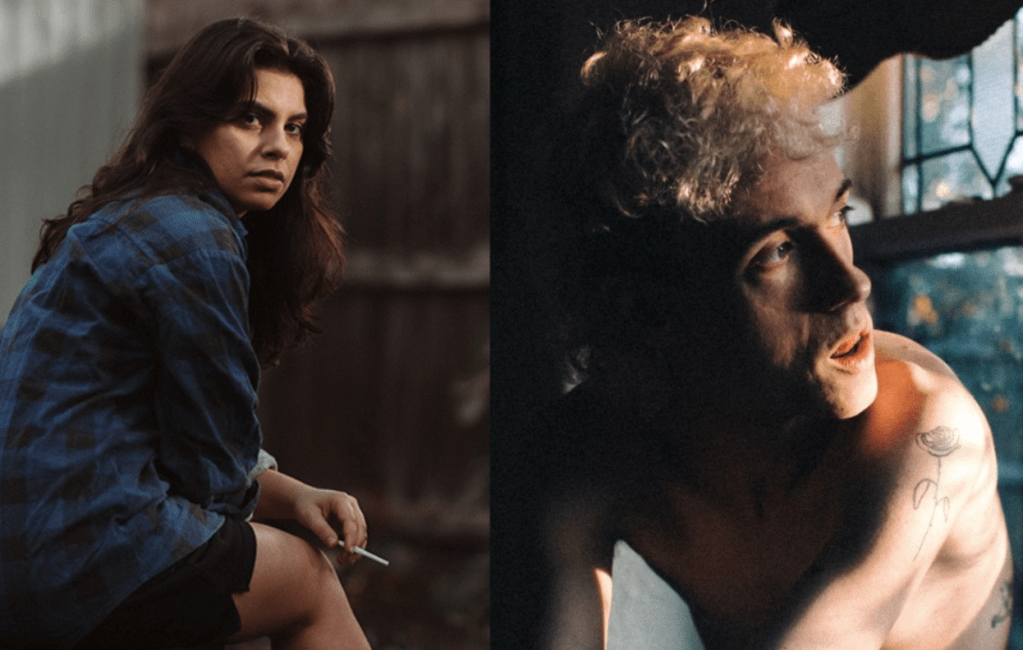
Finally, what can we expect from kerosene & SIRENS?
It will be a really interesting night of theatre, it’ll be two fifty-minute shows back to back with totally different characters, totally different stories, but very much belong in the same theatrical universe. It’s the same team working across both, it’s the same overarching themes, but different people grappling with the same issues, and doing it in a different way. I’m really hoping the experience of seeing those two works together will help to build a sense of collective empathy for those who are different to us, and I hope people come check it out.
kerosene & SIRENS will be playing a limited season from the 2-13 of August at fortyfivedowstairs, Flinders Lane.
Further information, including tickets can be found here.
 The Dialog