
By Tian Nie
Ah, the circus: a place of mystery, fascination and wonder – where the limits of the human body are explored, broken and reimagined, right in front of your eyes. Live performances may not be possible right now, but I’d argue that Cirque du Soleil’s online 60-minute specials give an even better up close and personal view. Cirque du Soleil (‘Circus of the Sun’) is a Canadian contemporary circus production company, which entertains fans globally with multiple shows every year. The first online episode features segments from either the beginning, middle, or end of three shows: KURIOS – Cabinet of Curiosities, O and LUZIA. Each combine storytelling with physical feats of wonder – offering a tiny escape into expansive new universes, exploring humanity’s relationship to our imagination, the natural world around us, and the cultural ties between people.
KURIOS is a travelling show; like cabinets of curiosities from the 17th century, it brings the spectacle to you, wherever you may be. Originally scheduled to be in Melbourne for March-April, KURIOS was only able to play for two days before closing due to the COVID-19 pandemic. The three opening acts presented in the video offer but a glimpse into the full two-hour experience, where the audience is taken into the world of the Seeker: “a hidden, invisible world – a place where the craziest ideas and the grandest dreams await”. It combines the pinnacles of circus artistry with award-winning narratives written and directed by Michel Laprise, who can count the artistic direction for Madonna’s Super Bowl halftime show amongst his directing credits. The steampunk costumes mix 19th century charm with an ever-changing set, from train stations to living rooms and underwater sea life. Without spoiling the acts too much, be prepared to see mimes taken to new heights.
If KURIOS explores curiosity and the limits of imagination, then O explores the infinite possibilities of water. As a permanent show based in Las Vegas, O has entertained audiences for over 20 years. Pronounced like the French word for water, eau, O combines all the intricacies of Olympic-level synchronized swimming and diving with the skills of award-winning sport acrobatics. In this show, the limits of stage design are re-invented with water in mind. A floating island sets the first scene, while a flying ship sets the second. The set uses close to 6 million litres of water that drains out into an artificial lake, in which the depth of the water can alter with each step. Performers walk on water à la Jesus one minute and dive deep into the unknown the next. The relationship of water with fire is also briefly explored, when a performer is set on fire while nonchalantly reading the newspaper. The camera close-ups truly capture the unruffled facial expressions of the man on fire, even as the world burns around him. An apt metaphor, perhaps, for the current global pandemic. Even so, water is ever-present, a purifying presence in the face of fire’s rage. Due to this moment being the middle segment of the episode which showcases the middle acts of the show, strange characters appear and disappear seemingly out of context, beckoning and drawing attention while doing not much at all. Perhaps it will all make sense if one day we can travel to Las Vegas and watch the show at Bellagio.
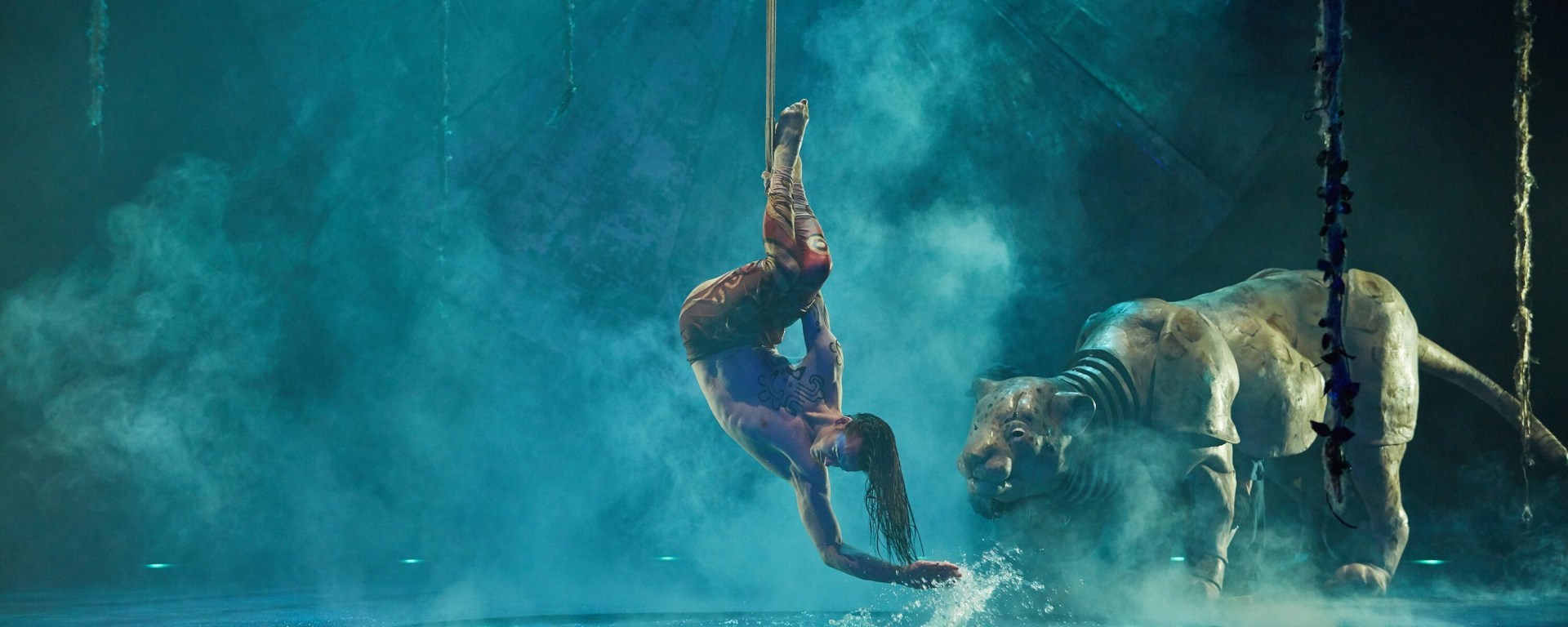
The hour-long snapshot closes with LUZIA, ‘A Waking Dream of Mexico’. A portmanteau of the Spanish words for light, luz, and rain, lluvia, LUZIA combines the artistry found in Mexico’s luscious natural environment with the monumentality of its architectural wonders, surreal animal menagerie, respect for rain, and “the spirit of the people”. A touring production, it aims to reach 450 cities around the world in five years. Yet as the first Cirque production centred around a single culture, it falls short of representing Mexico substantively on the world stage. The show is written, composed, produced, and led by an all-white, non-Mexican directorial team. Set designer Eugenio Caballero is one of the few Mexicans on board, and there are reports of 4 to 5 Mexican performers out of a cast of 45. It is fundamentally a show about the fantastical nature of Mexico as perceived by outsiders. Despite this, Cirque received close to $50 million dollars from the Mexican government to essentially promote the culture, history, and music of Mexico abroad. This is a funding decision that has been labelled as a “bad joke” by Mexican artists, especially as the government has been cutting funding and investment in its artistic community at home. In essence, LUZIA hides behind a façade of stunning visual dreams and experience to deliver the audience a Mexico that has been filtered through the lens of white perspective.
Leaving political and cultural criticisms aside, LUZIA presents lush imagery from mystical ponds to curtains of rain. Skilled puppeteers bring the wilderness to life, and the vibrancy of Mexican culture is brought to the forefront. The colours are uniform and vibrant, setting the scene for each act. A sense of community is also strong here, bringing all the festivities of a loud and boisterous party. Maracas solos are played with pinpoint rhythmic accuracy as guitar players strum around the stage. Symbolic blending of the traditional with the modern is embedded into the very fabric of the show, from intricate patterns paying tribute to traditional Mexican craftspeople, to technologically advanced colour-changing dresses. All in all, 1,115 different costume elements were made for the 45 performers throughout the show. As always, the performances are adrenaline pumping and death-defying, but it is the strange ending that leaves the audience waking up and wanting more beyond the short fantasies seen here.
Each show features a dazzling array of unique performances, as well as amazing backstage coordination. The live music is composed to maximize coordination with what is on stage; not unlike a musical, each beat is timed to every jump, kick, or flight through the air of the performers on stage. The music takes inspiration from cultures all around the globe, from the sounds of the Chinese erhu to the African kora and many more. The costumes are as strange as they are stunning, colourful, and glowing, blending in and popping out of the ever-changing set. The amount of effort to pull off every sound, visual spectacle and trick requires constant innovation from the stage crew to keep things literally afloat.
It certainly does feel odd watching the beginning, middle, and end of three different live circus shows through the lens of a camera. After all, everything that is visible is what the camera wants to show, and there are so much going on beyond the screen that every re-watch is a different experience. Video cannot recapture the organized chaos of a live performance, when there’s jugglers trading drumming sticks with percussionists while a woman walks on disappearing chairs. The make-up designed for clarity of expression even in the back row of the audience looks terrifying up close and personal. The second-hand thrill of death-defying stunts might be toned down (only perfect takes for the camera!), but the magic of swimming through the air with a selfie stick adds new angles to the circus experience. Overall, the 60-minute episode feels like an immersion into worlds where the abnormal is the norm, instead of merely watching from the sidelines as an audience member.
With close to 5,000 workers at its peak, Cirque du Soleil was a veritable global village of its own. Each show contains performers from over a dozen countries, and hundreds of off-stage staff to support its day-to-day operations. Unfortunately due the current pandemic causing the cancellation of 44 shows, they have since laid off close to 3,500 employees and have filed for bankruptcy. As the global situation stretches on, support for the performing arts both at home and abroad is more crucial than ever. Even though we may be apart, the messages of imagination and connection, delight, and whimsy from the circus remain relevant and timely.
Watch Cirque du Soleil’s 60-minute specials on YouTube and at CirqueConnect.
 The Dialog